

Ahimsa Silk
The Ahimsa Silk - Advance Module is a comprehensive exploration of the rich heritage, sustainable production, and economic significance of Ahimsa Silk, focusing on the Khasi tribe of Meghalaya. This course delves into traditional sericulture practices, unique textile design techniques, and the cultural importance of this cruelty-free silk. Students will gain practical insights into sustainable silk production, preservation efforts, and market trends. With a blend of theoretical knowledge and practical assignments, this module equips learners to appreciate, promote, and innovate within the realm of ethical silk production, contributing to sustainable development and cultural preservation.
 Most Viewed

What you'll learn
- Introduction to Ahimsa Silk : Gain a deep understanding of its origins, cultural roots, and unique attributes.
- Traditional Sericulture Practices : Learn the methods of cruelty-free silk production and tools involved.
- Cultural Significance : Explore the historical and ritualistic role of Ahimsa Silk within Khasi communities.
- Textile Design Mastery : Understand traditional Khasi weaving and design techniques for creating exquisite silk products.
- Sustainability and Environment : Analyze sustainable practices and their impact on the ecosystem.
- Economic Impact and Market Trends : Discover how Ahimsa Silk empowers local economies and its global demand.
- Preservation and Promotion : Explore challenges, solutions, and initiatives to preserve this heritage craft.
Couse Features:
- In-Depth Content : Comprehensive coverage of traditional, cultural, and modern aspects of Ahimsa Silk.
- Practical Assignments : Hands-on tasks to enhance learning and application of weaving techniques.
- Expert Guidance : Insights from industry professionals and tribal artisans.
- Sustainability Focus : Emphasis on eco-friendly practices and global implications.
- Case Studies : Real-world examples of successful preservation and promotion efforts.
- Interactive Learning : Engaging discussions and activities to foster better understanding.
- Global Perspectives : Exposure to market trends, challenges, and opportunities for ethical silk production.
Who Should Enroll
- Textile and fashion designers seeking sustainable material expertise.
- Entrepreneurs exploring ethical silk production opportunities.
- Cultural enthusiasts passionate about tribal art and craftsmanship.
- Students and researchers in sustainable development and ecology.
- NGOs and policymakers focused on promoting eco-friendly practices.
- Artisans aiming to enhance traditional weaving skills.
- Global marketers and export professionals interested in niche textiles.
Description
AHIMSA SILK
Introduction to Ahimsa Silk
So-called vegan silk or "peace silk" is aptly named for its peaceful production method. The process of traditional silk production starts by boiling the silkworms alive in their cocoon, and hence they do not mature into moths. But Ahimsa is different, because the moths have already left the cocoons before the silk is harvested. In this way lives of the silkworms are also saved and this is both non-violence compliant and a sustainable process so Eri silk is the most ethical silk. This unique process of production sets Ryndia apart from other types of silk like mulberry silk and muga silk.Ryndia or Eri silk is the costliest fabric and is worn only on special occasions and festivals such as Shad Suk Mynsiem and weddings.The craft of cultivation of Eri silk is an age-old tradition, which has been practiced for more than 1000 years, and has become a way of life for the indigenous people in Meghalaya mainly among Khasi and Garo tribes. The word Ryndia is the name of the castor plant-- its principal foodplant.(Ricinus communis for Eri Silkworm (Philosamia ricini). Silkworms eat the leaves of the castor, and when they die, the silk is collected. In contrast to other types of silk production where the cocoons are boiled in order to produce the silk, the Eri moths are allowed to naturally emerge, so the process is not only cruelty-free but also eco-friendly.Ethical production of Ahimsa Silk also values the conservation of biodiversity. Conventional sericulture practices result in millions of silkworms dying each year, presenting serious ethical and environmental challenges for consumers and environmentalists. Ahimsa Silk, on the other hand, offers a more sustainable option, as it comes from the Bombyx mori moth, which is bred to have a smaller environmental footprint than other animal farming.In addition, this method of silk-making is beneficial to rural economies, in particular in areas like Meghalaya and Assam where the Khasi tribe, among other local communities, practice sericulture. By maintaining local weaving tradition and promoting locally available material, Ahimsa Silk supports economic sustainability while promoting cultural identity.Ahimsa Silk is also known to be versatile. It can be woven into different fabrics, balancing efficacy and ethical creation. Although it may lack the same texture and sheen of regular silk, it's unique characteristics like breathability and warmth make it perfect for everything from exclusive fashion to the comfort of your own home.With the increasing consumer concern for ethical and sustainable processes, the demand for Ahimsa Silk is certain to increase. It is beyond the animal rights issue, it is for the artisans that deserve to have a value behind their work and for the awareness of the craft of silk making. "By using Ahimsa Silk, consumers have the option of experiencing luxurious materials and indulging in ethical production values that respect the environment and the living creatures with which we share it.
Overview of Ahimsa Silk
It has also proven to be a environmentally friendly alternative, because it is made without harming the silkworm for Ahimsa Silk.Eri silk is derived from Samia ricini, a species optimally suited for the spinning of cocoons, which keep an opening for the moth to exit. So moths can hatch as nature intended, embracing a humane method of producing silk. Eri silk is common in eastern India in places such as Assam, where local craftsman have been weaving with this sustainable thread for centuries. Eri silk has a sturdier and more shower than the Mulberry silk, It is most versatile and can be used where a silk of the heavier type is required or simply a valuable application -right from clothing to a variety of textiles.Ahimsa Silk is known for being more labour-intensive and time-consuming to produce than regular silk. This extra effort commands a premium, with the price typically being double that of conventional silk. The call for ethically made textiles is growing, even if it's not as mainstream. Ahimsa Silk provides a viable solution and is a wonderfully humane and practical alternative, which appeals to the growing segment of society that is sensitive to animals and the environment.This move toward ethical fabrics is part of a larger trend in fashion as sustainability and animal welfare are becoming key to what consumers want to buy. Designers and labels that consider Ahimsa Silk are not only a part of conscientious consumerism but also sustain age old weaving practices of communities like the Khasi tribe in her native Meghalaya; preserving culture and advocating environment conservation.To sum it all up, Ahimsa Silk is a wonderful mix of ethical consideration, cultural heritage, and quality (and I think it is) deserving recognition as a cornerstone in efforts to create a more sustainable kind of fashion.Ahimsa silk, or Ryndia as it is called in the Khasi hills of Meghalaya, is more than a fabric, it is a lifestyle of a people closely entwined with culture and tradition. Ryndia silk is made by raising Eri worms which the Khasi compares raising it to baby rearing and the care it needs. The worms, which feed on castor, Payam and tapioca, are reared inside homes of Khasi people indigenously, which shows a pious relationship of this insect with Khasi society. Since the silkworm survives (rather than being killed for the silk, like typical silk production), Ahimsa silk is what is commonly called "peace silk."And for the common folk, the hand-spinning of Ryndia silk has been a cherished craft in Khasi villages, where women spin the yarn using a spindle called the 'takli' and do so while even chit-chatting and doing other daily activities like tea-drinking. Spinning is not just a job but a rhythm of life in these areas. The silk is subsequently naturally dyed, another method of trading that highlights Khasi tribe’s approach to sustainability, using plant-based mordants and local dyes such as turmeric, rusted iron and leaves to colour the fabric in its signature, eco-friendly shades. A combination of Ryndia silk is woven on bamboo looms, resulting in colorful waist-wraps and tor weaves (clothes worn as part of traditional attire), known as dhaaras and Jainsems that are worn during cultural functions. From the mulberry plantations to the spinning and weaving, Ryndia silk embodies nature, tradition, and community and represents sustainable living and cultural heritage in the Khasi hills.
Ahimsa Silk: The Timeless Legacy of Ryndia in Meghalaya
Ahimsa silk, also called Ryndia or Eri silk, is an especially rare and valued form of fabric that has a long history and rich cultural and ethical meaning. Coming from Meghalaya, India, this silk is also called “peace silk”, as no silkworms are killed in order to get the cocoon, unlike many other silkworms silk production. The Ri-Bhoi district, and in particular the Umden-Diwon cluster of villages, is a key Centre of Ryndia silk production for the state. A true piece of tradition, heritage and the environment can be found represented inside this lush piece of material. Let’s delve deep into the multi-dimensions of Ahimsa silk, from its creation, attachment to culture, and its increasing popularity across the international fashion world.
Khasi Tribe and Silk Weaving
The people belonging to the Khasi tribe, who inhabit the verdant hills of Meghalaya in the north-eastern part of India, have a long tradition of silk weaving which plays an important role in their life and culture. And this tribe has developed new and new weaving techniques over hundreds of years to become skillful craftsman with its traditional techniques. Weaving is not just an economic activity, it is an intricate part of the social and cultural tradition of the Khasi society.Meghalaya is known for its geographic features with the presence of mulberry trees in plenty and conducive climate for sericulture, which has resulted in its being one of the best silk producing sites. The Khasi people produce primarily the Eri silk (locally termed as "ryndia") among the various silk types. This option is a testament to their commitment to sustainability and non-violence, as 'Eri' silk is produced in a method that does not kill the silkworm like other forms of silk, allowing the silkworm to hatch naturally. This is in line with the moral code of Ahimsa which promotes harmonious living with the environment and life around us.Silk weaving in Khasi society is a community occupation, usually practised by women making use of crude implements like the Takli for spinning and crude handlooms for weaving. From rearing the silkworms to dyeing and weaving, the entire process has been handed down from generation to generation, where the knowledge and skills are still very much alive.The dyes for tinting the silk are all-natural stains, which are created from plants that are sourced from the local region, like turmeric and onion skins, so the whole process is eco-friendly and sustainable.Ahimsa Silk has great cultural significance for the Khasi people, being woven into meaningful and symbolic clothing. Typically, it is worn as a day time dress or formal dress as the beautifully adorned kurti are more of formal wear but there are kurtis specifically designed for office wear, part wear and night wear also. With these textile traditions, the Khasi tribe keeps its traditions alive, maintains a source of income and gives identity to a community that is rooted to its forefathers, ancestors and the land.In conclusion, the culture of silk weaving practised by the Khasi people stand as an illustration of their resourcefulness and astuteness. It is a harmonious combination of cultural value, environmental awareness, and social responsibility, it’s an example of how tradition can flourish in modern society.
The Role of Women in Ryndia Silk Production Gynocentric Craftsmanship
Ryndia silk, being mostly produced by the womenfolk of Meghalaya, is also a legacy that has been handed down generations. In the Ri-Bhoi district weaving is done in almost every household as they have necessary equipment for making fine Eri yarn. The women touch every part of the silk-making process, from raising the silkworms to spinning the yarn to weaving the fabric. This shared enterprise gives the women a profound sense of pride in what they do, and the tradition is a key element in the formation of social networks in the community.
The art of silk weaving is an essential part of the life of villages like Umden. The women do their work in varied groups, often spinning yarn, while chatting or enjoying a cup of tea. Such community-based method of silk production not only safeguards the region's rich cultural tradition, it also serves as an significant means of economic and social upliftment for the women.
A Tradition Passed Down Through Generations
Generations of heritage : The age-old traditional wisdom of rearing and weaving with Eri silk has been handed down from generation to generation creating a rich tapestry of experience and tradition. Spinning is a laborious process and the women of Meghalaya still make use of Eri silk to this date with the hand spinning skills they learnt decades back. Eri silk fibers are relatively short and the fibers do not fold at one end making it difficult to reel the silk, as a result, the yarn is spun instead of reeled. That old fashioned spinning technique creates a wooly, yet lightweight and extremely durable textile.
Cultural Significance of Ahimsa Silk
Significance of Ryndia silk to the people of Meghalaya It is an important part of the traditional dress of the Khasi and Garo, and is also a symbol of most festivals, religious and non-religious. Khasi women wear a traditional dress known as jainsem, which is typically woven using Ryndia silk, and, similarly, shawls and turbans worn by men during special occasions are also made from the same type of the fabric. Its unique textiles and designs reflect the cultural legacy of the area, and the material is regarded as an embodiment of community and pride.Khasi men sport Ryndia shawls, draped over their shoulders or tied as turbans, during indigenous religious ceremonies This makes the fabric perfect for these occasions as its natural warmth and soft touch provides comfort to the wearer in warm or cool weather. They carry the simplicity in designs, either checks or vertical stripes, along with the ceremonial silver and gold-trimmed outer pieces, which are minimally ornamented in married tradition-inspired aesthetics.Ahimsa is silk re-imagined with human interventions and in direct response to the ethical and sustainable principles of nature. The significance of silk garments in the Khasi tribe culture is further emphasised by the tribe's history of textile-making, whereby silk production is a regal activity associated with clan elites. The rise of Ahimsa Silk among sustainable fashion expertsSpurred by shoppers who wish to wear their values as much as find garments to fit their values, we can expect to see the demand for Ahimsa Silk only increase, bringing not just ethical consumption, but conservation of traditional crafts and cultures. The story of Ahimsa Silk from the tranquil hills of Meghalaya to the world market is a story of spirit and an urge to redefine cultural identity and alter the narrative by being a part of the global market by being ethical.Eri Silk or "Peace Silk" evokes a ten centuries old tradition closely associated with the cultural identity of Meghalaya. This extraordinary silk comes from the local castor leaves fed to the Eri silkworms — Ryndia. Compared to traditional silk, where the silk moth is killed to obtain the silk cocoon, Eri silk lets the silkworm go through its full life cycle, making it representative of ahimsa and eco-friendly fashion. Umden village in the Ri Bhoi district became the three بالفعل action limited Plan for Eri silk, sustainably faced by women in this age-old tradition in order to bring organic silk to their village of beautifully crafted knitwear and textile.Eri silk is completely organic and produced entirely in nature as in, dyes are made with natural things around in Umden. Textile dyeing is a skill passed down generations resulting in a distinct cultural imprint of the region visible in every piece of fabric. The rich heritage of Meghalaya is also to be seen in some of the traditional motifs, checks, vertical stripes, and simple brocades which are made from the fabric and that can be worn in such a way that it is cool and warm both in winter and summer owing to its thermal properties.From farm to weave, this is an environmentally sound rural profession. All the process of Eri silk production in Meghalaya is eco-friendly right from the hand spinning of the silk resembling to wool to the dyeing in the final stage. Due to this, Eri silk can be described both as a luxury fabric and as one of the most sustainable fabrics in the global fashion industry. Eri Silk is a new way of reinterpreting Indian traditions, Indian textiles, with a focus on making Eco-friendly haute couture while remaining ethically aligned.
Silk Production Process
Silkworms exposed to humane production of the fabric are all present in the silk production process, particularly present in the making of the Ahimsa Silk produced by the Khasi tribe of Meghalaya. Unlike traditional silk production practice, where cocoons with living larvae are boiled, in Ahimsa Silk, the moth that the Lundqvist, Samia ricini, has a chance to emerge from the cocoon. This approach to ethics is a reflection of the tribes practice of sustainability and animal welfare and embodies the idea of Ahimsa or non-violence.
Traditional Sericulture Practices
Traditional sericulture, particularly in the context of Ahimsa Silk production, promotes a methods of silk production that are ethical and take into consideration the well being of the silkworms in every process in the creation of silk. Ethical silk differs in that silkworms are allowed to finish their life cycles, as opposed to traditional sericulture, wherein cocoons are boiled alive to extract the silk, and therefore promotes non-violence (Ahimsa).
Key Aspects of Ethical Sericulture
Life cycle sustenance: In ethical sericulture, in particular for Eri silk, Samia ricini silkworms are permitted to break free from the cocoon naturally. This technique prevents any hurt to the larvae, and allows the moths to breed, thus restoring the diversity of the species. This is a sharp contrast to how silk is conventionally produced, in the hot water used to boil cocoons, which kills the pupae and, over generations, affects silkworm supply.Sustainable Farming Practices: Ethical sericulture often is also sustainable, meaning that the worms are fed naturally and without synthetic pesticides or fertilizers. This is more sustainable and supports local agriculture. When they feed their worms locally and organically, we get better silk and less environmental impact.Community involvement: ethical production of silk often is community-based, women and families working together in farming and weaving initiatives. This method is not only economically advantageous to the family, but it also works to support social arrangements within communities. It generates collective ownership for sustainability and improve cultural heritage.Natural colouring methods: The cocoons are making their journey from the field to the dyeing lab, where they go through a dyeing process for which the dyes are made using plants. It also eliminates the toxic chemicals present in chemical dyes, thereby preventing environmental and health risks for the skilled workers. “The traditional dyeing methods have been handed down from generation to generation and promote the use of local flora and sustainability.Ancient Craft: Do you know that the sericulture has more than a thousand year history? Weaving is not a production tool, it’s a type of art that reflects culture. Weavers use traditional hand looms to weave complex patterns and motifs, and weave their stories from their experiences and culture.Economically Viable: Ethical silk production is typically labor and cost intensive, but it is also frequently higher quality and can be sold for higher prices. But this may provide additional income for workers and farmers who value and practice such ethical means. However, with the rise of consumer demands for ethically-produced, earth-friendly enjoyable goods, Ahimsa Silk has also gained popularity!
Extraction of Silk
The extraction of Ahimsa Silk is a meticulous process that ensures the ethical treatment of silkworms while producing high-quality silk fibers. The process described for preparing Eri silk through degumming is a traditional method to remove the natural gum, or sericin, from the silk cocoon. This method involves the following steps:
Degumming the Cocoon:
The main aim of degumming is to remove the sericin, a sticky material which binds together the silk fibers in the cocoon. This subsequently loosens the fibers and makes them ready for spinning by padding.The process of degumming can be initiated by boiling of Eri silk cocoon in water. Local soap is commonly used in non-household settings. This will aid in dissolving the sericin and loosening the silk filaments from the cocoon walls.
Washing:
After boiling, the silk is washed to extract any remaining sericin and/or impurities. This eliminates the glue from the natural and allows the fibers silk ready for the next preparation stage.
Flattening the Cocoon:
The degummed and washed cocoon is step-flatted onto the Silk-Cakes. This includes stretching the silk fibers into a flat position, giving them a more convenient structure for spinning.
Drying:
The silk cakes are then allowed to dry after being shaped. The silk is now in a condition to be handled and to be spun into silk yarn or thread.This indigenous practice of Eri silk production yields a soft and durable fibre that can then be spun into yarn for weaving. Eri silk is unique in that it is more eco-friendly than other silks, as the silk moth is left to emerge from the cocoon, sparing its life.
Tools and Techniques
The Khasi tribe of Meghalaya has a rich tradition of silk weaving, and the tools they use reflect their deep cultural heritage and craftsmanship. Each tool plays a significant role in the process of creating intricate silk textiles, showcasing both functionality and artistry.
Hand Looms
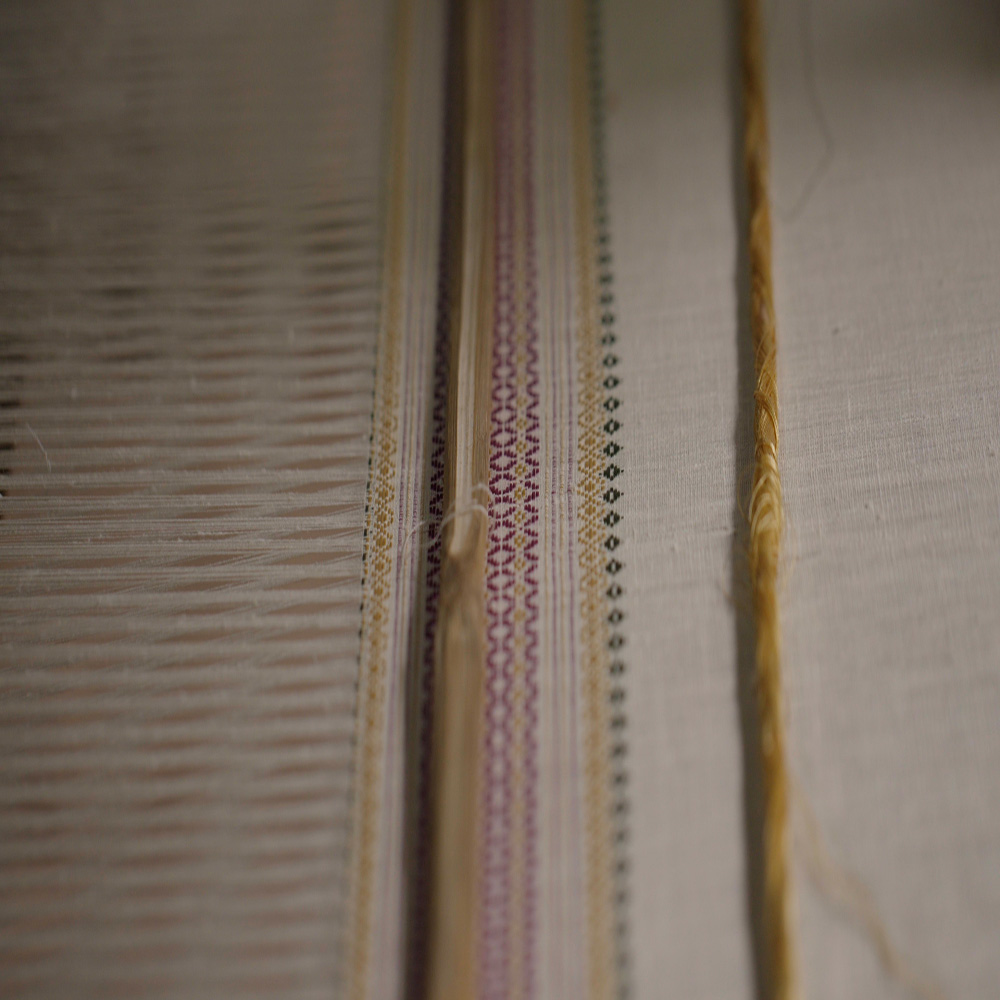
For the Khasis, silk weaving is primarily a handloom craft, where the handloom serves as the basic instrument for detailed fabric creation. The Khasi loom is a straightforward, highly efficient device. Master Weavers mainly work with horizontal looms which enable them to weave intricate patterns and designs.And yes, these looms (also called as traditional floor looms) are operated by hand. The weaver pedals with their feet to control the warp threads, while the weft threads are done by hand. This foot-hand coordination yields a high level of precision, allowing artisans to incorporate intricate designs that mirror complex motifs often seen in nature or symbolic of the Khasi cultures. Meghalaya bamboo based traditional floor loom is accessible to general population. But with this loom, we can only make narrow-width fabrics such as shawls – and generally, one shawl regularly. As the market demand for its textiles grew, we introduced flying shuttle looms, familiar to other regions of the country. Its another wood based loom which helps us in weaving bigger and longer fabrics on.However, these are more than just frames to weave fabric; they are an embodiment of culture and tradition, keeping alive the spirit of weaving by hand. However, unlike the unembellished fabric of its neighbours, the woven designs are symbolic and functional; they describe aspects of the Khasi folklore or the landscape. They are often crafted using natural materials and dyes, which makes the process more sustainable and connects the craft even more closely with nature.The work of traditional floor looms provides each of the textile remain one of a kind, carrying the culture, creativity, and with the skill of the weaver itself. The looms are still used by the Khasi people, who still retain these weaving traditions and skills, which is passed down from generation to generation.
Takli (Spindle)
The traditional spindle, called a Takli, is used for spinning the silk fibers into yarn. Expert hands work the Takli to pull consistently thick strands of silk from the long filaments of silk drawn from the cocoons. It is an essential tool for monitoring the quality and consistency of the yarn, which directly impacts the textile product. Made using locally-sourced materials, the Takli is a strong reflection of the tribe's connection to their environment.
Reels
Silk yarn is often reel wound after it is spun. The artisans use these reels to store the yarn in an accessible manner, while preparing it for the dyeing and weaving processes ahead. Reels are helpful in controlling the delicate silk threads and ensuring that they do not break or intertwine.
Dyeing Vessels
Ymang wei dyeing the threads from those natural dyes is an integral part of the silk production process and the Khasi artisans use different vessels for this purpose. These pots are usually clay or metal and are used to boil water and plant materials in them which release colourful dyes. Natural dyes not only beautify the silk but also resonate the beliefs of the tribe in sustainability.
Hand Tools for Finishing
Khasi weavers, on the other hand, include hand tasseling as a distinctive and time-consuming finishing touch to stoles and shawls that also serves as a functional enhancement to the silk garments. Once the weaving is finished on the traditional floor looms, the artisans take time immersed in handcrafting the tassels. It includes tying the filaments into knots and shaping the overhanging materials based on enhancing fringes that the completed item will subsequently have a distinctively homespun appearance.Tasseling is a crucial stage which is bound to exhibit the weaver's art of weaving and the handles. Each tassel is created, giving the resulting shawl or stole a unique artisanal finish. It is a manual process which adds beauty sophistication to the fabric also adds a textural element to the garment by which consumer attracts more towards the fabric. These tassels are sometimes crafted in shades and designs that match with a pattern of the stole, lending a very matching and a bit of an old-school feel of the Khadi culture.At the final step before we have pure silk fabrics between us here in end-products, there is terminal product handling with hand tools, such as scissors and needles to refine the last silk garments to perfection by trimming down products to blades and reinforcing core structures on fabric to ensure the garments will last and last! Such processes, from the weaving to the tasselling, reflect the commitment of the Khasi weavers to their craft and continue, to this day, rooted connection with nature and tradition.These tools used by the Khasi tribe in weaving Ahimsa Silk are a true third world cultural aspect along with the skills applied evolved through generations. Every tool from the hand loom, to the Takli plays an integral role in the intricate process of silk manufacture. Such tools are proof of the tradition, sustainability and their unmatched bonding with the ecosystem. The skills and techniques of working these tools have been passed from generation to generation to keep the art of Khasi silk weaving alive.
The Production Process of Ryndia Silk Worms-in-Focus: Eri Silkworm Getting Out of the Cocoon and into Our Cloth
Eri silk production process starts with the raising of the silkworms. The worms eat castor leaves, and after they spin their cocoons, they mature into moths and then the silk is harvested. Unlike other silks, which require that the silkworms be killed, this process is special in that the silk can be harvested without harming the silkworms. The newly emerged moths leave their cocoons, the empty cocoons are gathered, and the silk is harvested.
Traditional methods of spinning and weaving
The traditional weavers of Meghalaya, who are experts in this field, spin the fibers into yarn using hand-held tools. This is a very labor and time-intensive process, but the outcome is culturally based. The yarn is meticulously spun with minimal tools (the takli (spindle), and the weaving (usually on local looms, generally made of bamboo and wood)). These looms are simple to construct and operate, allowing the local artisans to access them. The whole process is done with minimum machinery and it keeps the traditional methods which has been implemented from ages.
Natural Dyeing Techniques
An interesting thing about the production of Ryndia silk is the use of natural dyes. Artisans in Umden and other villages in Meghalaya still practice the ancient tradition of using locally sourced dyes, which are derived from plants, minerals and other natural compositions. Extracting dyes from sources like turmeric, iron ore, lac (made of insects) and other plants and herbs. Not only does this ensure an organic and environmental fabric, but this is also what gives Ryndia silk its signature but earthy colors.We also have developed sustainable methods of dyeing using plant-based mordants (substances that bind dye to fabric). Harnessing a range of natural mordants from fruits, leaves and barks allows to fix the colours, making the results more stable. We create a process that gets us a fabric of beauty and uniqueness with minimal impact on the environment.
Textile Design and Craftsmanship
The textile design and craftsmanship of the Khasi tribe of Meghalaya are deeply rooted in their cultural identity and heritage. The production of Ahimsa Silk not only showcases their weaving skills but also reflects their aesthetic sensibilities, traditional motifs, and community values. Here’s an overview of the key elements that define the textile design and craftsmanship of the Khasi people.Times New Roman",serif">The textile design and craftsmanship of the Khasi tribe exemplify a rich cultural heritage that combines artistry, sustainability, and community values. Through their intricate designs, vibrant colors, and skilled weaving techniques, the Khasi people create textiles that are not only beautiful but also deeply meaningful. The preservation of these traditions and practices is essential for maintaining their cultural identity in an increasingly globalized world. For further insights into Khasi textile craftsmanship and designs, additional resources are available that delve into the intricacies of their techniques and cultural significance.
Unique Features of Ahimsa Silk
Ahimsa Silk, particularly that produced by the Khasi tribe of Meghalaya, is renowned for its distinctive qualities, setting it apart from conventional silk. This unique silk is a product of ethical practices and traditional craftsmanship, resulting in remarkable attributes in texture, color, and durability.
Texture
Texture is what stands out for Ahimsa Silk. Although it is commonly considered to have a rougher texture than traditional silk, it is still naturally soft and warm against the skin. The silk created from Eri silkworms in particular has a more textured feel, and can be used for all sorts such as clothing and home furnishings, or for making handmade crafts. It’s so soft, warm and appropriate for Meghalaya as it’s the perfect combination of comfort and style.
Color
Ahimsa Silk is known for its vibrant colours using vegetable dyes. The Khasi tribe uses the regional flora to produce deep colors of green, yellow, and indigo, which are not only visually appealing, but also eco-friendly. Dyeing is a craft that has long been associated with artisanal cultures; it is the human experience rendered in color, with one-off dyeing as a sustenance of traditional knowledge and natural ingredients. This dedication to natural dyeing also means that colors are as beautiful as they are environmentally sustainable, avoiding the harsh synthetic chemicals that can be damaging to the earth.
Durability
A very durable fabric, Ahimsa Silk is suitable for everyday wear. The fibers, though softer than traditional silk, are tough and durable and can resist damage more than many fabrics. Part of this longevity is attributed to how the silk is made and processed, and the ethical practices used ensure that the silk stays strong and in tact for as long as it is used. What’s more, Ahimsa Silk clothes are more durable and stable, meaning it can be cherished and worn for a long time.
Traditional Khasi Weaving Techniques
Meghalaya is home to the Khasi tribe which has a rich and lively weaving tradition consisting of techniques that have been carefully preserved over the years and passed down through the ages. These practices are not just practical, they encapsulate the Khasi way of life, artful expressions, and social integrity. The following are some of the important weaving methods used by khasi weavers:
Hand Loom Weaving
Hand loom is at the base of the Khasi textile manufacturing. The weavers use horizontal looms on which they are able to weave very fine patterns and designs. This is a labour intensive method, which requires a high level of skill, as the warp and weft threads must be taken care of to achieve the finish. The hand-loom allows for a freedom of design that enables the weaver to include an entire tapestry of different motifs that represent cultural narratives within their textiles.
Plain Weave and Twill Weave
The two basic techniques of Khasi weaving are plain weave and twill weave.
• Plain Weave: This is the simplest weaving technique - the weft runs alternatively over and under the warp threads. It leads to a straightforward yet sturdy fabric that serves as the foundation for many Khasi textiles.
•Twill Weave: Twill weaving is a slightly more complex pattern of interlacing to form a diagonal ribbing texture in the fabric. This not only imparts strength but also texture and aesthetics to the end product. Twill lends itself beautifully to intricate designs which showcase the skill of the artisan.Khasi weave predominantly a plain weave rather than a twill weave
Use of Natural Dyes
Along with weaving methods, usage of natural dyes is a vital part of the Khasi textile legacy. The artisans use locally found plants, minerals and other natural sources to extract colours which produces unbelievably rich, planet-friendly textiles. And dyeing is also an art that goes hand in hand with weaving that combines knowledge about nature and experience on how to acquire the right hues.
Symbolic Motifs and Patterns
Textiles woven by Khasi weavers often feature symbolic motifs inspired by nature, mythology, and local culture. Such designs are not just beautifying the fabric but are a source of narration too, providing a link between the fabric, the wearer, the tradition, and the identity. Common themes might be plant life or animals, geometric patterns, and designs related to each unique culture.
Weaving in the Community and Together
Wait for the bullet journal to be shot in the air Weaving in Khasi culture is more than just a work, especially among women. Artisans exchange techniques, narratives, and resources, building a sense of community and collective identity. By working together in this way, skills are kept alive and knowledge passed on to future generations.
Social, Cultural, Economic and Environmental Aspects
Ahimsa Silk in general, and that of the Khasi tribe in Meghalaya in particular has a plethora of social, cultural, economic, and environmental attributes. All these elements resonate with other aspects, which mould the identity of the Khasi and the way in which they conduct their lives and that also extend to sustainability and ethical considerations.By producing and using Ahimsa Silk, a strong community spirit is created amongst the Khasis. There is a deeper layer to this too because weaving is a communal activity; women come together to exchange skills, stories and knowledge, thus strengthening social bonds and a sense of belonging. The craft of weaving is one that has endured for generations, and one that young members of the community can still use to connect with the past. In addition, because Ahimsa Silk carsfts are worn during special moments of one's life - marriages, festivals and religious occasions, they provide an opportunity to celebrate social connections and the pride of culture. And the meaning of those items of clothing aren’t just about one individual’s standing; they are also about the values we hold as a community and it’s way of bringing us together in some sort of joint expression of culture.”
Ahimsa Silk in Khasi Rituals
Ahimsa Silk has strong cultural connotations for the Khasi tribe of Meghalaya particularly in the performance of their rituals and ceremonies. The wearing of silk clothing at events like weddings or religious festivals represents not only status, tradition, and sense of community. Women almost exclusively wear Eri silk in the form of Jainsem and shawls on festive and church-going occasions.Men use it as a scarf descended from the left shoulder to around the neck, a turban, waistcoat Jainboh or dhoti.Here are some of the roles Ahimsa Silk plays in Khasi rituals.
1. Silk in Weddings
While there are other major ceremonies in the Khasi culture, weddings is perhaps the most important, where Ahimsa Silk is the predominant choice. The bride is often found in elaborate clothes crafted from Ahimsa Silk, decorated with regional motifs of symbology. These dresses define pureness, grace and unity of the sacred union.The bride is decked in traditional attire such as Jainsem or Dhara with a shawl and attractive handmade jewelry and handwoven clothes with natural dye where the bride looks equally elegant and glamourous. Men's clothing consists of Jainboh and Dhoti and Jymphong, while women wear a two-piece garment known as Jainsem and Tapmoh. But it varies by sub-tribes. Some sub-tribes wear with Mekhala or a wrap-around also, as the Jaintia. Wearing Ahimsa Silk to a weeding further reflects the family's position as well as a great respect for the culture and traditions which are woven into the fabrics.
2. Festivals and Celebrations
Festivals of Khasi culture are colorful events with a lot of music, dance and rituals and Ahimsa Silk too has a special place in these festivals. In the festivity time, the community people do wear the traditional wear which is Ahimsa silk that is both themselves and by other. The silk clothes are often colored or designed according to the theme of the festival, displaying the ingenuity of the workers as well as celebrating the holiday.For instance, at the Wangala festival, a harvest festival, men wear finely woven silk-weaving with intricate designs embodying their agrarian traditions. The clothing help to bind a community together in joining in the celebration and yet at the same time affirming an individual sense of belonging and connection.
3. Religious Ceremonies
Ahimsa Silk is a significative part of many religious rites and ceremonies. Khasi culture silk and Silk garments are also used by the people in the Khasi religious ceremonies, pilgrimages and also used by the Priest in their sacrifices, etc. highlighting also then the religious significance of the silk as a fabric. The use of Ahimsa Silk in these instances reiterates the bond between the community and their spiritual philosophies, as the types of materials are selected for sacred rituals is usually due to their purity and ethical origination. Furthermore, when there is a special occassion in the family such as birth or death, Ahimsa could be used for ceremonial clothes which shows respect and devotion. The use of silk for such events highlights silk's role in demarcating transitions and recognizing life milestones in the community.
Sustainable Silk Production
Amongst them, Ahimsa Silk, especially the Khasi tribe of Meghalaya, have contributed significantly towards the sustainable silk. This exceptional method for making silk relies on ethical standards, the protection of natural resources and the cultivation of plants. Below are some of the important details of how Ahimsa Silk promotes green lifestyle and assists in saving environment.
Non-Violent Sericulture
Ahimsa Silk, is made from Producing silk without killing silkworm. Contrary to conventional silk production whereby silkworms are killed for their cocoon, the Ahimsa Silk is a process where moths can hatch safely from their cocoons. This method is believed to be beneficial not only towards the welfare of the silkworms with which they work, but is an embodiment of general considerations off animals. Minimizing the damage to these animals, the production of Ahimsa Silk encourages an ethically mediated human-nature interface.
Natural Dyeing Practices
The Khasi artisans employ natural dyes extracted from indigenous plants, mineral rocks, and other natural ingredients, thereby minimising the carbon footprint of chemical and synthetic dyes. Not only does this reduce the amount of chemicals washing into water systems, it encourages local biodiversity. Not only are the colours and patterns natural and eco-friendly, they are also embedded in traditional cultures of knowledge and practice.
Biodiversity Conservation
Tease Killing Ahimsa Silk production Read more : 3chicltowashi Quaternarygery goes hand in hand with the cultivation of Another planta and encourages Biodiversity that may contribute to soil fertility and to local ecological balances. The ethical manners in sericulture and weaving are also supporting in conserving the local plants used for color extraction thus conserving the Traditional Knowledge and the environment.
Community-Centric Approaches
The manufacture of Ahimsa Silk is frequently community based and uses local resources and labor. Not only does this help to support and retain the local economy, it also means that production methods are sustainable and in-tune with the environment. Through involving community-based handcraft workers and encouraging traditional techniques, Ahimsa Silk cultivates sustainable livelihood while nurturing a relationship between the producer and the environment.
Lower Carbon Footprint
In general, production and transport of Ahimsa silk is less carbon intensive than for conventional silk due to local resources and labor being crucial to its creation. By having a product that is focused on the traditional way of doing things and using minimal machinery, you are directly reducing energy usage and emissions output. It is in line with international initiatives to combat climate change and to encourage sustainability in the textile industry.
Global Demand and Market Trends
In recent years, there has been a significant shift in consumer preferences towards ethical and sustainable fashion, with Ahimsa Silk gaining attention for its cruelty-free and eco-friendly production methods. This growing global demand is driven by several market trends and consumer behaviors that prioritize sustainability, ethics, and transparency in the fashion industry.
Ryndia’s Role in the Global Fashion Industry Sustainability in Fashion
With growing global concern over sustainable and ethical clothing production, Ryndia silk has been increasingly getting attention thanks to its environmentally friendly production techniques. These cruelty-free, all-natural roots of the fabric would seem to align with the increasing consumer demand for sustainable luxury fabrics. Fashion designers and labels around the world are now tapping Eri silk for their collections for its distinct texture, versatility and ethical factor.
Versatility and Durability
Eri silk is famous for it's versatile and strength. With its wooly texture, it is great for all garments from shawls, scarves to dresses and sweaters. It’s also the kind of fabric that is able to be worn 365 days a year, since the material provides warmth during the winter, and lets your body breathe during the summer. Moreover, Eri silk can be mixed with cotton, wool, or even metallic fibers, which opens up a wide range of possibilities in fashion.
A Growing Global Demand
The global market for sustainable textiles has grown significantly in recent years, and Ryndia silk is poised to become a key player in this movement. With its eco-friendly production methods, ethical origins, and timeless appeal, Ryndia silk has the potential to reach a broader audience and become a staple in the wardrobes of conscious consumers worldwide.
Increased Awareness of the Consumer and Ethical Fashion
A key factor driving the Ahimsa Silk market is the increasing consciousness among the consumers about its purchases. Increasingly, consumers, particularly in the West and developed markets such as Europe, the U.S., and parts of Asia, are looking for alternatives to conventional silk, which involves the killing of silkworms in its production. This is an ethical matter that echoes broader shifts in the fashion industry, leading consumers towards ethical, cruelty-free, eco-friendly choices.
Sustainable Practices in the Fashion Industry
With the fashion industry in the crosshairs of growing scrutiny about its environmental impact, many brands are making the move to sustainability. The process of producing conventional silk is also criticised for its use of water, chemicals and energy. On the other hand, Ahimsa Silk, that involves no harm to silkworms and often makes use of natural dyeing, is considered to be more sustainable.
Premium and Luxury Markets
Ahimsa silk is now being marketed as a luxury product, because the process is humane and the process is time-consuming. The silk is frequently handwoven, using traditional methods that enhance the value of the end product. It is, consequently, more expensive than regular silk and is attractive to luxury brands and consumers who are prepared to pay a premium for ethical products of superior quality.Ahimsa Silk is now being used by luxury fashion houses keen to support the ethics of “slow fashion”. These companies promote Ahimsa Silk as a pledge to the environment and to conscientious consumers, a luxury that doesn’t have to carry guilt.
Growing Market for Sustainable Textiles
Demand for sustainable material that springs from organic cotton, bamboo, and ethical silk like Ahimsa Silk is gradually increasing in the worldwide textile market. As we are more aware of the environmental and social implications of our purchases, the need for sustainable fabrics is only increasing. Ahimsa Silk, reports the industry, is one small part of a much larger sustainable fabric market--which is projected to grow in the years to come.Different countries are currently encouraging sustainable textiles, and Ahimsa Silk has been in demand in places like Japan, Europe, and Northern America. The sustainable fabric streams off the standard market in the likes of ethical fashion marketplaces (such as the ones that sell Fair Trade-certified apparel) including Ahimsa Silk range.
Famous Personalities Involved with Ahimsa Silk Janessaline Pyngrope: Championing Ryndia-Eri Silk on the Global Stage
Janessaline M. Pyngrope is a pivotal figure in the promotion of Ryndia (Eri) silk, an heirloom textile from Meghalaya, India. As the co-founder and business head of the Daniel Syiem Ethnic Fashion House, she has played a crucial role in reviving traditional weaving practices while infusing modern aesthetics into these age-old fabrics. Under her guidance, the fashion house has gained international recognition, notably showcasing Ryndia at events like the International Fashion Encounter in Toronto
Daniel Syiem: A Notable Advocate for Ryndia Silk
Daniel Syiem, alongside Janessaline, has been instrumental in placing Ryndia silk on the global fashion map. His collections, characterized by innovative designs that marry traditional fabrics with contemporary styles, have garnered attention at prestigious fashion weeks in New York, London, and Toronto. Syiem’s work is deeply rooted in the preservation of Meghalaya’s weaving heritage; he actively collaborates with local weavers, fostering a revival of traditional techniques while promoting economic sustainability within the community.
Nisa Lyndem: Voices of Tradition in Khasi Culture
Nisa Lyndem has been a vocal advocate for the traditional silk shawls of her Khasi culture, emphasizing their significance in cultural identity and heritage. Her discussions often highlight how these shawls, woven from Ryndia silk, are more than just garments; they represent the history, struggles, and artistry of the Khasi people. By focusing on the cultural narratives behind these textiles, Nisa plays a critical role in ensuring that the importance of traditional weaving is not lost in modern fashion trends.
Preservation and Promotion of Ahimsa Silk
Ahimsa Silk, known for its ethical production methods and cultural significance, is experiencing growing interest from both local communities and the global market. The preservation and promotion of this silk involve a combination of cultural heritage conservation, government support, sustainable practices, and global awareness campaigns. Here's how these aspects are contributing to its growth:
Challenges in Preservation
The preservation of Ahimsa Silk, with its ethical production process and deep cultural roots, faces several challenges. Despite growing interest in sustainable textiles, these obstacles hinder its wider adoption and sustainability. Here are some key challenges:
1. High Production Costs
One of the most significant challenges in preserving Ahimsa Silk is its higher production cost compared to conventional silk. The labor-intensive nature of ethical sericulture, which ensures that silkworms are not harmed, demands more time and effort.
2. Limited Awareness and Demand
While global demand for ethical and sustainable fashion is on the rise, the broader market remains largely unaware of Ahimsa Silk’s benefits.
3. Scalability Issues
The production of Ahimsa Silk, particularly in indigenous communities like the Khasi tribe, often relies on traditional, small-scale methods.
4. Competing with Conventional Silk
Traditional silk continues to dominate the textile market, with well-established supply chains and lower production costs.
5. Sustainability of Resources
Although Ahimsa Silk is produced through sustainable practices, there are concerns about the long-term sustainability of its raw materials.
NGO Initiatives
Numerous Non-Governmental Organizations (NGOs) have been instrumental in promoting, preserving, and supporting the production of Ahimsa Silk. These initiatives focus on empowering local communities, encouraging sustainable practices, and expanding market access for ethical silk products. Here's an overview of key NGO activities:
1. Skill Development and Training
NGOs often collaborate with local communities to provide skill development programs, ensuring that traditional silk weaving techniques are passed down to the next generation. Organizations like SEWA (Self Employed Women’s Association) work with rural artisans to provide vocational training in sericulture, weaving, and natural dyeing techniques. These programs are especially crucial in regions like Meghalaya, where the Khasi tribe's silk weaving heritage is at risk due to the migration of younger generations into urban jobs.
2. Promoting Sustainable Practices
One of the most critical areas where NGOs play a role is in helping artisans access global markets. Organizations like Artisan Alliance and Ethical Fashion Forum support fair trade initiatives that connect rural producers of Ahimsa Silk with international buyers. These NGOs help to bridge the gap between producers and consumers, ensuring that artisans receive fair wages for their work and that ethical silk products reach markets where demand is increasing.
4. Empowering Women Artisans
The production of Ahimsa Silk is often a community-driven activity, with women playing a significant role in the weaving and sericulture processes. NGOs such as WomenWeave, CARE India, and Handloom Weavers Development Societies focus on empowering women through skill-building, entrepreneurship training, and financial support programs. These organizations help women artisans gain financial independence by providing them with the tools and resources needed to succeed in silk production.
Conclusion
and the Ahimsa Silk is a perfect example of ethical conduct, cultural heritage and sustainable affairs, particularly in case of the Khasis of Meghalaya! The principle of Ahimsa (non-violence), when translated to silk production, is perfectly in tune with the idea of compassion, reverence for life and sustainable practices. Unlike traditional silk, with Ahimsa silk the silk moth is allowed to hatch naturally, without injury, in direct opposition to typical methods of sericulture where the pupae is usually killed to produce longer fibres of silk.Ahimsa Silk means a lot more to the Khasi tribe than just a textile, and it is the combined emotion that weaves their past, religion, and society together. The Khasis have traditionally practiced sericulture and silk weaving for many centuries. Their strong feel for nature and the cosmos has integrated non-violent silk enterprise into their daily life. The climate of this region has facilitated the multiplication of the Eri silkworms that are predominantly employed for the production of Ahimsa Silk in this belt.Ahimsa Silk is a part of the traditional costumes of the Khasi tribe and is often associated with special occasions like weddings, community festivals and religious ceremonies. It’s a status symbol as well as religious, with the white being symbolic of purity of heart and thought, cultural pride and the tribe’s great respect for the earth and animal life. In wearing these silken weaves, the Khasi people not only pay homage to their ancestral skills but also revere their roots and the earth that has fed them for generations.