

Gond Painting
This course focuses on the depth of Gond painting, its history, religious and spiritual elements, characteristics, and contemporary relevance. It includes the art and technology of Gond painting to the contribution of prominent artists.
 Most Viewed
What you'll learn
- Origin and cultural importance of Gond painting : Get a deep understanding of the origin, development, and its cultural importance of Gond painting.
- Introduction to Gond tribe : Get information on the history, habitat, religious beliefs, and their cultural perspective of the Gond tribe.
- Religious and spiritual elements : Understand the depiction of religious rituals, deities, and folk tales in Gond painting.
- Features and techniques : Learn the specific style, design elements, colors, materials, and basic techniques of gond painting.
- Contemporary relevance : In modern society, get information about the importance of Gond painting and measures to promote it.
- Introduction to major Gond artists : Understand the contribution and style of famous Gond artists such as Jungar Singh Shyam, Durga Bai Vyam, and others.
- Projects and Assignments : Get practical experience through personal painting projects and assignments based on specific themes.
Couse Features:
- Detailed video and audio lectures : to explain various aspects of Gond painting clearly and attractive.
- Interactive Question Session : Question session for checking knowledge after each section.
- Introduction to major Gond artists : information on the contribution of famous Gond artists and the style of their portrayal.
- Assignments and Projects : Personal painting projects and specific themes based assignments.
- Contemporary relevance and protection : Importance of Gond painting in modern society and methods of its conservation
Who Should Enroll
- Those interested in traditional Indian art forms and eager to explore Gond painting in detail.
- Individuals studying art history, cultural studies, or traditional crafts who want to deepen their understanding of Gond art.
- Beginners looking to learn and experiment with the unique techniques and styles of Gond painting.
- Teachers who wish to incorporate indigenous art forms into their curriculum.
- Anyone passionate about preserving and promoting indigenous and folk art traditions.
- Those who have an interest in the cultural heritage of regions like Madhya Pradesh, Maharashtra, and Odisha.
- Designers, illustrators, or creators seeking inspiration from traditional art forms for contemporary work.
Description
What is Gond Painting?
Introduction to Gond Painting
This course is designed to explore the tradition, significance and nuances that lie within this exquisite form of art Gond Painting. Gond Painting is a traditional art of the Gond tribe of Central India that is full of life and culture. This course sheds light on the history, spirituality and religious aspects, unique techniques, significance, and artists of Gond Painting. You will also be assigned projects and assignments for Gond Painting, and you can understand and experience the art in time.
History of Gond Painting, Religious and Spiritual Elements
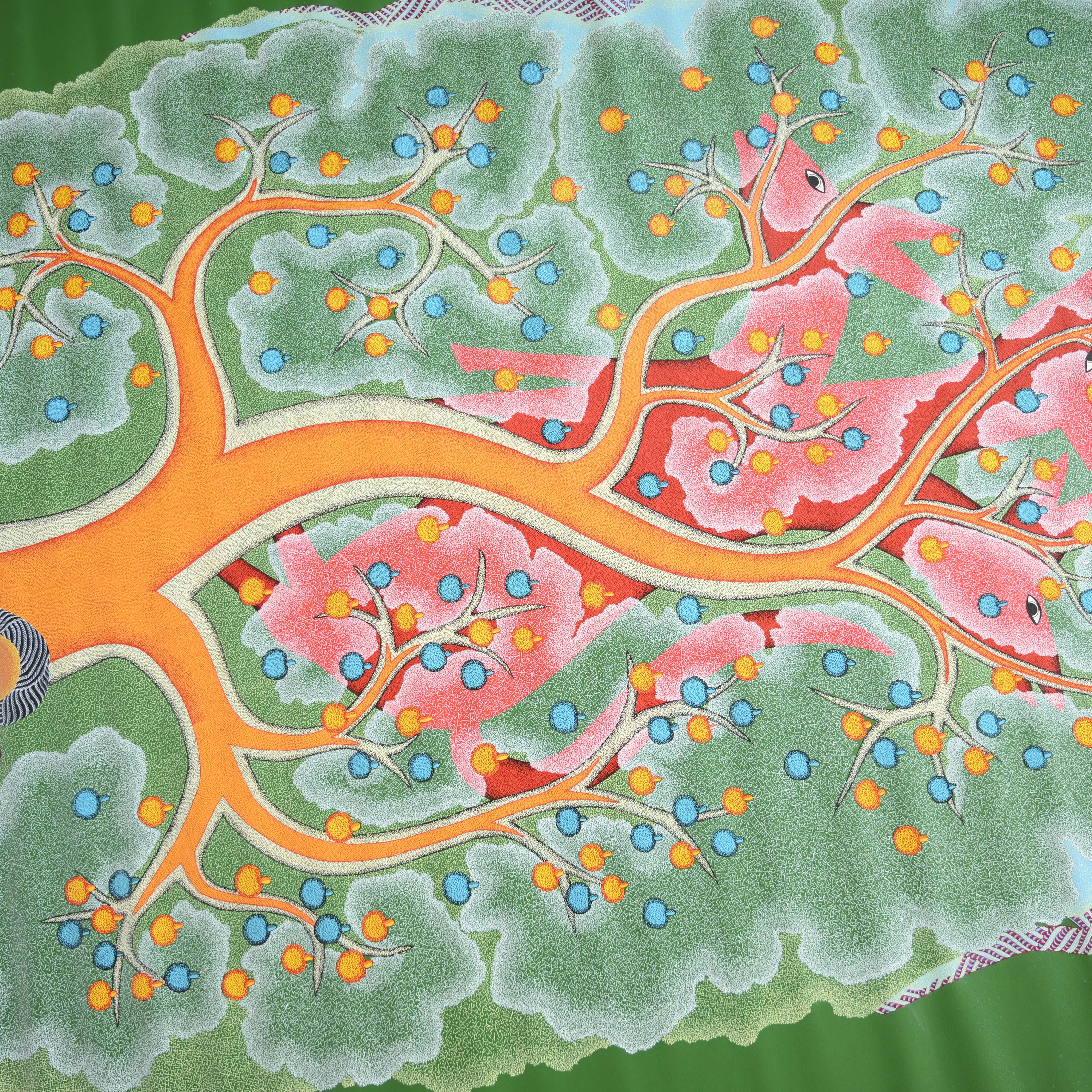
The origin of Gond painting is also associated with the cultural tradition of this tribe. This tribes has a maximum population in the Central Part of India. Gond painting depicts Gods and Goddesses, folk tales and rituals that relate to the religion. The religious, cultural and traditional believes and stories are artistically drawn with dots and small and big lines (as per imagination) and then colours by natural colours are filled into it. Gond painting goes hand in hand with colors and symbols.
Introduction and Brief History of Gond Tribe
Gond is one of the large tribal communities of the Indian subcontinent. The majority of this tribe lives in forest areas including Madhya Pradesh, Chhattisgarh, Maharashtra, Odisha and also Andhra Pradesh. Background: The initial stage of gond tribe of the earth is said to be 1000 years old because they have then told a lot of part of the earth by the name of 'Gondwana Land'.The chronology of Gond tribal is mix with diversity and struggle. At this time, this tribe had a strong social organization based on tribalism, meaning that this first stage was less about the social/ political organization of tribalism in itself, but rather a strong social structure. That system had chiefs, you see, so that each tribe or group would have one chief that decided things for the group. Gond has also been mentioned in Indian archaeological texts as well in historical records.The Gond tribes were the prominent people in medieval India, who had relations with many empires and rulers then. Coupled with this knowledge and skill, this tribe also proved to be the foundation of the Gondwana Empire, which additionally extended its power and jurisdiction for centuries between the 14th to 17th centuries. Portfolio Several Gond states were also important regional players. Similarly, the Gond states even though they Struggled against, also fell with the expansion of the British Empire and with that, the Gond tribe were also at the receiving end of colonial policies and administrative changes as well.The Gond tribal community has always been adjusting with the modern society but this tribe has always tried their best and always remain sticking towards their traditional cultural identity and customs. This is the reason, that the different dialects under language, art of old in this society are as yet alive, they are attempting to save them as legacy of society through a few methods. The Gond tribe is now progressing in the fields of education, health and social welfare. It is striving to preserve the routine lifestyle and cultural heritage of the community.
Habitats of Gond tribe Madhya Pradesh, Maharashtra, Chhattisgarh, Andhra Pradesh, Odisha
Gond is one of the largest tribal groups, which is dispersed in many states of India. They are primarily found in the forest and isolated regions of states like Madhya Pradesh, Maharashtra, Chhattisgarh, Andhra Pradesh, Telangana, Bihar, Odisha and others. Now let's talk a little bit about this:
- Madhya Pradesh: Madhya Pradesh's districts such as Seoni, Shahdol, Umaria, Pushparajgarh, Sidhi, Satna, Sagar, Raisen, etc. In these forests and hilly areas, which is the original habitat of the Gonds where they follow agriculture and hunting and collection of forest products,
- Maharashtra: The Gond tribe inhabitants in some parts of Gadchiroli, Chandrapur Nandurbar, Amravati etc. While the Gonds here are still involved in agricultural and forest-based activities, they continue to live in a purportedly traditional lifestyle without losing their cultural heritage.
- Chhattisgarh: the Gond tribe also lives in various places, mainly in almost all the districts of the Bastar division, including Surguja, etc. Bastar is rich in dense forests and these forests and mountains are part of a traditional life of the Gonds, who do traditional farming, raising forest products and hunting.
- Andhra Pradesh and Telangana: The people of the Gond tribe live in the present-day Andhra Pradesh and Telangana, including Adilabad, Karimnagar, Khammam, Kurnool, Visakhapatnam, Vijayanagaram etc. districts of Andhra Pradesh [6]. Their livelihood here is largely dependent on agriculture and forest produce.
- Odisha: Gond: People of gond living of odisha district show People of the Gond tribe live in the Kandhamal, Navarangpur, Koraput districts of Odisha among others Same again, their livelihood and culture relies on the landform of those regions.
Besides, a section of Gond tribal group exists in certain parts of states like Uttar Pradesh, Bihar, Jharkhand, West Bengal etc. It is a widely accepted fact that the native cultural identity, traditional customs and social structure of the Gond tribe, reside in the geographical features of the place of residence.
Origin of Gond Painting and its Cultural Importance
Gond Paintings are the traditional craft of the Gond tribe in Central India. The art form is rooted in the history and culture of the tribal people. Traditionally practiced mostly by the Gond community in Madhya Pradesh, Chhattisgarh and of late in Maharashtra. The style of Gond painting must have started in birthing and reproducing the attributes of the life of the tribal, their lifestyle, struggle, belief system and nature. This art has been expressed, right from the beginning, with the use of locally or naturally available means.Culturally, Gond painting indicates the community's religion, customs, and social organization. Such paintings are featuring motifs of Nature, Plants, Animals and Mythology which glorifies the spiritual and cultural root of the Gond Community.Gond painting has been getting recognition at national & international level since last few years. This is not only an essential form of tribal culture but also an essential component of Indian culture and art.
Gods, Folklore and Religious Beliefs
Here are some facts regarding the gods, oral traditions and faith on which Gond artists have centred their imagination which find place as the themes of Gond paintings:
Gods:
Gond paintings very often have images of gods and goddesses that are based on the community folk belief or their religion. The major gods and goddesses include:
- Padapen or Badadev – the primary deity of the Gond community. The Gond tribal worship him as the god. He is deep down seen as equivalent to Mahadev.
- Lingopen: The God of arts and a form of Shiva. He is also the father of each and every art like dance, and music
- Thakurdev — The village protector.
In addition, gods such as Hardulala (Patel Baba), Dulhadev, Bhainsasur, Khilamithua, Pathdev, Bhimulpen, Divagongo (Surya), Khanderai, Maradev etc. and goddess such as Kheromai, Gavradai, Chandi, Gangain Mai, Banjarin Mai, Budhi Bhavani, Panghat Dai, Khokhli Dai, Seven Sister Mothers (Chilkan, Chaban, Kodhan, Phodan, Regan, Phoolan and Fulesh) etc. are adored. Gond paintings represent these following the themes of the rituals.
Oral stories:
Gond Paintings-The Path to SilenceAncient oral stories and myths are especially significant in the body of Gond paintings because they belong to the memory of the Gond community, as well as representing cultural identity, religious beliefs, and traditions of the Gonds. Through these paintings, we express their history, their beliefs, cosmetics and their vision of the life. Now, do let us understand a few folk stories and myths in detail:
- Jal Katha:Legend has it that long ago water covered everywhere. And this water was plowed by Bhimuldev, and from this, the earth came out, One more legend says that when Mahadev thought of giving birth to human beings. Then he ordered the crow to go and bring in some soil! So, the crow flew inside the water, looking for some mud. He saw a crab. Crow to crab – Bring some soil from somewhere brother, Mahadev has to make a human! An earthworm was caught in the claws of the crab, and the crab pressed its belly. Shakya-caw transferred the running out soiled credited to it to Mahadev. With that Mahadev created an effigy of a man, breathed life into it, and gave it an axe. He was called Baiga. He walked into the woods and he never came out again. Mahadev created another doll again with it and he breathed life in to it and gave it a plough. And With That Plough, He Began To Farm He was called Gond. Belonging to the problem of the river of the earth and its creatures denying new prosperity, this story is one of the great traditional story of the Gond community.
- Dhanushkatha:Dhanushkatha is a mythological or historical fictional tale that represents strength, heroism and battle. The protagonist is behind of warrior stuff, but this story is some kind of heroic, because he is some sort of unique bow-holder but with unique arrow. This story stands for the stories of those-many heroes who fought with their valour and patience and safeguarded the society. Along with this narration, pictures are inscribed of arrow-bow and those warriors in Gond paintings, which give an idea about the culture and social structure of that time. This narrative exemplifies the internal strength and vibrancy of the Gond community in resisting oppression.
- Vriksha Katha:One of the most important stories that adorned the walls of the Gonds was Vriksha Katha because the Gonds have a special relationship with the plants. Nature worship trends in the Gond tribes family In their religious and cultural life, trees have an important role. Here, trees seen as life, which give oxygen to the people as well as offer the spiritual and material abundance of the society. Gond is illustrated with different colors and shapes using the plants of trees like leaves of trees, flowers of trees, fruits of trees and roots of trees etc. Through these paintings, the focus on the need of trees, and spreading the message of tree worship, conservation, protection, etc.
Cultural significance of Gond paintings:
While the artistic expression of Gond painting is important, Gond paintings help preserve the identity of the Gond tribe and pass it on to generations to come. Gond society expresses its ideas, customs and ethics of life through traditional stories and myths. The colours and patterns that the Gond society depicts in the paintings also confirms their close association with the surroundings.So, from this one can imagine that the stories and the myths are for the predominant artists that working on Gond paintings are not just considered as to be an art form, but they are a part of the identity of the Gand community that way keeping the culture and tradition as well as the beliefs of these people alive.
Religious beliefs:
Gond paintings are deeply rooted in the religious beliefs and traditions of the community. These religions primarily centre around nature worship, ancestor and supernatural man worship:
- Worship of Nature: Gond paintings showcase the worship and rituals of the various natural elements trees, animals, birds, mountains etc., forms a part of life
- Worship of from Ancestors: Gond Society worships from ancestors and shows in the paintings.
- Similarly, artwork on spirituality – Gond paintings also showcase spiritual themes, illustrating images, stories and ideals of different gods and goddesses.
The use of colours and shapes is fundamental in Gond paintings. This art keeps the religious and cultural identity and traditional stories of the Gond community.
Depiction of Religious Rituals in Gond Paintings
Gond is a vibrant Indian art form, which has been practised traditionally, mainly by the Pardhan community of the Gond tribal group of Madhya Pradesh, amongst the largest tribes in India. Another community is art passionate and active in a number of classical arts like dance and music. Traditional Gond paintings are also a mirror of their religious rituals. Gond paintings are known for their representation of religious rituals based on the following points:
- Religious symbolism: Gond paintings symbolize certain symbols and designs used to showcase rituals related to the religion. It has motifs of gods and goddesses, nature worship and classical customs. Plates generally have images of gods, puja samagri- i.e. flowers, diya, et cetera.
- Style and color: Gond paintings are always recognized by its colors and traditional style. Colors — for example, dark crimson, yellow and green are used in religious rituals and have their own religious significance.
- Nature and myth: Gond inextricably linked to the nature and myth. In the representation of rituals of faith, artists record those aspects of nature—the earth-sky, the sun-moon, the trees-mountains, the animals-birds, the rivers etc.—that are linked with religion(S), beliefs and myths. For instance – many Gond paintings show the worship of river or mountain gods.
- Rituals and ceremonies: The ways of worship of that community and their special puja can be seen in strict accordance with the Gond painting. It shows the idol of worship, the style of worship, and the way of worship. These are representations of some religious events as part of the local life and their celebrations.
- Culture and tradition: Gond paintings primarily depict religious rituals, and therefore connect the viewers to the traditions and culture of the Gon Tribe. This art type trades social interaction and spiritual customs and national or local traditions.
- Traditional Realism: Perception of Religion Most of the times, Gond painting hardly reflects the faithful state of mind of the one who practices of that religion. Such representation is a reflection of the belief system of the Gond people and the way they perceive spirituality.
Therefore, the way in which ritualistic traditions have been portrayed in Gond paintings, have cultural and religious significance, which provides an overview of the tribal life and their religion.
Characteristics and Techniques of Gond Painting
Gond paintings are rich in colour, lyricism and nature. The technique is characterised by using natural colours and leaf extracts of the tree, detailed descriptions and traditional symbols. Explaining tribal way of life and deals mostly with symbolical and religious ceremonies.
Style and Design
What sets Gond paintings apart from other kinds of art is their unique style and design. Such is the colourfulness of Gond painting, that is created by the Gond tribe of Madhya Pradesh, with not only the imagination of Gond tribe but a little of their unique philosophy of life as well.
Style: Gond paintings mostly remain in an abstract poetic genre. Here, figures and objects are not depicted realistically but are abstracted and given imaginative colours and perspectives. Nature, birds, animals, human figures are often seen in their own unique way.
Design Elements: Gond paintings have many distinctive designs. Some of the key elements are:
- Organic design: The paintings organically employ finer details & textured patterns. Shapes and colors are used among artificial intelligence structures to pattern lines and dots into complex, engaging and colorful formations of animals, humanoids and plants.
- Use of colors: In Gond art, the colors are given the most importance. Natural colors for painting are the colors produced in nature from natural sources like leaves, flowers, and minerals. The color values are exceptionally bright and light yet deep, bringing a liveliness and emotional weight to the painting.
- Symbols and symbolism: Color treatment: In Gond art, the colors are given the most importance. Natural colors for painting are the colors produced in nature from natural sources like leaves, flowers, and minerals. The color values are exceptionally bright and light yet deep, bringing a liveliness and emotional weight to the painting.
- Carvings: The Paintings are sometimes Craved in Black and White which enhances the depth of the design and gives an eye-catching abstract sense of visual imagery.
Hence, the style and the designing part of Gond painting gives a cultural identity and individuality to the respective art form making it unique on the world art map.
Colours and Materials Used
Gond painting is an art form created by the Pardhan community of the Gond tribe of Madhya Pradesh. This is the most colourful, unique painting ever. In this art style colour and material choice are of considerable importance since the paintings come from a lively cultural tradition.
Colours:
Gond paintings is a traditional by nature and therefore the colours are used very judiciously. Traditional Gond paintings use the following colours:
- Red: This colour represents passion, power and confidence. Red is associated with religious rituals, special occasions and representations of deities.
- Blue: Blue represents peace, sky and water. Color is common in paintings when showing rivers, sky and other elements of nature.
- Green Colour: Green Colour is indicative of nature, greenery and vitality. This is particularly used in illustrations of plant life & wildlife.
- Yellow: The colour yellow is a symbol of wisdom and enthusiasm. Used for brightness and light in deities and religious symbols
- White and Black: Peaceful white color represents purity and white, whereas black represents depth and mystery. Black is mainly used for the outline and design in the painting.
Materials:
When given all the shades and colours of the Umrav, the Gond, an ancient tribe of Gonnor, settles for conventional colours that are natural. The main materials include:
- Natural Colors: Colors are made from natural materials… plants, soil, stones and minerals are used to prepare the colors used in Gond paintings. For example, black is made from charcoal, red from hematite (a kind of red clay), and yellow from turmeric.
- Painting surface: Gond paintings are generally created on walls, paper and cloth. Wall paintings are mostly used as interior decoration of the house particularly in the rural area.
- Brushes and tools: Gond paintings do not use brushes as fingers and natural brush strokes are used instead. There are also artists who paint with stones in the help of them.
- Natural gums: Natural gums or resins are used in the painting to keep the colours stable and ensures that the colours sticks properly to the surface.
- Canvas: Though the paintings in the folklore era were made on walls & clay, more recently canvas is being used by modern Gond artists to preserve & showcase the paintings.
This peculiarity of colours and use of materials endows the Gond paintings with their distinctive ethnic character. Each colour and material used has a specific significance to the cultural beliefs and lifestyle of the Gond tribe, because more than a visual experience, this art form is an actual cultural document.
Basic Techniques: Simple Techniques and Pattern Making Methods
The unique exhibited nature and features of Gond painting is a significant part of the basic techniques and pattern making ways in this art. These methods are relatively easier and proven, based on ancient knowledge and experience. Below is an elaborate account & the techniques and pattern making ways of Gond Painting:
Basic Techniques:
- Background Preparation: Background Making As you can see in the initial stage of the painting, the artists make the background. Gond paintings are usually from the wall, cloth or paper. The background is cleared for flatness and smoothness and sometimes natural colours are done on it.
- Drawing: To begin with painting, we need to draw. But here, artist uses light colours and natural colours. Drawing is a variety of shapes, forms and designs. This is making the line or form or the basic pattern.
- Coloring: Once the images are drawn, the next step is to color the picture Natural, organic colours are used in Gond paintings, red, blue, green, yellow and black. When artists add colours, they apply their colours carefully. No area is spared for colour.
- Patterns and designs: once they have a shaded drawing, artists apply patterns and designs. These patterns may be detailed or simple and employ geometric shapes, dots, and undulating lines. The design from my experience is as complicated as the story and culture of the painting.
- Finishing touches: The final step of any artistic painting is the addition of final touches. Such as color correction, design clarification, and sometimes adding an extra detail. The end touches make the painting look better and more final and clearer.
Ways to Create Patterns
- Geometric Shapes: Use of very basic geometrical shapes like triangles, round and squares are very frequent in Gond paintings. These things are often used in representations of natural figures and gods. Gives the art an equilibrium and a beauty with those patterns.
- Dots and Lines: Patterns are comprised of dots and lines Dots are used in all designs, especially the colourful ones, while Lines provide the painting with structure and direction.
- Traditional Designs: Conventional designs involve images of Gods, creatures, blossoms and other religious images. These designs represent the cultural and religious beliefs of Gond Tribe.
- Natural Elements: The painting consists of natural elements including trees and animals and sound patterns of the water. Gond paintings embody these elements and convey their attachment of life to nature.
- Repetition of Forms and Lines: Gond paintings have repeated forms and lines. It sets the design in a mutuality and flow, resulting in Making the painting lush and engaging.
Such simple techniques and strategies of pattern making preserve its religious and cultural identity of Gond Painting. This art form is an important means of preserving the cultural heritage of the Gond tribal group.
Contemporary Relevance of Gond Painting
Gond painting raises tribal culture and traditional beliefs in the auditorium of modern art. Recognized at the worldwide art stage for its innovative style and colors, it revives the dead culture and people art.
Importance of Gond Painting in Modern Society
In the context of the modern world, Gond Painting is the traditional art of constantly living along the Kolam form of the Gond tribal group of Madhya Pradesh. More than just a priceless historical and cultural heritage, this art form is finding new life in contemporary art, social responsibility, and economic benefit.
Cultural Identity and Heritage
Gond painting is a significant component of their traditional culture and lifestyle. tribal life Tribal art portrays tribal life, beliefs, and traditions. And, in the contemporary world, Gond Painting has also played its part in preserving and promoting this cultural heritage. There are multiple art museums and cultural institutions who have been showcasing this art form ultimately enhancing the national identity and global recognition of tribal arts. Not only does it preserve the cultural identity of the Gond community, but it also helps introduce other people to their culture.
Contribution to Art and Design
Today Gond Painting style and technique has garnered a lot of inspiration from modern art and design. The bright colors, ethnic patterns, and lyrical designs of the traditional wear has served as an inspiration for a-house-hold name for contemporary artist and designer. Various art projects including fashion design and interiors are borrowing elements of Gond Painting. Mirdanganrti not presents traditional designs in new light, but also is exploring new domains of art and design.
Social and Economic Impact
Gond Painting has also played an important role in the economic development of the Gond community. The economic condition of some artists are growing due to fair price and royalty gains based on sales. The increasing fame of Gond painting has gained the local art market and revived several of the businesses associated with it. This promotion has created job opportunities in villages and has helped the economic status of the community.
Education and Awareness
A lot of work is being done to disseminate education and awareness of Gond painting. People are being educated on the technique as well as the significance of Gond painting through art-workshops, cultural programs and awareness campaigns. This augments respect and insight into the art and makes the society familiar with the depth and multitude of tribal culture.
Global Recognition
Gond painting has also gained recognition globally in the contemporary art world. Promotion of Gon paintings in international art exhibition, world museums, & art-fairs have opened the world platform for Gon paintings. Not just Gond painting has got this recognition, but through this, the diversity and richness of Indian folk art have also been recognized.
Ways to promote Gond art
Gond art is an ancient form of Indian tribal art. And there are several viable means of its promotion. In this way they are preserving and promoting Gond paintings and getting recognition worldwide. Here are a few of the key ways:
1. Social and cultural events
- Art festivals and exhibitions.
2. Public awareness campaign
- Media including social media, other communication channels, and public awareness about the importance and cultural significance of Gond art.
3. Commercial initiatives:
- Market places Special art markets or boutiques for Gond paintings should be developed so that art lovers and collectors can buy Gond artifacts. This will stabilize the art form financially. Gond Art has a huge potential to integrate Gond painting designs into various commercial products (fashion, home decor Sanitary etc Nd stationery) thus widening the exposure of Gond art to and also the reach to a wide audience.
4. Cultural Preservation
- Documentation and Archiving
- Gond Paintings Document the technique and style of Gond Paintings in museum and archives It will keep the history and the process of evolution of Gond paintings.
- Keeping the Old Way of Making it
- Preserve traditional colors and methods Use natural colours and materials so as to ensure that the characteristic of traditional art is maintained.
5. Economic and Community Support
- Art Training and Employment
- Train artists for Gond painting and ensure their employment Not only will this give a financial benefit to local artists, but it will also save the art
- Support From Government And Non-Government
- Encourage availability of government grants and funds by NGOs to promote Gond art. financial assistance and resources can help to advance the progress of art.
6. Presentation on the Global Platform
- Participation in International Art Fairs
- Take Gond paintings to international art fairs and exhibitions. This will expand global recognition of art and broaden engagement with worldwide audiences.
- Cultural Diversification: Establishing a link between Gond Paintings and other global statuses of art and culture while allowing it to find a status within the different cultural situations.
7. Digital Platforms and E-commerce:
- Online galleries and sales: Displaying and selling Gond Paintings on online galleries and e-commerce websites. This should support the art being displayed reaching international audiences and gaining a larger acclaim worldwide. Promotion - Social Media on social media it is content and or information the depiction style and technique of Gond Painting stories of artist, work process and gallery showing. All these steps promoting Gond art will not just save the cultural heritage but will help the art form find its identity on the world platform.
Need for Conservation
Gond painting has a unique style of depiction, tradition, and symbolism rooted in the culture of Indian tribal art. The cultural identity and social history of the Gond tribe is expressed in this art. But there are plenty of reasons as to why we should take care of the preserve from this incredible Source of Art.
1. Preservation of cultural heritage
Gond paintings reflect the traditions, beliefs and lifestyle of the Gond tribe. This art portrays the tribal community story, myth and religious belief. We can not only save this art form and this piece of cultural heritage by preserving it.
2. Protection of traditional techniques
Gond painting uses ancient methods and is carried out using natural colours, clay and natural brushes. By conserving these arts and crafts, it not only helps save the tribesman form of art but also teaches the generations to come about these traditional art forms.
3. Global recognition and respect
Gond painting slowly emerged on a global scale as more and more people began to acknowledge its merit. By preserving it, we are able to preserve this art and be able to respect it throughout the world. This will both ideally inspire artists and devalue the art in the first place.
4. Economic incentives
Projects involving Gond paintings conservation also deliver wealth to communities. This, in turn, will help the Gond artists to get the due recognition and remuneration for their artwork, thus leading to the betterment of their living and economic conditions.
5. Educational and Cultural Initiatives
Educational programs, workshops and exhibitions can help in educating people and promoting art thereby helping in conserving Gond paintings. This brings cultural awareness to younger generations and improves the experience of art.
6. Environmental and Cultural Heritage
It also implies harmony with nature as Vedic art uses natural colours and traditional techniques. This means that in preserving Gond paintings, we preserve environmental– as well as cultural– heritage.
- Conservation Measures: Educational Initiatives Art Education Through Workshops, Educational Programs, and Specialized Art Schools
- Digital Preservation: Preserving art on digital media and displaying it on the web through various online art galleries.
- Financial Aid: Financial subsidies and government assistance in relation to local artists and locally based art projects.
- Exhibitions and Art Shows: Arranging exhibitions of Gond paintings and adopting different modes of art promotion.
The heritage of the art that had begun in prehistoric times can be kept up and can be kept alive with the practice of conserving Gond paintings.
Prominent Gond Artists and Conclusion
One of the famous Gond artists Late Jangarh Singh Shyam has been renowned. He is known for being the renaissance of Gond Painting. Everyone knows Jaggarh ji for his unique dot & line style. Notable mentions include Ms. Durga Bai Vyam and Mrs. Nankushia Bord Shyam, wife of Late Jangarh Singh Shyam. They are “living” myths and folk tales in the form of paintings. Among the young artists, Shri Bhajju Singh Shyam is one of the internationally known artists through Gond Painting. For his exceptional performance in this art, he was awarded the Padma Shri by the Government of India. Other than him, Shri Anand Singh Shyam Shri Gariba Singh Tekam and Venkat Singh Shyam are also known for their colourful lively look and individualistic fashion. Tell us about them in the comments.
Their Contribution and Style - Late Jangarh Singh Shyam, Durga Bai Vyam, Bhajju Singh Shyam, Gariba Singh Tekam
Late Jagad Singh Shyam
- Contribution: In Gond painting (not art), renaissance of Gond painting Late Jangarh Singh Shyam is father. He has recognized Gond painting in India as well as at the international level. Graphic artist and One of the famous painter J. Swaminathan brought him from village Patan in tribal dominated district Dindori to Bharat Bhavan in Bhopal. He made a more modern definition of his ancient artwork then painted it on canvas. It was his contribution that gained Gond painting its due space in the world of arts.
- Style: In the second image, Jangarh style has had a notable use of dots and lines. His paintings usually consist of elaborate and complex patterns that tell stories of nature and tribal life. Animals, trees and tribal myths are inherent to Gond culture, and such elements also dominate his work.
Shri Durgabai Vya
- Contribution: One of the well-known female names in the painting of Gond is Ms. Durga Bai Vya. Her art narrates the implication of Gaud women struggles and suffering. Her paintings depict the roles of women and their legacy. Through the medium of her art, she has lent a voice to the women of the Gond community, and managed to raise their social standing.
- Style: Durga Bai Vya, who incorporates a lot of colour into her style Lahariya replicates traditional Gond myths and stories through her paintings in a contemporary style. Her art uses animals, gods, and natural features that relate to the religion and culture of the Gond community.
Shri Bhajju Singh Shyam
- Contribution: Artist Shri Bhajju Singh Shyam is a student of Late Jangarh Singh Shyam. He followed his guru's path and awarded a global recognition to Gond painting. He has received multiple international awards and hosnors for his art. Among them, His book The London Jungle Book has caught the attention of the globe. His unique ability has earned him many awards including the Padma Shri for making Gond traditional painting internationally recognizable.
- Style: Deep effects of minute details and intricacies are the style of Shri Bhajju Singh. Using the traditional Gond patterns, he speaks of modern themes. Unique color compositions and some quirky symbols that he uses in his paintings, represent his creativity and background in culture.
Shri Gariba Singh Tekam
- Contribution Shri Gariba Singh Tekam is one of the foremost masters of Gond art. Through his work, he has preserved the rituals and spiritual beliefs of the Gond tribe. His artwork has shown a different side of the life of the Gond community to the world, and in turn, made him a national and international identity.
- Style: The style of Shri Gariba Singh Tekam is a mix of classical Gond painting and contemporary form. His paintings are colorful and full of detailed patterns, which show Gond mythology and stories. This in turn also reflects in their art, and that is what makes it really unique, as the relationship between nature and human life is depicted so beautifully.
In addition to this there are also several other artists who have not only inherited the traditional art legacy of Gond painting, but have also enriched this art form with their inherent flair and given this art its distinctive identity. Yes, Gond painting has made a name for this art on the world stage with the culture of this community.
Differences between Old and New Gond Painters
The painter and his style: These are a few of the fundamental differences the old and new painters and their styles — their technique and their subject matter — have created in the arena of Gond painting.
Old Gond Painters
Gond art was traditionally painted by ancient Gond painters on walls and floor with natural colours and materials. The themes of their paintings mostly revolved around religious and cultural references along with tribal traditions and natural references. Paintings were then usually performed during religious ceremonies and festivals, where each painting had some cultural meaning. Gond artists of the past viewed their art as a conduit for narrating tales from their culture and community.
New Gond Painters
These traditional idioms have in fact been assimilated with new mediums and techniques by the new Gond painters. These days paintings are painted on canvas, paper, and other contemporary mediums. Contemporary Gond artists, like the late. Some artists like Jangarh Singh Shyam, Shri Bhajju Singh Shyam, Ms. Durga Bai Vyam, Shri Gariba Singh Tekam etc. have given a new direction to their art with new and original experiments in traditional art and attracted global attention. Portraying both real and/or modern life and social problems in their paintings. Colors have also been more intense and detailed and more detail is focused on.
Differences in technique and style
Old Gond painting was essentially a technique of dots and lines, based on geometric patterns and folk symbols. The new painters follow such techniques but creates their own new innovations, which includes the use of mixture colours, complex designs and modern painting styles.
Contemporary significance
The new generation of Gond painters have redefined Gond art, both in the context of India and the world, providing Gond painting with a new name and a new honour. They have made significant contribution in the journey of economic and social development of the Gond community.Hence one can clearly observe the difference in the style, technique and the subject matter among the Gond painters difference (evolution of Gond painting).
Conclusion
Gond painting is a style of traditional Indian art that is practiced by the Gond tribe that resides in Madhya Pradesh, Chhattisgarh, Maharashtra and Odisha. The essence of the art is the vibrancy and craftsmanship reflected through the traditional motifs. It is part of the cultural identity of the Gond community. The first thing about Gond painting that captures your attention is its style based on dots, lines and geometrical shapes. The art utilises natural colours, those which can be obtained from elements of nature, like flowers, leaves, clay, and many more, which gives the paintings their unique natural shine and beauty.Gond artwork illustrates various things from nature including animals, trees, and scenery along with cultural and religious motifs. The paintings sometimes portray traditional oral stories and myths of the Gond tribe, which represent different facets of their life. The Gond are preserving their tradition, religion and social structure through these art symbols.Gond painting must be preserved as it is a cultural heritage of the Gond tribe and it contains a very diverse form of art. Various steps, such as education, workshops, and art exhibitions, have been taken for its preservation, and they have come in handy to showcase this art at a global level. Moreover, digitization and international acceptance facilitated the spread of this art in the category of Gond painting.With more funding, educational programs and conservation initiatives, Gond art can continue to flourish for future generations to come. This is why it is necessary to support local artists and ensure their art gets appreciated, to carry on the tradition and passion for art. Therefore, Gond painting is not only an art but also a cultural identity of the Gond tribe and heritages over the centuries which we have to preserve and promote.