

MUD CRAFT
This advance course on Mud Craft provides a comprehensive exploration of the art form. It starts with an introduction to mud craft, its history, and cultural significance. Participants will learn about the characteristics, techniques, and types of clay used. The course also covers modern influences and conservation efforts. Each module includes practical insights and interactive Q&A sessions, ending with a conclusion and evaluation of assignments.
 Most Viewed

What you'll learn
- History of Mud Craft : Origins and significance of mud craft in ancient civilizations, including insights into the Baarela Tribe.
- Cultural and Economic Impact : The role of mud craft in various cultures and its economic and social importance.
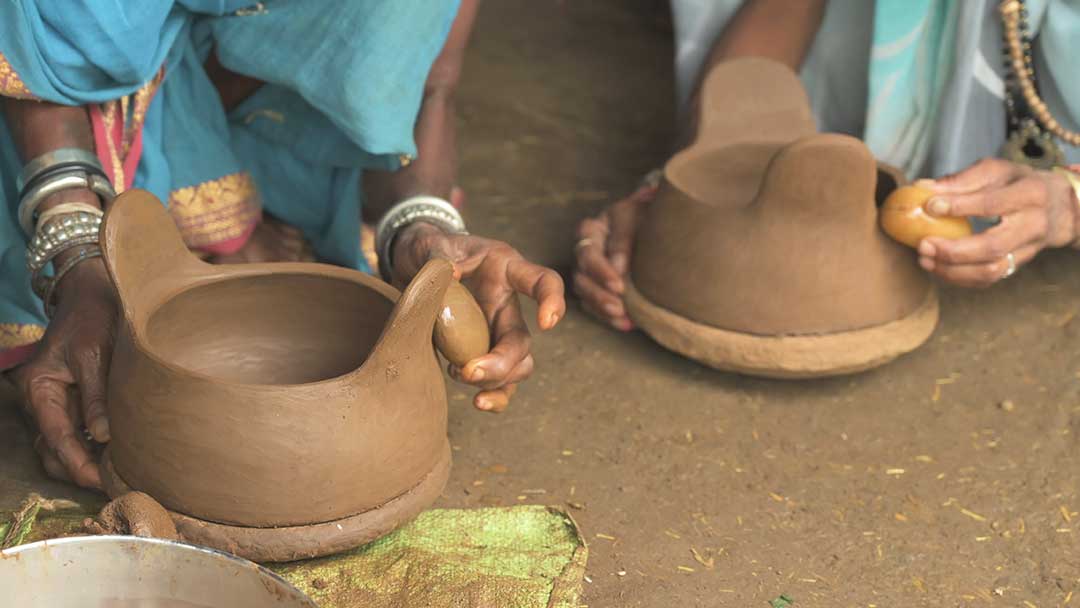
- Craft Techniques : Methods for preparing clay, sculpting, and designing, including hand-building and using a chalk wheel.
- Types of Clay : Different kinds of mud and clay, their uses, and regional variations in mud craft.
- Modern Influences : Contemporary designs and techniques in mud craft and their adaptation to modern contexts.
- Conservation Strategies : Approaches to preserving traditional mud craft techniques and materials.
- Practical Application : Hands-on assignments and evaluations to apply and reinforce learned concepts.
Couse Features:
- Comprehensive Modules : Six detailed modules covering history, techniques, types of clay, modern influences, and conservation.
- Interactive Content : Engaging sections with bytes and Q&A sessions to reinforce understanding.
- Hands-On Learning : Practical assignments to apply techniques and concepts.
- Expert Insights : In-depth exploration of traditional and contemporary mud craft practices.
- Cultural Context : Examination of mud craft’s significance in different cultures and its historical background.
- Modern Relevance : Insight into current trends and conservation efforts in the field of mud craft.
- Flexible Structure : A advance course designed to fit into various schedules with clear, concise modules.
Who Should Enroll
- Individuals interested in traditional art forms and cultural crafts.
- Those studying ancient civilizations and their artistic practices.
- Practitioners looking to expand their skills in mud and clay crafting.
- Learners focused on cultural and social aspects of communities.
- Professionals seeking inspiration from traditional and modern craft techniques
- People interested in preserving traditional craft methods and materials.
- Anyone curious about the historical and cultural significance of mud craft.
Description
Introduction and History
Clay craft, also referred to as "Mud Shilp" in Hindi, is a traditional and old art of India. It is a craft where the craftsperson creates different objects, sculptures, and decorative items with the help of clay. This craft is quite in demand in the tribal and rural regions of India and has been handed down through generations. The history of the craft is a significant aspect of India's cultural heritage and has been changing since the start of civilisation. Mud craft is a process in which the clay is prepared, shaped, and dried or fired. It is a tedious and patient process that needs skill and experience. Kneading the clay is the first step before making the finished product; it is never to be overlooked. Clay is first washed to rid it of impurities. It is then mixed with water to prepare the workable mixture that the craftsman would shape into various forms using the dexterity of his fingers and hands. Mud craft varies from one type to another, including terracotta, black pottery, among other local types. The most popular and well-known type is terracotta, which is typically produced from red soil and dried in the sun and subsequently fired in a kiln. Conversely, black pottery is a distinctive form where clay is cooked with specific methods such that it turns black. Black pottery is particularly renowned in the regions of Uttar Pradesh and Manipur. Moreover, there is also a variety in regional styles of mud craft across various regions of India. Mud mirror work and mud painting on clay walls are undertaken in Gujarat and Rajasthan, whereas traditional Bengal pottery is especially notable in West Bengal. Such styles are examples of regional folklore, religion, and ways of living. Not only is mud craft an art form, but it is also a vehicle of social and cultural expression. Clay festivals and rituals are commonly known in many rural areas, wherein clay idols are created and worshipped.
What is Mud Craft?
Mud craft is an ancient handicraft where clay is used to produce a variety of pots, figurines, and other decorations. Mud craft has been practised from ancient times and has been discovered in various cultures. Artists make desired products like pottery, wall designs, and statues through mud craft by modelling clay. The mud crafting process incorporates the selection and preparation of clay. The clay is kneaded extensively and prepared for moulding. The completed clay items are air-dried and then fired so that they become strong and durable. They are then embellished with colour, paints, or other ornamental items. This craft is not just helpful in creating objects and decorative pieces, but it also serves cultural and religious purposes. Mud craft products are generally utilised in festival times, worship, and cultural rituals. Earthen diyas, for instance, are lit during Indian Diwali, which is the best example of mud craft. The importance of mud craft is not just in its output but also in the collectivity, the traditional wisdom, and the local cultural heritage it employs. This craftsmanship also has significant contributions towards the rural economy because most rural economies gain their living from it. Despite urbanisation and technological development, mud craft continues to maintain its identity and is becoming more and more diversified over time. Thus, mud craft is more than art, but also culture, traditions and histories that are transmitted from one generation to another.
Early History: Importance of Mud Craft in Ancient Civilisations
Mud craft can be regarded as an ancient art, having formed early in the evolution of human civilisation. As soon as humans recognised the properties of clay, they incorporated it into their lives to fulfil different purposes. In ancient civilisations, mud craft and daily life were not just a physical need, but they also had an important role in lifestyle, social, cultural, religious, and economic needs.
- Mesopotamian Civilisation:Mud craft was highly prevalent in the Mesopotamian civilisation (3500-500 BC). Here, individuals used to construct buildings by creating bricks from clay. Except for this, pottery, statues and other ornaments were also prepared. Ziggurats, being the Mesopotamian religious structures, were constructed using mud bricks, and this is proof of the advanced technology of mud craft.
- Egyptian Civilisation:Mud craft was employed by ancient Egypt for both simple construction and religious ceremonies. Egyptians employed clay pots to carry grains, oil, and other materials. Mud craft is also observed in Egyptian tombs and pyramids, where the mud bricks were applied in the construction of buildings. Clay coffins and figurines are also a common sight in Egyptian artefacts, and were of religious and cultural importance.
- Indus Valley civilisations:Mud craft was a huge part of the Indus Valley Civilisation (2500-1900 BC), where pottery, toys, and other domestic items were produced in Harappa and Mohenjo-Daro cities in huge amounts. Roads, houses, and drainage pipes were built of clay bricks during this civilisation, showing the advancements of the technology behind mud craft.
- Chinese Civilisation:Mud craft was also very significant in ancient China. Here, the artisans would make pots, sculptures, etc., from clay. The best-known example is the Terracotta Army, which includes thousands of sculptures of soldiers made from clay. It represents the uniqueness and diversity of Chinese mud craft.
In ancient cultures, mud craft was important not only in being part of daily life, but was also part of their art, culture, and religions. Mud craft not only provided building materials, but it also built their culture.
Information about the Baarela tribe
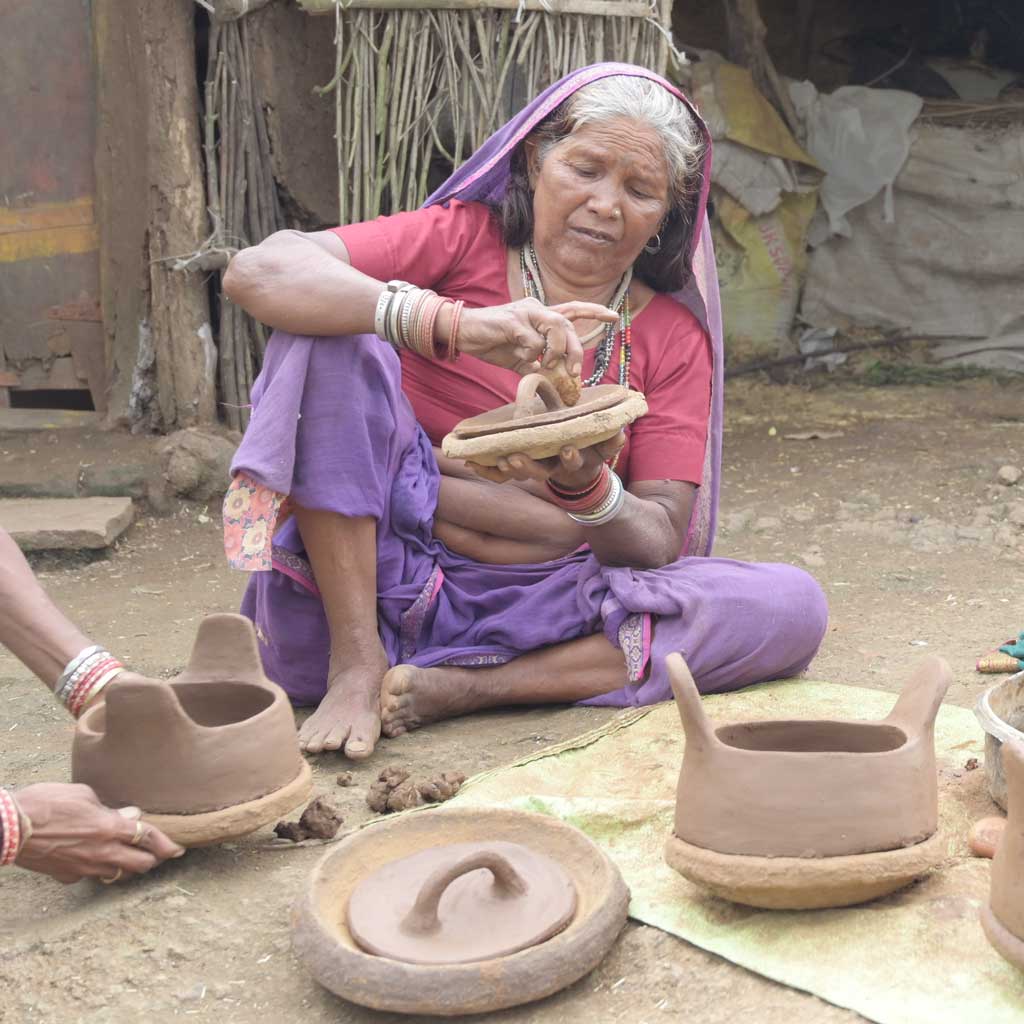
The Baarela tribe lives mainly in Madhya Pradesh and Rajasthan, and mud craft is considered to be one of their traditions. From clay, people of the Baarela tribe make items of daily use - utensils, toys, and religious idols. The mud craft art in the Baarela tribe has traditional designs and symbolisms that represent their cultural and spiritual beliefs. Mud craft, art, and craft were also a way to earn money in their livelihood. Mud craft signifies cultural heritage and identity among the Baarela tribe. "Bareli" is the language of the Baarela tribe, which is derived from the Bhilali and Nimari languages. They also communicate in Hindi and Gujarati. They highly value nature and ancestor worship and strongly observe traditional festivals and rituals. In addition to the worship of other gods and goddesses, Narmada Devi, Kalka Mata, and Bholenath are considered important devotional religious traditions for the Baarela tribe.
Tribes and communities associated with mud craft
Mud craft is related to a huge number of tribal and rural communities that inhabit different sites in India. Generally, these communities have been practising the technique for a long time and have preserved the art of mud craft through generations. The following are some major tribes and communities:
- Potter community:The potters' community is present in almost all parts of India, with this community specialising in more than just the making of pottery, clay sculptures, and various decorative items. The artisanship of the potters' community links the patches of ancient civilisation.
- Saharia tribe:The Saharia tribe residing in parts of Rajasthan and Madhya Pradesh also had potential in mud craft. They produced utensils and sculptures from clay and were used in rituals and cultural ceremonies.
- Bhil tribe:The Bhil tribe, which is primarily spread across Madhya Pradesh, Rajasthan and Gujarat, has a specific contribution to mud craft. The Bhil tribe make clay toys, sculptures, and household articles.
- Gond tribe:The Gond tribe is situated in central India and uses clay for their religious and cultural objects. The art of mud craft by the Gond tribe is heavily represented in the making of idols of gods and goddesses.
- Potters of Jharsuguda:People using mud craft could also be attributed to the potters of Jharsuguda district of Odisha. The people of Jharsuguda make decorative, sculptural and pottery items that are connected to their life and culture.
The traditions and people of these connections with mud craft are not just an art form but an extension of their own lifestyle and cultural heritage. The mud textiles created and developed by these tribal and community people not only facilitate the conservation of their social context, cultural identity, but are also one of the foundations that they depend on as a source of livelihood.
Features and Importance
The features behind the craft of mud come from its variations and locality. Other than variety in pots and pots with figurines, wall décor, and handmade items, mud craft can involve using clay textures and natural colours. Each territory has its own different style, taking cues from local resources and cultural practices, like rustic designs. Examples of styles like terracotta or black pottery show unique creations and uses of variations of clay. A crucial aspect of this art is utilising traditional designs and motifs that refer to time-honoured techniques and ideas passed down from generations. These same designs also hold religious and social symbols, which connect mud craft to its use in religious ceremonies and social practice. Mud-crafted items are common in rural spaces, particularly during festivals and rituals. In addition, mud craft is an essential livelihood for some craftsmen and some rural people. These crafts can also represent elite positions compared to other craft forms; they sustain cultural heritage and can stimulate the rural economy by providing artisans with recognition and jobs.
Features and Variations of Mud Craft
Features
- Use of local materials:The mud craft process utilises local clay, which comes in different colours and textures. The colours and strength of the product will depend on the clay type and the way it is mined.
- Hand craft:The artisanal manufacturing of mud craft is a fully handmade craft, where the displayed object reveals the artisan's imprint and how he/she follows age-old techniques in the final object. The process is hands-on, involving thrilling processes and combos of kneading, shaping, and decorating!
- Diversity of designs/styling:Mud craft has a whole diversity of designs and styles, and is an entity of the local culture and tradition. Including pottery, figurines, wall sculpture and other decorative pieces.
- Natural colours/paints:Clay products are usually decorated in natural colours (some examples: earth colours, natural paints, other organic colourants). The natural colours are developed out of natural features, thus they have a low carbon footprint.
Variety
- Geographical diversity:Mud craft varies by geography, and each geographic place is distinct and unique in its designs. The examples are earthenware and wall decorations in North India, and clay figurines and pots are important aspects of South India's mud craft.
- Cultural diversity:Each tribe, indigenous or not, engages in mud craft in its unique way, with potential ties to local culture. The Baarela tribes are reflective of their culture in their mud craft, and other tribes will demonstrate their locality or cultural atmosphere in their designs based on local festivities or focused on cultural beliefs, customs, and religion.
- Use and usefulness:Mud craft is not just a decorative craft- it can be used in utensils, reservoirs, puja material, and everyday items. Some products are for food-based purposes only.
- Modernity and innovation:There are elements of innovation and modernity within mud craft that can be found in new design aspects. Traditional methods are combined with new techniques and styles; examples include jewellery, garden décor, and using mud craft as contemporary art.
The characteristics of mud craft are the regional materials, handmade nature, and cultural variety. Mud craft is an art form that holds and respects traditional methods and designs, and also incorporates modern modes of imagination and innovation; it is still a relevant craft and provides a range of diversity.
Cultural Significance: Place of Mud Craft in Different Cultures
Mud craft is an important aspect of the varied cultural heritage of India. The forms of mud craft have taken different shapes in different parts of India, such as, for instance, the Bankura Horse of West Bengal, the Matli craft of Gujarat, and the Tajiya craft of Rajasthan. There are unique forms and cultural significance with respect to clay work in different regions and castes. Here are the cultural significance facets, concerning mud craft in Indian cultures:
- Central India
- Madhya Pradesh: The Baarela tribe and other tribal communities of Madhya Pradesh are renowned for mud craft. Mud craft here showcases local traditional designs and craftsmanship. These are items of usage in local festivals, social corporate events and religious ceremonies, which are the representative markers of the region's cultural identity.
- Chhattisgarh:Mud craft in Chhattisgarh is used to craft traditional utensils used for serving, decorative items, and religious items. The craft here shows the local traditions and beliefs.
- South India
- TamilNadu:Mud craft has a vital role in worship and religious ceremonies. Pottery, figurines and lamps are particularly important for use in temples and homes. Artisans will carve traditional and religious beliefs in clay, which have social and religious meaning.
- Karnataka:Mud craft of Karnataka especially consists of pottery and decorative items. Artisans in Karnataka often make their products colourful and attention grabbing, and these products are prominent in festivals and social gatherings for local communities.
- East India
- Bengal:The traditional mud craft of West Bengal is primarily observed during Durga Puja and other festivities. Idols and decorations made of mud are important parts of the puja rituals; moreover, the mud craft from this region is characterised by its uniqueness.
- Odisha: Mud craft is of particular significance in Odisha as a traditional art and festivals; it is the local artisans who manufacture forms of clay craft, puja items or decorative wares that represent the culture.
- North India
- Rajasthan: In Rajasthan, the age-old art of mud crafting features handmade clay statues, utensils, and decorations. Local artisans apply traditional colours and designs on clay pots, which play an important role in the community's cultural practices and social events.
- Uttar Pradesh: In Uttar Pradesh, artisans create beautiful clay lamps and candles, especially for festivals like Diwali. They stick to traditional designs, making these crafts an important part of local celebrations.
Legends and Folklore Associated with Mud Craft
Mud craft, also known as Mitti Ka Shilp, is more than an art; it has deeper legendary and folklore, which shows what significance mud craft has as a religious, cultural, and social way of living. These legends have been verbally communicated from generation to generation and still exist in rural and tribal societies. Here are some of the chief legends and folklore:
- Worship of Mother Earth and Soil:In many tribal and rural communities of India, Mother Earth is considered to be the foremost goddess; soil is represented as Mother Earth, and the clothing, idols, drafts and utensils made from the soil represent a medium to bring the power and blessings of Mother Earth into their home. Soil that is converted to textile, utensils, and idols and provided to them is believed to provide prosperity and peace among the household, which signifies mud craft as sacred.
- Making idols of deities:According to folklore, in ancient times when idols did not exist to worship the gods, a craftsman had a dream where a god appeared to him, inspired him to make his idol in clay. This craftsman, who was by faith inspired, made the idol out of clay and thus began the traditions of mud craft. This legend shows the religious significance of this craft and its close association with the gods and goddesses.
- Origin of Ganesha:One important legend linked with mud craft is lord Ganesha. According to this legend, the goddess Parvati created or extracted the figure of Ganesha, at which point, she animated or infused life into this being. The goddess presumably set up this clay figure as a gatekeeper. This reinforced the belief that a clay object has life or a hallmark of power.
- The Tale of the Potter:This folktale also shares the story of the origin of potters and their craft. Once there was a famine in the village, then a potter, using his special skill, made specific pots where he could store the grains and water and preserve them for a long period of time. In this way, the art of potters played an important role in the survival of the people, and later transferred to mud craft.
- Mud craft in folk dances and songs:In many tribal areas, these stories are taken more seriously when triggered mud craft and symbolised with folk dance and background music. When folk dance and songs narrate the career of craftsmen, their love and devotion to their profession, with attachment to their land. These folk songs and dances are not only a means of entertainment, but also spread the cultural significance of mud craft to the people.
In Indian cultures, mud craft has a profound significance. Mud craft is deeply immersed in local traditions, religious beliefs, and social ceremonies. Regardless of the region from which it comes, mud crafts' local flavour, form, style, and functional utility contribute to the overall diversity of its cultural heritage in India.
Economic and Social Importance
Economic Importance
- Empowerment of the Rural Economy: Mud Craft is important in the Rural Economy.Mud craft is an essential livelihood of artisans, mainly in rural India. Clay articles like pots, figurines, and decorative items are created for sale at local markets. This activity provides monetary support to the artisans, serving as a means of livelihood.
- Self-Employment and Entrepreneurship:Creating mud craft is an area of self-employment and entrepreneurship for artisans. Small-level businesses are mud craft workshops and production units in which artisans can work on their terms. A self-employment opportunity not only creates job opportunities but also aids artisans in displaying their skills and art.
- Tourism and Cultural Business:The attraction of mud craft also promotes cultural tourism. Tourists with an interest in arts and crafts, including Indian handicrafts, specifically contact to view and purchase traditional mud crafts from various regions. This boosts the economies of the tourism sector and other income sources for local artisans. Many fairs, festivals, and art exhibitions offer mud crafts to a global audience while generating contributions to the growth of the Dutch economy.
- Export possibilities:The export possibilities of the mud craft products are also growing. The foreign market demand for Indian mud craft has provided more economic opportunities for the artisans. Export also provides foreign exchange that strengthens the country and adds to the income for artisans.
Social Significance
- Cultural Heritage and Identity:Mud craft is part of the Indian cultural heritage. Different castes and regions of mud craft carry forth identity and traditions in their uniqueness. Mud craft is part of the culture through traditional customs, rituals, and social gatherings that keep the culture existing and relevant.
- Collaboration and a Sense of Community:Mud craft promotes social bonding and teamwork. Many craftspeople collaborate by imparting old practices to the next generations and sharing their expertise. It creates social bonds that create networks for support and collaboration.
- Women's Empowerment:Many of the artisans are women, and mud craft gives them independence. Women-led workshops and businesses promote economic independence and social perks from being known for their trade. This is a step toward women's empowerment and provides a strong identity to women in society.
- Education and Skill Development:Mud craft also opens up avenues of education and skill enhancement for artisans. The application of training programs, workshops, and government schemes allows artisans to learn new techniques and designs as well as take their skills to the next level. This enables them to compete in new markets.
- Environmental Significance:Mud craft products utilise natural materials and are thus environmentally sustainable. The process of production is low impact, and recyclable materials are used, conserving valuable resources and facilitating environmental conservation.
Mud craft has considerable economic and social importance. It is a genuine source of livelihood for artisans and strengthens ties. Mud craft is also necessary for women's empowerment, skills development, and environmental conservation. Mud craft continues to play an important role in the social and cultural life of India.
Mud Craft Techniques
Mud craft techniques have changed over the years, but the processes to form clay have not changed. First, we cleaned and prepared the clay to eliminate all impurities. Then we would knead the clay with water until it was pliable.
Preparation of Clay
- Selection of Clay:The clay is selected from the best quality clay site. Most often, clay is obtained from river banks, clay pits/quarries, and natural clay sites. Depending on the quality and type of clay, some types of clay are drawn from the proper places. There are many types of clay are chosen for their specific characteristics and uses. The clay is tested so that it can be processed to the desired quality and ratio. Testing included moisture level, compactness, and purity of the clay.
- Cleaning of Clay:The clay is cleaned by sifting small stones, pebbles and any other impurities. This makes kneading and shaping the clay even easier. The clay is usually soaked in water and then the impurities are filtered.
- Kneading the Clay:The clay is first soaked in water for a period of time to aid its kneading and make it uniform. When the clay is soaked, it is then kneaded thoroughly. During this process, there is pounding and mixing. I knead the clay by hand or with wooden tools. With this, you can be confident that there are no air bubbles or any stiffness left in the clay. While I kneaded the clay, I sometimes put in small amounts of other material like paper sheets, fibres or sand to increase the structural strength and stability of the clay.
- Standardisation and the Exchange of Clay:The kneaded clay is standardised to ensure that all the clay that is made has similar properties, colour, and qualities. This is to ensure that there are no changes to the final uniformity and quality that is produced. The kneaded clay is usually kept covered in order to keep the moisture in the clay and to minimise it drying out. The kneaded clay is then split into smaller parts if necessary so that the clay can be used in the manufacture of other products.
- Testing and Final Preparation:The prepared clay is also open to testing before it is made into a product. For example, hardness tests, durability, and shaping tests. The final preparation is the kneading, and then the shaping a second time to give the clay its final shape.
Materials used in Mud Shilp (Clay Art)
- Clay: Clay is the principal and most significant raw material for mud crafts. Craftsmen choose clay that is pliable and clean with no impurities. After sieving it, water is added to knead it to a craftsman-friendly consistency. The type of quality clay available can determine the wear and beauty of the crafts.
- Water: Water makes clay pliable. Water helps shape clay and provides smoothness for an attractive final craft.
- NaturalColour: Natural colours come from fruits, plants, and minerals and are used for decorating mud crafts. Mad and cane craftsmen mainly use red, yellow, brown, and white colours, which variety significantly contributed to aesthetically pleasing crafts.
- Wood: Wooden tools are used to create shapes of clay and are called "Chaak" or "Belan", which are called moulds. Wood tools allow craftsmen to shape the clay product. Wood protects products while the clay object dries.
- Potter'sWheel: Chaak is a revolving tool, which craftsmen turn with their feet, used to shape clay into circular and other shapes. It is used specifically for circular artefacts (like vessels and lamps). This tool was not used in the ancient method of mud craft, and the Baarela are the only tribe continuing this craft and the steps of an ancient craft. The Baarela do not use chalk in mud craft, while other tribes use chalk in mud craft.
- Kiln: A Kiln is used to make the final provided shape in mud crafts, which provides heat and baking of clay artefacts after they have dried. The drying process will be completed before baking the artefacts in the kiln. The heat, followed by the kiln, finishes the clay objects to be hard and used for all artefacts. It is important to have a balanced interval of heat with time in the kiln so that the surfaces of the clay do not crack.
- Adhesive: When clay parts are joined, glue is sometimes used to join the parts of mud crafts. This glue can be natural or artificial.
- DecorativeEffects: In some cases, features such as shell, pearl, and metals are applied to increase the aesthetics of clay materials in the production of objects. In doing so, decorative elaboration and sometimes pattern making can take place, making it more beautiful.
Sculpture and Design
In mud craft, the act of design and form-making becomes so important because it truly lays the foundation for the quality and uniqueness of the artwork. Attractive techniques and elements of art and craft play a powerful role in this process. A unique combination of historic artistry and modern craftsmanship. Here is a step-by-step look at our sculpting and designing process:
- Process of Sculpture
The process of designing and planning the design marks the very beginning of the process, though. At this point, the sculptor determines what kind of sculpture the piece will be, spiritual, cultural or ornamental, and starts to develop a first version or plan. The sculptor sketches out drawings and ideas aesthetically by the size and shape of the statue, sometimes a small model maquette. Often, it is constructed right in clay.
- Shaping:Once the clay is well conditioned, it must be manipulated into the desired final shape of the pattern. With both hands and wooden pointed sticks, the clay is pinched into the desired form. In this process, the clay is delicately moulded to carve in grooves and designs. Artisans then complete them with a range of instruments including scrapers, brushes and burins to inscribe details.
- Drying and Finishing:After each piece is moulded and formed, the sculpture needs to air dry in a safe environment, allowing the clay to thoroughly bond and establish enduring durability. It then gets stored in a very dry place so it doesn’t dry out and crack. Once sculptures have dried, each sculpture will undergo a final refinishing stage where a talented artist further smoothes the surface, removes clay impurities, and develops the final colours on that delicate piece.
- Design Process
- Traditional Design:Traditional designs consist of regional patterns, religious symbolism, and cultural elements that reflect skill and culture. In many cases, these designs are the product of a combination of cultural understanding of local building traditions and historic precedents.
- Modern Design:Contemporary design of mud craft works deeply on experiments with unique techniques, new nature-inspired shades & textures. Artisans adapt tradition and modernity to find their places in global catering markets.
- Decorative Elements:Colouring and dyeing are performed in the last stage, with the use of organic and artificial colours depending on the design pattern. To make each one unique, decorative elements such as glass beads and metal pieces are included.
Through the often intricate process of sculpting and design, the art of mud crafts comes to life. This process goes beyond creative and cultural expression to guarantee the finished product’s quality, beauty, and functionality. That combination of the familiar and the new makes mud crafts stand out, helping them stand out even further in both local and global markets.
Techniques – Hand Building, Chalk Wheel
Hand building and the chalk wheel are the two main techniques used in the mud craft process to create a range of clay products. Each technique has its unique characteristics and applications, which influence the artistic quality and range of the craft. Tell us about them in-depth, though:
- Hand Building
Hand-building technique is the most primordial and common way of mud craft. This method gives artisans the space to fully showcase their craft and creativity.
- Process:The hand-building process begins with wedging the clay. Once clay is kneaded, it is prepared to be shaped with the fingers by the artist creator. The artisans handcraft each piece using traditional hand tools as well as modern production techniques to give the clay a beautiful shape and form each one into exciting, individual works of art. The whole process is done by hand, reflecting the artisan’s hands-on approach in full, reverberating a love for the compelling, delicate control of the hand. Especially when carving through slip, a liquid clay mixture often painted on before firing, artisans create beautiful patterns and textures. Artisans will often use wooden or metal implements to chisel deeper into the details of the design. The final step, other than shaping and decoration, is sun drying. Next, in the finishing process, craftsmen hand finish the product with a final topcoat, stain or paint.
Advantages:Simple to create layouts and patterns. Making the parts by hand is an incredibly time-consuming and labour-intensive process. Creating and crafting each product fully by hand is painstakingly tedious work.
- Chalk Wheel
The chalk wheel process is a newer one applied to forming clay into a round shape. The process is particularly effective in the production of pots and other round objects.
Process:The chalk wheel utilises a turning platform. The clay is loaded onto the chalk wheel, which turns it while the craftsman shapes it. As the wheel is in rotation, the craftsman models the clay into circular or other complex forms with his fingers and tools. It facilitates the development of a symmetrical and equal form of the clay. On the chalk wheel, the craftsman designs and decorates. The method is more effective and quicker compared to hand building. Artisans are able to provide fine details on the surface with a set of tools. Once shaped on the chalk wheel, the item is left to dry. Then, during the final stage, colours and topcoats are applied.
Advantages: Objects created by the chalk wheel method are created more quickly, and more products are produced. These products are more accurate and symmetrical. This method is perfect for developing circular and regular shapes. The chalk wheel is typically utilised in the development of circular designs and objects. This could lead to some restraint in complicated and asymmetrical designs.
Hand building and chalk wheel are both vital processes in making mud crafts, which serve to produce a range of designs and items. Hand-building process is a reflection of the personal style and creativity of the craftsman, whereas the chalk wheel process is useful in producing circular objects with velocity and accuracy. The proper application of these two processes enhances the quality and diversity in mud craft production.
Types of Clay and Mud Craft
Various kinds of clay employed in mud craft are grouped according to their properties, colour, and purpose. Every form of clay possesses its characteristics that directly affect the quality and workability of the craftsman's output. The most popular forms of clay are red clay, black clay, white clay, and sandy clay. The most widely applied clay is red clay, particularly in terracotta work.
Red clay has a good grip and is elastic, which, when it dries and gets fired, provides a lovely red colour. The black clay, for making black pottery, is coloured black and is fired separately to impart a black colour. White clay, or porcelain clay, is smooth and fine and is capable of producing very delicate and beautiful crafts. Sandy clay, composed of sand particles, is used for producing large and strong crafts.
The selection of these various forms of clay is based on the needs of the craftsman, the look, and the final application of the craft.
Main types of clay:
- Earthware Clay:Usually brown, red, or orange, earthenware clay. This clay melts at a low temperature and is comparatively porous. Making pots, vases, and other ornamental goods with this clay, Potters frequently make use of it. Making ornamental objects and classic pots calls for this clay. It is used in a low-temperature kiln.
- Stoneware Clay:Generally grey, brown, or black in tone, stoneware clay. This clay is tough and smooth; it melts at a very high temperature. Pots, figurines, and superior ornamental items are made from stoneware clay. High temperatures in a kiln fire this clay, so it becomes more sturdy and stable. It is used to produce strong and long-lasting products.
- Porcelain Clay:Often pale or white, porcelain clay is quite thin and smooth. Fired at extremely high temperatures, it also possesses antimicrobial characteristics. High-quality pots, sculptures, and other decorative objects are made with it.
- Ball Clay: Normally, this clay can vary between brown and light grey. Ball clay is very soft and highly plastic. It is very flexible and malleable. It is used to create crafts like pottery. Frequently added to other kinds of clay to enhance their characteristics is this material. Ball clay's pliability and malleability make it perfect for craft and modelling. It is combined with other kinds of clay.
- Fire Clay:Generally, it is brown or crimson in hue. At elevated temperatures, this clay melts and is able to tolerate extreme heat. Manufacturers of high-temperature objects like as kilns, commercial equipment, and other heat-tolerant goods use fire clay. Manufacturing of industrial furnaces and other high-temperature objects makes use of it. It is appropriate for certain applications because of its great temperature tolerance.
Different kinds of clay are employed in mud crafts according to their characteristics and nature. Every kind of clay has its distinctive properties that fit particular kinds of crafts. Selecting the appropriate clay improves the quality of the work.
Regional Styles: Special Types of Mud Craft in Different Regions
Mud craft has developed in various Indian regions according to distinctive styles and traditions. Not only does this art depict the cultural heritage of the locality, but it also utilises local material. Following are some of the prominent regional styles and their unique forms of mud craft:
- Matki Art:Matki art is a significant and heritage craft of Rajasthan, in which red clay available locally is employed on earthen pots and urns with intricate designs and colouring. This art is significant predominantly in wedding ceremonies and religious rituals, where stunning masks are utilised. In this art, these pots are made from the locally available red clay. Matki art is a technique that makes use of a conventional potter's wheel, where the pottery is formed. Then the artists perform exquisite painting on the pots with their expert hands, which symbolises the conventional Rajasthani pattern. The vibrant figures and patterns created on the Matki not only add beauty but also show the religious and cultural importance of these practices.
- Kullu Valley Mud Craft: One of the most prominent features of the mud craft in the Kullu Valley is the use of a special type of clay in the making of local temples and houses. Mud acts as a perfect natural insulato. The traditional way of decoration is climate-ready and thus, it is built to last for generations without weather damage. This ancient craft keeps the culture of the local people alive, but it also gains recognition in the upcoming era because of its green qualities.
- Tarkoli Clay Craft:Tarkoli clay craft springs from a small village in Odisha, where artisans shape raw earth into revered idols and charming decor. Culturally and spiritually, it counts, mirroring age-old customs and village faith. Makers rely on local red clay and gentle earth colours found nearby. Each piece grows through steady hand-working and careful carving, so no two items are ever identical. Skilled hands guide the mud into gods, farm animals and everyday ornaments that breathe with local life. More than craft, this tradition carries Odisha's soul forward, passing proudly from grandmother to grandchild.
- Bishnoi Mud Art:Bishnoi Mud Art is an exclusive art form of the Bishnoi community of Gujarat, which is made by using mud, cow dung, and natural pigments. The most prominent aspect of mud art is that it is carved and adorned on floors and walls of rural homes, making the homes look traditional and pretty. The incorporation of cow dung and mud not only adds beauty to this artwork, but also emphasizes the theme of community responsibility and conservation of the environment. Mud art patterns are usually motivated by regional culture, faith, and nature, so it has become a symbol of distinctive and affluent cultural heritage.
- Kumar Mitti Shilp:Kumar Mitti Shilp is one of the prominent traditional arts of West Bengal, which is very popular particularly on the festival of Durga Puja. In this art, idols of gods and goddesses are created using clay, where Durga Maa's idol is given special importance. The sacred earth of the Ganges River is utilized as the major material during the process of creating the idols, hence providing the idols with spiritual and cultural meaning. The Kumar Mitti Shilp technique is very skilfullness, whereby the artists mold the mud manually and then paint them meticulously. This process showcases a wonderful combination of fine workmanship, which imparts a vibrant appearance to the idols.
Major Mud Craft Centres
- Mandla:Mud craft in Mandla is rich in its cultural and religious meaning. The tribal people of this place use nature and conventional belief in their crafts. Folklore associated with it can be perceived in the production of religious and ornamental objects. These crafts particularly involve the making of idols of gods and goddesses, animal forms and materials used in religious rites. The style of mud craft is being maintained by the artisans here generation after generation.
- Khandwa and Khargone:Khandwa and Khargone tribes have the traditional skill of mud craft. Besides religious idols, the artisans here prepare clay objects, particularly for daily use utensils and decorations for homes. These have a strong impact on local religious practices. Other than that, rural life-inspired figures are also sculpted well in mud craft, which are highly sought by tourists and locals alike.
- Gwalior:The process of making clay idols and toys is a significant mud craft tradition in the area of Gwalior. Idols and decorative items are made here specifically for use during religious functions and cultural celebrations. Gwalior's mud craft speciality lies in the delicate work done by the artists.
- Chhatarpur:The artisans of Chhatarpur make clay idols of Lord Ganesha, Lakshmi, and other gods, for religious ceremonies and festivals. The uniqueness in the idols is the vibrancy of their work and traditional patterns. Besides this, clay decorative things and toys are also indications of the expertise of the craftsmen here. The craft products of Chhatarpur mud are seen very obviously in local haats as well as markets.
- Vidisha:The Vidisha area boasts a long history of mud craft, wherein religious and cultural objects are made out of clay. Mud artisans in this place develop novel forms of idols for religious institutions and festivals. In Vidisha mud craft, care is taken to use natural colours as well as pure clay, so that these artifacts are not only beautiful to behold, but also symbolise cultural heritage.
- Balaghat:Mud craft in the Balaghat area holds special importance related to rural life. The artisans here make traditional homes, utensils, and other household items using clay. There can be glimpses of folklore and rural culture seen in the mud craft of Balaghat. The mud craft products of Balaghat are also a point of attraction for tourists, who carry them along as a cultural souvenir.
- Ujjain:Ujjain, significant from a religious as well as historical perspective, also boasts a rich art of mud craft. The artisans here prepare lamps, idols and other religious items utilized in religious ceremonies from clay. These are in great demand, particularly in and around the Mahakaleshwar temple and other religious sites. Ujjain's mud craft products are renowned across the state and are worshiped by religious worshippers.
These regional styles exhibit India's variety and cultural heritage, and the art of mud craft in each region captures its unique identity and sensibilities.
Modern Influences and Conservation
The traditional mud craft styles, which represent the cultural identity of different regions, are still alive and evolving with time. Modern designs and techniques are changing this traditional art not only as per the need of the hour but also making it more popular. 3D printing and design software have given craftsmen the ability to create more precise and detailed designs and a new direction to their creativity. Moreover, traditional mud craft is being reinvented in domestic and global markets through fusion designs where modern decorative and utility items are being made using traditional techniques. And online platforms and e-commerce websites have given the craftsmen a platform to market their products across the country and abroad.
Modern Designs and Techniques
- Influence of Contemporary Design:
- Integration with Contemporary Aesthetics: These days, mud craft is being integrated with contemporary aesthetics to give rise to innovative designs. Contemporary patterns, colours, and shapes are being added to traditional art forms, thereby making them attractive to modern consumers.
- Fusion Art: Fusion art is being made through the fusion of conventional mud craft and contemporary art practices. This not only provides the art with a new turn but also makes it more accessible to a large number of people.
- Latest Techniques and Applications:
- 3D Printing: Application of techniques such as 3D printing is on the rise in mud craft. This enables intricate designs to be produced fast and with precision, something impossible with conventional techniques.
- Digital Design: By utilising computer-aided design (CAD) technology, artists initially design and then transfer the designs onto the clay. This adds more precision and diversity to the designs.
- Eco-friendly techniques: Contemporary mud craft is also adopting eco-friendly techniques, including solar kilns, which offer a more energy-efficient substitute for the furnace.
- Integration of traditional and modern:
- A mixture of innovation and preservation: These days, traditional mud craft is not only preserved but also innovated. Artists are keeping the traditional styles intact and incorporating modern twists to them, modernising this art with the times.
- Education and training: New education and training programs are being planned to sustain mud craft, in which new techniques and designs are being imparted to artists. Because of this, the younger generation is also interested in this art and imbuing it with new meanings.
- Growth in the international market
- Online platform: Mud craft is increasingly penetrating the global market using the Internet and online business sites. This is providing artists with a platform to sell and showcase their products globally.
- New marketing strategies: Mud craft is being marketed and branded using social media and online marketing, hence extending its customer base.
Need for Conservation
The necessity of conservation for traditional crafts such as mud craft has become more necessary today than ever before. With the change in times, it has been a requirement to keep this ancient craft in existence and save it for generations to come. In this chapter, we will be writing about the necessity of the conservation of mud craft and its significance.
- Conservation of Cultural Heritage:Mud craft is not only an art but a part and parcel of Indian cultural heritage. To preserve it is to preserve our traditions, beliefs and community identity. Mud craft of various regions is a representation of their cultural identity. Its preservation can conserve the identity and pride of local communities.
- Preserving Disappearing Art Forms:With modernisation and industrialisation growing, most traditional art forms are threatening to disappear. Mud craft is not immune to it either. If proper conservation is not done, this art form can slowly disappear. Even the number of skilled craftsmen who have specialised in this art is reducing. There is a need to conserve their skills and knowledge and transfer them to the next generation.
- Environmental Conservation:Sustainable and balanced utilisation of clay and other natural resources employed in mud craft is inevitable. Indiscriminate utilisation of such resources may lead to environmental imbalance without conservation. Ecological practices adopted in traditional mud craft should be preserved, safeguarding natural resources.
- Economic and Social Significance: Conservation of mud craft creates employment for the artisans. It not only enhances their livelihood but also creates economic growth in rural and tribal communities. Conservation of the art is necessary to preserve the social hierarchy and cooperative spirit of the communities involved in mud craft.
- Global Recognition and Promotion:Conservation provides mud craft with global recognition. Mud craft is not only a part of India's cultural heritage but also occupies a niche in the international market. Conservation not only provides the current generation with an opportunity to relate to their cultural heritage but also opens an opportunity for exchange and promotion with other cultures.
Challenges Faced by Mud Craftsmen
- Decline in Market Demand:Mud crafts demand has decreased due to changes in consumer taste and the availability of new, cheap and sustainable products. Plastic, ceramic and other new materials-based products have been found cheaper and more functional compared to traditional crafts. As a result, the popularity of mud crafts declined sharply, and sales volumes for craftsmen plummeted. Besides this, the poor capacity to modify mud crafts into fashion or design forms is also a problem, which has caused its popularity to decline.
- Economic Insecurity:The livelihood of mud artisans is precarious and meagre. The sale of their products is usually dependent on festivals or cultural occasions. Yet, their economic situation is worsening day by day owing to the absence of demand. This insecurity is compelling the artisans to abandon their traditional craft and seek alternative employment. To add to this, a number of artisans do not even get the minimum pay, and this is deteriorating their living standards.
- Shortage of advanced methods:Mud craftsmen use traditional methods, without modern equipment or techniques. This decreases their efficiency, and they cannot work on a large scale. New equipment and methods are unaccustomed and costly to the craftsmen, and thus they are limited in to use. It has also been noticed that proper training is not given to make them aware of the latest designs and trends, because of which their products fail to meet the demand of the market.
- Unavailability of raw materials:Urbanisation, acquisition of agricultural land, and climate change are resulting in the depletion of clay and other natural resources. Clay and other materials that are needed to make mud crafts are now not easily accessible, because of which the artisans have to purchase these at a very high cost. Besides this, the quality of clay is also deteriorating, which impacts the durability and strength of the product. Everything enhances the production cost, making the financial status of the artisans more difficult.
- Marketing and Branding Issues:Mud craftsmen don’t have a solid and structured marketing network to market their products in the market. They don’t get a good price for their products as they can’t reach their crafts to big markets or online platforms. Many small businesses struggle to showcase their unique products as they don’t have the right branding knowledge and tools.
- Loss of Traditional Knowledge:The younger population is no longer interested in traditional mud crafts. The techniques and knowledge of the craft are traditionally transferred from one generation to the next, but now the younger population is in pursuit of more secure and better-paying jobs, which is preventing the preservation of traditional crafts.
- Lack of support:Though numerous schemes and programmes are initiated by the government and non-governmental organisations to provide support to the artisans, the artisans do not get the benefits on time and in an effective manner. In many instances, the artisans are unaware of the schemes, or the procedure is so complex that they cannot get the benefits. Because of the government scheme and policy bureaucracy, artisans find it hard to avail assistance. It is also hard for them to obtain loans from financial institutions, thereby inhibiting their business development and growth.
Mud craft is part of our tradition and cultural legacy and must be preserved. Conservation of this craft will benefit the artisans economically and our culture and tradition. Government and non-government institutions' efforts to reach the artisans in an organised way, link them with modern technology and provide them a platform to sell their products are key to the conservation of this craft. Apart from that, specific training and job opportunities should be designed to attract the youth towards this craft. Conservation of mud craft is a step towards preserving our cultural diversity and will give the next generation a chance to connect with this heritage.
Conservation Methods
Preserving indigenous crafts like mud craft is a nuanced and continuous process that not only helps to preserve cultural legacy but also promotes the advancement, growth, and socioeconomic richness of the art. Traditional crafts like mud craft have been vital in India and other countries for millennia, and their conservation is especially urgent in the current period. A few of the significant steps taken in conservation are elaborated in detail below:
- Documentation and Research:Complete documentation of the traditional mud craft process, design, and lives of artisans is essential. It can be achieved through video recording, photography, and writing to ensure that the nuances of the craft are understood. This documentation can be kept in museums, websites, and books. Besides, different regions of mud craft need to be studied to find out their historical significance, local differences, and evolving techniques. This study can not only point towards the educational and cultural significance of the art but also towards its economic and social significance.
- Education and training:For creating interest in this art form among the younger generation, not just traditional training institutes need to be set up, but mud craft can also be made appealing by incorporating modern design and technology. Mud craft must find a special place in the art subject in school and university curricula so that people become aware of the craft. Besides this, 'train-the-trainer' courses can be conducted on the local level for trainers, so that they can train the new generation proficient in this skill.
- Government and non-governmental assistance:Government policies and schemes assist a lot in mud craft preservation. The government can implement special grant schemes to foster art development. Besides this, non-government organisations and cultural bodies can also assist the artisans by offering financial help, marketing, and networking that promote their products. The artisans should also be linked with health insurance, economic protection, and other social welfare programs.
- Marketing and Branding:There is a need for effective marketing strategies to promote mud craft products in international markets. Online portals, websites and social media are utilised in this regard. Making mud craft a premium and different brand will generate greater demand for its products, and artisans will receive a respectable price for their work. In branding, it is important that the uniqueness and originality of the products are kept intact so that the local culture can become a part of the consumers.
- Exhibitions, Fairs and Crafts Bazaars:Systematic bazaars and international and national handicraft fairs can be held periodically to exhibit mud craft products. By these fairs, the artisans will have a chance to exhibit their crafts in front of more people, thereby giving recognition and appreciation to their art. By these exhibitions and fairs, buyers receive information regarding the diversity, quality and cultural heritage of the craft, which encourages them to accept this art.
- Community awareness and involvement:Local community involvement is very crucial in the conservation of mud craft. For this, awareness campaigns can be conducted, in which the local community is made aware of how vital this art form is and how crucial it is to conserve this art form. Individuals belonging to the local community not only conserve this art form by being involved with this art, but can also introduce innovations in it. Participation of the community can provide a new vitality and sustainability to this craft.
- Technological progress and innovation:By integrating contemporary techniques with ancient mud craft, it cannot only be conserved, but it can also be provided with a more innovative shape. This craft can be provided with a new appearance through the application of 3D printing, CAD design, and environmental materials. This will make traditional art compatible with contemporary lifestyle, which will also elevate its demand.
- Economic empowerment:Mud craft artisans should be provided with sustainable sources of livelihood. Self-help groups and cooperatives can be formed to this end, where artisans can work together and sell better.
Hence, we need a holistic approach to conserve mud craft, passing on traditional knowledge, advanced technology, government and non-government assistance, economic progress, and community involvement.
Conclusion and Evaluation
Mud craft is not only an intrinsic aspect of India’s rich cultural heritage, but has withstood the test of time and kept its identity intact through centuries. This craft is more than an economic lifeline for the rural and tribal community. Mud craft has reinvented itself to suit the needs of the present era by using contemporary designs and technology. Technological developments such as the lidar scans mentioned above and design innovations have reclaimed mud craft a newfound identity on the global stage, offering greater opportunities and recognition to the craftsmen. Going digital has allowed the entire world to come knocking on the craftsmen’s proverbial door, bringing with it all sorts of new opportunities from international markets. Tangible or intangible, this art form perpetuates our cultural heritage and is increasingly eco-sensitive, because it’s all about using natural, sustainable materials. Hence, preservation and promotion of mud craft not only preserves our cultural values but also contributes to economic and social development.
Conclusion
Mud craft is a significant and rich aspect of Indian heritage. The extensive and diverse history of this art gives us a chance to study the culture and life of ancient civilisations. The art of mud craft, which has lasted from ancient times to this day, remains alive in various tribes and cultures with its distinctive character. We learned the fundamentals of mud craft in the history and introduction. The art is utilised in the production of clay articles and decorative pieces traditionally. The art played a huge role in ancient civilisations, as it not only comprised an integral part in the production of useful items of daily use but also held a significant role in rituals and culture. Baarela tribe and other tribal communities' examples of mud craft made us realise the way these craft traditions are ingrained within their cultural and social context. Characteristics and Significance discussed in detail the characteristics, diversity and cultural importance of mud craft. This art is significant within various cultures with its individuality. From economic as well as social considerations, too, mud craft has given jobs and identity to the local people. This form of art also enhances social unity and community identification. In Techniques of Mud Craft, we learned the process from clay preparation to designing and sculpting. Various techniques such as hand building and using wheel wheel make this art even more appealing and diversified. These methods have provided a distinctive appearance to mud craft, thus keeping it active and lovely. Types of Mud and Mud Craft explains the various forms of clay and their applications. Regional styles and features of mud craft across various regions indicate the varied nature of this form of art. It has developed based on various local resources and cultural influences and is therefore even more enriching. Contemporary influences and conservation aim at the present situation of mud craft. Contemporary designs and methods are reviving this art, while the methods of conservation aim at saving its cultural heritage. The methods of conservation, like documentation, training, government and non-government assistance, marketing and brand building, and community awareness, are significant in preserving this art for generations to come. Therefore, this journey of mud craft not only brings into focus the variety and historical value of the art but also makes the process of conservation and development clearer. Conservation and popularisation of the art are very much necessary to preserve our cultural heritage, and it needs coordination and support at every level.