

Tarpa Instrument
This advanced course provides a deep dive into the Tarpa, a traditional Warli instrument central to the tribe’s culture. Through comprehensive modules, participants will explore its history, playing techniques, significance in dance, and role in rituals and social dynamics. The course emphasizes conservation, highlighting efforts to revive the Tarpa tradition and the craftsmanship of local artisans. Practical assignments and discussions ensure hands-on learning and cultural reflection.
 Most Viewed
What you'll learn
- Introduction to Tarpa and Warli Culture : Historical and cultural roots of the Tarpa.
- Tarpa Playing Techniques : Materials and design of the Tarpa.
- Integration of Tarpa in Dance : Choreography and movement of Tarpa dance.
- Cultural and Ritual Significance : Tarpa’s symbolic role in unity and traditions.
- Conservation and Revival : Challenges in preserving Tarpa craftsmanship.
- Practical Skills Development : Playing the Tarpa and crafting designs.
- Reflection and Cultural Insight : Understanding modern relevance of Tarpa.
Couse Features:
- Comprehensive Modules : Six in-depth sections covering all aspects of the Tarpa tradition
- Practical Learning : Hands-on experience in Tarpa playing and crafting
- Cultural Exploration : Detailed study of Warli festivals, rituals, and symbolism
- Conservation Insights : Examination of efforts to preserve and revive the Tarpa tradition
- Interactive Discussions : Opportunities to discuss cultural significance and modern relevance
- Expert Guidance : Instruction by cultural experts, musicians, and artisans
- Capstone Project : Final presentation blending theory, craftsmanship, or performance
Who Should Enroll
- Musicians interested in indigenous instruments
- Anthropologists studying tribal cultures
- Ethnomusicologists exploring cultural traditions
- Artisans and craft enthusiasts
- Performers of folk dance and music
- Conservationists promoting traditional arts
- Educators and researchers in cultural studies
Description
INTRODUCTION TO TARPA
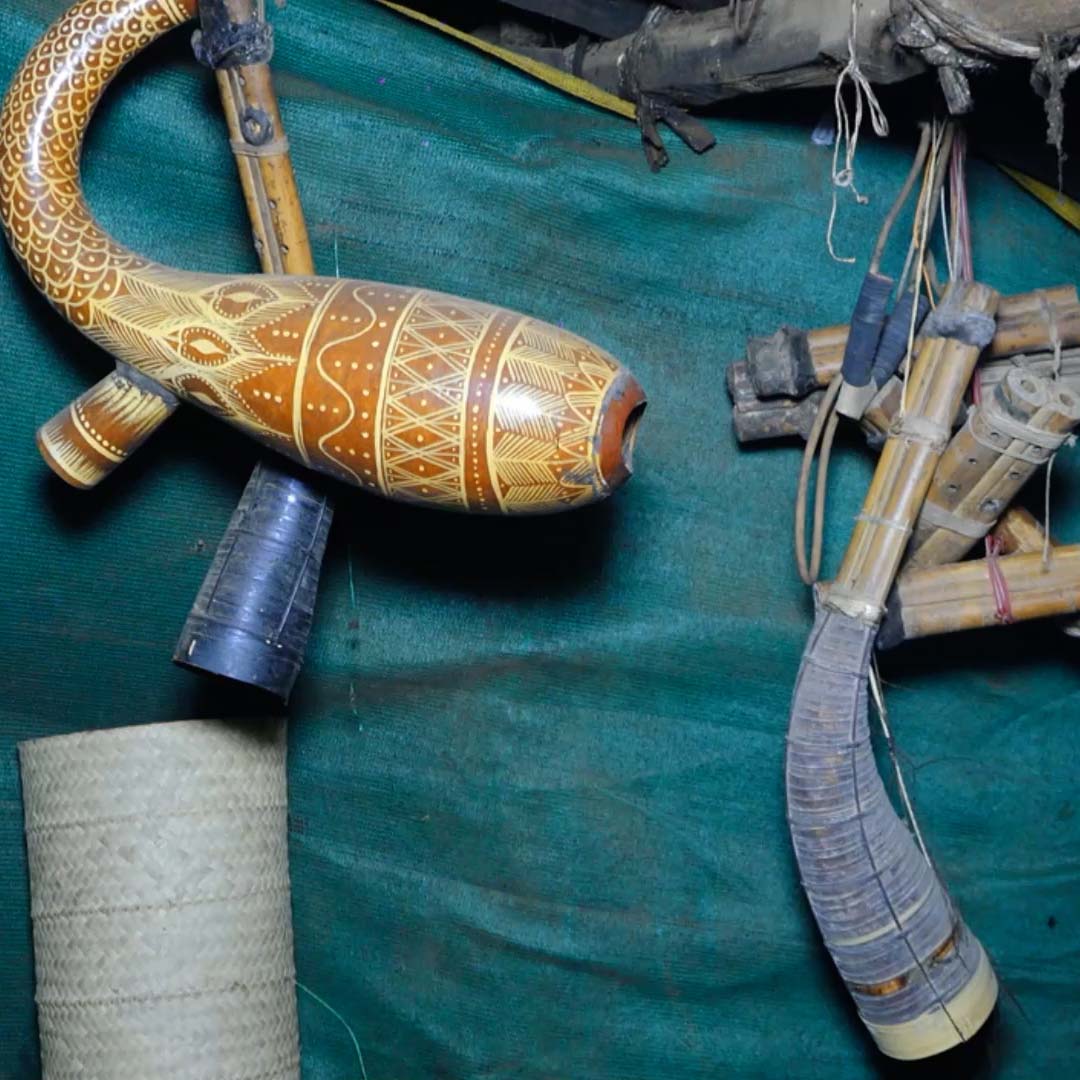
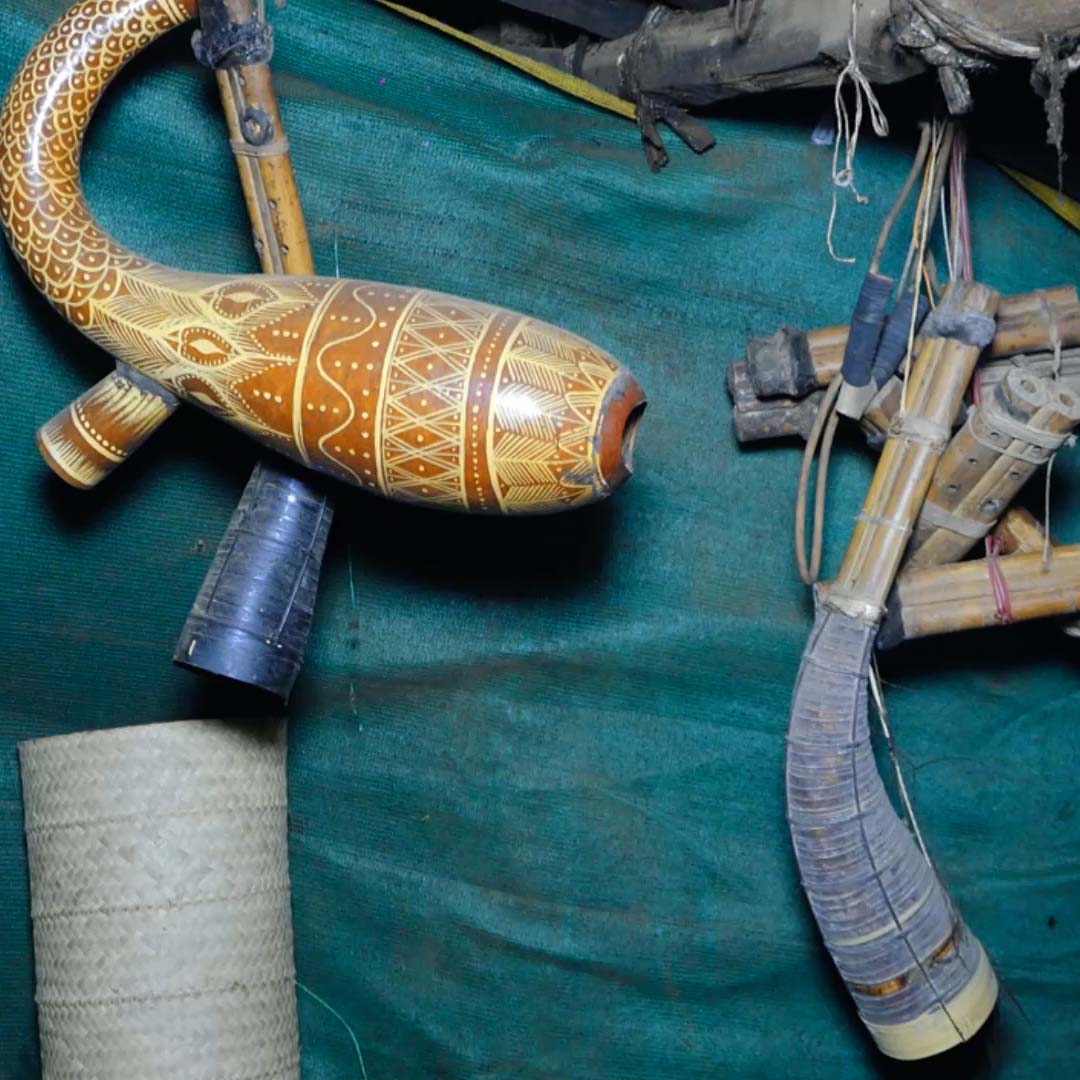
The tarpa is one big element of the cultural heritage of the Warli tribes. It is a traditional musical instrument used by Warli tribe especially in the regions of border areas of Maharashtra and Gujarat. The Warli see music and dance as an important cultural activity as the tarpa is the biggest part of these events. It is played along with group dances and songs, especially during harvest season, marriages, religious worship, festivals and other social celebrations. The tarpa is a type of instrument made of gourd, bamboo, dried palm leaves, wax, thread. It consists of a large, curved gourd joined to two long bamboo tubes. When the tarpa is played, its sound can be heard for about two or two and a half kilometers. Holes are made on the bamboo tube to produce melodious notes and to increase or decrease its volume. There are five holes on the right bamboo tube and these are male and three holes are made on the left bamboo tube which is female. To ensure equal volume of sound from both the bamboo tubes, wax is applied to the upper hole of the left bamboo tube (which has three holes). The amount of wax applied to this hole is necessary so that the sound produced from both of them in equal volume produces a distinct and melodious tone. Gourd found in nature is used to make tarpa. This instrument produces a special tune which not only reflects the community spirit but also brings people together. Tarpa playing and the dance performed with it are a symbol of the collective unity of the Warli tribe and their customs of life. The tarpa instrument is also a symbol of community unity and cooperation in the Warli society. It brings the community together. When the tarpa is played everyone assembles and dances together, and that moment strengthens their collective social ties. All and all, Tarpa is not just an instrument of the Warli Tribe, but it is a major part of their cultural, social structure and ritual festivals. Through it, the Warli people present their traditions, collective social relations and their relationship to nature.
Making and Structure of Tarpa
It's a type of wind instrument which is made up of natural materials like gourd, bamboo, dry leaves of palm trees, wax, thread. Tarpa is made by a male from the Warli tribe who knows how to play it. The single components of the tarpa instrument are the two bamboos called male and female in the Warli community. One (male) pipe produces bass and one (female) the treble sound. The tune or sound created by the bamboo combination is melodious and hypnotic and the members of the Warli society attributed special place to this during their religious and social practices. “A lot of breath control is required for playing the Tarpa instrument, as it is not only about blowing air into the instrument but also about managing one’s breath and keeping pace with rhythm. The (person who) knows how to play this Tarpa( musical instrument), play this Tarpa (musical instrument). There are five holes on the right bamboo tube and these are male and three holes are made on the left bamboo tube which is female. To ensure equal volume of sound from both the bamboo tubes, wax is applied to the upper hole of the left bamboo tube (which has three holes). The amount of wax applied to this hole is necessary so that the sound produced from both of them in equal volume produces a distinct and melodious tone. Gourd found in nature is used to make tarpa. This instrument produces a special tune which not only reflects the community spirit but also brings people together.
When is the Tarpa instrument played
As per the Warli tradition, Tarpa is played from Nag Panchami till Diwali. "If a person wants to play the instrument in the village, then permission is to be taken from the adult people of the village. When a person plays the Tarpa instrument after Diwali, the penalty is collected from that person. The Tarpa instrument is played during the ritual of “Khalyacha Dev” after harvesting the paddy crop. And after Diwali, when the wedding season begins, the Tarpa is played. When the maker or player of the Tarpa instrument dies, the Tarpa instrument is played during his funeral.
Cultural and religious significance in Warli society
The Tarpa is used in many religious and cultural rituals of the Warli society. From harvest festivals to worship of various deities, its playing plays an important role in religious and marriage ceremonies. The Warli society believes that through the Tarpa they invite the forces of nature, especially their local deities. For instance, the deities in the worship of ‘Savari Devi’ are invited through the Tarpa and different tunes. These are played for each deity.
This wonderful instrument is also seen as a symbol of social unity and community. The whole community forms a circle around it and participates in a special dance. This dance is a way to strengthen community bonds and resolve social conflicts. Through this, people of the society come together and preserve their customs and cultural heritage.
Tarpa and Warli Dance
The Tarpa instrument is used especially in the Warli dance, which is an integral part of their cultural festivals and rituals. This dance involves community participation, in which men and women dance in a circle around the player. The tone of the Tarpa and its rhythmic sound determines the pace and rhythm of the dance. This dance is not only a cultural act, but it symbolizes the collective identity and community unity of the Warli society.Through the Tarpa dance, the Warli people not only express their cultural heritage, but it also symbolizes their social structure. The Tarpa dance becomes a medium of solidarity, collective cooperation and establishing harmony with natural forces in community life. During this dance of the Warli society, their entire lifestyle and deep respect for their environment is demonstrated.
SOCIAL AND RELIGIOUS CONTRIBUTION OF TARPA
Tarpa is also significant in religious ceremonies and festivities of the Warli tribe. During harvest time, it is performed to usher in the new harvest. It is also believed to be a segment of the ritual of dedicating to the gods. The Warli community holds the belief that Tarpa is an invitation of the gods and represents their blessings. Therefore, Tarpa is not merely a musical instrument but a way of life which is closely associated with religious faith and traditional traditions. Besides, Tarpa is also employed to settle social disputes. When people of the community sit together and play Tarpa, this enhances their relationship with each other further. This musical instrument is a symbol of the unity of community and social harmony is preserved by it. Tarpa is not only a musical instrument but a symbol of cultural and social identity of the Warli tribe. With this, they not only preserve the tradition of their ancestors, but also show their reverence for the unity of community and natural forces. The Tarpa is a significant part of the festivals, dances and religious ceremonies of Warli society and thus is a great cultural symbol.
Geographical Location
The Warli tribe is predominantly found in the districts of Thane, Palghar and Nashik of Maharashtra, and Dang and Valsad districts of the southern parts of Gujarat. The tribe resides among the hilly and dense forests of the Sahyadri mountain range. The survival of the Warli people in these regions is forest- and farm-based, where they operate their living from agriculture, cattle rearing and forest products. The Warli people's villages are usually established in hilly regions, where they have a harmony with nature. Many of their villages are situated close to forests and rivers, which offer resources to sustain their livelihood.
History
The Warli tribe is centuries old and they belong to one of the aboriginal tribes of India. Though their historical records are extremely scarce, it can be inferred from their art and culture that they have been settled here from time immemorial. Their forbears have been nature worshippers, and they continue to have religious and cultural beliefs revolving around respect and devotion for nature.Unities and collectivisms have been significant in Warli society. Their "village" is a central unit within their social organization, where decisions are made through the panchayat of castes. Their conventional tales and myths provide information regarding their origin and cultural evolution.
Religious and Spiritual Life
The religious life of the Warli tribe is totally dependent on nature. They worship different natural forces like mountains, rivers, trees, and forests. Their most important god is "Hirva Dev", who guards their family and agriculture, crops. Besides this, they also worship "Savari Devi" and other local gods and goddesses. Music and dance have a special significance in religious rituals. "Tarpa Dance" is the principal dance of the Warli tribe, wherein group dance is done to the sound of the Tarpa instrument. Dance done on the Tarpa instrument is referred to as Tarpa dance. It is usually danced during harvest time or during significant religious rituals, marriage, festivals, which represents community harmony and oneness.
Social structure
Warli society is founded on the concept of collectivism and equality. Marriages and other social ceremonies are observed as community celebrations, where everyone takes part collectively. Women have a significant role in Warli society, particularly in agriculture work, art, homes. Women have a great role in Warli painting, and many times they depict their family experiences and stories through paintings. Other than this, women also have a high level of participation in activities like farming and animal husbandry.
Respect for environment and nature
The Warli tribe is intimately connected with nature. Their religious customs and belief systems show their profound respect and commitment to nature's powers. The Warli do something called 'vaghya' during the harvest and rainy season to express their appreciation to nature. They're tied to many important elements of human existence- birth, marriages, and deaths- by nature. There is also a commitment to conserving the forests and nature resources. Because of this tradition, they have a sensitivity towards protecting everything associated with the forest and nature, onto trees, and rivers. Nature represented not only as a resource but something they're worshipping and preserving and respecting. Overall, the ancestral and social history of the Warli have been respected worldwide as their love for nature, collectivist-oriented society, and their way of expressing their artistic genre. Even today, Warli have been working hard to pursue their lifestyle and customs through modernization in our present day.
Importance of Music and Dance
Music and Dance are central to the life of the Warli tribe, more than just sources of entertainment, they have a profound cultural, religious and social meaning. It forms a critical part of the festivals and religious worship marriages of Warli society, through which they are not only adhering to traditions but also safeguarding cultural heritage. Warli tribal religious and cultural traditions are based on respect and faith in nature and local deities. In their religious rituals, worship cannot be complete without music and dance. When it is harvesting time and the festivals are held without the community dancing and singing, the entire village is overflowing with dance and music.
Tarpa Dance and its Importance
Within the Warli community, the Tarpa dance is one of the most popular Folk dance, done especially during harvest, religious occasions, marriage, and festivals. The Tarpa dance is a major folk art of unification of community. It involves one person leading, to the sound of the Tarpa instrument played by the leader of the dance which is a type of wind instrument. The whole village and community dance with each other in a circle with their hands on the waist of the individual beside them. The pace of the dance differs as per the music of the Tarpa instrument and the beating rhythm of the dance, which makes it exciting and energetic. The Tarpa dance fosters collectivism and excitement by having everyone dance together with the same rhythm. Men and women take part equally in Tarpa dance which symbolizes the importance of equality and unity for the Warli community. The Tarpa dance is an act of ritual but it also represents unity of community which is a foundational part of the Warli community's everyday life.
Social Importance of Music and Dance
Music and dance are a key part of the community lifestyle of the Warli tribe. They are a significant source of social gathering and building community. Whenever there is a prominent ritual occurring, such as marriage, the whole village engages in music and dance as part of the activity, thus creating village togetherness and collectivism.
The Warli tribe also use music and dance to communicate folklore and traditions of the tribe to future generations. Their music and dance presents stories of their ancestors, their beliefs and insight of their day to day living.
Music and cultural beliefs are an important part of the rituals of the Warli tribe. While involving the gods and goddesses in the rituals, the music and dance takes place in the essence of the rituals, with special tunes being played to appease the deities. It is believed that if the right music is played to the right rhythm and tone, it attracts the metaphysical, giving blessing from the gods and goddesses.
Role of Tarpa Instrument
The instrument known as Tarpa is quite significant, as it requires particular skills to play. Tarpa is not only a ritual item for the Warli tribe, but also represents their culture in a general sense. The players, holders of Tarpa are given a special place in society and are generally regarded as important people in the community. Music and dance are an active component of the lives of the Warli tribe that continue their best to promote and extend their cultural existence, as well as portray an important part of their religious and social life. The role of music and dance at festivals and through rituals is evidence of the Warli tribe's belief system in reference to nature and the relationship in their communities.
Traditional Festivals and Celebrations
There is a significance of festivals and rituals in cultural life of the Warli tribe. Festivals, especially harvest festivals, are of specific importance in their agricultural lifestyle. Festivals can be a celebration of the joy of harvesting but also reflects their gratitude to nature, and their unity as community. There are occasions where we can celebrate a festival by playing Tarpa. The tarpa can not just be used for music, but is also important for cultural, and religious rituals.
Harvest Festival and Importance of Tarpa
Agriculture is the prime occupation of the Warli tribe and harvest time is their most important celebration during which they thank the gods and goddesses and pray for the coming year's harvest. The tarpa instrument has special relevance in such celebrations. At the harvest festival the people of the whole village come together, and as a collective they celebrate with dances and music.
Tarpa Dance
The tarpa dance takes place during harvest, religious and other festivals. During all these festivals, there is one highlight of the festival, which is the tarpa dance in which men and women dance together in a circle by putting their hand on each other waist. The tune of this dance is produced from the tarpa instrument, which is a special type of flute-like instrument made by using gourd and two bamboo sticks joined together with wax. The tunes of the tarpa start slowly and gradually become faster and the dancers also increase their speed. When a tarpa player is playing, they will play many different types of tunes, and will sing songs as they produce a variety of tunes. They learn from the musician, and become proficient. In the tarpa dance all the people dance in a circular shape, and in the middle, there is the main musician who is playing the tarpa. The circular shape of dance symbolizes community unity and devotion in Warli society. Dance forms a part of community entertainment as well as a means to express gratitude to the gods. The tarpa is not only for dance, but through it, the Warli also perform their religious rituals. There are special rituals that are organized to please the gods and goddesses after harvesting in which the tune of tarpa has a special value. In Warli society, it is also believed that the melodious tones of tarpa also attract to the gods and goddesses and help in receiving blessings from them.
SOCIAL AND CULTURAL ROLE
Tarpa's use in celebrations such as harvest festivals is not only for religious purposes, it is also symbolic of the collective life and community bond of Warli society. Harvest festivals are culturally significant markers of collective prosperity and unity, and it is on these occasions that the people of the village come together, of course with music and dance central to the gathering. Tarpa is a symbol of community music, and the player occupies a special place in the society. The Tarpa player is the linchpin that unites the village and is a catalyst for bringing people together through dance and music, it is a cultural instrument that embodies collectivity and unity.
Role of Tarpa in Marriages and Other Ceremonies
Apart from harvest festivals Tarpa is also utilized in marriages and other social ceremonys. The Tarpa dance and music also has a major role during marriage ceremonys. For marriages the family, friends and guests of both the bride and groom also dance and sing to the tune of the Tarpa. This represents that a new chapter is starting along with signifying togetherness as well as community double and happiness.
Symbol of Collectivity and Unity in Society
The Tarpa dance not only serves the purpose of entertainment, but it also reflects the arrangement of the Warli tribe. While celebrating occasions such as harvest festivals, all the villagers surround the Tarpa player as they dance in unison, portraying the sense of collectivity and collective action that Warli society embodies. In addition to this, the Tarpa also allows them to hand over their cultural education to the next generation, thereby perpetuating their traditions. The instrument of Tarpa is incredibly important in the life of the Warli tribe, especially during situations such as harvest festivals and other ceremonies. It is not only a musical and dancing instrument, it also embodies their collectivity, unity, and cultural identity. The Warli people demonstrate their societal structures, cultural legacy, and belief systems through the Tarpa, highlighting how important it is in their ways of living.
Techniques of playing the Tarpa
The processes for playing the Tarpa are an essential aspect of the cultural traditions of the Warli tribe. The Tarpa is a traditional wind instrument used generally by the Warli tribal people, especially for harvest times, festivities and group dances, religious ceremonies, marriages and more. Playing the Tarpa requires a specific set of skills and techniques. The structure of the instrument, the process of sound production and the physical techniques required for playing it demonstrate the cultural uniqueness of the Warli society.The Tarpa has a simple structure, but playing it requires special techniques and physical control. The main structure of the Tarpa consists of a hollow gourd, with a reed pipe that they join together with wax. This produces sound by blowing an air current into this hollow bamboo tube. The materials and components of the Tarpa, including bamboo and wax, are all obtained locally. The most critical aspect of playing the tarpa is the management of breath control. The blower must have the appropriate balance of breath to enable him to create a relatively steady sound. Playing the tarpa involves proper body posture and physical balance. Usually, the tarpa player stands upright, and their upper body remains still. The bamboo instrument is held in both hands, to put the instrument in front of their mouth to blow. The most important technique when playing the tarpa is to use breathing properly. The tarpa player controls his breathing rhythmically in order to keep the music flowing in a constant stream with no gaps. This instrument is played using circular breathing technique, where the musician can breath in and out of the mouth at the equal time. This technique is useful to keep long melody and rhythm for the tarpa, especially during trisawle of long time which is followed by other dances and rituals. Playing the tarpa is a difficult and artistic process which includes various breathing techniques of the musician, different control of rhythm and body coordination. The tarpa instrument is very important in harvest festival and other occasions of the Warli tribe, and the skill to play it, is normally being passed from one generation to another.
Design and Material
The tarpa instrument is a distinctive heritage of the Warli tribe, utilized during tribal traditional ceremonial events and festivals that includes music. The design and construction of the instrument is very simple but distinct when compared to other instruments, which results in its remarkable sound/music characteristics. The design of the tarpa and the materials it contains in making it; gourd, bamboo, wax and reed pipe, makes it a unique natural musical instrument. So let us explore the various parts it comprises and how they are manufactured:
- Structure of Tarpa
The tarpa is a wind instrument that is played by blowing air from the mouth. It consists of two key parts.
- Main Body: The main body of the tarpa is made of hollow bamboo and has a long, straight shape. The bamboo serves as the sound path of the instrument, where air comes into and makes sound.
- Reed Pipe: The second key part of the tarpa is the reed pipe that a player puts in their mouth and blows air into. This pipe is made mostly of reed and was attached to the upper end of the bamboo. Air moves into the hollow space of the bamboo through this reed pipe. Then, sound follows.
- Bamboo
Bamboo is the basic material of tarpa. Tarpa is made from a special strong and light bamboo and is collected from local forests. Selecting its bamboo is the most important process because the bamboo will not only determine the strength and quality of the sound produced, but it will also allow it to be played comfortably.
- Length: The bamboo of the tarpa is usually long and straight and depends on the comfort of the player and sound. The quality of sound from the tarpa will be based on the length of the bamboo and the thickness of the bamboo.
- Natural Hallowness: Hollow bamboo is used as an instrument where blowing air creates music. The hollow bamboo acts like a sound instrument, which means sound is produced by the pressure of air.
3. Reed Pipe
The reed pipe is the most vital part of the tarpa since it is the part which let the air pass through it. The reed pipe is made from reeds or narrow segments of bamboo and is constructed in such a way that it allows the air to pass in the proper direction.
- Shape of the reed pipe: The reed pipe is narrow and has tiny holes which care used to manage the air. Different sounds are made from these holes, which echo the melody of the tarpa's music.
- Wind control: The reed pipe is particular to both air pressure and air direction. By blowing the proper amount of air, and controlling the direction of the blow, either high tone or low tone can be produced in the tarpa. The reed pipe opens the air a controlled speed, allowing to maintain the speed of the tiled music.
- Wax
Wax is also an essential component in creating the tarpa when joining the reed pipe and bamboo together. The joining process helps to create strength and performance on the tarpa. With the joing process on the instrument, the player can hold it and play comfortably.
- Joining: Wax is used to join the bamboo and reed pipe together to ensure that the air flows in the right direction and doesn't leak. The wax adds strength and durability to this structure while keeping the design of the tarpa simple and exact.
- Natural wax: Warli people often use natural wax which they obtain from bees' hives since it is strong as well as durable. Since it is natural, it is also good for the environment and readily available.
- Process of producing sound and rhythm
The emergence of sound from the tarpa is related to air flow, and the bamboo half, which is hollow. When the player blows into the reed pipe the air intake is through the hollow part of the bamboo. The size and length of the bamboo will determine the sound of the wind.
- Ways of sound production: The player controls the sound of the tarpa with breath from his lungs. The player can create different tones by changing the speed and direction that the breath flows.
- Control of rhythm: Tarpa music consists of tunes that start at a slower pace and then get faster. The intensity and rhythm of sound depend on the speed of the player's breath and add variance to the music.
- Control of pitch: When playing the tarpa, many varying kinds of pitches are present during varying times of festivals.
The tarpa is a unique musical instrument due to the combination of the materials and design (bamboo, reed pipe and wax). The form can be seen as representative of the simple and grounded, natural lifestyle of the Warli. The tarpa produces music but is also serves as a key aspect of cultural heritage of the Warli tribe, stems plays a significant part in Warli travails.
Basic Sound Principles
The tarpa is an ancient wind instrument that is used predominantly by the Warli tribe. It consists of gourd, bamboo, wax, and dried leaves of the tandaka tree, and is a wind instrument because it requires air to be played. The sound production of the tarpa is based on a simple scientific principle. The overall sound production processes of the tarpa is based on three main principles, which are breath control, the flow of the air, and the structural style of the tarpa. In the following section we will discuss the sound principle of the tarpa.
1. Air flow and sound production: The very first sound producing mechanism of the tarpa is airflow. When a musician blows air from their mouth, it travels into the hollow bamboo of the tarpa. Inside the bamboo, the air resonates and sound is produced through the reed pipe. The production of sound in this way is referred to as pneumatic resonance, or the production of sound waves due to the pressure of the air. When air travels into the reed pipe, the air creates a certain amount of pressure. That pressure creates movement in the air, therefore the air particles begin to vibrate. Sound is then produced from that vibration.As the air resonates in the hollow area of the bamboo, sound waves emerge. Subsequently a musician uses their breath, or control over airflow, to modulate the frequency and amplitude of the sound waves produced.
2. Bamboo structure and sound quality: Sound quality of the tarpa is determined by the length, thickness, and hollowness of the bamboo. A long bamboo tube makes a sound that is slow and deep and a short tube makes a sound that is loud and intense. The hollow portion's inner surface increases resonance and the sound gives depth and variety to the music.
3. Role of Reed Pipe: The key part of sound production in tarpa is the reed pipe. The reed pipe is made of reeds and is made to regulate the air; air enters the bamboo from the reed pipe, and thus controls the flow of air to produce tones. The flow of air in the reed pipe causes air particles to vibrate; these vibrations create sound waves. The vibration sequence depends on the design of the reed, thus constructed reeds produce good sound quality. Air will enter from the hollow space of bamboo through the reed that turns the air into sinusoidal waves making music.
- Breath control and continuity of sound: The circular breathing technique of the tarpa player is an important aspect of sound production. The sound produced can be modified with pitch, rhythm, and intensity by the player controlling their breath. Breath speed: when the player blows air fast, the sound is loud and forceful. Whereas, blowing at a slow speed creates a quieter and deeper sound. Circular breathing technique: This technique allows the player to play the tarpa wherever the player is headed while no stopping the sound. It is important to be able to play long amounts of music. It requires practice, but circular breathing can be mastered.
- Science of sound production: The sound produced from the tarpa is in the form of sound waves produced by the vibration of air. When the player pushes air through the tarpa, it moves the air particles producing vibrations. The movement of air and vibrations resonates with the hollow part of the bamboo and produces sound.
- Frequency: The frequency of sound can be either high or low depending on the speed of the air flow and length of the bamboo. The frequency of sound of tarpa is mostly medium to high based on it's structure.
- Amplitude: How loud a tarpa is depends on how much pressure and amount of air the player blows. Loud is when you blow hard and soft is when you blow softer.
- Cultural significance of sound: Tarpa's sound is another type of music, which makes it a symbol of culture and tradition for Warli communities. The sound that tarpa makes creates harmony and rhythm with dance and other social activities. The sound is meaningful to Warli ritual practices and festivals, where the community continues its cultural practices through dance and music. The process of producing sound of tarpa is a great combination of natural science and cultural traditions. Hidden in producing the sound is the complex science of airflow, control of breath, and bamboo structure. When the principle of producing sound is understood, we come to know the science behind music and also learn something about Warli culture and its relationship with music.
Traditional Playing Techniques
Traditional playing techniques of the tarpa instrument are significant in the cultural life of Warli society. Traditional techniques involve the player's posture, control of breath and rhythm. All of these components together create music, which is culturally important for Warli festivals and rituals. Let's delve into the main traditional playing techniques of the tarpa in detail:
- Posture
The player’s posture is very important when playing the tarpa. Proper posture can affect the flow of music, and the ability to play. The traditional way of playing requires comfortable and preferably a stable position while either sitting or standing, when playing the tarpa.
- Playing standing: Players usually play the tarpa while standing up, which expands their lungs and respiratory system, allowing the air flow out with full force. Standing provides ample air pressure in the lungs for the sound of the tarpa to come out effortlessly and at its full potential.
- Official Grip: The tarpa is held with a firm grip with both hands. One hand grips the end of the bamboo base and the other hand is near the end of the reed pipe, where the player blows in the air. This grip in combination helps to keep the sound of the tarpa steady and balanced, and at the same time, get full volume from the instrument.
- Breathing Technique
Airflow control is the crucial element in playing tarpa. Tarpa players need to have proper air flow control, and consistent air flow at all times when playing the instrument, as the flow of air affects the musical noise and rhythm of the music produced.
- Circular Breathing: Tarpa masters the circular breathing technique, creating sounds continuously without pauses. In this technique, the player breathes through the nose while pushing air from the mouth to create continuous sound with no breaks.
- Exhalation: The player blows air slowly from the mouth, to obtain a relatively equal and melodious sound produced in the tarpa. The sharp tones are created by quickly blowing aghair out while soft tones are produced by blowing aghair out slowly. Lungs: The role of the lungs are the centre in sound production in tarpa. The player has to exhale air from the lungs, in a rather uniform matter so that rhythm and beat of the sound produced is always balanced.
- Rhythm Patterns
Rhythm is extremely important when playing tarpa. In the Warli culture, tarpa is used for celebration and ritual, and the rhythm of the melodies is part of their layers. Tarpa tunes are initially composed of simple rhythms and become increasingly complex.
- Basic Rhythms: Tarpa tunes typically begin with a slower tempo. Musicians use their breath to implement change in the sound's intensity and pace. Tarpa tunes are composed to correspond to Warli dance, simultaneously creating togetherness and correspondence between group dance and music.
- Faster Rhythms: As musicians progress with their music, the tarpa player elevates his breathing and produces complex rhythms. This variation creates excitement and depth in the Warli dance. The flow of a faster rhythm and music is an experience of peak moments at festivals.
- Rhythmic Structure: By using these rhythmic structures, the tarpa musician provides a musical role under Warli festivals and dance while coordinating rhythm to breath, intensity and tempo of music. This style establishes the rhythms of community dance for the Warli women and men circular dancing style, with the same rhythm,taking each other by the waist.
- Tonal Range and Melodies
Some special tones are produced in the Tarpa, which give a special identity to its tunes. This instrument plays only in a limited range of tones, but the player creates melodious and interesting tunes by combining these tones.
- Range of Notes:The tarpa has a limited range of sound, mainly between low and medium frequency notes. The player controls his breath and uses the length of the bamboo to produce different tones.
- Melody Creation:The melodies produced by the tarpa are simple, but it is their simplicity that makes them special in Warli rituals. The players maintain a balance of rhythm and melody while playing traditional tunes, which maintains a natural flow in the music.
- Role of Tarpa in Group Performances
Tarpa players often play a leading role during group performances. Within the Warli community, as the tarpa players , they stand in a circle of dancers and have control over the rhythm of their dance music.
- Cultural Collective, Community Leadership: The tarpa players lead the music, and the dancers dance around the tarpa players. This shared experience of music and dancing represents the cultural collective and collectivism for the Warli people.
- Harmonisation of playing and dancing: The tarpa players and dancers are aligned with each other. When the tarpa player begins to breathe deeply the dancers will perform increasingly more dance movements, with and equalising duration of time spent in both the deeper breathing and increased movements, respectively. This musical harmony relates to the scope of the unique relationship of music and dance across Warli culture.
The traditional playing methods of the tarpa depend upon the coordination of the posture of the player's body, breath control and rhythm. With these methods, not only does the sound of the tarpa become an origin of music but also reflects the Warli society's cultural identity and community spirit.
Learning traditional Warli tunes
The tarpa is an important instrument in Warli culture. It plays various traditional tunes that are essential to the cultural festivals and rituals of the Warli tribe. Let us introduce some common tunes and rhythmic styles played on the tarpa.
1. Variety of tunes: Warli melodies are generally rhythmic and simple, aiming to be delightful for group dances and festivities. They tend to be passed from generation to generation orally.
- Social and religious subjects: Warli tunes are derived from a range of social and religious subjects. These are typically connected with rituals like the harvest, marriage and festivals. For instance, those tunes played during festival times of harvest are to commemorate farmers' hard work and achievements.
- Music and songs: The music songs and the melodies that are sung in Warli music are specifically of a particular mood and rhythm. These melodies are frequently designed to add to the sense of togetherness, so all the dancers are able to dance together.
2. Rhythmic Styles: The melodies of tarpa have different rhythmic patterns. These rhythms are:
- 4/4 rhythm: It is a general rhythm that ensures velocity and steadiness in the dance. This rhythm is best suited to traditional Warli dance, in which the dancers are consistent.
- 6/8 rhythm: This rhythm possesses a clear sense of velocity and wavelike movement. These types are particularly employed in celebration occasions, where there is energy and enthusiasm.
- Dhol accompaniment: With the addition of other instruments such as the dhol with the tarpa, there is a rich musical experience. This adds more energy and enthusiasm to the dancers in group dances
3.Main Tarpa Tunes: The main tunes are super famous within the Warli society:
- Harvest Festival Tunes: These tunes describe the farmer through his hard work and the importance of agriculture. The tunes have a wonderful mixture of speed and enthusiasm
- Wedding Tunes: Tunes played during wedding ceremonies are considered to be very sacred. They carry the message of love, good wishes, and unity.
4. Synchronization of Tunes with Dance
The tarpa tunes synchronize with dance. The tempo and rhythm of the music are set differently according to the various stages of the Warli dance, giving the dancer a chance to modify the posture and speed.
Steps: The steps of the dancers are formed as per the tunes of the tarpa. This creates an atmosphere of unison and harmony in the group dance.
Social Interaction: This unity of Warli music and dance serves as a great interaction platform wherein community members have fun together.
The common tunes and rhythmic styles made on tarpa represent the cultural identity of the Warli tribe. The tunes are not merely considered music; instead, they are at the core of social and religious rituals. Studying this important aspect of Warli culture will not only reveal the music but also the deep-rooted traditions of the community from which the culture comes alive.
Role of Tarpa in Tarpa Dance
Tarpa-style dance is characterized by lively cultural expression, for whose performance the Warli tribe considers a matter of identity and social life. The Tarpa is an aerophone; the dance receives life and energy from this wind instrument. The Tarpa is played on and reflects the tradition, belief, and lifestyle of Warli society; thus, the dance stands as a living symbol of their heritage.The dance fosters the spirit of togetherness; members of the community come together for its shows, strengthening social bonding through joint experiences in rhythm and movement. The Tarpa beats coordinate with the dancers' steps-especially when in unison, which makes the dance highly elegant-and are also used as a mode of narration by the Warli, relating their traditions, histories, and life experiencesThe Tarpa dance stands at the intersection of entertainment and spirituality; the dance is thus commonly interspersed with religious and cultural rites, grounding the community to their land, culture, and gods.
TARPA DANCE AND ITS SIGNIFICANCE
The Tarpa dance is a particular and pivotal dance form of the Warli tribe, in which the Tarpa instrument plays an integral role. Let us understand the relationship between the Tarpa dance and the instrument in detail.
- Introduction to the Tarpa Instrument: The Tarpa is auniqueinstrumentconstructedoutofbamboo, gourd, wax, dried palmleafand other naturalfibers. Its sound isboisterousandsweet, whichbringshappinessto festivals and celebrations. Tarpa isprimarilyutilizedin Warli dance,whichprovidesthe dancewithadistinctidentity.
- Cultural Identity: The Tarpa dance is a representation of the cultural identity of Warli community. This dance is generally performed in harvest festivals, marriages, festivals, etc. and other religious ceremonies. The tunes and dance positions of the Tarpa highlight the traditions, beliefs, and lifestyle of the Warli tribe.
- Unity and Community Spirit- The Tarpa dance has a sense of collectivity. When people of the community gather together to play the Tarpa and dance, it becomes a symbol of unity. This dance strengthens social bonds, where all the members come together and celebrate together. Through this, people communicate with each other and express their emotions.
- Dance: The beauty of Tarpa dance is in its rhythm and pose. Dancers modulate their moves and steps with the Tarpa tunes in a manner that there is perfect harmony between the music and composition of the dance. It is built upon the principles of rhythm and beats, which provide energy and vibrancy to the dance. The Tarpa instrument is also played during religious festivals in religious rituals. This dance is not just an entertainment but also represents religious affinities. The people of the Warli tribe perform it for the gods and goddesses, thus asserting their beliefs and devotion.
- Conservation and Future: Over the last few years, an attempt is being made to conserve the Tarpa dance specifically. Different programs are being planned to teach and propagate this tradition to the next generation. Efforts are being made by community groups to make this cultural heritage last.The association of the Tarpa dance with the instrument not just enhances the cultural and social life, but also deepens the identity of the Warli tribe. This dance is a special experience that brings together the community members and adds vigor to their festivities.
Group Dynamics in Tarpa Dance
Tarpa dance is one of the Warli tribe's cultural activities, representing community and unity through communal dynamics. During tarpa dance, the tarpa player is surrounded by community members in a circular manner, which not only adds to the dance's beauty but also to the community bond.
- Symbol of Collectiveness and Unity: The group dynamics of Tarpa dance is not just a dance process but it is also a reflection of the collective identity of the Warli tribe. When the dancers surround the player, it symbolizes unity, commitment and cooperation of all. This is a very important aspect of the dance, where all individuals play their part and enjoy the collective experience.
- Central position of the player : The tarpa player is at the focal point of the dance. The melody and rhythm of the player dictate the movement and action of the dancers. The dancers adopt their posture and gait against the rhythm, and the result is a great harmony of group dynamics. The dancers dance in a circle around the player, and this unites the dancers with themselves and achieves a sense of oneness.
- Coordination of dance steps and rhythm: Coordination of varied steps and rhythm is required in Tarpa dance dynamics. Forming circles, dancers move in rhythm, which brings energy and vitality to the dance. Coordination not only increases the beauty of the dance but also the harmony and the rapport among the dancers.
- Social and Cultural Expression: Circle formation of Tarpa dance is a social and cultural expression. The dance is a festival, celebration and special occasion of Warli tribe. When the people dance in a circle, it portrays their culture, tradition and social bonding. The dancers express their feelings and experience, thus generating the feeling of collectivity. Active Participation and EnjoymentAnother significant characteristic of group dynamics of Tarpa dance is that it engages the dancers in active participation.
- Preservation of Tradition: Not only is the group movement involved in the dance, but it also preserves the tradition of the Warlis. When the younger generation performs these traditional dances, they play a tremendous part in keeping their tradition and culture alive. It preserves the cultural heritage.
Choreography and Movement
- Role of Tarpa Music: The music of the instrumentalist performed at the Tarpa dance dictates all movements of the dance. Tarpa rhythms control the dance movement, and the dancers have to alter their postures and steps depending on what the rhythm is dictating. This implies that the choreography of the dance also gets altered along with the rhythm and beat of the music and thus the performance becomes dynamic and participatory.
- Traditional Dance Steps: Tarpa dance consists of several steps of traditional nature including:
- Collective Circles: the dancers form the circle around the person who is playing the instrument, symbolosing unity.
- Coordination of Steps:The dancers adjust their movements based ont the rhythm of the music. This synergy of rhythm and movement gives a new creativity to the dance.
- Postures and Emotions: Dancers use various postures, which add emotional depth to the dance. It is not just a body exercise but also a means of communicating the cultural values and feelings of the people.
- Synergy and Expression
- Tarpa dance and music is a form of expression. The dancer conveys his feelings, experience, and culture through the dance. The beat and pace of the music enable the dancer to narrate a story and make the people emotionally connect with the dance.
- Development of Choreography
- Choreography is more about the structure and arrangement of various steps of the dance. It is accomplished primarily spontaneously in Warli culture, with the dancers using their own conventional positions and methods. Over time, the new generation has added diversity to this by bringing their own methods without discarding the conventional ones.
- Education and Training
- Workshops and community classes are held to learn the Tarpa dance movement and choreography. Community programs and workshops are organized in order to familiarize oneself with the choreography and movement of the Tarpa dance. These programs not only familiarize the youth with the Tarpa dance techniques, but also encourage them to preserve their cultural heritage
Cultural Expression through Dance
Dance is one of the most ancient and most influential human arts that have evolved with the passage of time. n this context, the Tarpa dance has its own importance, both as a dance and as a cultural communication medium.
- Preservation of Cultural Heritage : Dance is significant in conserving cultural heritage. Various kinds of dance represent the tradition, custom, and beliefs of society.
- Social Unity and Empathy: Dance promotes collectivism. People dancing in different forms of dance come together and share a common identity. This is evident from the Tarpa dance, where people in the community come together as a group to dance and build their social relationships.
- Emotional Expression: It is a medium to convey intense emotions that are beyond words. In dances such as Tarpa, artists convey their happiness, sadness and experiences using music and dance.
- Modernity and Change: Dance has incorporated modernity in the modern era. Modern dances such as Bollywood and hip-hop are being incorporated into classical dance. This enables cross-cultural learning and new types of empathy among communities.
- Education and Awareness: Education is also utilized through dance. Different types of dance are an appropriate means of educating children regarding their cultural heritage. This makes the younger generation aware of their roots.
- Economic Impact: Locals are also benefited economically by way of cultural events and dance performances. Not only do they provide a platform to the performers, but they also generate revenue for local businessmen.
Symbolism of Instruments
- Instruments Symbolize Collectivity: The use of instruments in the Tarpa dance symbolizes collectivity. When a group of people get together and dance, the sound and rhythm of the same tend to unite them as one. For example, the drum and tarpa sound and rhythm encourage all the people to unite and dance. It is a sense of collectivity, where all the people tend to forget their individual problems and unite for a cause, and that gives a sense of oneness.
- Promotion of communal harmony: Tarpa dance and its musical instrument encourage communal harmony between different communities. When people from different castes and communities gather and dance Tarpa, it sends out a message of brotherhood and unity. In this dance, all the people play musical instruments with each other, because of which communication and understanding are built in between them. This means that cultural expression can express the unity not only of one community but between different communities also.
- Expression of emotions: The musical instruments are also employed as a medium to express emotions in the Tarpa dance. When they are played, their sound enhances the emotions of the dancers. The pleasant sound of the tarpa and the beat of the drum express the happiness, enthusiasm and unity of the dancers. So, these instruments are not only music instruments, but also social and cultural emotions.
- Symbol of Culture and Identity: Tarpa instruments are also symbols of Warli culture's identity. The appearance of the instruments, the pattern of use and the shape of music, all symbolize the uniqueness of the Warli culture.
- Ritual significance The instruments of Tarpa also have ritual significance. In the culture and religion of the Warli community, these instruments are included in religious and cultural rituals. The melodies of these instruments, in the rituals, not only provide an experience of joy, but they also symbolize respect and devotion. This clearly indicates that these instruments are not merely a cultural phenomenon, but they symbolize the spirituality and faith of the people too.
Conservation and Revival of the Tarpa Instrument
Current Status of Tarpa
Tarpa Music and musical instrument being a vital component of the cultural heritage of the Warli tribal community. Let us consider the existing status of Tarpa, causes of decline, and revival processes.
- Current Status of Tarpa: The status of Tarpa dance is alarming at present.
- Effects of Modernity: As a result of urbanization and globalization, the next generation of the Warli community is not giving due importance to dances like Tarpa anymore. Modern entertainment devices like television, films and social media have taken the place of this tradition. Crisis of cultural identity: The cultural identity of Warli tribe is gradually diminishing. The younger generation is not well-versed with their tradition and culture. This is not only impacting Tarpa dance but also in total, the Warli culture.
- Reasons for Decline
- There are numerous causes for Tarpa's decline: Economic issues: Because of the failure to improve the economic conditions in the Warli society, the young generation is unable to embrace the traditional art. They are required to migrate to other regions to seek better job opportunities. Urbanization: Because of high urbanization rates, individuals from the Warli community are departing from their conventional way of life. Because of this, cultural practices, like Tarpa, are gradually vanishing. Social media and newer sources of entertainment: The power of the digital medium has grown among the young generation today. It has made them lose interest in conventional music and dance, as they are predominantly choosing new forms of entertainment.
- Revival Efforts
There have been numerous attempts to save and revive the Tarpa dance:
- Training programs and workshops: Local organizations and NGOs are organizing workshops for the conservation of Warli culture. In these, training is being provided in Tarpa dance and music, which is encouraging the younger generation to take it up.
- Incorporation of education: Certain schools and colleges have included courses to learn Warli culture. This alerts the new generation about their culture and gives them a chance to know traditional dances such as Tarpa.
- Community festivals: Tarpa dance festivals are being held frequently in the Warli tribe. These help not only in developing cultural identity but also in enhancing community unity.
- Digital platform usage: Through social media and video-sharing sites, Warli artists are showcasing their work on a mass scale. This has gained Tarpa dance more awareness and introduced it to wider audiences.
- Governmental and non-governmental assistance: Several governments and organizations have attempted to offer grants and aid for the sustenance of Warli art. These sources of finance have motivated the artists and they have been successful in maintaining their art.
The status of Tarpa as of now signifies a complex situation, where the practice is declining because of the impact of modernity. Yet, with conservation and revival, there are chances of bringing back this beautiful art form.
Impact of Modernisation
- Impact of technology
- Increased power of digital entertainment: The new generation is used to constantly staying on digital media such as television, internet, and social media. It has substituted the old dance and music with contemporary music and video games. The classical dances such as Tarpa are no longer appealing to the young generation.
- Influence of social media: Trends and challenges on social media have altered the attention span of people. People now spend more time on these sites than in their old traditions.
- Commercialization of dance and music: With the advent of modern technology, dance and music have become a commercial affair. Because of this, folk dances, such as Tarpa, are regarded as a commercial dance form, which is losing its original essence and social value.
- Changing lifestyle
- Urbanization impact: Owing to the fast pace of urbanization, the members of the Warli tribe have begun abandoning their indigenous way of life and migrating to cities. The demands and issues of urban life have compelled them to abandon their cultural identity.
- Social structure changes: Social events and cultural practices were significant in the Warli tribe earlier. However, now the events are fading away with a change in family structure and social relationships. This has also influenced such traditional dances as Tarpa since the collective experience is lost.
- Economic challenges: Because of fluctuating economic situations, the youth are compelled to depart from folk dance and music. They have to earn their livelihood in other professions, because of which they begin to forget their cultural heritage.
- Social values and identity crisis
- Extinction of culture: If the younger generation does not take up traditional dances such as Tarpa, it brings about a crisis of cultural identity. It is not just detrimental to Warli culture but is also an indicator of loss of social values.
- Loss of sensitivity: With the speed and stress of today's lifestyle, people's cultural sensitivity is declining. As there is no interest in traditional music and dance, individuals are losing connection with their ancestors' traditions.
- Conservation efforts needed
- Reviving the culture: The Tarpa instrument needs to be preserved by the community. The educated generation, artists and leaders of the Warli community must unite and take efforts to revive the Tarpa.
- Education and awareness: Teaching Warli culture must be incorporated in the school and college curriculum. It will be an effective means of linking the new generation with their culture and tradition.
- Organizing community festivals: Tarpa dance and music festivals should be organized regularly in the Warli community. This will promote community unity and cultural identity.
Efforts for Preservation
Efforts are being undertaken by various cultural organizations, non-governmental organizations (NGOs), and government initiatives towards the conservation of the Tarpa instrument, an integral component of Warli cultural heritage.
- Role of Cultural Organizations: Cultural organizations organized workshops and festivals to keep Tarpa's traditional art going. These organizations give platforms to local artists to perform their dance and music.
- Role of NGOs: Numerous NGOs are involved in the conservation of Warli culture. They conduct education programs, training workshops, and community events to make the Tarpa dance popular among the youth generation. These organizations also ensure that the traditional knowledge and skills are conserved so that it can be transferred to the next generation.
- Government Schemes: The government is also funding some programs for the preservation of the Tarpa instrument. Under different programs, the Warli artists are provided with financial assistance and grants.
Preservation of craftsmanship
Tarpas, which are the integral cultural heritage of Warli tribespeople, are produced with traditional methods. However, preservation of the traditions is encountering a number of challenges.
- Impact of modernity: Because of modernity and globalisation, the traditional methods of tarpa-making are losing their popularity. The younger generation is getting inclined towards modern, easy-to-use alternatives, because of which they lose interest in traditional craftsmanship. Because of this shift, fewer numbers of skilled artisans who can impart these traditional techniques are being seen.
- Availability of materials: The source material used in the production of traditional tarpas like bamboo, gourd, wax, palm leaves and other local materials is also dwindling. Artisans are unable to obtain the needed materials because of urbanisation and land use change. It has become even more difficult to adhere to traditional procedures. Regardless of these problems, conservation of traditional tarpa making is vital. The community, NGOs, and government schemes should collude to enforce mechanisms to conserve such methods. This will not only conserve Warli culture but also open doors for the younger generation to identify with their heritage.
Future of Tarpa
The future of the tarpa instrument, one of the vital components of Warli tribe cultural identity, is in the hands of younger generations and modern artists. It can make it feasible to preserve this one-of-a-kind art form and revive it through their contribution.
- Role of the Younger Generation: The younger generation plays a significant role in embracing the tarpa instrument. If the youth introduce it into their lives, this tradition can be sustained. It is essential to ensure that the youth realize its significance by offering information and training regarding tarpa in schools and colleges. Introducing the traditions and stories of Warli culture to the new generation is an effective method of connecting them to their origin.
- Contribution of Modern Artists: Modern artists have made great contributions to projecting the tarpa in a new light. They are introducing traditional music and dance in a new version, which makes it popular among the younger generation. Modern artists have showcased Tarpa on all possible platforms, including music festivals, dance competitions, and social media.
- Promotion and Experimentation: Tarpa is being enriched by young artists even more as they are applying their creativity to it. They are placing it in modern context by adding new songs, dance, and elements of modernity. Tarpa's future is assured if the younger generation and modern-day artists embrace this tradition and take it forward. It is vital to maintain the cultural heritage, re-shape it, and merge it with the modern way of living so that this art can last forever.