

Warli Painting
This advanced course delves into Warli painting, an ancient tribal art form rooted in the culture of the Warli tribe. Participants will explore its origins, spiritual elements, and techniques, alongside its relevance in contemporary society. The course highlights the contributions of major Warli artists, differences between traditional and modern styles, and methods to promote and conserve this art. Through in-depth content and engaging assignments, learners will gain a profound understanding of Warli painting and its cultural significance.
 Most Viewed
What you'll learn
- Cultural Foundations : Origins and significance of Warli painting
- Spiritual Elements : Depiction of religious rituals, gods, and folklore
- Artistic Techniques : Style, materials, and methods used in Warli painting
- Historical Insights : History of the Warli tribe and their habitats
- Contemporary Impact : Role and importance of Warli painting in modern society
- Artist Contributions : Influence of major Warli artists and their unique styles
- Promotion and Conservation : Challenges and efforts to preserve Warli art
Couse Features:
- In-Depth Exploration : Comprehensive coverage of Warli painting's history and techniques
- Practical Learning : Step-by-step guidance on creating Warli art
- 3.Cultural Relevance : Insights into the spiritual and societal role of Warli painting
- Contemporary Context : Understanding the adaptation of Warli art in modern times
- Expert Perspectives : Study of renowned Warli artists and their contributions
- Engaging Assignments : Opportunities to create and analyze Warli-inspired works
- Conservation Awareness : Exploration of challenges and initiatives in preserving Warli art
Who Should Enroll
- Artists and illustrators exploring traditional art
- Cultural enthusiasts interested in tribal heritage
- Anthropologists and historians studying indigenous cultures
- Educators and students of art history
- Conservationists focused on preserving folk art
- Designers seeking inspiration from Warli motifs
- Professionals in the art and craft industry
Description
WARLI PANTING
What is Warli Painting?
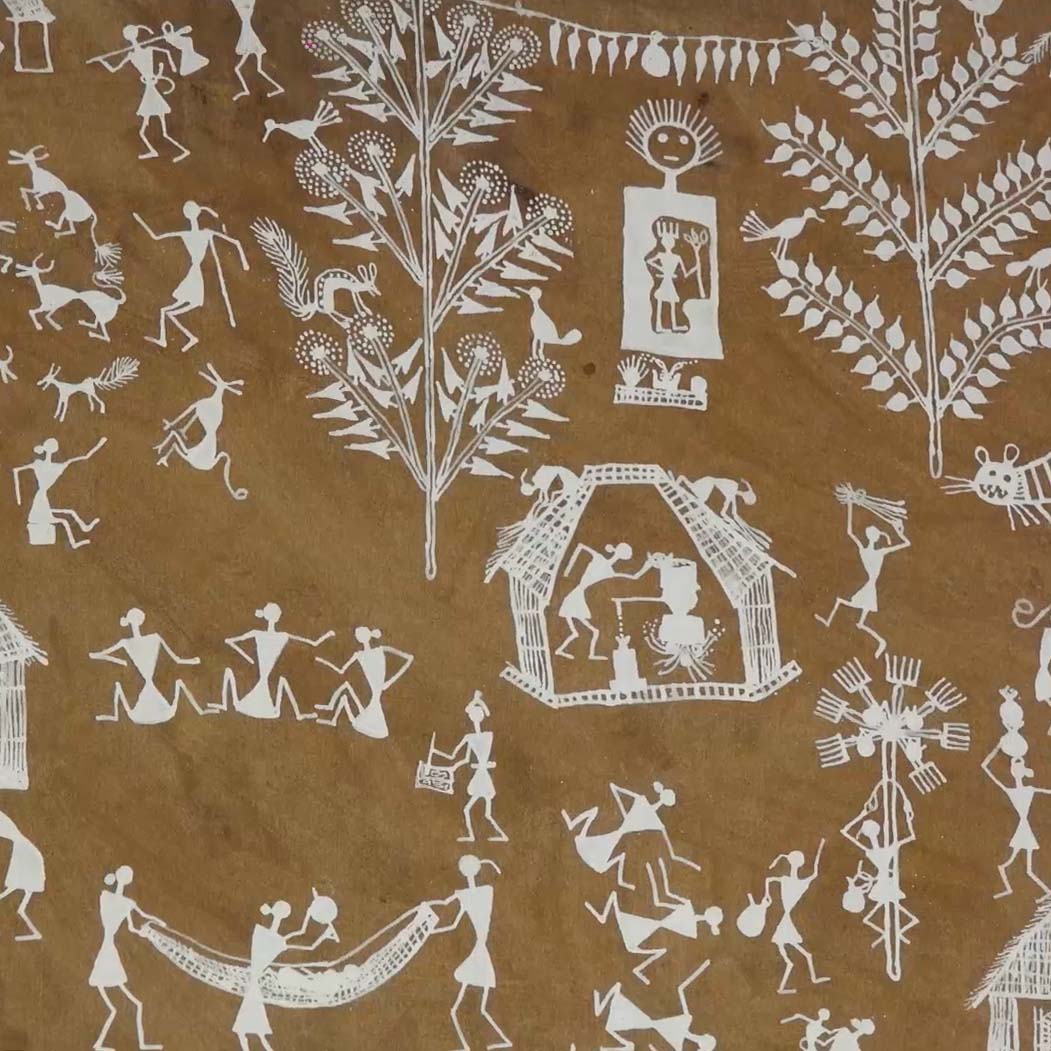
Warli Painting is a very old and traditional tribe art, originated by the tribe Warli at Maharashtra. And it is the face of Warli tribe. It is estimated that this art was in existence since time immemorial and this art represents the cultural identity and the way of life of the tribe. White color commonly found in warli art is prepared by rice paste. During this first phase white ash made by burning wood in a forest fire was utilized. This ash was however not obtained easily thus after sometime rice flour began to be used. Today, we have lime usage or color being used in a contemporary world.
The ground of this painting is done on walls which have been slapped on mud and cow dung to give them brownish color.
The distinguishing characteristic of Warli art is the use of simple but very significant figures and symbols created in it. These images represent the tribe in agreement with nature, their everyday life, house materials, musical pieces, trees, human body, animals and birds, agriculture, hunting, dance and religious ceremony. Warli tribe mainly lives a life which is comprised of agriculture works, and this show of lifestyle is also depicted through their paintings. The paintings here represent the sun-moon, mountain-tree, and man-made places using geometric shapes namely circle, triangle and square.
Warli painting not just reflects the social and cultural life but also it is a form of religion and spiritualism. Their religious beliefs are expressed in the form of gods and goddesses, the moon, the sun and all other religious signs, which portray them. Most of the art was done on festivals, weddings, and other rituals, and in the process it united the community together and shared the traditions.
Nowadays Warli paintings have taken a flight beyond walls to canvases and clothes designs. Contemporary musicians are reintroducing this art in a different context turning the art into a household name worldwide. Nevertheless, it is highly necessary to conserve it and get to know their cultural heritage in order to ensure that this invaluable art would be remembered.
Information about Warli Painting
The old and traditional tribal art in Maharashtra is the Warli Painting whose origin is with the Warli tribe in the area of the northern Sahyadri ranges of the state. The art dates back to thousands of years. Warli paintings are special and simple kind of paintings which are mainly done on walls using rice paste as the medium of painting, geometric shapes circle, triangle and square are the prime shapes used. The artwork (paintings) is used in the description of agriculture, religion and other significant factors in the life of the tribes.
The colour mostly used in warli paintings is white that is prepared using rice paste. It also is painted on mud plastered walls which form a dark reddish-brown ground. The colour used by the painters is white which shows simplicity of the paintings and also shows how they are related to the natural life. The forms are very geometric- circles, triangles and lines are the main motifs. The circle represents the moon and the sun.
The elements that form the style of painting are everyday life scenes e.g. hunting, farming, dancing and religious rituals. Warli painting has the most distinctive element of its creative and symbolic associations with nature. There is the harmony of nature and man in the painting and the painting should not be treated as a decoration but rather as portraying the spiritual and the religious part of the tribal life. In addition, there is the presence of the descriptions of gods and goddesses in this art and it is more centered to the social life and the characteristics of nature.
Warli painting is not a painting alone, it represents the ways of life, cultural identity and the religion of the Warlis. This art illustrates the strong bond existing between the natural life and the human being and each of the paintings tells a story lurking within them. By simple geometric shapes and white color Warli artists display the intricacies and spirituality of life in a quite successful way.
The Warli painting has found its fame on the national and international level in the era of modernity, yet there have to be constant attempts at preserving the practice and keeping it as close to its original cultural implications as possible. It is an imperative aspect of the Indian culture which needs not only to be inherited by future generations but also to be advanced in the contemporary way yet keeping respect to its classical form and root culture.
Origin of Warli Painting and its Cultural Significance
Warli Painting becomes popular with the Warli community that lives in Maharashtra. The community is disseminated around the region of the Sahyadri Mountains that comprises the districts of Thane, Palghar and Nashik. Primary occupation of this tribe is farming and all life of the tribe is so embedded with nature and environment. The Warli tribe has developed painting on the walls in the process of cultural and religious actions. All the community events both socially and religious were not complete without this painting and particularly during marriages, harvest and other celebrations.
Historians claim that this is a very ancient art but it came into wide recognition during 1970s when the renowned Warli artist Jivya Soma Mashe introduced this very art in the national and international stage. The paintings of the Warli tribe is really a very good example of how rural and tribal life has been portrayed by the use of simple shapes and forms to portray the bigger scene and the deeper life.
Warli painting is not a typical art but it is also a cultural heritage of the warli tribe and is part of the religious heritage. Warli tribe had the tradition of painting that was majorly done on religious and cultural occasions. It has full themes of harvest, marriage and other ritualistic festivities. The religious and social scenarios that can be seen in the paintings are quite focused on the community life, value of family and peace with nature.
The symbol of life and fertility is the symbol of mother earth, this symbol is of great significance to religion and this symbol is often used by the religious practitioners. There is special role of religion in Warli art and it shows a lot of spirituality of the tribe and the reverence they have towards nature. It is a form of art that was solely practiced by women especially when it came to religious ceremonies. As time passed so too did the male artists join in this art and today this art has turned into a day to day activity undertaken by all the members of the tribe.
History, Religious and Spiritual Elements of Warli Painting
Warli painting history is related with Warli tribal of Thane, Palghar and Nashik districts of Maharashtra. The art has been existent in these tribal regions of Sahyadri ranges since centuries. The culture is depicted by the art with respect to the lifestyle of the tribal community, religion that they believe in and the way they are closely related to nature.
Warli painting was locally based and existed over a long period and it is the traditional art that lies within the tribal society. It gained national and international acceptance in the 1970s after having been brought into mainstream by Warli artist Padmashree Jivya Soma Mhase. His works introduced a new course to this art and introduced it to the world.
The oral tradition and ritual of the tribal society are strongly related to warli painting. Utility is one of the key reasons as to why it was developed and the writing was carved on walls in the rituals of religion and culture. Simple geometric shapes or simple geometric forms which have cultural and symbolic meaning are so much used in these paintings, e.g. circles, triangles, squares, etc.
The religion and the spiritual aspect of Warli painting is very deep. This is a symbolic art form that illustrates the religious activities and other activities in life portraying gods and goddesses, folk stories and ancient beliefs at the same time. The power of nature and gods is respected in this art and its beliefs are referred to religious beliefs of the Warli tribe.
Warli painting is not simply an art, but this technique reminds religious and spiritual values of the Warli tribe. Every single detail of this painting is enclosed with religious rituals, harmony with nature and the unity of community. This artwork reflects not only the culture of their lives, but also how they respect and believe in nature and gods. Keeping this religious and spiritual heritage of Warli painting alive is a suitable option to keep our culture history going.
Introduction and Brief History of Warli Tribe
The Warli are concentrated towards the north of the state of Maharashtra mainly in the Palghar, Thane and Nashik districts. The tribe exists mostly in the tribal regions and their livelihood depends on the nature and agriculture. Warli tribe is said to have had their roots in the regions surrounding the Sahyadri ranges and thus they are the native of the region through centuries. The tribe relies primarily on agriculture, hunting, fishing and gathering forest products and rituals of the tribe are closely related to nature.
Social structure of the Warli-The social structure of the community is usually arranged with the help of the Jatpanchayat in which all the important decisions are made. They are guided by a good sense of community and their ritual and cultural programs enhance this community structure as well.
Historical and Cultural Context
The genesis of the Warli and the way of life of the Warli tribe is anchored on the farming nature of the tribe, and their proximity to nature. Warli people have their traditional reliance on agriculture where the production of paddy plays a key role. In their agricultural cycle, rain, soil, seeds and natural resources are very crucial.
This is made up of a complete harmony between nature and their whole life. They treat trees and animals and other nature factors as gods and hold special rituals and festivals on them. Special significance are assigned to dance, songs and rituals within the cultural tradition of the Warli tribe by means of which they realize their beliefs and religious concepts.
Dancing and songs in culture: Dancing and songs form a major part in the culture traditions of the Warli tribe, Tarpa dance is almost part of their lives and is held at the time of harvest, marriage, religious functions. Such a dance is performed by a group, and it is regarded as a religious and communal ritual, which manifests a thankfulness towards gods, and increases the community solidarity.
The art and culture of the Warli tribe greatly look up to nature where every single element of the nature is considered a god. Their songs and dances as well as paintings show this worship of this nature.
Relation to nature
The Warli tribe has a significant role of nature in their religious beliefs. They perceive plants, rivers, mountains and other natural items as gods and worship them. They are Indians whose paintings, referred to as Warli paintings, stands out among other paintings because it predominantly symbolizes several items in nature including trees, sun, moon, animals and life on the farms.
The reverence and respect the Warli tribe has towards nature in a certain sense are also disclosed in this painting. Their religious practice entails worshipping of trees, water and other natural objects. The Warli people think that all the natural things carry a godliness and this could be observed on their artwork as well as their way of life.
Social and religious significance of Warli art in community rituals
The warli painting holds significance in the social and religious life of Warli tribe. This painting is an art rather than a decoration since it represents their religious symbolism and social life. They express their belief and veneration to the deities, nature and life in the community through these paintings.
1. Painting as popular in marriage and in religious ceremonies: Another significant application of the Warli painting is on matters to do with marriage and other religious matters. As an instance, a special kind of painting, 'Lagna Chowk' is done during marriage, wherein, Gods and their blessings are painted. This is a painting whose image is traced on the walls in the house and this is regarded a good omen.
2. Painting during harvest and other festivals of rituals: Harvest festival also plays a special role in the religious beliefs of the warli tribe. This time they perform Tarpa Dance and other religious ceremonies and Warli painting is applied in the religious functions. In these paintings harvest, different phases of agriculture, and deities and goddesses are depicted.
3. Gods and Goddesses: The Warli paintings have been primarily known to draw various gods and goddesses like, 'Hirva'(Kuldevata, the god of greenery and agriculture), and 'Vaghya'(god of animals). Such paintings are done in their religious rituals where they invoke gods and goddesses.
4. Symbolic representation of natural cycle and life cycle: Warli paintings are symbolic in terms of depicting natural as well as life cycle. They also use circle shapes in their paintings representing the sun and the moon movement, as well as life cycle. Such cyclical nature expresses their religious values and their strong relationship with nature.
The Warli tribe had great respect and reverence to nature as expressed in the art, culture and religious beliefs held by the tribe. They strongly associate their cultural norms with their way of life and this is also depicted through Warli paintings. Warli painting cannot be described as an art only but this is an indication of their religious life and social order which helps them be distinctive. The existing world of this tribe is founded on the nature and community which are important principles that can serve as an example to the modern people of the actual society.
Habitats of Warli Trib
The Warli tribe inhabits primarily in part in the states of Maharashtra and Gujarat. They predominantly reside all around the northern Sahyadri ranges of Maharashtra stretching across Thane, Palghar and Nashik districts of the state. Besides this, population of Warli tribe is also available in Gujarat in Dang and Valsad districts. The lifestyle, art and culture of the Warli tribe have been greatly conditioned by the geographical point and climate of these territories. But Let us know more about their residence.
1. Northern Sahyadri Ranges in Maharashtra:
The Sahyadri Ranges which is also called as the Western Ghats is a vital geographical area of Maharashtra. Not only is this range significant to the biodiversity, but also constitutes a big aspect of the culture and religion of the tribe of Warli. This region in the north of Sahyadri Hills has a high population of the Warli tribe and they are established in Thane, Palghar, and Nashik districts.
1. Palghar District: This is Maharashtra district that hosts many Warli tribes. Palghar area is regarded as a stronghold of Warli culture since their traditions, art and religious practices have been ongoing for many generations. It is a rich heritage of Warli painting which finds its way of existence in their social life and culture.
2. Thane District: Thane district particularly rural and hilly regions are the principal homeland of the Warli tribe. They are very attached to this vegetation, river and hills. Warli art is originated in Thane where the painting derived and had international recognition.
3. Nashik District: Nashik district, in the northern regions of Sahyadri Hills, is as well an area of central importance in residency of the Warli people. Warli tribe continues to live as the primitive farmers in Nashik and rely on agriculture and forest. A special combination of Warli art and culture is noticeable in Nashik district that is associated with their religion rituals and lives of the community.
2. Dang and Valsad districts of Gujarat:
The Warli tribe also lives in Gujarat in the regions of Dang, and Valsad. These regions also border the Sahyadri ranges and these are actually a part of the expansion of the normal habitat of the Warli tribe. The community of Warli tribe inhabiting these regions is no different when it comes to their traditions and customs as compared to the Warli people in Maharashtra.
1. Dang district: Dang district of Gujarat is in the south of Sahyadri range. This is a district enclosed by the area of forest and mountains which is a perfect environment to stay of the Warli tribe. Farming, Forest produce and animal husbandry are the traditional means of support of the Warli tribe in Dang district. Lifestyle and the religion of the Warli community here is very much like the Warli community of Maharashtra.
2. Valsad District: Valsad district in the south of Gujarat too is a huge residential region of the Warli tribe. The rural and hilly belts of the Valsad are home to the Warli people who are much in touch with their traditional life and art and are able to suit in the modern society as well. They are working to the conserve tradition of Lake painting at Valsad so that this culture can live to many generations.
Characteristics of Warli Tribe's Housing:
Environment-housing relationship: The hilly and forest area is the habitat of Warli tribe in which it is closely attached to nature. They live in small villages located close to the forest and the field. Conventionally, their houses are built using mud, cow dung and bamboo and grass, which is environmentally friendly and since this is their nature of life. With time, tiles began to be used as roofing materials. Not only does this residential building balance with nature, but it also represents their religious ideology and knowledge towards nature.
1. Access to Lifestyle: Warli tribe has a simple basics based on nature. They are mostly into farming where they cultivate paddy, varai (nachani) and other cereals. Other than this, forest products also form the source of income by the Warli tribe as they use the forest products which include wood, fruits, and herbs. Forest produce and animal keeping are another common livelihood source of them.
2. community spirit: The Warli tribe is community oriented. They also exist in colonies and they hold their rituals and festivals together. Their traditional music and dance is the part of their life that translates participation in the community and solidarity. These community activities also include nature, like, harvest festivals and worship of forest deities.
The exuberant attachment with nature can be seen through the lifestyle and buildings of the Warli tribe. This is a tribal group that is residing in the forest and hilly terrain of Sahyadri range of the mountains and districts of Dang and Valsad in Gujarat and is in co existence with nature through its cultural heritage. Not only does their environment play a larger role in their cultural and religious background, but also is an important geographical factor which is expressed in in the form of paintings called Warli paintings.
Gods, Folklore, and Religious Beliefs
Warli tribe has its culture which includes religious beliefs, gods, and folklore. All these factors are so closely intertwined in their social life, paintings, and dances. The warli people believe in natural forces and gods and goddesses and this is connected to their life that is based on agriculture and flow of nature. So, let us get to know about the various aspects of these in detail.
1. Gods and goddesses
Members of the Warli tribe believe in different gods and goddesses, some of the most popular ones are:
• Vaghya (Animal God): The image of Vaghya is found in the Warli paintings. It is regarded as the one who protects animals and wild life. This god is significant to the tribal animal farming, and forest activities.
• Hirva (God of Greenery): Hirva- is a deity called due to the expansion of greenery and crops. Hirva is a clan deity. Rituals are also conducted so as to enable the Warli tribe to enhance productivity of their crops.
2. Folk Tales
The culture, traditions and religious beliefs of the Warli tribe are many a time revealed through their folk tales. These are stories about the community, its ethics and interaction with nature. Some of the notorious folk tales are:
- The Story of the Sun and the Moon: The Warli tribe depicts the sun and the moon as a lover couple. These are narrations of the natural cycles and the impacts of the sun rays and the moon light on life.
- The Tale of the forest god: The saga surrounding the forest god usually revolves around conservations of the forests and what it entails to live in the forests. These stories sensitize the natives of the tribe of the usefulness of forests and motivate them to preserve their environment.
3. Religious Beliefs
The religious praises of the Warli tribe lie in respect and reverence of nature. These are some of the important beliefs:
- The respect to Nature: Warli tribe respects what surrounds them. They consider that any natural element such as tree, mountain, and river contains a divinity in it. Thus, the Warli natives are economical in the use of natural resources and attempt to conserve them.
- Remembering: The people of Warli tribe indulge in several religious worships like harvest worship, summoning of gods in marriage rituals and exclusive images of the time of festivals. All these rituals touch upon all other parts of their lives and make them feel that they belong to their community.
- Festivals and celebrations: Various festivals are celebrated by the warli tribe, these include, Shimga, Diwali, Navkhane, Kavli Bhaji whereby deities are worshipped. Besides their religious value, these festivals reinforce the solidarity of the community with its culture.
The gods, folktales, and religious ideas of the Warli tribe play a great role in representing their social life, art, and culture. Warli people through these aspects are able to retain their identity and their cultural heritage is passed between generation to generation. Their religions, cultures, and legends make their lives colorful and this is the backbone of their existence. Therefore, the religious and cultural lifestyles of the Warli tribe make their lives rich enough but it also brings out their art and identity.
Religious Rituals Depicted in Warli Paintings
Warli paintings are an important form of Indian tribal art that depicts the cultural and religious lifestyle of the Warli tribe. The art is primarily made from mud, cow dung and natural colours and has simple but intense symbolism. The depiction of religious rituals in Warli paintings is particularly significant as it reflects the spirituality of the tribe and their deep connection with nature.
1. Ritual Depictions
Warli paintings depict various religious rituals. These include:
• Crop Puja: The Warlis perform special puja rituals for their crops, invoking deities. The paintings depict farming and crop growth, with men and women working in the fields. The depiction reflects their agricultural tradition and the importance of crops.
• Wedding Ceremonies: The Warlis perform various pujas during weddings. Wedding ceremonies are depicted with great enthusiasm in Warli paintings. The paintings not only depict the wedding ceremony but also symbolize community unity and happiness.
• Celebration of festivals: Warli paintings also depict festivals, such as Shimga, Diwali, Navkhane, Kavali Bhaji. Various religious rituals and mass celebrations are celebrated during these festivals, which reflect their cultural heritage. The paintings contain scenes depicting dance, music, and community joy.
2. Symbols and colors
The symbols and colors used in Warli paintings also reflect the importance of religious rituals:
• Natural colors: Warli paintings usually use white color, which is made from lime and other natural materials. The use of white color symbolizes purity and divinity.
• Symbolic depictions: The paintings contain various symbols such as trees, animals, and human figures, which depict different aspects of life. In particular, there is a depiction of gods and goddesses, which symbolize natural forces.
3. Community Rituals
Community rituals have an important place in the culture of the Warli tribe. These rituals are performed collectively, in which everyone participates. Community dance, music, and sharing of food are a part of these rituals. Their depiction is particularly important in Warli art, as it reflects the unity and cultural identity of the tribe.
4. Religious Importance
The description of religious ceremonies in Warli paintings not only tells about their religious beliefs, but it indicates how strong the role of nature is in their existence. This image plays a significant role in the faith of Warli people because they adore their gods and goddesses in all life activities.
Religious rituals depiction in Warli paintings is significant and significant dimension, which makes the cultural identity of the Warli tribe and many segment of lives stand out. Other than keeping tribe traditions, this art also values the future generations in respect to tribal religious and cultural nature.
The Techniques and the Features of Warli Painting
The Warli painting is an archaic and distinctive tribal art which predominantly evolved by the tribe of Warli in Maharashtra. Its simplicity and great symbolism is the main characteristic of this art. The Warli paintings are generally painted in white paint on brown or black plain of clay which is prepared of lime and other natural colours. The use of a certain colour combination makes this art to identify itself.
The paintings only show human beings, animals, trees and daily life activities indicating the kind of lifestyle of the tribe. Warli paintings are geometric and simple, where the pattern is represented as triangle, squares and circles to depict the human and other animals.
Warli painting styles are very interesting as well. Bamboo sticks are common brushes, which are used by the traditional Warli painters to put the natural colours. Besides this, the paintings are made with the use of mud and cow dung and other arr constructor materials around the area.
The religious and community rituals have been shown in Warli art that outlines the culture and belief of an artist. This art has helped the Warli tribe maintain its own culture which is now moving around the world like a thief.
Style and Design
Warli painting is a major form of Indian tribal art, known for its unique style, designs, and symbols. This art is developed primarily by the Warli tribe of Maharashtra, and has a deep connection with human life, natural elements, and religious rituals.
1. Large Themes and Imagery
The painting of warli has some themes and symbols that make it unique:
• Human Figures: Warlippini human figures are simplistic and geometrical. Men and women are normally developed through triangles, circles, and lines. The figures present diverse activities of society that include farming programmes, dancing and other social events.
• Trees, animals and the other natural elements are also instrumental in Warli paintings. All these factors show appreciation and belonging of the tribe about their life and world. More specifically, the images of bulls, tigers and other wild animals depict a very important aspect of their lives.
• Agriculture: Warli people favor audience to the field of agriculture and therefor fields, crops and farming activities are also featured largely in the art. The images in the paintings contain plough, seeds, harvest and women workers.
2. Religious and Ritual Significance
• Portrait of Gods Warli paintings show different gods and goddesses. They are drawn in the process of worship and ritual, whereby the artists depict their belief and religiosity.
• The Warli people also portray their festivals and celebrations including marriages and harvesting prayers. The dance, music and shared happiness scenes in these paintings evidence unity of the society.
Instead of rituals: Warli paintings also show the religion about religious rituals like a marriage and other major events in the community. The descriptions of these paintings are normally colorful and very vibrant representing the happy and enthusiastic celebration.
3. Relation to Nature, Animals, Agriculture and Daily Tribal Life
Another important aspect of Warli painting is the relation of its themes to natural life:
• Nature: The Warli people attach importance to nature. The paintings portray trees, rivers and mountains which form a part of their life. This is an indication of their care about the environment.
Animals: Warli paintings have animals as well and these are well integrated in their lives. Such portrayals do not only show the way of life of the tribe but also show their belief in their own culture and beliefs.
• Daily Life: Warli paintings show pictures of daily life activities like cooking, fetching water and child care. These paintings bring out the social set up and family of the tribe.
Warli painting is the fantastic art which introduces the tribal culture in its simplicity and complexity. The portrayal of main themes, symbols and religious practices do not only show their religion, but also show the various components in their lives. Warli painting has taken its special niche in the Indian culture and is being introduced in the international world.
Colours and Materials Used
The Warli painting is unique and simple but the colours and materials used in it play a major role. The art form involves the use of nature, something that represents the key aspects and folklore of the art form.
1. Use of Natural Colours
Warli painting mainly uses white colour, which is made from lime and other natural elements. This white colour is the main feature of the painting and its background is usually brown or black soil. The use of this colour gives a special depth and simplicity to the paintings. White colour has symbolic importance, as it represents purity, life, and naturalness. In addition, black, brown, and red colours are also sometimes used in Warli paintings, which make the various symbols and images even more vibrant. These colours are obtained from natural pigments, which maintain the natural element of this art.
2. Choice of materials
This painting technique is also characterized by its materials used in the Warli painting:
• Clay: Paint is done on clay which is raw and is prepared. The images are carved on this clay to form the surface by which the paintings are made.
• Cowdung: Cowdung is also used in Warli painting and not only this; use of cowdung is said to be a traditional as well as considered as a natural and environment-friendly material. The use of cowdung surfaces as something to paint on creates a special texture.
• Natural Brushes: Warli artists apply bamboo as natural brush. These sticks bring out the accuracy, the focus of the painting thus, the paintings are livelier and even more intense.
3. Modern Advancements
Despite the fact that classical Warli painting is done with natural colour and materials, in the recent years there are artists who also use synthetic colours and canvas. The aim of this modernism is to popularize the art hence accessible to all around the world.
The colours and materials used in the Warli painting not just add beauty to it but their selection also signifies culture and tradition of the place. These colours and materials indicate the faith of the Warli tribe, their way of living and the respect to their environment. It is such a selection of colours and use of materials which makes Warli totally different and very unique in its appearance which ensures that it does not lose its identity.
Basic Techniques
The mentioned Warli painting as a form of art that was developed by Warli tribe of Maharashtra presupposes the existence of a wide range of simple techniques, materials and tools. This art has its history, which goes back to ancient traditions; simplicity and symbolism are its other features. The warli paintings are made solely with natural colour and materials, this makes it special.
1. Traditional Techniques
Some of the core methods in the Warli painting methods have been founded on representation of natural materials. These have evolved to be used in portraying diverse rituals, lifestyles as well as local culture elements.
• White colour: White colour is predominantly used in the paintings of Warli. This colour is derived out of lime that is combined with clay along with other natural colours. It is produce rice flour paste to get white colour. The employment of the white colour assists in making the art look clean and pure.
• Technique: during the warli painting, paintings are done on walls. Bamboo sticks help bring delicacy and clarity in paintings by the artists. In this, bamboo sticks are utilized as hands and paintbrushes to make images.
• Application of symbols: Warli paintings are characterised by many symbols like circles, triangles and other geometric shapes. These characters represent different creatures in life including human beings, beasts and trees.
2. Tools and Materials
The materials and tools used in Warli painting add to its uniqueness:
• Natural white pigment: This color defines Warli painting predominantly. It is ready through a mixture of lime, rice and other natural substances. The paintings are bright and appealing because of its whiteness.
• Mud and cow dung: The Warli artists usually paint with the help of cow dung and mud. This is natural and traditional material, which gives the walls a special texture. The painting is made to render the kind of stability and strength that cow dung can afford.
• Bamboo sticks: bamboo sticks are also used brush or Warli painting. Rounded or flattened end of the bamboo stick makes brushes of varying sizes and thickness by artists.
3. Modern Adaptation
Despite the uniqueness of the traditional methods of the Warli painting, with the passage of time there has been a movement to mix the Warli painting style with the modern methods and materials:
• Synthetic Paints: The Synthetic Paints have also made their way to the modern Warli painters and these are more durable and have brighter colors. These paints are available in varieties of colours and this is where the artist can portray his artistic routes.
• Canvas work: The use of canvas: Warli painters nowadays also work on canvas, rather than traditional walls and clay. The paintings have better durability and flexibility because of the canvas surface. This assists in making the value of Warli art rise in the modern art market.
• Newest Technologies Experiments: The new technologies Mainly digital art and printing are also increasingly used by Warli artists. Such methods can spread the art and get it to the people worldwide.
4. Social and Cultural Impact
The Warli painting methods help in the creation of an art work, but they also represent the social and cultural life of the tribe.
•Parties in the community: The warli paintings are also used in the community parties. The pictures reflect unity and collective identity of the population.
• Tradition, Cultural Identity: The cultural identity of the tribe of Warli is maintained by utilization of traditional methods and traditional materials. The art is guarding their history, customs as well as the memories.
The Warli painting is a distinctive type of painting because of simple techniques, materials and tools that are utilized in this kind of painting. This art has been existing since ancient times and it has been turned out to be a modern art but it has been a major source of cultural expression and a way of living of the Warli tribe. This art is now moving towards modernity hence sacrificing nothing of its roots as it moves into new heights.
Contemporary Relevance of Warli Painting
Warli painting has seen the light and has become not only a contemporary cultural representation but also a conventional painting style. This art is no more on walls but the modern artists are mixing it up on canvases, fashion, home decors, and other products. Warli painting is being popular amongst the contemporary art admirers due to its creativity and ingenuity.
One of the key points of this art consists in the fact that it has turned into a way of illustration of environmental and social concerns. The concepts of natural harmony, tribal rights and identity are being now being brought out through the medium of Warli Artists. Also, Warli art has promoted a lot of crafts and artisans which has uplifted their economic status.
The increased significance of the Warli painting in the modern design is making it an active genre of art. Other than propagating Indian culture, it also introduces Indian arts into the world. Warli painting has also found a place in the marketing of different brands hence it is a special place to the modern consumers.
Accordingly, Warli painting is indeed a cultural heritage but at the same time, it retains its significance and importance in the modern world.
Importance of Warli Painting in Modern Society
1. Transition from Traditional Wall Painting to Modern Canvas
The origin of warli painting is in the warli tribe of Maharashtra, in which it was done on the walls. Such paintings normally depicted community life, agriculture and religious ceremonies. The natural colors which were used in preparing the paintings traditionally were usually prepared with the use of local materials.
But through the course of time Warli painting acquired modern taste. Nowadays, the artists are daubing it on canvases and panels, as well as other surfaces. This change does not only state at technological change but it is the globalization of Warli art. Canvas use gives the artists durability and wide choice of color, thus their work becomes more attractive and vibrant. Warli painting has therefore grown into a modern art that can be traced to be a trendsetter in the culture.
2. Place of Warli in Contemporary Design
The Warli paintings find place in many spheres in modern design today:
Home Decor: Warli paintings are being applied as home decoration on walls. These paintings make houses look unique and cultural presenting a conventional and modern touch to the surroundings. Prints and decoration pieces of Warli phenomenon are being sold in many art galleries as well as online stores.
• Fashion: Warli paintings are finding space in such things as clothing and fashion accessories. Several designers have used the warli paintings in their line and they have aided to popularize the Indian culture internationally. Having graphic and clean designs, Warli art has taken a new fashion trend in the fashion industry.
Branding: There is a high usability of the Warli art by companies to develop brand. This culture is the expression of their social conscience and devotion towards Indian culture. This is the reason that companies are providing a specialty and historicity to their products.
3. Role of Warli Artists
Warli artists have not only preserved their art but have also played an important role in spreading it globally.
• Conservation of Art: Warli artists conserve art by means of their native methodologies and content. They are busy taking their art in a contemporary kind of way and thus letting the new generations the chance to learn and know this kind of art.
Warli painting has already received international recognition as well. Most Warli now take part in art festivals, workshops and exhibitions thus sharing and popularizing their art. In that way, they not only preserve their cultural identity but also leave a niche in the sphere of global art.
• Social representation: Warli painters are coming up with paintings which represent social concerns. This art is no longer a sign of only beauty, it also raises significant issues such as environmental conservation, tribal right and social justice.
4. Development of Contemporary Art
Warli painting has struck a foothold in the contemporary art. The representatives of it are engaged into some fresh experiments and introduce the traditional art into the modern setting. Warli painting has today not only become an art but it has become a powerful tool when it comes to causing problems like the social, economic, and cultural question.
Therefore, it is not merely an art in the contemporary society but it is also a platform of culture and social discourse. Its modern practicality creates it as a significant aspect of the Indian art, which still has been bright and pertinent even now.
The significance of Warli painting in the current society stretches back to the traditional use and to the new possibilities. Not only is this art a representation of Indian culture but has even found considerable niche at international level. It is Warli artists and their hard work and dedication, which make this art live so, that it would be inspirational both to the present generations and generations to come.
Ways to Promote Warli Art
Warli art is a beautiful culture that needs to be promoted in plenty of productive methods, as the art is heritage of Maharashtra warli tribes. These methods are touching people with the awareness both locally and globally, educating people, giving them economic advantages, and adopting modern practices. Some of the ways are discussed below:
1. Seminars and Lessons
One of the significant activities that can help to popularize Warli art is education. Schools and colleges can include courses regarding Warli painting.
• Workshops: Workshops organized by the local artists have helped the students as well as the art lovers learn and know more about this splendid art form. Such workshops show traditional methods where people could empower themselves with the art.
• Community festivals: A good idea would also be organizing festivals whose theme would be based on Warli art in local communities. It links individuals in the society with the work of art and inspires them to conserve it.
2. Use of digital platforms
Correctly in the era of digital technologies, the Warli art can be popularized with the help of the Internet:
• Social media: Posting the details of Warli painting exhibitions and workshops on such websites as Facebook, Instagram and Twitter. The fact that artists can display their work on the internet can make them attract the notice of a worldwide mass of people.
• Online market place: online sale of Warli painting products and prints. The availability of Warli art goods in the global market can be reached through the increase of its availability on e-commerce which can be an effective method.
3. Economic Incentives
Escaping to something economical is also a way that may help in promoting Warli art:
• Handicrafts Fair: Handicrafts Fairs can be conducted at local and national levels which are special fairs to the Warli art. In this artists are able to showcase their art and meet customers face to face. This presents them with new sales.
• Government aid: The government can help the economic support of Warli art and artists like the subsidies, grants, and schemes. This assists artists to practice art.
4. Conservation and Promotion
There are certain steps that may be towards preservation and propagation of Warli art:
• Culture Conservation Programmes: Special programs could be arranged to maintain the Warli painting where the traditional methods of painting could be maintained.
• Traditional Material: It is necessary to preserve the traditional materials of Warli painting. Materials which are local and natural should be encouraged to be used by artists.
5. Global Promotion
There are some steps that can be undertaken to popularize Warli art world over:
• International Art Festivals: Take part in international art festivals where the paintings of the Warli can be exhibited. This not only acknowledges the artists but also causes the Warli art to be loved across the world.
• Art Publications: Publish books, magazines and research papers on Warli paintings. This will popularize this art more and contribute towards realizing the dignity of it.
6. Social Awareness
It is also quite effective to use Warli painting in order to bring out social problems.
• Social Campaigns: Environmental and social matters can be represented using the warli paintings. The given art may assist in community awareness-raising and to get people inspired towards social change.
• Presentation of Local Challenges: Local problems like the climate change and wildlife preservation can be presented in the Warli paintings which would make the society to get aware.
The above measures are significant to popularise Warli art. This entails an all-inclusive strategy and this involves education, financial rewards, utilization of electronic interfaces as well as worldwide marketing. When these measures are taken in the right way, not only Warli art will be kept but it will also become a key source of inspiration in the future generations.
Need for Conservation
Warli art, which is the cultural heritage of the Warli tribe of Maharashtra, is in dire need of conservation. This art is not only famous for its distinctive designs and symbols, but it also represents tribal life, nature, and religious beliefs. However, the influence of globalization, modernity, and technology has forced this traditional art to face many challenges.
1. Reasons for the need for conservation
• Extinction danger: Traditional methods and materials of the Warli painting are going out of use. This is mostly because of the fact that the younger generation is not interested in this art and it tends to be more modern.
• Threat to cultural identity: The loss of this kind of art can alternatively make it as an endangered cultural heritage and also cause a loss of cultural identity of a people.
• Influence of modernity: Modernity with modern technology and urbanization are some of the factors that have influenced traditional attitude to Warli art. Warli art is now turning into a business venture because many artists are viewing it in that perspective hence altering its initial spirit and meaning.
2. Conservation measures
• Educational and awareness: Workshops regarding Warli painting can be conducted in schools and colleges to know about its essence. Local and national workshops ought to be provided so as to enable young generation to learn and appreciate this art.
• Economic incentives: This means giving economic support to musicians, like subsidies and grants in order to enable them to sustain their arts and train other musicians.
• Conservation programmes: The government and non government organization should come up with special programmers in conserving Warli painting. This can be technical training, marine studies and cultural programs based on Warli paintings.
3. Global Support
• Cross Border Collaboration: Uniting with other art institutions in other nations to present the Warli art to the international platform.
• Exhibitions and Festivals: Novel participation in international art festivals and exhibition of Warli paintings. This not only shall provide the artists with the recognition but also shall make the Warli art be widely known in the world.
4. Use of Technology
• Digital platforms: Online e-commerce sites can also be used to display and sell the Warli art. This will provide artists with a chance of settling new clients.
• Social Media Impact: Creating awareness on Social media about Warli art. Artists are also able to share their work and thus have a chance to reach more people.
Conservation of Warli art is very critical since not only is it a superb piece of art but it also signifies the culture and heritage of a tribe itself. Unless this art is conserved, it can turn out to be extinct as a valuable heritage of culture. Thus, conservation of it should be reinforced by educating people and economically supporting it with global awareness.
Prominent Warli Artists and Conclusion
There are several popular artists in this discipline of the Warli painting that made this art get another identity by their own styles and paintings. Some of the names that are prominent in this regard are Jivya Soma Mhase, Balu Mhase, Tushar Vayda, Mayur Vayda Jivya Soma Mhase has given a new scope to the Warli painting by his style of work and he got the name established as a professional art. Balu Mhase, a Warli artist who showcased his art form at an international level, his depiction has facilitated in popularizing the art among more individuals. Tushar Vayda and Mayur Vayda have made this art even more popular because they manage to present it in their own way.
All these artists have been of help not only on how to preserve Warli art but also on how to develop and expand it. In their art, the social and cultural issues have been brought to light hence making people become more aware.
Warli art is not only essential because it has been known historically but also because it has significance in contemporary world. Its use and value is becoming higher and higher all over the world. Therefore Warli painting is not merely an art but this art is a very vital component of the cultural identity of the tribe Warli and their way of living. They still should do their best to save and popularize it in order that people of the next generations also could feel and know this wonderful art.
Their Contribution and Style
Warli painting is the distinctive cultural heritage of Warli tribe and many renowned artists have done wonders to this field. Builders of this art and the obvious keepers of this art are these artists who are simultaneously contributing significantly in the emergence of such art and its exposure in the world. We would talk about the works of these eminent artists and their styles in detail.
1. Jivya Soma Mhase
Jivya Soma Mhase is a very well-known painter in Warli form. His art has given a different dimension to this traditional style. His paintings have attracted a lot of attention due to the use of colours and elaborate designs. Mhase thinks that Warli art is more than a painting; rather it is a projection of their society and culture.
Jivya got born at Dhamangaon Taluka -Dahanu District Thane, Maharashtra. Since childhood, he got interested in Warli art. He is the pioneer to realize the value of Warli paintings and to remain responsible in preservation of the Warli paintings."
Jivya portrayed the Warli paintings in a contemporary context and this fact interested the young generation to follow the painting. He has also appeared social issue in his works of art like that of climate change and maintaining traditional style of life. His art reveals a big interaction between nature and society which makes the audience realize what is implied in this art. In 2011 he was awarded the Padma Shri in recognition of his work in the Warli painting. This recognition of Jivya Soma Mhasse does not only point out his own performance, but it also makes it evident how magnificent the Warli art and the tribal culture may be. Jivya Soma Mhasse has won numerous prizes in his creations. He has already exhibited in different national and international art exhibitions, and has already drawn attention to his art throughout the whole world. His contribution is continue to inspire and he is now making efforts to save and popularize Warli art.
2. Balu Mhasse
Another well known artist of Warli art is Balu Mhasse who has developed his own touch and this has made this art a worldwide recognized work. Clarity and simplicity are present in his paintings thus indicating the initial culture of Warli painting. Balu has incorporated Warli with contemporary painting and it is applicable today and not just during the traditional days.
His numerous artworks have gained popularization among the audience at the international exhibitions, which he has joined many. The harmony of the local culture and modern life is also easily noticeable in his work. He is also working as a developer of Warli painting as a form of business so that more and more artists can gain out of it.
3. Tushar Vayda and Mayur Vayda
They are known as Warli painting and they are unique in the art of Warli painting. They have also introduced this traditional style of the Warli art in their different style. Social, political and religious themes are portrayed in their work, which is an issue of thought to the audience.
They feel that change can be achieved in the society through art. Warli painting has become a medium using which they can bring out the social ills of the society. Strong colors and complexity of forms in their paintings appeals to the viewers.
4. Prakash Pithole
Prakash Pithole has been born in Nyahale Budruk, Taluka Jawhar, District Palghar, Maharashtra. He is a Warli painter and has made amazing contribution in preservation of Warli painting. Not only does his art preserve this ancient tradition, but also attempts to popularize it among the new generation. Prakash Pithole has played an important role of preservation of Warli painting thus maintaining this cultural heritage.
Not only have these eminent Warli artists provided a new direction to the Warli painting, but they have also been critical in the preservation as well as maturing of this art too. They have provided testimony to the fact that traditional art can actually be relevant even in a contemporary setting. Due to the work done by these artistes, today Warli painting is not only a cultural asset but also an art form known by all over the world.
In case you are interested in knowing more about this work of the mentioned artists, you may track different art exhibits as well as online sources. The path of Warli art is not only significant in the Indian culture but can also serve as the means of inspiration to the whole humankind.
Difference between Old and New Warli Artists
Warli painting, which is part of the cultural heritage of the Warli tribe of Maharashtra, has seen many changes over time. There are several significant differences between the old and new Warli artists, which explain the evolution, styles, techniques, and social context of this art.
1. Differences in Materials and Techniques
Old Artists: The natural materials were normally used by old traditional Warli painters. Mud, cow dung and vegetable dyes were what they used to paint. The paintings were done either on the walls or papers using natural colors and these colors kept their art deep and natural. They were traditional and used folk lore and religious beliefs in their own way.
The New Artists: New Artists have begun by mixing modern materials and techniques with traditional art. They have adopted synthetic paints, canvas etc. This transformation has not only provided their work with a new appearance in addition to offering it as a commercial form as well.
2. Style and Subject Matter
Old Artists The paintings of old Artists expressed: Rural life, Religious rituals and Folklore, mostly. They painted in a simple and spontaneous way and their ultimate goal was to describe their culture and manner of life. The paintings mostly showed portrayal of human beings, animals, farm occupation and nature.
New Artists: The new artists style is more varied. They have traditional and modern themes. Modern Warli artists not only show the world of life in tribal situation in their paintings, they also show the environmental and social problems and their own life. Other themes incorporated in their art work comprise women empowerment and social change.
3. Social and Cultural Context
Old artists: Old Artists These were Traditional Warli artists who shared their culture and social life of the surrounding. Their art was closely related to religious rituals, festivals and traditions of the society. Their painting was used to bring the community together and the tales that were contained in the paintings were told generation after generation.
New Artists: New warlis are functioning within a different social arena. The art created by the artists nowadays is more international and they work in order to popularize their creations. They have made Warli painting a kind of business making the artists dependent free in terms of money.
4. Exhibition and Marketing
Old Artists: The work of traditional artists was mainly confined to local communities. They would exhibit their work in villages and towns, and their art would receive recognition only at the local level.
New Artists: Modern Warli artists now participate in various art exhibitions and festivals to showcase their work internationally. They have made their work reach a global audience using online platforms. This has given their art wider recognition and market.
5. Education and Training
Old Artists: The traditional Warli artists were taught by their families and other artists. It was experimental and oral in the process through which knowledge was oral and given to the successive generations.
New Artists: New Warli artists are usually educated. Art schools train many artists and they embrace modern techniques and principles. This education experience adds a fresh vision and larger knowledge to their art.
6. Impact of Globalization
Old Artists: The primary aspect of art of old Warli people is the dedication to preserve their culture. They did not know how the globalization would affect them and their art was directed towards the preservation of the cultural heritage.
Modern Artists: Globalization influences have been embraced by the modern artists. They bring in the foreign aspect into their work and are influenced by various forms of cultural references. They aim at providing Warli painting with international identity that will enable it to be syncretized to other arts.
Such disparities between the ancient and the modern Warli painters have placed Warli art in an exclusive evolutionary track. It remained the cultural heritage of the old artists and has been introduced in the international arena by the new artists. Both of them are critical and on the one hand, the maintenance of the traditionalism is necessary and on the other hand, modernity and innovation makes the art to acquire the new identity.
So, the history of the Warli painting is not only changing into an art work, but also into a cultural and social movement. The artists of both generations have managed to keep this art alive, in their own way and retain it to the future generations.
This development of the Warli painting should be respected along with the contributions of both the generations, in order to help us carry on this distinct art even in the future.
Techniques and Materials
Warli Painting Techniques
Medium and Materials: The traditional materials of creating the Warli paintings are natural disciples including rice paste, mud and cow dung. The colours used are white (hexagonal in shape, rst mud; subsequent rice flour), on brown ground of soil or wall natural colour.
Brush: artists use bamboo sticks or thin twigs to draw tiny lines and patterns thus the process is easy and efficient.
Design: The designing in Warli art is painted in geometric form whereby circles, triangles and squares depict different aspects in life like animals, human beings and trees.
Style: It is a minimalistic and stylised style which frequently represents moving figures. Employment of repetitive designs symbolises this attachment of the community to the nature and its environs.
Themes and Subject Matters
Warli Painting Themes
Nature and Daily Life: Warli paintings are largely representational of day-to-day activities of the tribals, i.e. farming, hunting and social gatherings. They exhibit the strong roots of the people with the environment and their reliance on nature to feed them.
Rituals and festival: Rituals and festivals can be a topic of many Warli paintings, as some weddings, harvests and group meetings are painted in the form of many Warli paintings.
Spirituality and beliefs: The other important aspect in Warli art is spirituality. Motifs used in paintings usually represent gods, nature elements.
Community and social organization: Warli paintings convey the social organization of the community, that is, how group activities and solidarity are important.
Cultural significance
Warli paintings
The warli paintings are no mere forms of art and artifacts, but they are much more a part of the very lifestyle and culture of the Warli tribe. They symbolize traditions, views and way of people and their attitude to the nature of the community. The Warli art has now received a significance in the modern society and it has filled the fear of alienation that existed between the tribal and the mainstream arts. Efforts on popularization and protection of Warli art allow not only to save the culture but also to create jobs in this sector among the artists.
To conclude, Warli are significant types of Indian folk artwork, whose peculiarities, techniques, and cultural backgrounds depend on each other. To depict the sense of simplicity and community shown by Warli tribe, which is grained towards nature and daily life, Warli art shows referred to it.
These art forms are shown to be the testimonies to richness of the Indian culture, and capability of traditional practice to evolve and survive in contemporary times. Knowledge of this art gives further meaning to our admiration of the Indian art and the need to conserve these precious cultural forms, not only as heritage to the present generations but also to the forth coming generations.
Conclusion
The warli painting is an invaluable heritage of the Indian tribal art that has acquired a lot of acclaim not only in India but also throughout the world. An art of the Warli tribe in Maharashtra, it is simple and deep at the same time. Every image of Warli painting is a bright manifestation of the human life, nature, and the culture traditions. Based on such art, the Warli tribe has shown their perspectives regarding religion, way of life, and attitude towards nature. It is not just a piece of art but it is a kind of cultural heritage which has been inherited down generations.
Warli painting is unique in the ways by which the painting is done. The principal characteristic of it is simplicity of lines and form, which portrays various human actions, animal life as well as natural events. The color that is normally used in warli painting is white then this is painted on a black clay background. These masterpieces do not only look beautiful but also represent translations of cultural and religious ideas. It has become a living art form due to the description of different religious rituals, religious life, and agricultural lifestyle.
Warli painting has gained significant position in contemporary art in the last few years. Its relevance is increased by the fact that standing on it is the surface and the pieces painted on it on traditional walls were changed to the canvases and other materials. Warli art has become a very significant element of fashion, branding, and decor in the home as it is no longer regarded as a cultural heritage. It is also gaining popularity among worldwide art lovers and making its feel felt in the art shows.
Modern Warli artists have incorporated a lot of means through which they want their arts to be known across the world. Not only obedient to the common themes, they also resort to the existing social problems of the society when creating. This alteration makes the form of art even more prosperous and evolves it as active media. Modern day appeal of Warli painting maintains it as a living art system, thus it continues to develop with time.
In parallel with that, Warli art may be promoted in numerous ways. An important role in this art is played by the education, workshops, and exhibitions. A lot of organizations and artists are collaborating to conserve and create awareness about Warli painting. The preservation of the identity and relevance of the Warli painting therefore is a common undertaking, that cuts across artists, educational institutions, and any other stakeholder of the society.
There is also the new twist to this art with the contribution of modern Warli artists and their styles. The new artists in their works do not only preserve the traditional elements but also add some modernism in it. This puts a new light to their art and makes it applicable in the contemporary structure. Warli painting gets a new life with new experiments and explorations.
To summarize this discussion, Warli painting is not a form of art alone rather, it is a part of culture and an identity symbol. Not just a cultural representation of the Warli tribe but it also can be seen as a cultural diversity that richly abounds the entire India. Hence there is the need to conserve and evolve Warli painting. It does not only keep our culture but it also acts as a source of inspiration to future generations.
Warli painting has therefore gone another dimension with time and is a phenomenon of how art can be changed with contemporaneity and still remain in its roots. In order to realize and be aware of the importance and the relevance we have to make efforts to maintain and endorse it. This path of evolution of the Warli painting does not just give a new insight towards art, but also brings about the reflectivity of our cultural roots.