

Bhagoriya Dance
This Beginners course on Bhagoriya Dance provides an in-depth exploration of its history, cultural significance, and techniques. The course is divided into six modules, covering the origins of the dance, its characteristic steps, rhythm, and beats, as well as traditional costumes and instruments.
 Most Viewed
What you'll learn
- Historical Origins : Explore the origins and cultural significance of Bhagoriya dance in Bhil tribal traditions.
- Dance Techniques : Learn the key movements, steps, and forms that define Bhagoriya dance.
- Rhythms and Beats : Understand the rhythmic patterns and musical accompaniments central to the dance.
- Cultural Significance : Gain insights into the social and religious importance of Bhagoriya during festivals.
- Costumes and Instruments : Discover the traditional attire and musical instruments used in performances.
Couse Features:
- Comprehensive Overview : Covers the historical, cultural, and social aspects of Bhagoriya dance.
- Interactive Sessions : Engaging Q&A and discussions for a deeper understanding of the material.
- Practical Learning : Step-by-step instruction on dance movements, rhythms, and techniques.
- Cultural Immersion : Explore traditional costumes and musical instruments in detail.
- Expert-Led Instruction : Learn from instructors knowledgeable in tribal dance traditions.
Who Should Enroll
- Anyone with an interest in traditional Indian folk dances.
- Those studying the culture and heritage of indigenous tribes.
- Individuals looking to expand their repertoire with diverse dance forms.
- Researchers focused on tribal traditions and cultural preservation.
- Instructors aiming to introduce traditional arts in their curriculum.
Description
Bhagoriya Dance
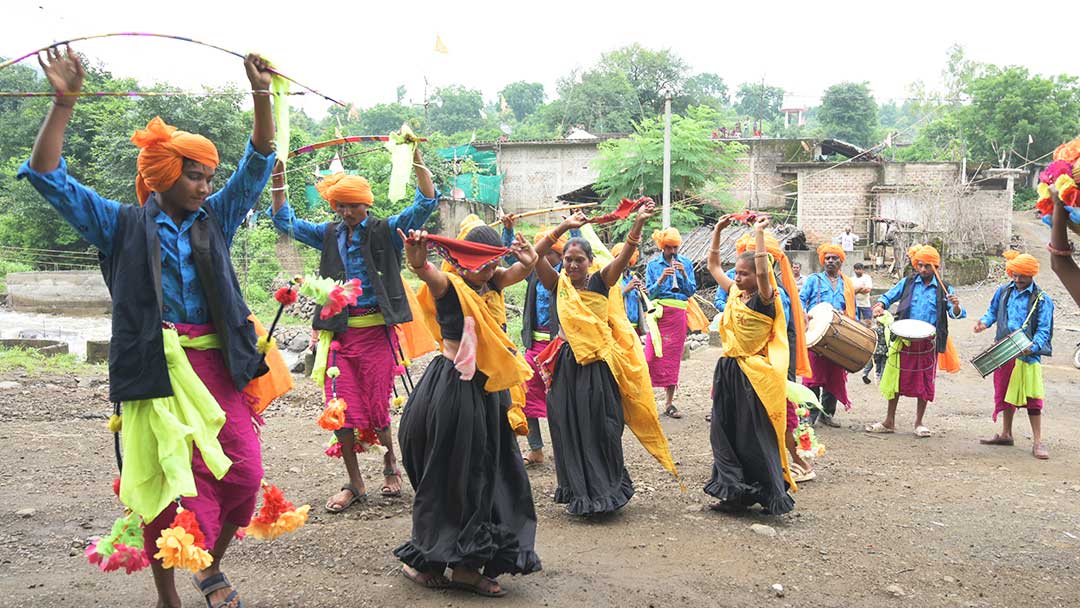
Bhagoria dance is a folk dance of Bhils, Bhilalas, Barelas and Palas, dominates in Bhilanchal of western Madhya Pradesh, the Bhil is the largest tribe group in Madhya Pradesh by population. A characteristic group dance performed as the people of the Bhil tribe group participating in the special weekly market of Bhangarya or Bhagoria Haat, which is played just before Holi in Bhilanchal. This festival, which is arranged once in a year, witnesses gathering of people from nearby and far away Bhil tribal community. The fest also acts as a ground for interaction and allows new people to indulge in knowing each other. Even the marriageable young men and women get a chance to opt for their life partner of their choice in this fair. Now let us get to know about Bhagoria festival and its unique dance system.
Introduction and History
Beginning and Background
Let us now get to know the tribe group of Bhil associated with Bhagoria dance. The seventh entity in the list of Scheduled Tribes (ST) of Madhya Pradesh issued by the Government of India is Bhil, Bhilala, Barela and Palia. We will name them Bhil tribal group. As per the 2011 census the number of this group is 59,93,291, which is 39.13% of the total number of tribal of Madhya Pradesh. This indicates a large number of immigrant tribe belongs to Bhil in Madhya Pradesh. This is a tribal community localised mainly in the western part of Madhya Pradesh which includes districts like Jhabua, Alirajpur, Dhar, Khargone, Barwani, Ratlam, Mandsaur etc. Other than Madhya Pradesh, they were found in Rajasthan, Gujarat, Maharashtra, Karnataka, and some other states. The etymology of the term Bhil may be from Dravidian, adorable to the words ‘Vill’ or ‘Villu’, supposing bow. Since then the word 'Vill' started to be pronounced as 'Bhill', which we also later pronounced 'Bhil'. The output of 'Bhidanti iti Bhillah' in Sanskrit is the one who pierces is bhil i.e. Bhil. That is how in Mahabharata times, Bhil Kumar Eklavya, became a great archer.Bhagoriya is a type of traditional dance of Bhil tribe group. Bhagoria festival, this dance moves came from bhagoria festival. Hence, it is performed primarily in Bhagoriahat. The history of Bhagoriahat comes from the antediluvian Bhilanchal which had three locations namely Bhagor, Palwa and Rath. The stately seat of Bhagor state of those days was Bhagor village near Jhabua. Bhagga Raja i.e. Bhagorya Bhairu settled there. This is the same king who initiated the Vasantotsav in Bhagor, the capital of the state during Holi. During that grand fair which was organized in Bhilkshetra people of Bhil community, along with their family members used to come to participate in it, singing and dancing with traditional instruments. The joy was so intense that a new dance style sprang from there in that impulsive joy. It served as a rare community interaction event. It was a place where new relationships were formed, and needed goods were procured. The festival of Bhagoriahaat /Bhagoriaa dance that was multi-tinted also gained its fame.
Introduction to Bhil Tribe
So, now let us familiar ourselves with the Bhil tribe. Therefore it is one of the large tribe of India which basically located in Madhya Pradesh. This is a tribe with unique culture, tradition, social life.The antiquity of this tribe is related back in history. The name Bhil is supposedly derived from the word "Vill" means "bow". The tribe is known for the traditional use of bow and arrow. Even ancient texts such as Mahabharata and Ramayana talk about Bhils. The villages of this community are predominantly found in hilly and forested areas. Bhil tribes people mainly use Bhili as their mother language, also other related communities use Bhilali, Bareli and Palia languages. Other than this, at places of this community, Hindi, Gujarati, Marathi and other regional languages are also spoken by people. The society of the Bhil tribe it is a Patriarchal society, wherein the head of the family is a male. There are tribal units and each clan has their chief. Fishing and woodcraft are the primary occupations of the Bhil tribe, supported by agriculture. They grow jowar, millet, maize and oilseeds. Apart from this, their primary occupations include hunting and fishing. The Bhil tribe main festivals are Holi, Diwali and Bhagoria.
Characteristics of the Dance
Next we are going to study the key features of the Bhagoria dance. This is one of the famous customary dances of the Bhil tribe which is performed significantly on Holi in the Bhagoria Haat as previously mentioned. The attributes of this dance form make it distinct and unique to their culture.
Main Features
1. Marriage and love symbol: The traditional dance Bhagoria gives a chance to boys and girls of the Bhil community to choose their life partner of their choice and propose marriage. In this particular community, such dance is considered a custom of the love and marriage.
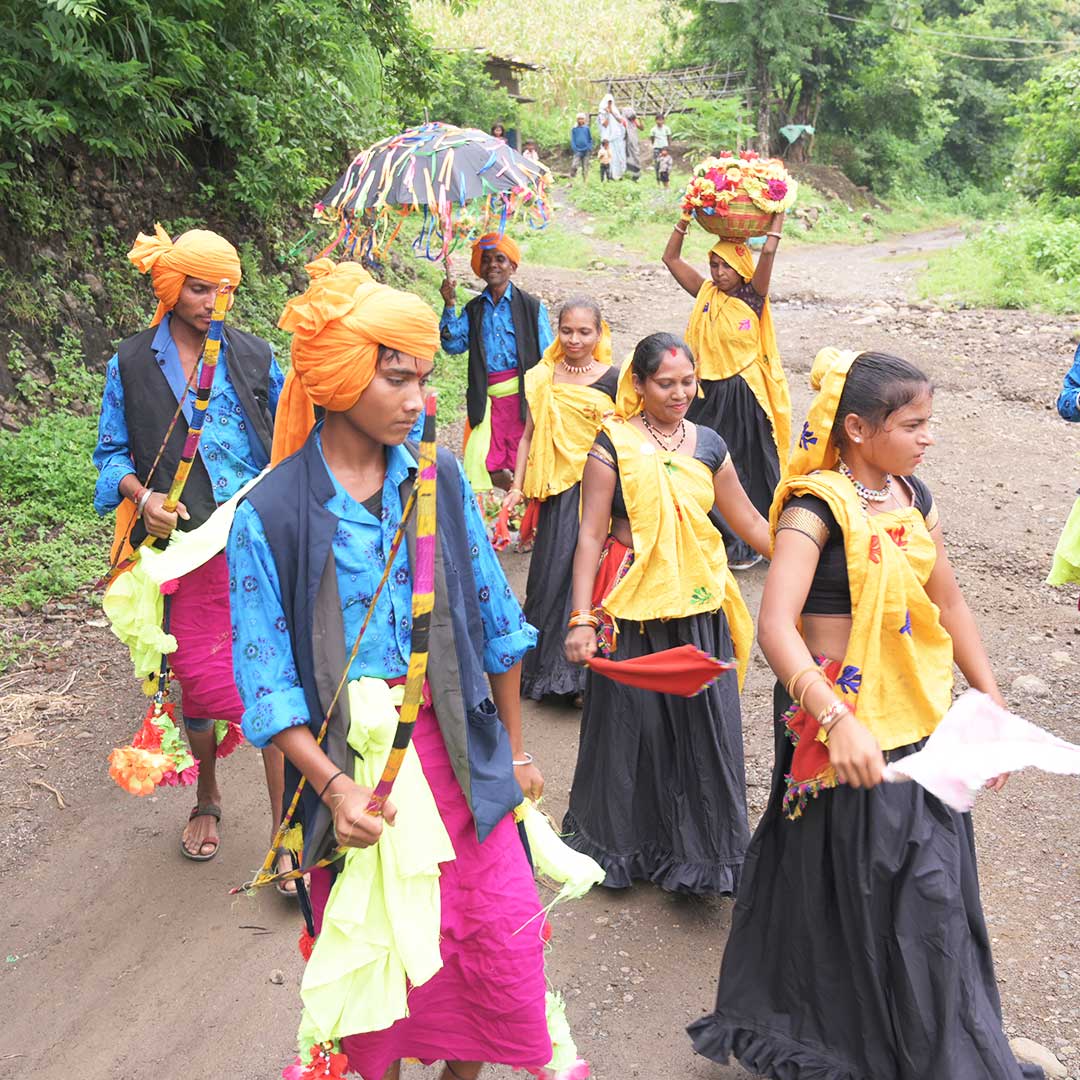
2. Traditional dresses: Bhil traditional dresses are worn during dance and this is known as dancers dancers. Men beat dhoti, kurta and turban, and women wear Ghaghra Choli and Odhani. The jewelry and makeup too, are conventional.
3. Musical Instruments: But during this dance, Bhil traditional music is played. Thus it involves the instruments like dhol, mandal, flute and shehnai, which maintains beat and rhythm during the dance.
Common Steps and Their Description
Each stage (pada) of the Bhagoria dance signifies its own importance and uniqueness of culture. All this steps not only make the dance dynamic but also make it a dance full of high spirits and alerts.
1. Aadi Taal: The first step is executed at the starting point of the dance. The dancers stand in a circle and sway to the beat of either the dholak or mandal. For the padmudra therefore the steps of the dancers face towards each other and they move according to certain beat which provide the gist of the dance.
2. Rotating Step: This is an exercise where dancers dance in place while moving This step is used to get the rhythm and energy into the dance. The dancers rotate in circles to each other and also move their hands in a rhythmic way. During this step, the dancers usually wave traditional clothes, creating extremely delicious scenes.
3. Parallel Step: Same Direction Same Step It offers togetherness in the step dance symbolic of unity. They raise their legs up together and then slowly sends them down creating rhythm and beat to the dance.
4. Crossing Step: In the crossing step dancers cross their legs as they step. This move introduces some variety and complexity into the dance. The dancers enter one way and exit and come in the other way. Here, the dancers also intertwine and twirl about, enhancing the scene a step further.
5. Jhoomta: The jhoomta step is full of excitement and exuberance within the dance. Here, the dancers take a step by gently swinging their body. They groove together and wave their hand to the beat. This step (Stomp Step) brings a rhythm to the dance and co-ordination amongst the dancers and makes it experience for the audience as well.
6. Jump: In the Fourth step, the dancers jumps high from their place. This step adds uniqueness to the dance. They freeze and jump in the same time together and then they bounce back to their positions and keep the beat. Once this is performed, the dancers beat their traditional garments that brings a very colorful touch to the dance scene.
Rhythm and Tal
Now, letting us know about the beat taal of Bhagoria dance. What makes Bhagoria dance standing out and imba is the rhythm and taal that is uderstand by everyone doing this dance. The dance rhythm and taal not only regulates the frenzy of the dancers’ movements but also enriches and rejoices the hearts of the audience.
Identifying the tempo and taal of the dance
1. Role of rhythm and taal: The rhythm is the architecture of the dance, it is made with a specific number of beats. Rhythm plays an important role in Bhagoria dance, because it regulates the steps and movements of the dancers. Beat is imparted via dhol, modal and different percussion devices. The rhythm and the taal is like the stairs on which the dancers place their feet, generates their energy, and perform the steps. Bhagoria dance is characterized by its enthusiastic and lively rhythm that energizes and invigorates the dance.
2. Rhythm structure: There is a some what simple yet appealing rhythm structure in this dance. Taal in the most common form is in 8-matra, also known as the 'aath maani' taal. In addition to this, 6-matra and, 12-matra are also used in some of the dances. The dancers steps increase as per the taal, helping to ensure that the dance is balanced and in sync with one another. So, in aath maani taal, they repeat their steps after every 8-matra, or at the completion of the aath maani cycle.
3. Tempo of the dance: The Bhagoria dance is generally a fast and exciting dance. The dancers at a fast pace and showcase their energy and enthusiasm. The tempo of the rhythm can differ at various levels of the dancing. The tempo, as an example, may start slow and then increases as the dance goes on. This alteration of pace gives the dance both diversity and depth.
Different categories of taal and their use
Now let us try to understand the different types of taal and their application in Bhagoria dance. In this dance, various types of taals are mentioned, which define a particular rhythm and form of the dance. In Bhagoria dance, there are three major types of taals Aath Maani Taal, Chhah Maani Taal and Twelve Maani Taal.
1. Aath Maani Taal: This is the most used taal for this dance. It has a total of eight beats that dancers move with steps through balancing and in sync. This taal is also played for starting and main sequences of dance, in which the dancers make a circle and do their hand gestures in rhythm to the taal. Aath Maani Taal keep the rhythm even and level in a dance.
2. Chhah Maani Taal: Chhah Maani Taal has six beats and therefore is featured in both middle and quick steps of the dance form. The speed and energy of this taal turns it into a dancing taal. This taal is of a quick pace and the dancers show their rhythm through their body. Chhah Maani Taal is the Taal which works with zeal and zest in the dance. That drives the performers and the audience.
3. Twelve-Mani Taal: Three additional beats introduce a level of complexity and variety to this dance. There are twelve beats where the dancers show off their moves through intricate variations. This taal is used in most advanced levels of the dance and in special presentations. The dancers show their art forms of different dance positions on this dance of Twelve-Mani Taal, which is very alluring of this dance form.
Costumes and Instruments
Traditional and Modern Costumes of Bhagoria Dance is the topic next after Introduction to Bhagoria dance. The mix of traditional and modern costumes makes it unique, and that is even a reason why it attracts people. Widely accepted as a cultural heritage of the Bhil tribe, the costumes in this dance express the identity of the dancers and their cultural values.
Traditional and Contemporary Costumes
Traditional Costumes:
1. Now comes the turn of traditional male costumes. When spotted, the men wore dhoti and kurta with white or color. The dhoti is wrapped around the waist and the kurta has full sleeves, and also tie on the head a traditional safa i.e. turban which is very colorful. It is tied in a special way. Bangals, Ear rings, Toe ring are their traditional ornaments.
2. Likewise, the traditional dresses of women give way to extremely colorful ghagra (loose, flowing long skirt) and choli (blouse). Decorated with their traditional embroidery and designs to wear this dress. The dupatta, or scarf, that is traditionally colourful, which covers the head and shoulders, is wrapped in a particular style. The articles women wears in jewelry matter neck bangles nose rings earrings and anklets. These ornaments are the part of their traditional dress up.
Now, let us see them to know their modern dress. Today, in addition to traditional boutiques for men, shirts and pants feel modern for men. Other men are wearing jackets and blazers too. You can see such dresses during dance in special events. A few of the ladies have started wearing saree as opposed to customary ghagra choli, giving a cutting-edge stint. Albino wear modern dress such as in the form of Salwar-kameez, which among other is a dress of choice for women during dance. Bhil women are being attracted towards the new fusion of traditional and modern elements, the modern designer dresses.The traditional and modern costumes worn in Bhagoria dance is one of the major features that make it unique and also help in preserving the culture. Traditional costumes are the true representation of the identity of the Bhil tribe whereas modern costumes bring in a contemporary feel to the dance. The traditional wear when comes together equips a unique but appealing look to the Bhagoria Dance, which thus allows dancers and spectators to relish the event of festivities.
Characteristics of costumes and their cultural significance
Now, let us break down these costumes and their cultural importance. Traditional and Modern costumes in Bhagoria dance and their cultural significance are:
1. Traditional men's:
The men's costume comprises of white or colored dhoti and long-sleeved kurta. These are comfy or dance-ready clothes. They also means culturally. The Bhil tribe is the most popular tribe in the western tribal region and they are wearing Dhoti and kurta which is their traditional costumes and it represents their culture. Such art incorporates a costume that reflects their village and natural life style. A unique patternturban worn on the mind is of cultural value and a symbol of pride and honour for males. In Bhil society, it embodies social and cultural prestige. Jewelleries such as bangles offer a stronger association with culture and community identity along with toe rings and earrings. In addition, they mirror societal status. These jewelleries are traditional in design preserving their heritage and are made up of silver, gilt khadi metals.
2. Traditional dress of women:
Well embroidered and traditionally rich Ghagra (long skirt) and Choli (blouse) worn by women here are cured in variety of colors. Bhils wear Ghagra Choli as their traditional dress. It is also indicator of their culture and social standing. It is a part of their way of living and culture. Odhni is not only a head and shoulder covering, but except of covering head and shoulders, colorful Odhni (dupatta) is also the symbol of modesty of women, as well as their honor. Traditional dress, which expresses the social status and religious beliefs of you the simplest way. Jewellery forms an integral part of the attire, among which bangles, and necklaces, nose pins, earrings and anklets occupy an important place. These female ornaments date back to their culture and status. Such ornaments decorate their body and enhance their social status. These are built up of conventional metals and patterns.
Features and cultural significance of modern dresses:
- Modern dress of men: The Bhil youth also seem to prefer shirts and pants over traditional dhoti-kurta which is a natural tendency to keep with the times and modernity. Kurtas well before kurtas actually were their love for jackets and blazers worn on special occasions must be looked at in the same light. Today inside is an indication of the advancement of custom blend with current way of life. It is also a manner of being cognizant of the times.
- Features of modern women's clothing: The Indian society wears a traditional outfit called saree like the Bhil women. This dress has traditional and modern items. Salwar-kameez is comfortable. The Bhil women are coming up with their choice of clothing which is yet to the clothing range of Bhil Women. These clothings shows the integration of both their new age culture and contemporary society along with their customs, traditions and way of life. Fusion clothing is a blend of tradition and modernity.
Major instruments and their features
Next let us explore the traditional instruments that are played to make Bhagoria dance. Unlike other musical instruments, the unique shape, form, structure and sounds produced by them makes them distinct and different and their collective musical waves multiply the joy and cheerfulness of Bhagoria dance. These instruments form an essential part of the tunes and rhythm that add momentum to the dance. These prominent instruments are Dhol, Mandal, Vahali (flute), Fefaria (Shehnai):
- Dhol: The main instrument of this dance, known for its deep and booming sound.
- Mandal: Modal is also a significant instrument, where it has a lighter and sweeter sound compared to Dhol.
-
Vahali: Vahali i.e. flute is a sweet sounding instrument, which gives sweetness and sound quality to the dance.
-
Fefaria (Shehnai): It is an essential instrument for the dances of the Bhil tribe, and its sound is quite distinctive and heart touching.
-
Conservation and Modern Influence
Next we will learn about the preservation of traditional styles and methods. Retaining traditional styles and methods, especially in terms of cultural heritage and community identity. There are some significant traditions and techniques typically done to preserve usual dances like Bhagoria dancing. Such as educational activities, cultural events organisation, and social engagement.
Preservation of traditional styles and methods
Dance and arts from the traditional works should be naturally integrated into the curriculum of schools and other cultural institutions. These processes tell and train the youth what their culture is about. Reviving the traditional Guru-Shishya parampare where senior artists impart knowledge and skills to the next generation of artists. This method is one of the key elements in preserving the traditional styles and techniques. Conducting cultural festivals at local and national level, one can see how local bajans and arts are performed. This is a way to provide a platform to the artists and popularise their work among the masses.Traditional dance contests in which they did what and got paid. This inspires and encourages young artists Local level community dance groups to rally to preserve traditional dances/arts. These groups also conduct cultural programmes and take care of the artists. Conducting community workshops that teach traditional dances and arts. Not just in providing abilities but in bolstering community organisation.
Contribution to education and impact of media
Just as the impact of media on Bhagoria dance, the function of Bhagoria dance in education will also be interesting to know. Specifically, education and media play a significant role in the culture domain. Since, Bhagoria dance is bearing the heritage of ancient culture, so, through education and media this Bhagoria can be imparted to forward the cultural consciousness in the society.
1. Now this Bhagoria dance which has its roots in the tribal regions of Madhya Pradesh will be introduced in the state education curriculum medals of schools and colleges so as to give students Education in regards to the tradition of Indian culture. This dance can play a significant role in cultural learning that bonds the younger generation to their culture. Dance workshops and training programs must be organized which teaches the different styles of Bhagoria dance. This provide the student the skills they need to dance but also creates knowledge of cultural beliefs and traditions.
2. Bhagoria dance education increased co-ordination in the community and increased co-operation in the society. A shared cultural experience among diverse participants fosters social cohesion. Dancing teaches choreography, fitness and creativity. Tackling it can be great for students, ensuring both mental and physical development
Influences of Media:
1. Media, particularly television and the Internet are a major part in this campaign of this Dance. Its performances and documentaries allow people to watch and learn about the craft, and will raise cultural awareness as well. Dance reaches a wider audience as it is broadcasted through media covering cultural festivals and events. This makes them more curious and knowledgeable about the dance.
2. Disseminating video tutorials, and documentaries of Bhagoria dance on digital platforms This type of content then preserves the ways and forms of the respective dance to enable others to access the teachings in the future. Social media sharing different components of the dance for both local youth and global audiences. Hashtags, posts, and videos facilitate the promotion of the culture of dance.
-
Conclusion
Bhagoria dance is one of the significant dances of Bhil tribe of Madhya Pradesh and it depicts their rich traditions, lifestyle and social structure. This 2 hour Bhagoria dance course takes you through the origin and history of the dance, its technique, rhythm, costumes and the instruments used. This course is meant to make its participants familiar with the distinctive qualities and significance of Bhagoria dance along with the need to protect this dance form.
Review of Key Points and Techniques
Description: Bhagoria dance is one of the most important and a rich, distinctive folk dance of bhil tribe, and a popular custom in western Madhya Pradesh. This sort of dance is primarily performed in Bhagoria festival associated with Holi celebration. In order to know the roots and history of the Bhagoria dance we must look into the history and culture of the Bhil tribe. As one of the oldest and significant tribes in India, the Bhil tribe is a Tarzan-like human that lives closely with nature. The Bhagoria dance is an expression of the tribal culture, tradition and community life.This dance is not just a cultural program but also an important opportunity for the youth of the Bhil tribe group to select a life partner. This dance has a unique place culturally as it represents collectivism, celebration and community integration. Here, the woman wearing colorful saris and ornaments and the man wearing traditional women dhoti, kurta and turban by the Bhil community of the dance Bhagoria. In this Dance the dancers dance in a circle and they make the adjustment in the steps according to the rhythm of the musical instruments with the tune that consists of musical instruments such as dhol, modal and turi.The Bhagoria dance is dynamic and is performed in a mass. The presence of various dance forms and variations adds further richness to this dance. Variouse postures and techiches used while dancing such as Right-left tilt, Circuler Turn, Stepping according to every different type of rhythm. There has to be a synchronization between the dancer and the musicians to understand the beats and rhythm of this dance.Dhol, Mandal, Turi, and Thali are the key instruments played in the Bhagoria dance. The lively sounds of these instruments play an important role in the dance, making it all the more appealing. These instruments play the role of controlling the rhythm of the dance so that the dancers can match with its beats. Besides this, the costumes of Bhagoria dance are another significance of it. Enhancing the beauty of the dance, the folk dance enacts the traditional one, adorned with traditional costumes and jewellery, illustrating its cultural background.