

Gond Painting
This course is designed to explain the history, characteristics, and cultural significance of Gond painting. In this course, you will get an in-depth understanding of the basics of Gond painting, its origins, and the process of making it.
 Most Viewed
What you'll learn
- Deep Understanding of Gond Painting : Students will understand the origin, history, and cultural significance of Gond painting in detail.
- Identification of Characteristics and Techniques : Identification and understanding of the specific characteristics of Gond painting and the techniques and tools used in it will be developed.
- Knowledge of Major Themes and Themes : Students will identify major themes and themes used in Gond painting and understand their importance.
- Creativity and Art Making : Students will be able to create their own art using key elements of Gond painting and develop their creativity.
- Need and Importance of Conservation : By understanding the need and importance of conservation of Gond painting, students will be able to consider the measures for its conservation.
Couse Features:
- Comprehensive Video and Audio Lectures : Engaging video and audio content that will help in understanding various aspects of Gond painting in detail.
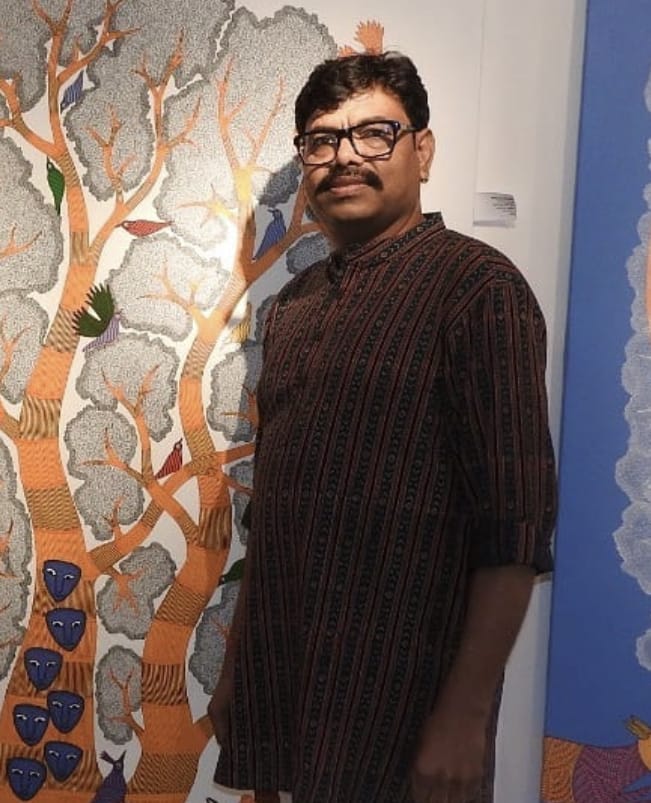
- Guidance from Expert : Special guidance and information from Master Trainer of Gond Painting, which will give students deep understanding and inspiration.
- Interactive Knowledge Test : Quizzes and assignments after every important section, enabling students to test and improve their understanding.
- Study work and case studies : Study work and case studies for students which will boost their creativity and skills.
- Cultural Insights : Comprehensive information about the Gond tribe and their cultural heritage, which will help students understand the historical and cultural context of Gond paintings.
Who Should Enroll
- Those interested in exploring traditional Indian art forms and learning about the unique characteristics of Gond painting.
- Individuals keen on understanding the history and cultural significance of the Gond tribe and their art.
- Aspiring artists looking to learn about the tools, materials, and themes involved in creating Gond paintings
- Teachers and instructors who wish to incorporate knowledge of indigenous art forms into their curriculum.
- People passionate about preserving traditional art forms and promoting cultural heritage.
Description
What is Gond Painting?
About Gond Painting
The objective of this course is to know and learn the great lineage of Gond painting its cultural importance and nuances. Gond painting is a traditional art form of the Gond tribal community in Central India, that is primarily known for its bright and bold narratives. In this course, we will explore the history, religious and spiritual aspects of Gond painting, technique, contemporary relevance and key artists. You will also be assigned projects and assignments on Gond painting, giving you an opportunity to learn and experience the art.
History of Gond Painting, Religious and Spiritual Elements
The origin of Gond painting can be traced back to the Gond tribal community to which its history is closely linked. This tribe is largely habitating the Central India. The Gond painting portrays Gods and Goddesses, legends and stories, religious symbols and signs. Religious and cultural beliefs and local myths are aesthetically illustrated with dots also short long and unique lines as subjectively imagined and are filled with the colors of nature. In Gond painting, colors and symbols are significant to the meaning of the artwork.
Introduction to Gond Tribe and their Brief History
Gond is a prominent tribal group of Indian subcontinents. This tribe lives in the forested regions of Madhya Pradesh, Chhattisgarh, Maharashtra, Odisha and Andhra Pradesh. The gondians are also amazing one can find the history of the gond people at many centuries before, the gond people were living in Indian subcontinent in 'Gondwana Land' named place.The tale of Gond tribe is a history of varying, and opposition. This tribe in its early age was organized socially and politically on a tribal system, however it formed a solid social foundation. Under that arrangement, every clan or section had a chief, who could take decisions to do with the group. Indian chronicles and Indian archaeological records also provide reference to Gond tribe.History The Gond tribe was not empire builders, nor religious fanatics. This wise, strong and powerful tribe had built the Gondwana Empire and ruled between the 14th and 17th centuries. Several Gond states emerged in the regional politics. Amidst British expansionism even the Gond kingdoms too would succumb to their control and thereafter have to deal with colonial strategies and administrative reforms.
Habitats of the Gond Tribe
The Gond's are an important tribal group in the several Indian states. It is found predominantly in different forests and hilly states, which includes Madhya Pradesh, Maharashtra, Chhattisgarh, Andhra Pradesh, Telangana, Bihar, Odisha and so on. Let us explore this subject a bit more:
- Madhya Pradesh: There is a big population of Gond tribe in the Dindori, Mandla, Betul, Chhindwara, Balaghat, Seoni, Shahdol, Umaria, Pushparajgarh, Sidhi, Satna, Sagar and Raisen, etc. districts of Madhya Pradesh. Here the woodland and hill tracts form the home of the Gonds who gain a living by agriculture, hunting, and gathering of forest produce.
- Maharashtra Adivasis like Gond tribals is found in the Gadchiroli, Chandrapur Nandurbar, Amravati districts of Maharashtra. The Gonds living in this tract continue to be agriculturists and forest dwellers, adhering to the ways of their forefathers and still attaching to their songs and dances in the common socio-religious events.
- Chhattisgarh: In Chhattisgarh, the Gond Tribe lives primarily in almost all the districts of Bastar Division such as Surguja etc. The thick forests and hills of Bastar are an integral part of Gonds’ traditional way of life, involving agriculture, collection of forest produce and hunting.
- Andhra Pradesh and Telangana: Gonds live in Adilabad, Karimnagar, Khammam, Kurnool, Visakhapatnam Vijayanagaram etc. districts of Andhra Pradesh and Telangana. Here, they primarily depend on agriculture and forest products for their livelihood.
- Odisha: The Gond tribe live in the Kandhamal, Navarangpur, Koraput etc districts of Odisha. Here also, their way of life and customs are controlled by the geographical characters of these tracts.
Beside those said, The Gond tribe group also spread in certain regions of states such as Uttar Pradesh, Bihar, Jharkhand, West Bengal etc. Geographical Feature of Habitat and Its Influence on the Social Structure/cultural Identity/ custom of Gond 6The Social Structure, Culture and one s Own Identity of the People of Gond 7The Social Structure, Culture and Habits of the People of Gond The geographical characteristics of their habitat make a deep impact on the cultural identity, traditional custom and social structure of the Gond tribe.
Origin and Cultural Significance of Gond Painting
Gond painting is a form of painting from folk and tribal art that is practised by one of the largest tribes in India with whom it shares its name. The traditional basis for this craft work lies in the socio-cultural life of the tribal community. This art form has been practiced traditionally by the Gond tribe from Madhya Pradesh, Chhattisgarh and Maharashtra. Gond painting is inspired by a life that is connected to nature, to the rituals of daily life, an existence that is always relating to a power beyond ourselves. Right from its inception, local resources and organic material were input to express the art form.Gond paintings are a reflection of their religious Background: In terms of their culture, Gondwana has historically been a place of tribal festivities and celebration. These paintings close up in further images of nature, plants, animals, birds and mythology which are the important aspects that reflect the Gond community’s religion and culture.Gond painting has gained recognition nationally and internationally in recent years. Not just a significant facet of tribal art but a substantial part of Indian art and culture.
Gods and Goddesses, Folk Tales and Religious Beliefs
The gods and goddesses, oral tales and religious beliefs mentioned below are central to the imagination of Gond artists, so this information should be kept in mind as the subject of Gond paintings.
Gods and Goddesses:
Gond paintings depict images of gods, goddesses, whose images function often as the folk belief and their religious faith. Some of the most important gods and goddesses include:
- Padapen or Badadev: The supreme deity of the Gondologn. The Gond tribes revere him as God. He is khud Mahadev's equal.
- Lingopen: (As a god of arts and a form of Shiva). He is also known as the father of every arts and dance and music etc are believed to be his arts.
- Thakurdev: The (guardian/deity) of the village.
It narrates about still many gods and goddesses like gods—Hardulala (Patel Baba), Dulhadev, Bhainsasur, Khilamithua, Pathdev, Bhimulpen, Divagongo (Sooraj), Khanderai, Maradev etc. and goddesses—Kheromai, Gavradai, Chandi, Gangain Mai, Banjarin Mai, Budh Bhavani, Panghat Dai, Khokhli Dai, Seven Sisters (Chilkan, Chaban, Kodhan, Phodan, Regan, Phoolan and Fulesh) etc. And it talks about how these gods and goddesses are shown in Gond paintings through ritual themes.
Oral stories:
Gond paintings have oral stories and myths of the Gond community, which hold great importance as they are engraved in the memory of the Gond community, and at the same time, it displays that how much it represents the culture, religious faith and traditions. These paintings are a tool for them to artistically express their history, beliefs, and their vision of life. Now, let us try and understand some of the essential folk tales and myths in detail:
- Jal Katha - According to a traditional story, once upon a time water spread all over. Into this water, Bhimuldev ploughed helped him and the earth was formed. In another Tale; Mahadev thought of making the man. So, he told the crow to bring the soil! The crow flew off to hunt for earth in the water. He saw a crab. The crow said to the crab – Get some soil from somewhere brother, Mahadev has to make a man kya! An earthworm was caught, the crab squeezed its stomach. The crow now took the earth out of it and delivered it to Mahadev. From it Mahadev made a man's figure, gave him life and an axe into his hand. He was called Baiga. After he left for the forest, he never came back. Seeing this, Mahadev took some of the remaining soil and made an effigy like this and breathed life into it and gave it a plough in its hand. He began to till the ground with the plough. He was called Gond. It is a landmark folklore of the Gond community and narrates the story of the origin of earth and living beings from water and their abundance.
- Dhanushkatha – Dhanushkatha is a mythological or historical story, symbolizes power, bravery and struggle. Which in this story, there has an hero or warrior, who shows rare type of a courage with arrow-bow. This story is that of those heroes, who with their perseverance and bravery, saved the society. Apart from this story, in Gond paintings images of arrow-bow and those warriors are also marked, which tell us about the culture and social structure at that time. It is a story that expresses the power and the fight of the Gond society.
- Vrikshakatha – Vrikshakatha is also significant among Gond paintings because it depicts a relationship of the Gond people with plants, trees and trees. Members of the Gond tribe worship nature. Trees are significant in their religion and culture. In this tale trees are depicted as the lifesavers, that not only provide oxygen but signifies the spiritual and material upliftment of the society through avocation of a culture to save lives by saving trees. Gond paintings use different colors and shapes to represent different traditions within the tree such as leaves, flowers, fruits and their roots. They exhibit trees and their worth and urge you to admire and protect trees.
Religious beliefs:
Gond art is heavily inspired by mythology and spiritual beliefs. Generally, these beliefs revolve around the ancestor worship and divine power of nature:
- Worship of Nature: Gond paintings reflect worship and rituals of natural entities such as trees, animals, birds, mountains etc, which are equally considered as a part of wellbeing.
- Ancestor Veneration: Gond society worships its ancestors, and these figures represent those offered veneration.
- Spirituality: Gond paintings are based on spiritual themes which portray different gods and goddesses and their tales.
Characteristics and Techniques of Gond Painting
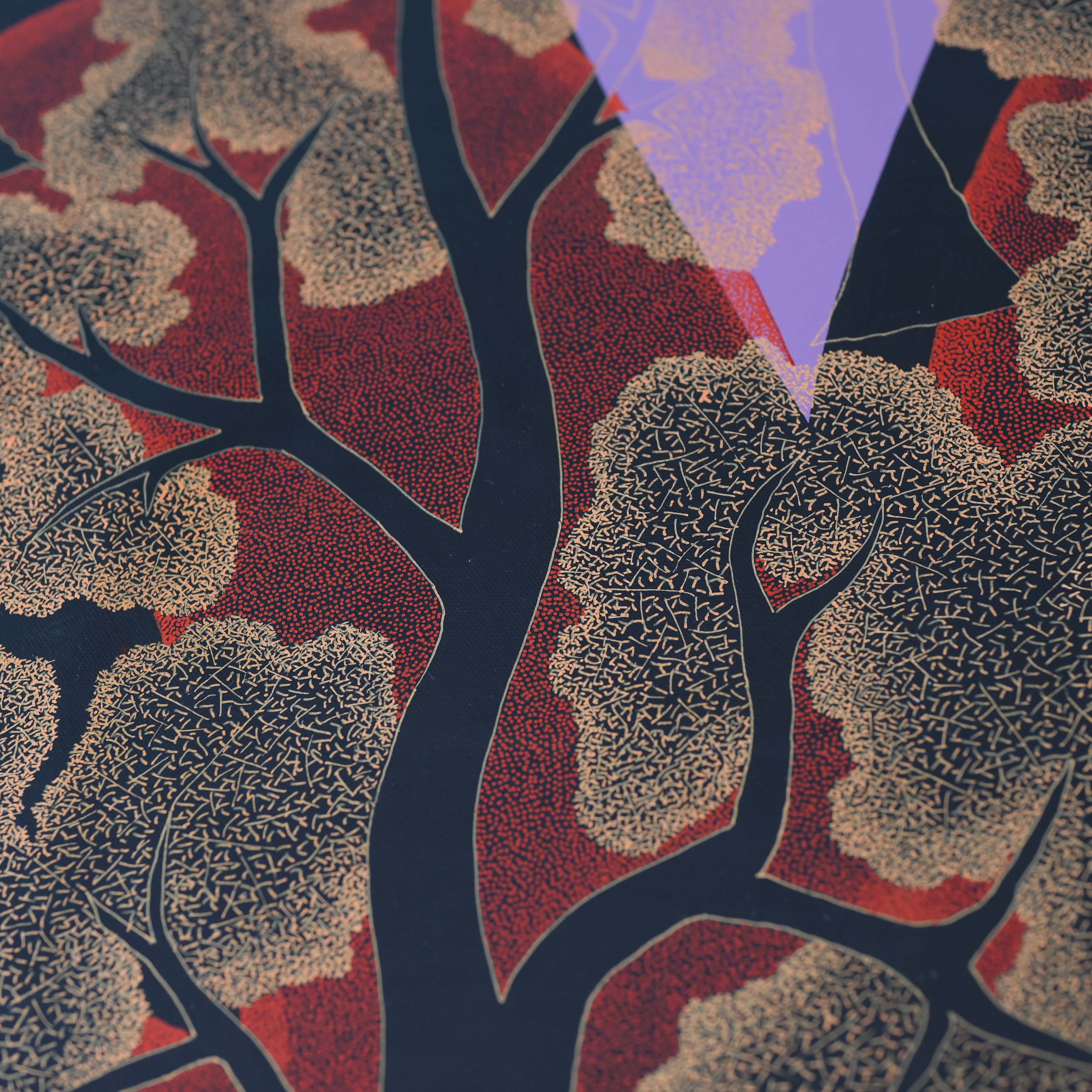
Vibrant colours, poetic designs, and earthly elements mark the characteristics of the Gond paintings. It is an art of painting using Natural colours and leaf extracts. It furthermore employs illustrative representations, and universal iconography. These paintings are based on tribal life and mythological rituals.
Style and Design
Gond paintings are different from other art forms due to its unique style and design. The beautiful Gond painting by the Gond tribe popular in the heart of Madhya Pradesh are modelled on imaginations, alive with colours and have the diversity of philosophy of life hidden in them.
Style:
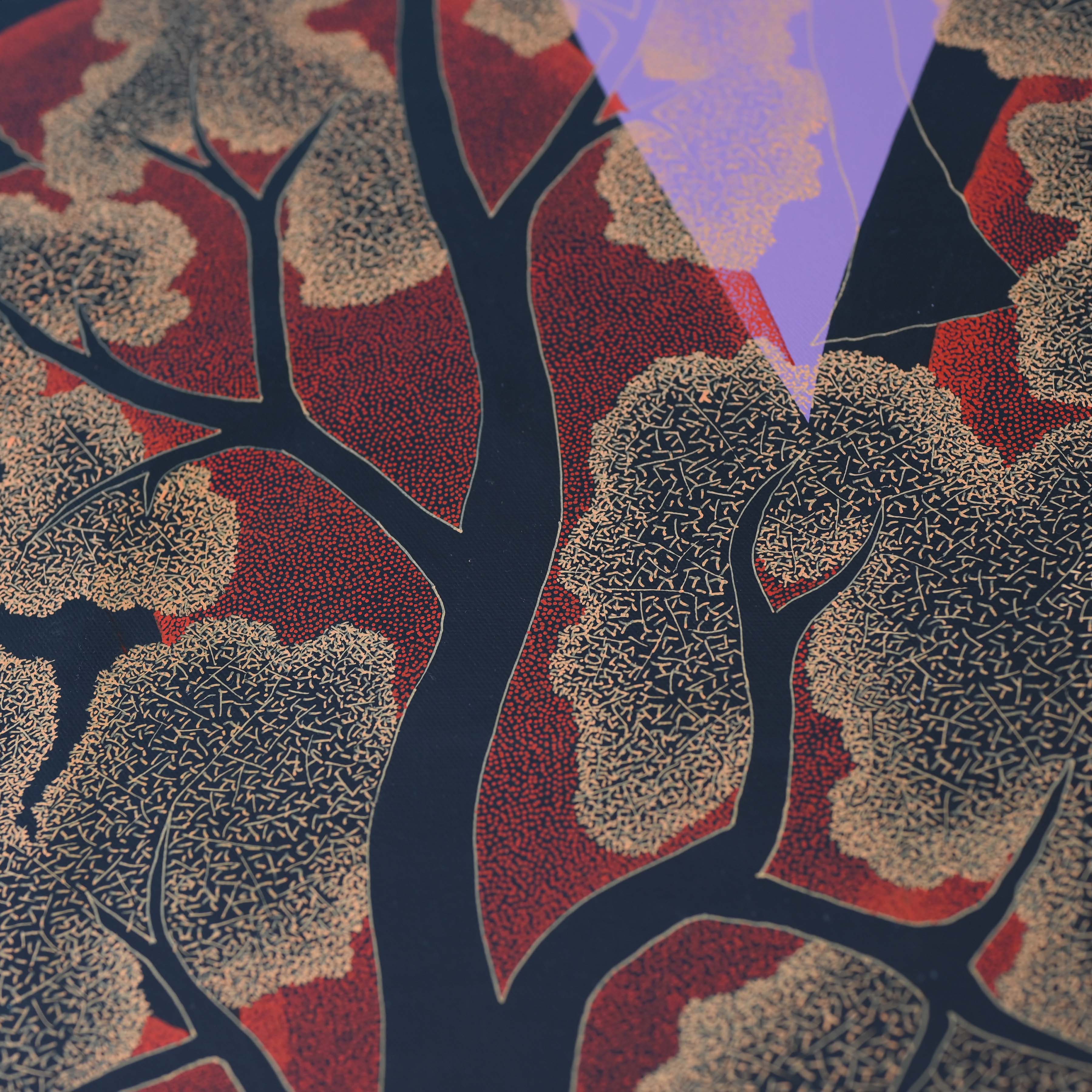
Gond painting style is entirely abstract and poetic in nature. This is through the imaginative abstraction and colourful perspective of objects and figures, not in an actual form. Several aspects of nature such as trees, plants, animals, birds and still human forms etc. appear in extraordinary forms and patterns.
Elements of Design:
Gond paintings have very unique design elements. Some Top Items Are:
- Organic Outline: Thin lines and delicate patterns used in the painting. By means of lines and dots, the animals, human figures and plants are all designed which forms a complicated but interesting and colourful fabric.
- Use of colours: Colours are very significant in Gond paintings Conventional paint colours comes from natural elements like leaves, flowers and minerals. The brightness and richness of the colours makes the painting more live and intense in mood.
- Symbols and Symbolism — The Paintings Incorporating the Symbols of Religion and Culture such as the Deities, Myths, and Scenes from the Traditional Customs These symbols are influenced by the ideology and culture of the Gond people.
- Carving: The canvas paintings are sometimes overlaid with dramatic carvings of white and black which helps to add dimensionality and spectacular imagery to the décor paintings.
Gond painting naturally derives its cultural identity and uniqueness and makes its a rank as a world art form, through its style and design.
Colour and Material
Pradhan community of the Gond tribal group of Madhya Pradesh are associated with Gond painting. The most colourful and one of the most unique among its own kind fun fact is this painting. The colour and material play a crucial role in this art form as they showcase the vibrancy and the cultural heritage of the paintings.
Colours:
Gond paintings are very thoughtful in relation to their usage of colours. In traditional Gond paintings, the following colours are used:
- Red: Represents passion, zeal and power. Red also appears in religious usage, in several ceremonies and when depicting deities.
- Blue: Blue represents the peace, sky and water. This color is often employed in paintings in order to present rivers, sky and other nature objects.
- Green: Green symbolises nature, greenery and liveliness. This has particular relevance in representations of flora and fauna.
- Yellow: Yellow represents new ideas, hope & wisdom It shines as a light in gods and religious figures.
- White and Black: White is purity and peace, while Black is depth and mystery. The black, primarily, is used to know the size and shape of the painting.
Materials:
Gond is one of the largest tribes of the world, and the paintings are done using natural, traditional materials associated with the Gond. The main materials include:
- Natural colours: Gond paintings are known for using colours made from natural materials including plants, soil, stone, and mineral based colours. A few examples are: charcoal for black colour, hematite (a kind of red clay) for red colour, and turmeric for yellow colour.
- Painting surface: Paper, cloth and wall are traditional surfaces for Gond art. The paintings painted in the walls are mostly used as the internal decoration of the house, especially in the villages.
- Brushes and tools: In Gond painting, fingers and natural brush strokes replace brushes. There are artists who make use of stones in painting also.
- Natural gums: Natural gums or resins used to fix the colours in the painting — it helps the colours to stick even more to the surface.
- Canvas: Canvas is used by modern Gond artists; Traditionally the paintings are made on wall/ clay, but it is good because it saves and use to exhibit the painting as well.
Basic Techniques
The Essential styles and patterning elements of Gond Art sincerely contribute to the richness and appeal of this art form. They are based on simple but efficient ways and were designed based on knowledge and practical experience. Below is the step-by-step tutorial to help you understand the fundamental methodologies of Gond painting and how to create patterns:
Basic Techniques:
- Background Preparation: The traditional Gond painting is done on the walls, cloth and paper. The background is cleaned in order to flatten and smooth out any areas, and, occasionally, it is painted with natural-coloured paint.
- Line drawing: Step one of the paintings process is line drawing. For this, artists generally used light colours or earthy colours. The term "line drawing" refers not only to something drawn with lines, but also to shapes, forms and designs. These are the lines that define the foundation pattern.
- Coloring: Once pencilling is completed, the comic is colored. Gond paintings are made with natural colours derived from charcoal, cow dung, leaves, gum and also beeswax. There is nowhere the brushes of the artists are not being gently used when they paint.
- Patterns and design: Artists added patterns and designs after coloring. The patterns are simple or compounded designs that generally contain geometric shapes, dots, and wavy lines. The complexity of the ornamentations is related upon the narrative and cultural content of the painting.
- Final touches: Artists add the final touches of painting in the completion stage. By that, I mean I'll do some color tweaks, clean the design up and occasionally add something more. The final details deliver the richness and robustness of the painting.
Ways to Create Patterns:
- hapes: Triangles, Circles and Squares Geometric shapes like triangle, circle, square are very prolific in Gond paintings. Such figures are a common motif in representations of gods and nature. These repeated designs lend an air of symmetry and elegance to the art.
- Dots and Lines: Dots and lines are used for designs. Dots are incorporated in particular with regard to colourful designs, and lines give shape and directions to the paint.
- Traditional Patterns: The traditional patterns will show deities, animal life, plants and flowers, and spiritual symbols. These stylish also depict the Gond tribe cultural and religious conceptions.
- Natural factors: The artworks include natural factors like trees, animals, water patterns. These features are signature of Gond paintings and depict the bond between life and nature.
- Repetition of Forms a
- Geometric Snd Lines: In Gond paintings, forms and lines are repeated. This gives a harmony and rhythm to the design, which renders the painting very rich and charming.
Contemporary Relevance of Gond Painting
The relevance of Gond Painting is growing in modern times as it showcases tribal life and folklore in a format that is contemporary. The distinctive style and colour have brought it to the international stage of art, revitalizing cultural heritage and the art of the common people.
Importance of Gond Painting in Modern Society
Gond Painting: The Traditional Art of Madhya Pradesh that's so Relevant in the 21st Century Gond Painting (does not have too much repetition of words, hence even synonyms can be considered) The Importance of Gond Painting In Today's World Gond Painting is the folk and traditional art form of the Gond community in the central India. Its significance is not just rooted in its historical and cultural legacy, but this art form is making an impact in modern art, social awareness and economic development.
Cultural Identity and Heritage
Recognition and practice of Gond painting are considered as essential components of Gond tribe. This art genre is presented on tribal life, religious faith, lifestyle and custom. Gond Painting has acted as a way of preserving and spreading this cultural intermediary in contemporary times. This is the art form, that is nowadays being shown in various art museums and cultural institutions, contributing to the fact that this art has gained a wider exposure in the world. It keeps alive the cultural memory of the Gonds and familiarizes non-Gonds with their own legacy.
Contribution to Art and Design
The unique form and technique of Gond Painting has also influenced modern art and design xxxix. Its bright colors, classic motifs, and ethereal motifs have influenced countless modern-day makers. Things like this are explaining that Gond Painting is making waves in art projects, fashion design, and interiors. Integrating both traditional design into contemporary context and innovation takes place in new dimension of arts and design.
Social and Economic Impact
Gond painting has also played a crucial role in the economic development of the Gond community. Where artists are being recognized for good price and remuneration, they have the resources and the incentives to do better. The increasing popularity of Gond painting has created a more dynamic local art market and has given rise to a number of associated businesses. And this art has ensured employment in the rural areas leading to the better economy of the society.
Ways to Promote Gond Art
Gond art is an important part of Indian tribal art. There are many effective ways to promote it. These ways help in preserving, promoting and getting recognition for Gond painting at the global level. Here are some of the major ways:
1. Social and Cultural Events:
- Art Festivals/Exhibition may be held Gond Art: Art festivals and exhibitions to be prepared for displaying Gond art, Gond paintings and other art works can be displayed; Sadra Festivals Art festivals/exhibition to be prepared for displaying Sadra. These events make the art form known to a general public, both locally and internationally.
- Cultural Workshop: Conduct workshops demonstrating the process and skills of Gond painting. This will not simply make the art more well-understood, but also educate our own youth in this art.
2. Education and Awareness:
- Educational programs: The artform should be part of school and college curriculum. Gond art can be taught as a part of art history and cultural studies.
- Publicity Awareness Campaign: It is possible to generate public awareness through media, social media and other means of publicity to disseminate the importance and cultural significance of Gond art.
3. Commercial Initiatives:
- Art Market: Gond paintings should have special art market or boutiques established where Gond artefacts can be bought by art collectors and art lovers.
- This will ensure the art form becomes economically sustainable.Commercial Partnerships Gond painting designs need to be embraced for the production of more commercial products in fashion, home decor, and stationery and take Gond outside of its traditional markets.
Prominent Gond Artists and Conclusion
Late Jangarh Singh Shyam was one of the most celebrated Gond artistes. He is hailed as the revivalist of the Gond painting. Jangarh ji was well known for his unique point and line style. Ms. Durga Bai Vyam and Mrs. Nankushia Bord Shyam, Lens based artist also hails from the same village and she is wife of Late Jangarh Singh Shyam is another well-known personality. These Gadis turn myths and folk tales into a living presence. Shri Bhajju Singh Shyam One of the most well-known, young artists, who has gained international recognition with Gond painting. He has been feted with the President's Pride of Performance and Sitara-i-Imtiaz by the Government of Pakistan for his exceptional work in this craft. Other than him, Shri Anand Singh Shyam, Shri Gariba Singh Tekam and Venkat Singh Shyam are also famous for their colorful and distinctive artwork. Here's what we know about them:
Contribution and Style
Late Jangarh Singh Shyam
- Late Jangarh Singh Shyam is believed to be the renaissance of Gond painting. He has given prominence to Gond painting both within India and internationally. Famous Indian painter J Swaminathan got him from village Patan in tribal belt Dindori of the state to Bharat Bhavan of Bhopal. He then reimagined his traditional art and began to paint it on canvas. His efforts established Gond painting as a mainstream art.
- Style:The characteristic of Jangarh’s style is use of dots and lines. His works show intricate and elaborate patterns and unfold stories of nature and tribal life. His work is dominated by animals and trees and tribal myths that are part of Gond culture.
Shri Bhajju Singh Shyam
- Contribution: Bhajju Singh Shyam is the son of the Late Jangarh Singh Shyam. He has pursued the paths of his Guru and has taken Gond Painting to a world across. His art has gained him numerous international awards and accolades. Especially due to his book "The London Jungle Book". He has been bestowed with the Padma Shri in recognition of his remarkable work in taking Gond Traditonal Painting to the world level through his exceptional talent.
- Style:Shri Bhajju Singh has made his unique with sharp impressions of details and fine work. He explores contemporary issues in traditional Gond patterns. His works are characterised by distinctive colour profiles and odd symbols -- a spiritual testament to his wild imagination and the cultural legacy of his heritage.
Conclusion
Gond: Gond painting is a traditional Indian art from Madhya Pradesh, typically practiced by the Gondi people (the largest tribal group of Madhya Pradesh, India). What makes this art form intriguing is its colour and craft in which the traditional symbols are depicted. It is the cultural heritage of the Gond people. Style The most distinct feature of Gond painting is its style of using Dots, Lines and Geometrical figures. This art is painted with natural colors that are obtained from flowers, leaves and derived from soil, these colors give the painting a natural glow and beauty.References to the natural world, animals, trees, and landscapes, as well as to cultural and religious symbols pervade God paintings. These paintings usually contain traditional Gond tribal oral traditions and mythology that reflect different elements of Gond life. With these symbols of art, the Gonds keep their traditions, religious beliefs and social structure alive through the painting.Therefore, Gond painting is not just an art, it is a tradition and culture to the Gond people and an aspect of their historical legacy that we want to protect and promote.