

Jagor Dance
This course offers an immersive exploration into Jagor, the vibrant folk theatre tradition of Goa practiced by the Gawda community. Unfolding through dance, drama, and music, Jagor reflects centuries-old rituals, mythological tales, and community life. Participants will gain insights into the cultural roots, performance techniques, traditional instruments, and evolving role of Jagor in modern society. The course also sheds light on the social structure of the Gawdas and their contribution to preserving Goa’s rich intangible heritage.
 Most Viewed

What you'll learn
- Cultural Roots and Tribal Ethos : Understand the Gawda community’s social structure, beliefs, and rituals shaping Jagor.
- Theatrical Elements and Performance : Explore Jagor’s mix of prayer, dance, skits, mythological narratives, and humor.
- Music, Instruments, and Rhythm : Learn about traditional instruments like the Ghumat, Dub, and Zanj, and their rhythmic significance.
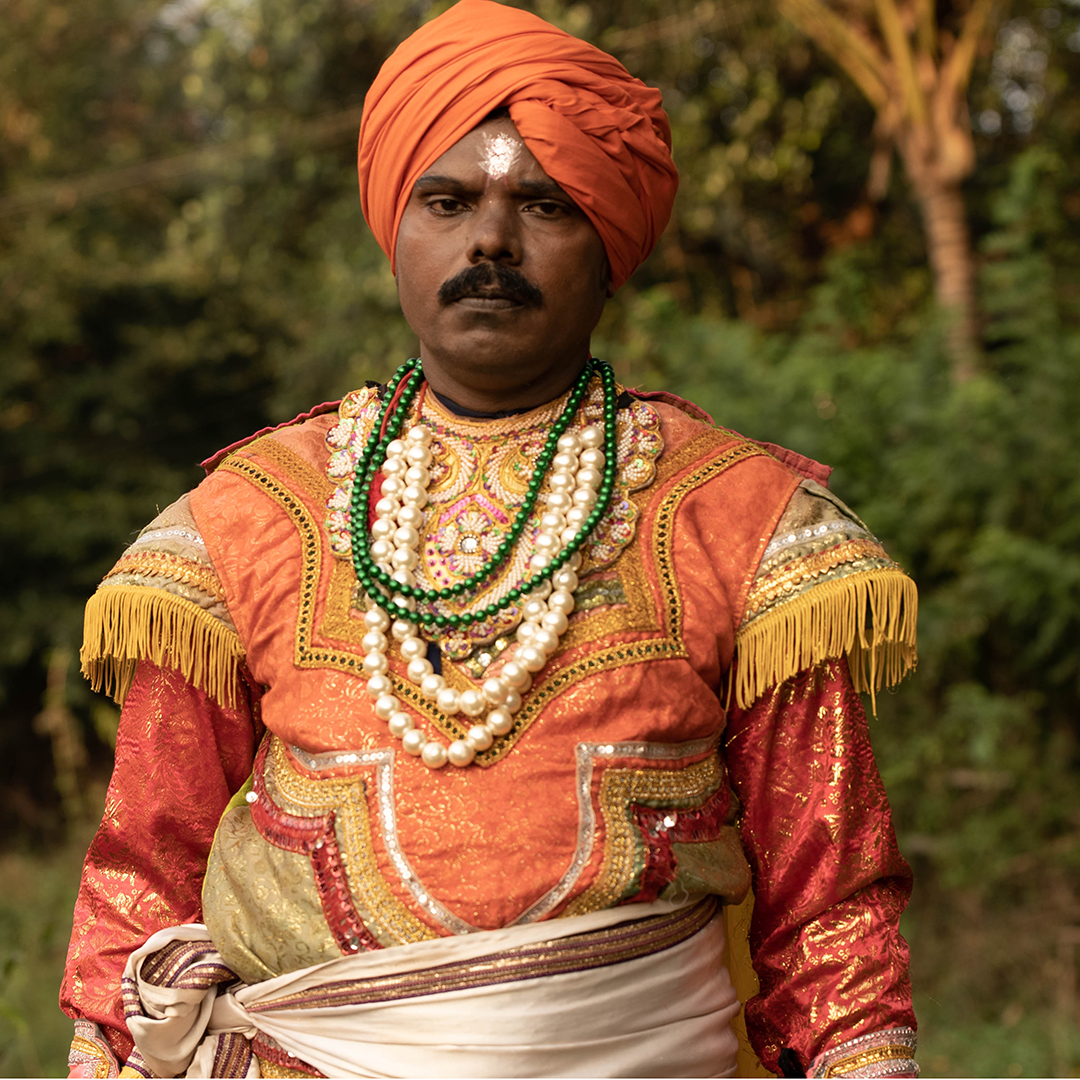
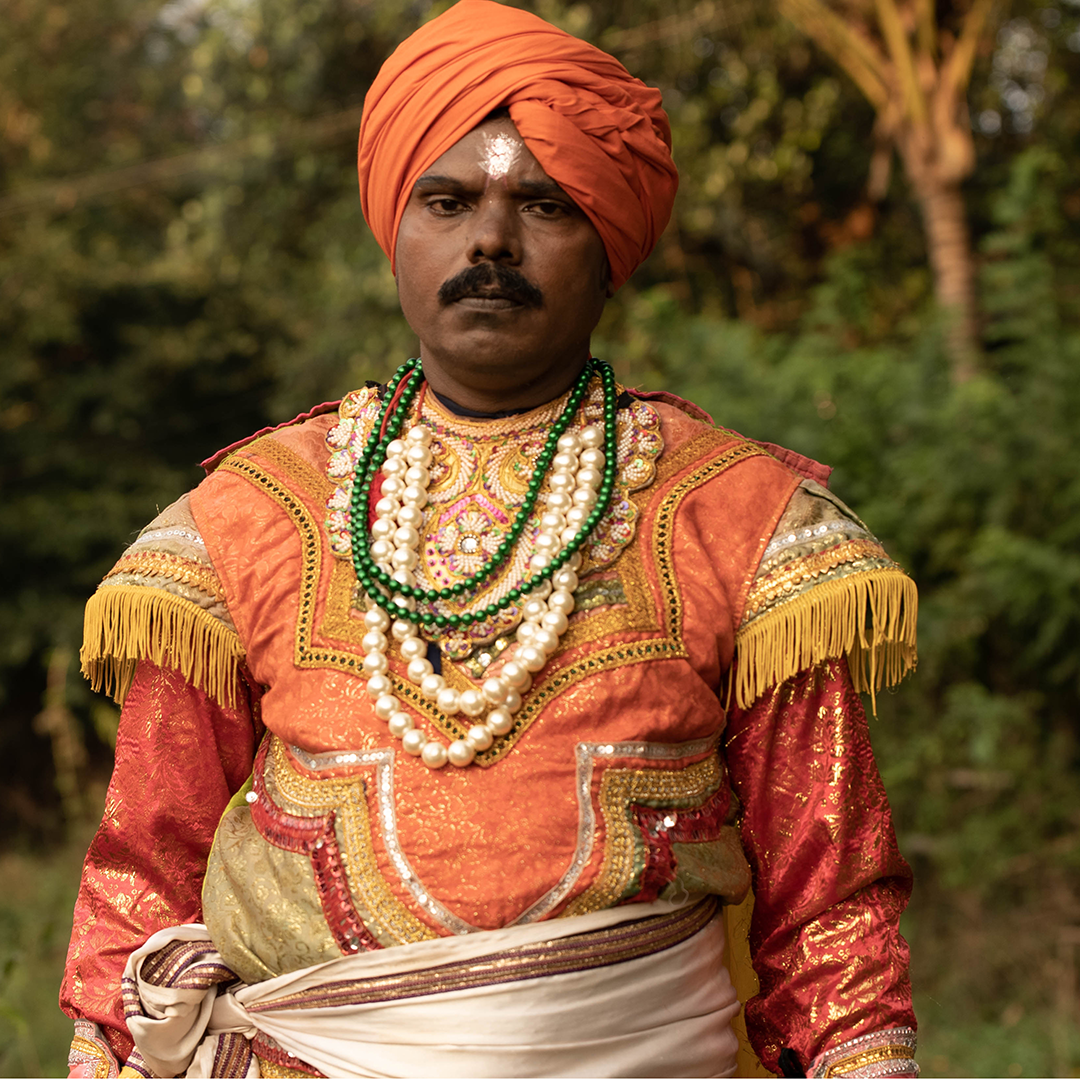
- Roles, Characters, and Costumes : Study how male performers represent over 60 characters using makeup, props, and symbolic costumes.
- Contemporary Challenges and Revival : Assess the impact of modernization, youth involvement, and ongoing efforts for preservation and recognition.
Couse Features:
- Visual Demonstrations : Includes video clips of live Jagor performances, showcasing costumes, music, and dramatic styles.
- Expert Insights : Interviews with community elders, performers, and cultural experts sharing firsthand experiences.
- Downloadable Resources : Access scripts, music samples, costume references, and historical documentation.
- Community Engagement : Opportunities to connect with Jagor artists and cultural forums promoting tribal arts.
- Project-Based Learning : Encourages learners to document, analyze, or recreate Jagor elements for creative assignments.
Who Should Enroll
- Students of Performing Arts, Folklore, or Cultural Studies
- Researchers in Anthropology and Indian Tribal Cultures
- Theatre practitioners and folk art enthusiasts
- Educators and curriculum developers in heritage studies
- Anyone interested in Goa’s indigenous traditions
Description
HISTORICAL BACKGROUND AND CULTURAL PERSPECTIVE
The Gawda community has their special relation with the soil they cultivate. After finishing the work in the field of agriculture the community pays their respect towards the agricultural land they cultivate. So while performing the Jagor with the 'naman' (starting prayer) firstly they worship mother earth and nature. Also with the deep beliefs in local deities Jagor also becomes medium of worshipping & seeking their blessings throughout the year.
Jagor gives a vital space to every segment of society that represents person from each and every community through the characters played in Jagor performance.
Mythological stories and Characters are also shown in the Jagor. Example, Rama, Lakshman, Shravan, Dashrath Raja, Ambabai, Saraswati, Ganapati etc.
‘Dhajan’ is an organization established by the tribal people together. This organization introduced the concept of 'mand' (authentic and traditional place where jagor or any such traditional folk art is performed) in the village. The Mand is the center of cultural life of the village. Folk art has been originating and developing from this stage. The place where the jagor is played is called the 'jagaracho mand'. Jagra Mand is a sacred place. It has a special respect in the villageside. In some places, the traditional offering is made to honor the local deities continues with the faith.
JAGOR DANCE AND OTHER TRADITIONS OF GOA
Similarly, like Jagor there are many other Goan folk forms which are locally practiced as a kind of rural traditions. Which are significant in rural background. Nearly 50 such folk arts decorate the Goan cultural frame, for eg. Dhalo, Fugdi, Shigmo, Goff, Taalgadi, Morulo, Ghode Modeni, Kunbi - Dhalo/Fugdi, Musal Naach, Dhangar Naach, Virbhadra etc.
What We Learnt
- Jagor is a night-long folk dance-drama rooted in Gawda traditions.
- It blends music, dance, drama, and prayer to celebrate post-harvest joy.
- It’s performed only by Gawda males and held at sacred village spaces called mand.
What We Will Learn Next
- The Gawda tribe’s lifestyle, values, and social setup.
- How Dhajan system and joint families shape community life.
- Role of festivals and rituals in preserving Gawda culture.
Gawda Tribe and Their Culture
The social structure of the Gawda society is traditional and consists of well – organized through ‘Dhajan System’. The traditional affairs are handled by a “Maankar or Mukheli” of the community, who take decisions according to local traditions and religious beliefs.
The religious beliefs of the Gawda tribe reflect deep reverence for nature. They worship local deities Santeri, Betal, Mallikarjun, Kulpuris and Devchar etc. These deities are worshiped to provide blessings for the safety and prosperity of their villages.
The Gawda tribe has various religious and cultural festivals, some of the major ones are:
•Jagor: This is a major religious festival, which we have already understood. In this, the local deities are worshiped through dance, drama, music & creating social awareness.
- In the Marathi calendar, the month of January / February is known as Paush Month, which is also referred to as Mhalun Mhaynoin the local language. During this time, offerings are made to Devchar, the local deity. This festival is celebrated as Gad Utsav, highlighting the cultural significance and reverence for the traditions associated with it.
- The Gawda tribe has a unique language and literature, which is part of their cultural heritage. Their language includes traditional songs, stories, and folklore, which highlight their cultural heritage from generation to generation in oral tradition.
- The culture of the Gawda tribe is an important part of Goa's cultural diversity. Their religious beliefs, festivals, arts and crafts, and lifestyle together enrich the cultural heritage of Goa. Studying the culture of the Gawda tribe not only helps in understanding their traditions and lifestyle but also highlights the cultural diversity of Goa.
Social Structure of Gawda Tribe
The Gawda tribe is an ancient and culturally rich tribal population of Goa. Their social structure is traditionally very well organized and disciplined. The purpose of this structure is to maintain harmony, order, and social responsibilities in the society. Let us look at the various aspects of the social structure of the Gawda tribe in detail:
Dhajan System
Dhajan System in Gawda Community in early times use to be the decision making body in the community keeping law and justice in placed. Dhajan is a group of Community members, may not be only ten rather head from each family limited to a particular village.
The family structure in the Gawda society is traditional and joint. A family usually lives in a single house, consisting of grandparents, parents, and children. In the joint family system, all members live with each other in cooperation and support.
Family responsibilities are clearly divided. Men are usually involved in outside work such as farming and other economic activities, while women take care of household tasks and children, also looking after farming activities.
Traditions of the Gawda Tribe
Gawda are believed to be the original inhabitants of Konkan. Most follow folk Hinduism, but many were converted to Catholicism by the Portuguese missionaries during the Christianisation of Goa while still keeping their folk tradition and culture alive.
The Gawda are followers of Lord Mallikarjun, a form of Lord Shiva. Their unique way of life and religious practices are fascinating and offer a glimpse into their ancient cultural heritage. It is important to continue to learn about and appreciate the customs and traditions of this community to promote understanding and respect for cultural diversity.
Shigmo, Dhalo, Dhendlo etc are folk traditions of Gawda Community where as Chavath (Ganesh Chathurthi), Diwali, Kalo – Jatra, Sanvansar Padwo, Gorva Padwo etc. are traditional festivals celebrated by them. Also in the remembrance of ancestors the traditional rituals like Shradh, Mhal, Aya Nam, Banvad are performed.
What We Learnt
- Gawda tribe is agriculturally driven and deeply rooted in folk traditions.
- They follow a Dhajan system, with strong family and community bonds.
- Festivals like Jagor and rituals like Shradh, Gad Utsavare integral.
What We Will Learn Next
- The cultural and religious purpose behind Jagor.
- How Jagor promotes unity, awareness, and devotion.
- Link between Jagor and local deities and festivals.
Religious Significance and Social Roles
1. Spiritual Worship and Worship of Deities: Jagor is a religious ritual whose main purpose is to worship the deities and obtain their blessings. The people of the Gawda tribe believe that through Jagor they can please the deities, which is essential for the safety, prosperity and peace of the village. During Jagor, the artists and villagers sing religious songs, offer prayers and perform various rituals that express their faith and devotion.
2. Ratri Jagaran (Nocturnal Vigil): Jagor is an all-night ritual in which a night-long vigil is held. It symbolizes devotion and reverence towards the deities. Through this night-long ritualistic experience, the Gawda community expresses its religious beliefs and faiths. This vigil is a dedicated effort to seek the grace and protection of the deities.
3. Community Worship and Religious Unity: The Jagor dance involves people from the entire village, which promotes religious unity and cooperation. This ritual brings together all sections of the society and encourages religious social unity. Particularly, in some villages, Hindu and Christian Gawda people set an excellent example of religious harmony and social cohesion.
Jagor and local festivals
Importance of Jagor in Local Festivals:
Jagor is deeply associated with various festivals and cultural events of Goa. This dance is especially performed during festivals that are related to the religious beliefs and cultural traditions of the Gawda tribe. This ritual is an integral part of collective worship and celebrations, wherein the villagers and locals come together to enjoy the festival spirit through religious rituals, music and dance.
Being an important part of the agricultural culture of Goa, Jagor dance is also associated with agricultural festivals. During harvest and agricultural events, Jagor is performed as a special ritual performance. This dance is seen as a worship of the deities for fertility in the fields and prosperity of the crop.
Jagor dance plays an important role in local folk art festivals and cultural events. It is often made a part of local art, music and dance festivals, which showcase the cultural diversity and traditions of Goa. The performance of Jagor embellishes these events and makes the audience aware of the unique form of traditional folk art.
What We Learnt
- Jagor is a spiritual vigil that blends religion and entertainment.
- Promotes social harmony, moral messages, and village bonding.
- Part of major Goan festivals, especially agricultural and folk fairs.
What We Will Learn Next
- How Jagor is performed — steps, music, costumes, and technique.
- Understanding the role of characters and instruments.
- Breakdown of performance stages from Naman to Dandvat.
Dance / drama: Style and Technique
Music and Rhythm of the Dance
The music and rhythm of the Jagor dance are its soul, which not only drives the energy of the dance but also reflects its religious and cultural depth. Rooted in the rural life and traditions of Goa, the music and rhythm of this dance embodies the elements of depth, variety, and collectiveness. Ghumat, Dob & Kasale / Zanj are used to accompanied for music. Let us understand the features of the music and rhythm of the Jagor dance in detail:
The following folk instruments like the Ghumat, Dub & Zanj / Kasale are used in Jagor to accompanied for music:
- Ghumat:
Ghumat is honoured as the heritage folk instrument of Goa and one of the most ancient percussion instruments in existence. It is an earthen pot having two mouths out of which one is big and the other one is narrow. The bigger mouth is covered with monitor lizard-skin (varanus spp.) and fixed with tree-gum and cotton string. The Ghumat is suspended from the neck or tied to the waist of the player and played with the right hand controlling the air-pressure within the pot when the right-hand fingers strike on the membrane. The resonating sound of the Ghumat gives a deep rhythm and energy to the dance. It is the cornerstone of the taal, with which the dancers synchronize their steps. The Ghumat is the most common folk percussion instrument widely used in Goan folk art forms.
- Zanj / Kassale:
The Zanj / Kasale is a pair of metallic cymbals used for rhythmic purpose. These cymbals are flat circular discs connected by a cord or cotton thread passing through a hole in their centres. The Zanj / kasale produce a pleasant sound and is used mostly as accompaniment to music. Some players produce attractive rhythmic variations with this tiny instrument thereby displaying surprising virtuosity in playing.
- Dub:
The Dub is a half-spherical drum covered with bull-hide. The shell of the drum is of riveted Wooden, copper or brass. The diameter is usually approximately between 80-90 centimetres and the height is around 60-70 cms. The skin is strained upon metallic hoops and stretched with the help of leather thongs passing round the shell. Dub is struck vigorously with one stout sticks called toni to produce deep booming and imposing sound.
Traditional Folk Tunes and Songs:
Traditional folk tunes and Songs hold special significance in Jagor. The Jagor begins with prayer songs, which are sung in the local language. These songs are dedicated to the praise of the deities and highlight the religious and sacred aspect of the Jagor. Naman are sung at the beginning of the dance, seeking blessings from the deities.
Traditional Costumes
The traditional costumes of Jagor not only highlight its cultural significance but also bring alive its religious and mythological symbols. The costumes of the performers are specially designed to reflect the characteristics of this folk dance-drama, allowing every character to effectively portray their role. Let us understand the key features of the costumes used in Jagor and their cultural significance in detail:
1. Traditional Costumes:
As per the various characters the artists in Jagor wear suitable costumes. The females do not take part in actual performance as the male artists plays the female characters and dressed up like female.
2. Makeup:
Make up is done to get the resemblance of the characters of that artists perform. In earlier time only Mud, Rocks with different colouring shades, Coal, fruits with different colours etc. were used for makeup. But nowadays various fascinating colours are used. Though it looks like a small part of work but have important task in Jagor.
3. Jewellery and decorations:
Jewellery also plays an important role in the costumes of Jagor dance. Performers wear traditional jewellery, such as beads, bracelets, and crowns. These jewellery are used to highlight the features of the characters. The crowns and jewellery of the characters playing the role of king, gods and goddesses are specially decorated, so that their divine form appears lifelike. In traditional rural society, these jewellery and decorations are considered a symbol of power and devotion.
4. Props
Characters Like Gharasher wearing Turmati (Headgear with Flower), Nikhandar, Parpati & Thoto wearing Dandla (special probes for supporting legs or wooden stick), Ram Laxman used Bow and Arrow, Artits dressed like animal (Tiger, Goat etc.), Soldiers Characters uses Gun, Bamboo Artisans that’s come with Bamboo artifacts etc.
The costumes of Jagor dance are made from locally available materials, which reflect the cultural and geographical features of Goa. These costumes are made of natural fabrics and decorative items, which symbolize the simplicity and traditionalism of rural life.
Major Phases of the Dance
Jagor is a traditional Goan dance-drama known for its distinctive style, unique steps, and complex structure. It combines dance, music, and dramatic presentation through various phases that depict religious and social narratives. Let us understand the major phases of the Jagor dance in detail:
1. Lamp Procession:
The Lamp procession proceeds from rehearsal Mand then moving moves towords the actual Jagor performance mand. In this procession lighted dry palm leaves are carried by artists.
2. Naman (Prelude or Initial Prayer)
The first phase of the Jagor dance is called the Naman, in which the performers and the community gather and seek blessings from their deities. This phase takes place at the village’s sacred place, the Maand (an open, sacred space), where prayers are sung in praise of the deities. In this phase, the performers remember the deities, ensuring the success of the dance and theatrical performance.
3. Beginning of the Dance Performance
After the naman other dance / drama performances begin. The performers enter the stage and dance to the tunes of the traditional folk instruments (Ghumat, Dub & Zanj / Kasale). The tunes of the ghumat and other folk instruments set the rhythm and tempo of the dance. In this stage the dancers are in colourful costumes as per the character.
4. Dramatic Performances
An important feature of the Jagor dance is its dramatic performances. It is a combination of dance and drama, in which the performers enact mythological stories, religious events, and social narratives. Every dramatic performance has a synergy of dialogue, song, and music, and the roles of the characters are played through specially made costumes.
5. Humour and satire
Another major phase of Jagor is humour and satire in some chracters. This part satirises various issues of the society, and small incidents of village life are presented in an entertaining manner through the artists.
6. Character-based dance
Each character in Jagor dance has its own specific dance style. Like the Nikhandar (Village Guard) and Parpati (Revenue Collector) dances with swords and wooden stick, while the Thoto (lame person) dances on his one leg with the help of wooden stick. Similarly, other characters also dance according to their specific roles. Through these different dance styles, the audience is introduced to the structure and order of the village in a symbolic form.
7. Incorporation of religious and mythological stories
Many of the steps performed during the Jagor dance are based on mythological and religious stories. These include stories of Lord Shiva, Goddess Ambabai, and other mythological characters, which are depicted through dance and drama. These religious stories not only reveal the faith of the villagers but also give them a moral message.
8. Concluding Step
The concluding step of the Jagor dance is also religiously significant. In this step, the artists and the villagers once again seek blessings from the gods and thank them for the success of the performance. Just like naman which starts the performance, the Dandvat is performed at the end concluding the Jagor.
What We Learnt
- Jagor includes group drama, dance, prayer, and skits with humor.
- Instruments like Ghumat, Dub & Zanj drive the rhythm.
- Costumes, props, and dramatic storytelling bring myth and reality together.
What We Will Learn Next
- The changing face of Jagor in today’s world.
- How youth, tourism, and tech are preserving or altering the art.
- Economic and cultural impacts of modern Jagor.
Modern Scenario, Challenges, Preservation and Promotion (15 mins)
The current scenario of Jagor dance reflects the vast changes taking place in Goa's folk culture and traditions. The dance, which was once an integral part of the social, religious and cultural life of the Gawda tribe and other rural communities, is today facing various challenges due to modernization, urbanization and cultural changes. Despite this, Jagor has not completely lost its cultural identity and continues to be performed in various parts of Goa.
At present, media and digital platforms are being used to promote the Jagor dance globally. Video clips and information about the Jagor dance are being shared on various YouTube channels, social media pages and websites. In this digital age, this art is reaching more and more people and inspiring the younger generation to understand and adopt it.
Contribution of younger generation and international recognition
The younger generation plays a crucial role in both preserving and reinventing Jagor for contemporary audiences. While traditional participation has declined due to changing lifestyles, some young Goans are actively working to revive interest in this folk theatre form. They engage in digital storytelling, social media promotion, and documentary filmmaking to capture and share Jagor’s essence with a wider audience. Educational institutions and cultural organizations are also encouraging youth involvement by incorporating Jagor into workshops and performance arts programs.
On the global stage, Jagor is gradually gaining recognition through cultural exchange programs and international folk festivals. Scholars and researchers from abroad are documenting its history and performance techniques, adding to its academic relevance. Additionally, Goa’s vibrant tourism industry provides a platform for showcasing Jagor to international visitors, fostering cross-cultural appreciation. While these efforts bring visibility, maintaining the ritualistic and community-driven aspects of Jagor remains essential to preserving its authenticity. The collaboration between tradition-bearers and the younger generation, along with international exposure, ensures that Jagor remains a living, evolving art form rather than a forgotten relic of the past.
Social and Economic Impact
Jagor, as a folk theatre form of Goa, has significant social and economic impacts on the local communities that preserve and perform it. Socially, it serves as a powerful medium for communal bonding, fostering unity between Hindu and Christian communities, especially in villages like Siolim and Taliegao. The performances bring people together, reinforcing shared cultural values, oral traditions, and a sense of identity. Additionally, Jagor often addresses social issues, offering moral and ethical reflections that resonate with audiences across generations.
Economically, Jagor provides opportunities for local artisans, musicians, and performers. Traditional costume makers, instrument craftsmen, and stage decorators benefit from the performances, generating income and sustaining cultural livelihoods. In recent years, tourism and cultural festivals have further boosted its economic potential, as visitors seek authentic Goan cultural experiences.
Government and non-governmental organizations have also started supporting folk arts through grants and sponsorships, helping to sustain performers and ensure the continuation of this heritage. However, challenges such as declining participation and commercialization risks must be managed to maintain the authenticity of Jagor while leveraging its economic potential for community development.