

Karma Dance (Chhattisgarh)
It is a beginner course that gives basic knowledge of Karma Dance in terms of its origins, cultural meanings, and artistic expressions. Participants will know the major movements, instruments, and almost all the traditional attires associated with this tribal dance. In addition, the course imparts the social and agricultural importance of Karma Dance and goes into that of community celebrations. It's for people who have just started learning tribal arts and here combines the most basic theory with fun activities to make knowledge acquisition informative and enjoyable.
 Most Viewed

What you'll learn
- Introduction to Karma Dance : Learn about the cultural and historical origins of the dance.
- Key Dance Moves : Master steps and the symbolism of the formations.
- Musical Instruments : Know the instruments employed and their role in performances.
- Traditional Costumes : Investigate the role of clothing in Karma Dance.
- Cultural Significance : Value the dance's use in celebrations, rituals, and group bonding.
Couse Features:
- Beginner-Friendly Content : Straightforward explanations and easy-to-demonstrate processes for easy understanding.
- Visual Learning Tools : Diagrams, images, and videos to help with learning.
- Cultural Insights : Background information on the Oraon tribe and their culture.
- Hands-On Activities : Engaging activities to practice and reinforce concepts.
- Expert Guidance : Courses designed by experts in tribal art and culture.
Who Should Enroll
- The dancers keen to learn folk dances.
- Students embarking on tribal art exploration.
- Those who pursue cultural studies and require some elementary grounding.
- Teachers interested in infusing tribal culture into their curriculum.
- Anyone with an interest in the performing arts traditions in India.
Description
KARMA DANCE
Introduction and Historical Context
Origin and Historical Background of Karma Dance
India's traditional Karma Dance is a pertinent representation of the undying customs of the Oraon tribe of Chhattisgarh. The dance originates from the Karam festival which celebrates the harvest and honors Karam Devta, the god of power, youth, and fertility. This festival is celebrated mostly on the eleventh day of the bright fortnight in the Hindu month of Bhado (August-September). This marks the entry of the sun into autumn and the exit from the rainy season.
Historical Context:
For centuries now, the Karma Dance has remained at the core of the traditions of the Oraon tribespeople. In early times, however, it is said that the dance represented the worship of nature, putting the Karam tree (Nauclea Parvifolia) in the center. The present-day Oraon people, together with other tribal groups such as the Gonds and Baigas, behave in this manner when worshipping the Karam tree considered very important from a ritualistic point of view.
Cultural Significance:
The Karma Dance is not just a mere performance; it is a symbolic representation of fertility and the harmonious relationship between man and nature. In the life cycle of the farmers, the Karam festival is intimately associated with the fertility cult, celebrated in the month of August. The Karma dance symbolizes the bringing of green branches of the forest in the spring. A tree would sometimes be erected in the village and the people would dance around it. The dance is the breath of trees. The men leap ahead, drums rolling out fast. Women, bent low to the ground, dance, their feet in rhythm, back and forth, till the advancing group of singers meets them.
Cultural and Agricultural Significance of Karma Dance
On this occasion, it will be celebrated according to the Karma festival, which is associated with the Karam dance; an event dedicated to Karam Devta celebrated in honor of the patron deity of power, youth, and fertility. The day of Bhado, or August through September, is celebrated during the harvest of crops when complete fruition dawns in the agricultural process. Rituals during the festival have much to do with agricultural prosperity, and one example is the planting of nine different seeds called Jawa by unmarried girls and nurturing them during the given number of days, believing it would symbolize their hopes regarding an abundant harvest.
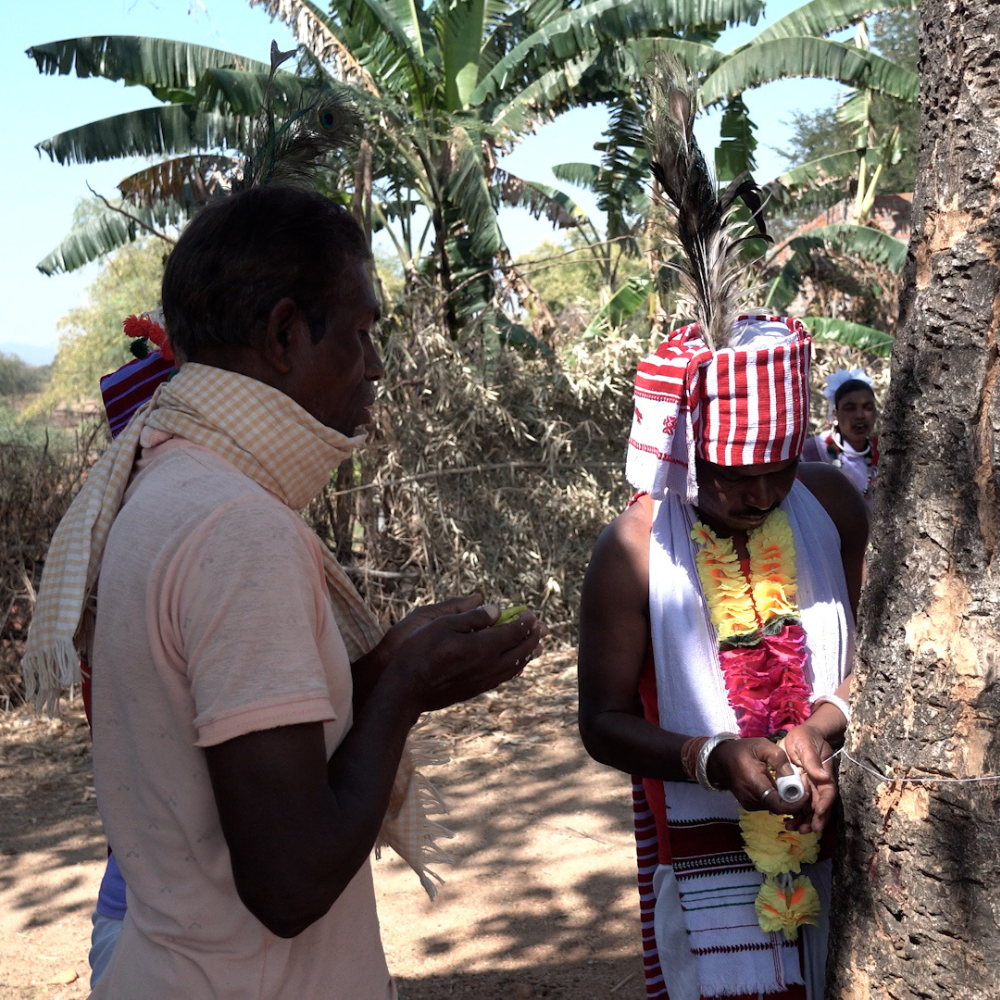
On the day of this festival, villagers go into the forest to collect branches of the Karam tree (Nauclea Parvifolia) for the rituals. These branches are then ceremoniously planted within the village and offerings made to invoke the deity's blessings upon the land so that it gives to its people fertile soil and abundant crops. The subsequent dance established around these branches would then embody the community's gratitude and reverence for the gifts given by nature.
Cultural Significance
Apart from its agriculture aspect, Karma Dance becomes an important organizational expression of culture for the Oraon tribe. It is a community activity that spotlights collectivism, bonding, and preservation of oral tradition. The dance takes place through synchronized movements echoing sound of traditional instruments like Mandar and Dholak, thus, spinning an intoxicating union of music and motion.
Thereby conducting men and women into dance, often forming circles or lines representing unity and collective strength. The songs and movements narrate tales of origin, courage, and the tribe's relation with nature, carrying cultural values and history to younger generations. The dance also serves as a medium of worshipping Karam Devta, asking divine blessing for the welfare of the whole community.
In short, the Karma Dance of the Oraons does not come down to a performance; it is an extension, rich perhaps, of the tribe's agricultural economy, of the tribe's spirituality, and identity-keeping, all synthesized to the ever-lengthening legacy of harmonious balance in this community and the flora and fauna surrounding it.
Dance Characteristics and Practices
Key Movements and Rhythmic Features of Karma Dance
The structure and stance of the Karma Dance are central to its visual beauty and symbolic meaning. The dancers align in a semi-circle or circle, symbolizing unity and oneness of existence. Women on one side, men on the other, clasping each other's waists or holding each other's arms to ensure the coordination of moves. The dance starts with gliding and effortless steps, but as the tempo increases, so does the dynamism.
Footwork is essential to the dynamic performance of the dance. The performers glide in a to-and-fro motion, transferring their weight from one foot to the other in a rhythmic and synchronized way. The steps are taken with light but purposeful movement, producing a smooth flow that harmonizes with the beats of the traditional music. Men use leaping and energetic strides, whereas women sustain softer and fluid movements, inclining gently toward the ground, which reflects respect for the earth and fertility.
Hand movements in the Karma Dance are symbolic and expressive. The dancers usually share small twigs of the Karma tree, which are holy. This process reflects the sharing of prosperity, blessings, and the essence of harmonious coexistence. The movements are choreographed to the beat of the drums, and dancers clap or wave their arms in synchronization. In some versions of the dance, performers stretch their hands up towards the heavens, expressing thanks to the gods.
The characterizing aspect of the Karma Dance is its motion in a circular pattern, one that symbolizes the ongoing process of life, seasons, and agricultural rebirth. The participants move around the center Karma branch of a tree, which remains in the grip of one of the participants or is planted vertically in the earth as a marker. This illustrates the tribe's perception of an eternal cycle in nature and keeping in touch with their roots.
Rhythmic Characteristics of Karma Dance
The rhythm of Karma Dance is directed by tribal traditional instruments, which play a pivotal role in keeping the tempo and spirit of the performance intact.
Tempo and beat development in Karma Dance is a systematic process. Dancers start the dance with a gentle, slow tempo, ensuring they are in rhythm. The dance gradually increases its tempo, generating a wave of excitement and energy across the performers. The climax of the dance is reached when there is high-energy drumming and fast footwork, which can go on for hours in celebratory festivals.
The other essential rhythmic component of the Karma Dance is the utilization of vocals. The dance is complemented by singing and chanting, usually in call-and-response mode, where a group sings one line and another group responds. The songs normally extol Karam Devta, recount myths, and rejoice at a fruitful harvest. Through the intermingling of song and dance, there is an intense spiritual and communal experience that strengthens the cohesion among the participants.
The coordination between rhythm and movement is important in Karma Dance. The dancers need to be in complete sync with the drumbeats, and each step, clap, and gesture has to correspond with the music. It calls for a great deal of skill, practice, and instinctive knowledge of rhythm, which makes the dance a work of art as well as a communal experience.
Role of Circular and Line Formations in Dance
The Karma Dance of the Oraon community in Chhattisgarh is a rich display of cultural identity, closely associated with agricultural and religious life. At its center are the circular and line structures, both with different symbolic as well as functional value.
Circular Formations:
In the Karma Dance, the dancers usually hold hands in a circle, which represents unity and the cycle of life. Both men and women dancers hold hands around the waist, dancing in rhythm to folk music. This circular formation is not just pleasing to the eye but has deep cultural significance:
- Unity and Equality: The circle signifies the togetherness of the community, stressing mass participation without superiority.
- Cyclical Nature of Life: The endless cycle imitates natural cycles like seasons and crop cycles, demonstrating the harmony between nature and the tribe.
- Ritual Significance: At the time of the Karma festival, a holy tree or branch is kept at the heart of the circle, and dancers dance around it, worshipping Karam Devta, the god of destiny.
- Line Formations: Besides circular formations, the Karma Dance also involves line formations where dancers stand in rows, usually holding hands or putting hands on shoulders. This formation allows for synchronized movement and has particular functions:
- Gender Roles: Men and women can stand in distinct lines, enabling gender-specific dance patterns that emphasize traditional roles in the community.
- Dynamic Movements: Line formations allow for large steps and synchronized sequences, displaying the expertise of the dancers and increasing the visual beauty.
- Narrative Expression: Linear arrangements help dancers to illustrate narratives or deliver messages, providing an additional layer of storytelling to the performance.
- Integration of Formations: The fluid integration of circular and line formations in the Karma Dance reflects the flexibility of the Oraon tribe and the dynamic character of the dance. Not only does this interaction enrich the performance visually but also solidifies cultural storytelling, representing balance between oneness and uniqueness, convention and creativity.
Line and circular formations in the Karma Dance are more than mere choreography; they are reflections of the Oraon tribe's values, beliefs, and relation to nature. These forms are a testament to the community's rich cultural fabric, to be preserved and to be honored generation after generation.
Main Instruments, Sounds and Uses of Karma Dance.
Main instruments of Karma dance
The instruments employed in Karma dance not only keep up the rhythm and beat of the dance but also portray the extent of tribal tradition and culture. So let's learn about the principal instruments used in Karma dance in detail.
1. Mandar / Dholak
The mandar or dholak is a prominent instrument of Karma dance. It is cylindrical in shape with leather membranes on both ends. It is played with the hands. Its resonant and deep sound enhances the rhythm of the dance and is in harmony with the movements and postures of the dancers, thus providing energy and vitality to the dance.
2. Cymbals
Cymbals are flat, circular and elevated metal plate-like instruments, typically bronze or brass. It is played in a pair, and the player creates a cymbal by clashing them with both hands. It is bigger in size than the Manjira and has a sharp, harsh tone which harmonizes with the beats of the Mandar, introducing zest and playfulness into the music.
3. Ghungroo
Ghungroos are small round hollow balls of bronze with iron pellets inside them. They are tied to the dancers' feet using a cloth or rope. When the dancers walk or strike their feet on the ground, the Ghungroos create a melodious tinkling noise, which complements the sound of Mandar and cymbals and gives the music a lively feel.
4. Songs / Music
Music also has a significant role in Karma dance and perform like musical instruments. These Karma traditional songs depict folklore, religious faith and tribal experiences. The dancers modify their postures as per the rhythm and emotions of these songs, which makes the emotional depth and cultural message of the dance more effective.
The instruments employed in the Karma dance - the mandar, dholak, cymbals, ghungroo and the traditional songs - do not only produce rhythm and beat, but also emphasize collectivism, cultural pride and traditional way of life. The combination of all these factors makes the Karma dance not only a work of art, but a dynamic cultural experience.
Sound and Use of Instruments in Karma Dance
The function of sound is very significant in Karma dance, as it is the soul of the dance. The music and rhythm of this dance not only direct the tempo of the dance but also render the entire environment energetic. Karma dance employs traditional instruments such as dhol, mandar, cymbals and manjiras, to the rhythms of which the dancers move together.
The rhythmic beat of these instruments not only enhances the energy of the dance but also emotionally bonds the dancers.
The special music rhythm gives a direction to every move and turns the dance into a pleasing flow. When dancers dance at the rhythms of mandar or dhol, their step and body postures' rhythm creates a harmony, which charms not only the dancers but also the audience. This sound turns not only a physical movement but also a live expression of emotions and cultural sentiments.
Another significant feature of sound is the songs of the Karma dance. These songs convey love, separation, folklore, struggle and other elements of life. The songs not only explicitly tell the tale of the dance but also establish an emotional connection between the audience and the dancers. These songs become a medium of conversation, and the dance becomes an experience and not merely a performance.
The use of music plays various significant functions in the Karma dance. Firstly, it provides rhythm and tempo to the dance. All the instruments such as dhol, mandar, cymbals, manjira and ghungroo assist the dancers in taking appropriate steps at the appropriate moment. Secondly, it provides a medium to convey the emotion and story of the dance. The songs have life, customs and cultural values, which lend depth and significance to the dance.
Third, sound reinforces community spirit. When the entire community dances together to the rhythm of music, a sense of participation and unity is created. This unites all individuals in a common experience that reinforces collective identity. Lastly, the sound of the Karma dance emphasizes the cultural identity of this community. The traditional sounds of instruments and music link the dance to its origins and work towards keeping the tribal heritage alive.
Hence, sound in Karma dance is not only a music element but an integral component of the soul of the dance, its story and the identity of the people. The dance and the sound both send out the message of harmony, love and pride in culture in the society.
Karma Dance Traditional Costumes, Characteristics and Their Cultural Significance
Traditional and Modern Costumes of Karma Dance
The Oraon community's cultural heritage and identity are also reflected in the traditional costumes used in the Karma dance. The costumes not only add beauty and attractiveness to the dance but also represent the cultural and social values of the community.
Traditional men's clothing
White dhoti, tied around the waist and wrapped up to the knees, is the traditional clothing worn by men during the Karma dance. A gamchha is also tied around the waist, which provides comfort and ease of movement while dancing. Apart from this, men have an angocha or gamchha on one shoulder, which is a symbol of their cultural identity. On the head, they wear a red and white striped, ornamental traditional turban, whose ornamentation depends upon their social status and the nature of the occasion. Men also bind ghungroos on their feet when they dance, which give the dance a more energetic feel.
Women's traditional attire
Oraon tribal women dance with traditional saree of light whitish color during the Karma dance. Saree is tied in such a manner that pallu covers the head and a tight tie on the waist that keeps one at ease in dance. Sari is paired with a traditional blouse of red color, and hence the dress completes.
The dress of women is not complete without ornaments. They have bangles in hands, kardhan in the waist, earrings in ears, rupee garland and pearl necklace in the neck. Besides this, anklets and toe rings are also put on the feet and a waistband on the waist as well. Lace khosa of white color is put in hair, which also adds to their beauty.
These classic costumes contribute to the grandeur and loveliness of the dance. When colorful costumes and ornaments such as peacock feathers are carried onto the stage by dancers, they not only introduce an art form but also bring their culture to life.
Modern costumes and current trends
The uniforms of Karma dance have also evolved over time. Newer costumes have become more comfortable and expressive while maintaining the traditional aspects.
Modern Costumes of Women
Today's Karma dancers use traditional silver ornaments as well as contemporary fashion earrings, bracelets and necklaces. These adornments add to the majesty of the dance as well as reinforce their cultural heritage.
Contemporary Men's Costumes
Men today dress in conventional white dhoti, bandi or kurta during cultural festivals. But the younger generation is embracing new costumes as well as these traditional ones. During training sessions, social festivals and festivals they dress in modern attire at times, which makes the performance more appealing and vibrant. They also dress in traditional jewelry such as bangles and beads, which keeps them connected with the culture.
The contemporary and traditional costumes of Karma dance depict a splendid blend of culture and modernity. Not only do the costumes make the dance elegant and easy, but also assist in keeping and spreading the culture of the Oraon community. Thus, the costumes of Karma dance are a symbol of living their identity and pride and tradition.
Cultural Preservation and Modern Impact
Efforts to Preserve Traditional Karma Dance Styles
The Karma Dance occupies a pivotal position in the cultural heritage of the Oraon tribe of Chhattisgarh, representing the tribe's strong affinity towards nature, agriculture, and spirituality. Conservation of this traditional dance form is important to ensure the preservation of the tribe's identity and cultural continuity. Measures to conserve and popularize the Karma Dance include a range of initiatives:
Documentation and Research:
Academic Studies: Researchers and cultural scientists have made massive studies to record the history, development, and diversity of the Karma Dance. The studies give proper insights into its meaning and diversity at different places.
Cultural Surveys: Government departments and cultural bodies perform surveys to list traditional dance forms so that the variations of the Karma Dance are documented for future generations.
Cultural Festivals and Events:
Karma Festival Celebrations: The Karma Dance is highly showcased during the Karma festival, which is annually celebrated around August. The festival offers an opportunity for the people to display the dance, drawing the attention of locals and tourists alike, thus promoting cultural pride and consciousness.
Folk Dance Festivals: Festivals such as the Chhattisgarh Folk Dance Festival offer a platform to exhibit different tribal dances, including the Karma Dance, to enhance inter-tribal cultural appreciation and exchange.
Overall, the conservation of the Karma Dance in Chhattisgarh Oraon culture is a complex process that requires documentation, education, community involvement, and institutional support. Though obstacles are present, collective action by the government, NGOs, and community will ensure that this dynamic dance lives on for generations to come.
Conclusion
Karma dance is a part of the cultural identity of Oraon tribe people, and it is not merely a dance but a dynamic traditional art form. Not only did we learn through this dance about its technical aspects such as rhythm, beats, instruments, and costumes, but also the religious and social conventions behind it. The proper combination of all these factors makes Karma dance a special and marvelous art, which provides us with the chance to perceive the rich cultural heritage of this tribe from a different point of view.
It is an important cultural heritage of the Oraon tribal people who live in the north-eastern part of Chhattisgarh. Its distinctive style, rhythmic movement and active postures differentiate it from other tribal dances. The first characteristic of Karma dance is its beat and rhythm, which is made possible by instruments such as Mandar, Jhanj, Dhol and Ghunghru. These instruments regulate the pace and energy of the dance, which allows the dancers to provide a balanced and structured performance. Postures adopted in the dance portray nature, religious beliefs and societal values. Postures express not only the feelings of the dancers but also the richness of the overall tribal culture. The dance is also performed with songs and music, in which the melodies of old folk songs are associated with life in nature, worship of gods and local events. These songs provide greater intensity and spirituality to the dance.
The traditional costumes of Karma dance are also its distinctive identity. The dancers adorned with white saree, red blouse and traditional jewellery enhance its cultural dignity. These costumes not only incorporate local art but also elements of modernity, making it attractive to the contemporary audience.
This dance is also regarded as an activity involving community, where individuals from various age groups perform the dance together. It fosters social unity, participation and cooperation. Arranging Karma dance during festivals and social celebrations becomes a means to unite the community people, hence strengthening collective identity and cultural sustainability.
But since most of the traditional arts are declining due to the impact of modernity, it has become the need of the hour to preserve and promote Karma dance. To make the young generation aware of its significance and encourage them to learn this art is the need of the hour. For that, training camps, workshops and cultural events are being held so that this art reaches the young generation and retains its vigor.
Thus Karma dance is not only a dance but an icon of cultural awareness, communal feeling and spiritual life of the Oraon tribe. Its rhythm, beat, poses, music, attire and community make it a treasure of rich culture, whose preservation and dissemination is very much required in order to save our cultural heritage.