


MOONJ ART
This beginner course introduces the traditional Moonj craft of the Tharu women in Bihar, covering its basics, cultural value, eco-friendly materials, and simple weaving techniques through interactive sessions, making it ideal for those new to indigenous handcrafts.
 Most Viewed

What you'll learn
- History of Moonj Craft : All about the history and geography of moonj grass weaving in the Terai region of Bihar
- Materials and processes : All about the harvesting, processing, dyeing and weaving processes of moonj grass
- Ritual and practicality : All about how moonj items are engaged in weddings, festivals and everyday use in the household
- Community and Transmission of Knowledge : All about how how values, techniques and skills are passed from mother and daughter, and mother to daughters
- Importance of cultural and eco-mapping : All about how moonj art connects with eco-consciousness, ways of being and identity
Couse Features:
- Four foundational modules : Each module will help you examine the history, material, cultural meaning, and evolution of the product.
- Practical learning : Hands-on activities in weaving, craft design, and basket-making.
- Cultural contexts : Learning about songs, stories, and traditions surrounding Moonj craft.
- Eco-craft awareness : Appreciating the sustainable rural economies surrounding Moonj and the environmental considerations involved in making it.
- Reflective learning : Acknowledge Moonj's role in showcasing women agency, in cultural preservation, and as a reference for modern eco-design.
Who Should Enroll
- Craft enthusiasts and designers interested in indigenous weaving techniques
- Cultural anthropologists studying tribal material culture
- Environmentalists focusing on sustainable practices and livelihoods
- Art historians and heritage professionals working on grassroots tradition
Description
Introduction to Moonj Art
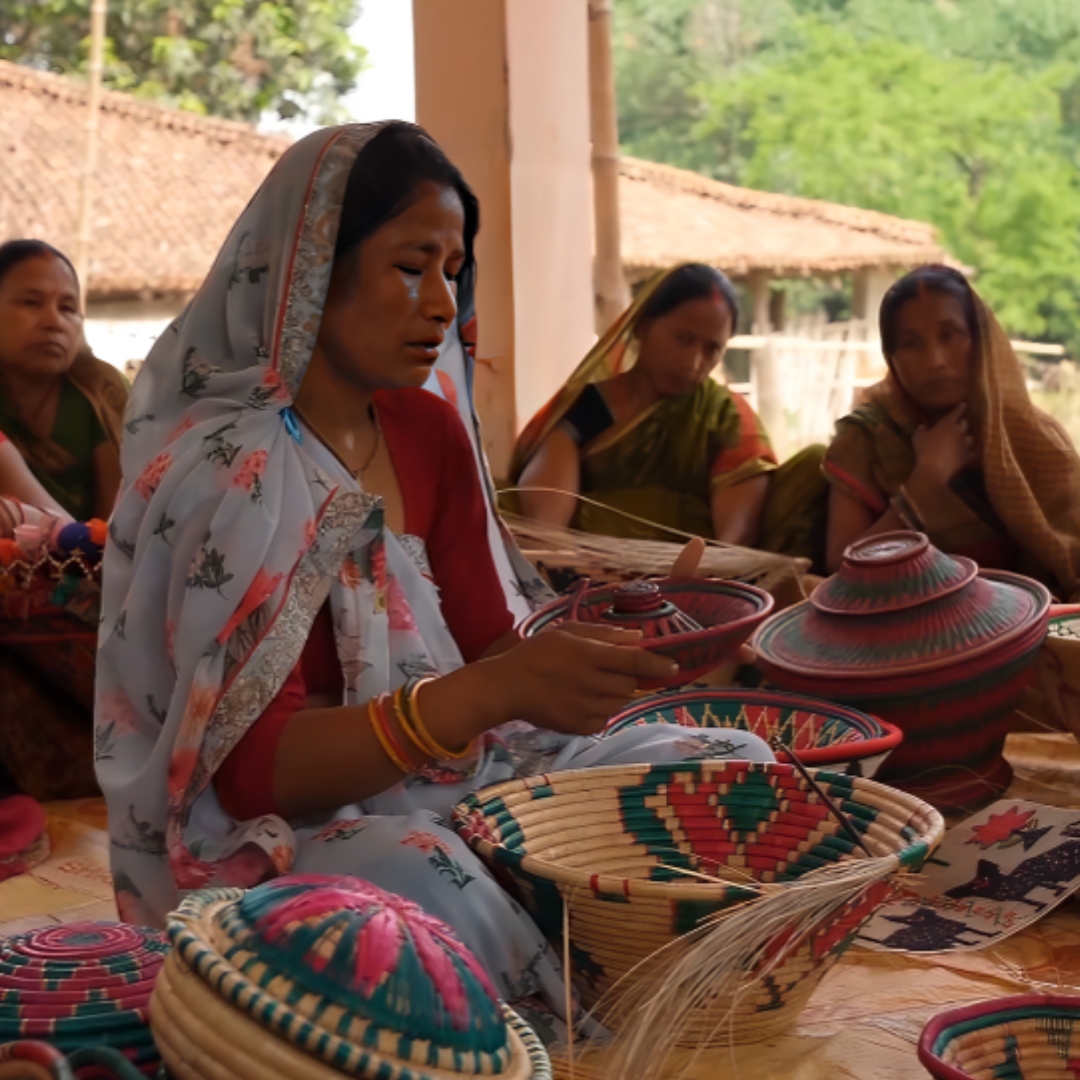
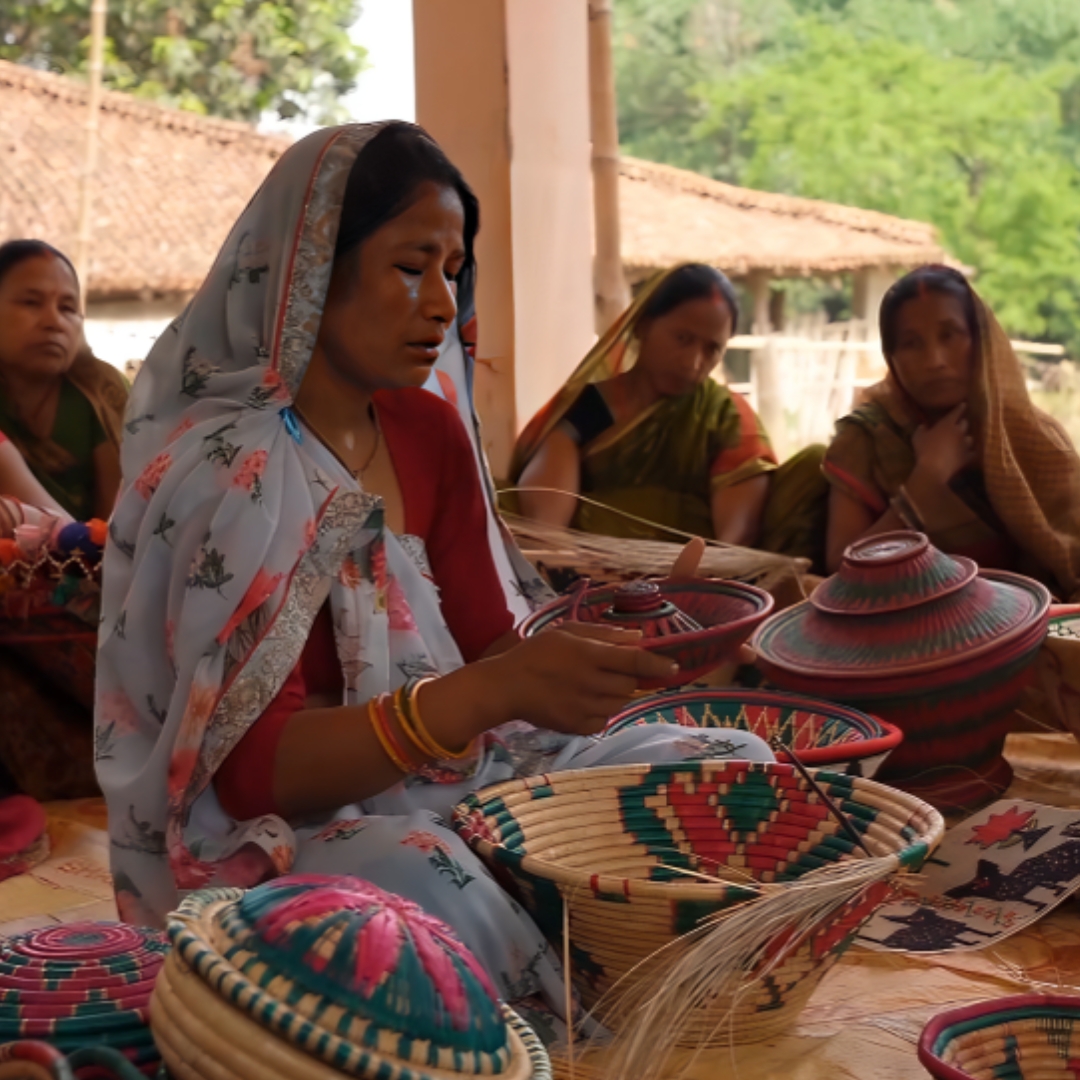
Moonj art is an age old technique of grass weaving mainly practiced by Tharu tribal women of Bihar, especially in West Champaran. It is deeply ingrained in their way of life and surroundings. It uses Moonj grass (Saccharum Moonja) , a wild sturdy grass that grows abundantly on the river banks and marshy areas of the Terai.
Geographical context and origin
Originated in the West Champaran district of Bihar and the adjoining Terai region on the Indo-Nepal border, Moonj art is derived from the lush green lands of western Bihar. Tharu ethnic group Tharus live in Ilam , an aboriginal tribe known for their culturality , agrarian culture and connection to nature. Geographical location is an important factor in Moonj weaving as it is parallel to the availability of natural resources like Moonj grass (commonly Saccharum Moonja). In this region , Moonj grass grows in abundance along riverbanks , marshlands and floodplains. A wild , perennial grass , it thrives in sandy , loamy soil – the kind that is very conducive to the Terai river ecology. The grass plants mature after the monsoon season and are cut in the dry months. Its sun-dried , peeled and torn large , fibrous stalks are the raw material for Moonj weaving. Traditionally , Moonj grass was used to make items of daily use such as ropes , floor mats (chatai) and baskets used to carry grains , vegetables and festival offerings.
Here are some of the most important terminologies in relation to Moonj art:
- Terai weaving culture - refers to the Moonj craft embedded in the ecology and life of the Terai region.
- Ilam Tharu Belt - a phrase denoting the Indo-Nepal border region where the Tharu community lives and crafts.
- River Craft Ecology - Emphasis on how rivers , floodplains and soil affect the survival of the Moonj.
- Border basketry – refers to the art as native to the Indo-Nepal border region , reflecting its unique geography.
- Saccharum craft - a technical but artistic label referring to the scientific name Saccharum Moonja.
- Split stalk weaving - Technical process term for splitting and weaving the stalks of Moonj.
In this module we uncovered the origin, history of Moonj art in the Terai region of Bihar and its significance for Tharu women. We will explore in detail the culture of the Tharu tribe , the role played by women , the Moonj process of weaving, and traditional and modern Moonj items further.
Description of Tharu Tribe and Moonj Craft
Tharu is one of the Scheduled Tribes of India , present mostly in the Terai region due to their main occupation agriculture and concentrated in the area bordering Nepal in India and the Terai region in Nepal , especially in the West Champaran district of Bihar. Noted for close-knit communities, agriculture-based lifestyle and millennia-old association with nature, the Tharu have preserved their unique culture for generations. Their habits are closely linked to the environment , and are reflected in diet, festivals, dress and crafts.
Tharu Tribe of Bihar
The oldest and most recognizable indigenous community of India , the Tharu tribe of Bihar , mostly settled in districts like West Champaran and other Terai areas on the Indo-Nepal border , is a scheduled tribe. The Tharus have preserved their unique cultural identity with forests , traditional life and a poignant bond to the community.Tharu culture is described as simple , practical, and environment-focused. Social organization for Tharu people is community-based , with decisions made on a community basis through local panchayats and elders. Gender relations are socially fairly equal. Tharu women , who take charge of family management , agriculture, and ancient crafts such as jute-weaving , are economically independent contributors. They are essential to the economic stability and social continuity of their society.One thing that defines Tharu existence is their closeness to nature. Traditionally , they depend on agriculture, forest work, fishing and animal husbandry. Their knowledge of plants and plant-based remedies , forest foods and seasonal variations reflects a deep understanding of their surrounding environment. They grow crops including paddy , maize and mustard and often practice subsistence farming with indigenous materials and techniques.Their houses are made primarily of mud , bamboo and thatch – materials that not only help save money but are more suitable for the regional climate. Symbolism abounds in Tharu art and architecture , which primarily represents nature, including trees , animals, and celestial objects.
Process of making Moonj Artwork
The process begins with the collection of Moonj grass , also known as Saccharum Moonja. It is a tall, bushy grass found in abundance on the floodplains , marshlands and riverbanks of the Terai region. Once it is harvested , the grass is sun-dried for a few days so that it dries out and becomes more durable. Drying also does not destroy the natural yellowish-beige colour of the Moonj as it is the base for dyeing. The drying process is necessary to avoid mould or breakage during weaving. The dried stalks are then cut into thin, uniform strips by hand or basic hand tools. The divisions are done based on the desired size and type of product – baskets , trays , mats or ritual pieces. The separated threads are then dyed with natural or chemical dyes. Natural colour comes in the form of dyes derived from turmeric , indigo , henna and flowers , while chemically created dyes are used for brighter and longer-lasting colour. The threads are dipped in hot water with the dye and then dried again. The threads are now prepared and dyed , ready for weaving. The most prevalent method is coil weaving. With this technique , a core of coarse straw or grass is tightly wrapped in spirals or concentric circles with finer coir threads. The craftsman continuously coils and sews the material using a strong thread and a needle or awl. The stitching is done in such a way that the layers are secured together to form the artwork – whether a flat tray, cylindrical vessel, or domed basket. All this work is done by hand, requiring a rhythmic mix of wrapping, shaping, and stitching. The tools required are:-
- Needle for sewing
- Needle for making holes or guiding thread
- Scissors for pruning
- Thread or jute rope for tying
- Containers of water to soften the grass if needed
Products and their uses
The Moonj craftsmanship of the Tharu women of Bihar produces a wide range of products that exhibit practical utility as well as aesthetic appeal. They are used for domestic , ritualistic and commercial purposes , making Moonj art a versatile tradition that harmonizes functionality with cultural expression. With the growing demand for eco-friendly , handmade products , Moonj products are gaining popularity in rural and urban markets.
Functional Objects
At the heart of Moonj weaving are practical, everyday items that are durable and built for longevity. Among the most ubiquitous are:
- Baskets: For carrying vegetables, grains, clothes and other household items. They come in various sizes, are sturdy and long-lasting.
- Mat: Placed on the ground for sitting or sleeping. Soft, light and naturally cool - ideal for humid lowland climates.
- Storage containers: With lids or open tops, these are used to store dry food , grains , clothing, and small tools. Their stackability makes them convenient in countryside homes.
- Chappals: Eco-friendly footwear designed from finely woven Moonj yarn. Soft and decomposable, they are gaining popularity among green fashion enthusiasts.
- Stools and Seating: Compact utility stools and cushioned seating made from Moonj have also been designed, which are typically used in traditional kitchens or outdoors.
Traditionally made for household use in the neighbourhood, Moonj products are now entering larger markets due to their eco-friendliness and handmade value. At urban craft fairs, green stores and internet sales sites, demand is growing for:
- Designer baskets and decorative items
- Eco-gift packaging
- Durable Household Goods
- Fashion products such as bags and jewellery
We understood Tharu culture , the role of women in Moonj weaving, and the detailed craft methods of traditional and modern Moonj products. Next, we will study the aesthetic styles of Moonj art, sustainability practices, economic aspects, and the challenges faced by Moonj artisans today.
Artistic Elements, Sustainibility and Innovation
Design Patterns and Aesthetics
The aesthetic language of Moonj art is based on simplicity, symbolism and symmetry. Although the raw material – Moonj grass – is plain and naturally occurring , the weaving techniques and aesthetic sensibility of Tharu women artisans transform it into visually appealing, culturally significant artworks. The aesthetic appeal of Moonj products lies not only in their functionality, but also in the careful attention to design, detailing and form.
Common motifs and symbolic patterns
Moonj artisans often incorporate geometric designs into their products – such as spirals, concentric circles, zig-zags and triangles. These are realized through differences in the position of the colored threads , the stitching method and the color sequence. Most of these motifs have symbolic significance:
- Circles represent wholeness, cycles of nature and continuity of life.
- Triangles usually symbolize fertility or strength.
- Chevrons or wavy shapes can represent water and movement.
- The finishing touch is usually the pride of the craftsman—a testimony to skill , perseverance, and aesthetic restraint.
Market dynamics and economic Impact
What started as a rural tradition of Tharu women has evolved into an eco-friendly economic movement. With growing demand from consumers seeking sustainable and hand-crafted products, Moonj art is unique in its own way as it combines indigenous knowledge with today's needs.
Local markets and craft fairs
- Moonj products were earlier sold in village haats and festival gatherings, but now these products can be found in the hands of consumers:
- Saras Mela of Rural Development Ministry
- Dastkar Nature Bazaar
- State-sponsored exhibitions
- These platforms not only promote sales, but also educate urban consumers about the skill, symbolism and sustainability of Moonj weaving.
The digital leap: the new wave of craft business
- Moonj art artisans have entered the online world with the support of NGOs and government initiatives, and are reaching out to a more and more responsible audience:
- Online Marketplaces: Amazon Artisan , Okhai , GoCoop , Gatha
- Green mergers
- Instagram , Facebook Ads
- helps artisans reach out to a wider audience , receive payments, and receive packaging assistance , turning Moonj into a sustainable business.
Eco = environment power and economy
- handmade , without plastic , and it's bio-degradable , making it a beautiful addition to an eco-conscious lifestyle. As the trend for ethical design continues to gain momentum , Moonj baskets even appeared on fashion runways as green-labeled products last season.
- Moonj is not just surviving. It is thriving – in its crafts , in its culture, and in its commerce.
- discussed the design patterns of Moonj , sustainable practices , innovations and market trends. In the next section , we will discuss how Moonj art is preserved , its promotional strategies , its modern relevance and efforts for wider recognition.
Conservation, Promotion and Conclusion
Preservation of Moonj art is important to protect the cultural heritage and sustainable tradition of the Tharu tribe. This indigenous art, based on eco-friendly lifestyle and traditional knowledge, is under threat due to lack of interest among the younger generation , small market outlets and competition from synthetic products.
Promotion of Moonj Art
Fostering an identity for Moonj art in the present times also comes from merging traditional Tharu tribal craftsmanship with contemporary media. NGOs , government schemes like ODOP as well as digital initiatives have played a role in taking Moonj from the villages of Bihar to national and international markets. Workshop design, digital literacy and marketing support have improved quality and visibility. With other platforms like Delhi Haat and Surajkund Mela , there is direct consumer reach, while social media and other e-commerce platforms help boost awareness and sales. Recently, Moonj has also managed to make its mark in eco-lifestyle fashion, catering to a rapidly growing green buyers market.By popularizing these promotional media, Moonj art can truly survive as a heritage art, and become a symbol of the country's cultural economy and sustainable development.
Conclusion
There is no better example than Moonj Art to show how indigenous life wisdom , nature balance and cultural identity are integrated into art. Inspiring the daily lives of women of the Tharu tribe of the Terai region of Bihar, this art is a work that goes beyond utility. It is an extraordinary, vibrant curriculum that incorporates sustainability, community and creativity.Woven in Moonj grass, a sustainable natural fiber, with age-old techniques , every piece reflects the artist's deep connection to nature. From harvesting and drying to dyeing and weaving, the process is impact-free and largely completed using earth-friendly methods. In an era when the world is looking for plastic and industrial product alternatives, Moonj art is an excellent example of sustainable craft.