

Rathwa Dance
This beginner-level course introduces the Rathwa dance, covering its origin, historical significance, and cultural background. It explores dance characteristics, rhythms, tal, costumes, and musical instruments. Students will learn about preservation, modern influences, and the role of media. The course concludes with assignments to deepen understanding and practice.
 Most Viewed
What you'll learn
- Historical and Cultural Insights : Discover the origin, history, and cultural significance of Rathwa dance, along with an introduction to the Rathwa tribe and famous individuals connected to it.
- Dance Characteristics : Learn about the main characteristics, variations, and common steps in Rathwa dance, helping you understand its unique features.
- Rhythm and Tal : Gain an understanding of the rhythm and Tal (beat system) used in Rathwa dance, and how different Tal patterns shape the dance.
- Costumes and Instruments : Explore the traditional and modern costumes, their cultural importance, and the key musical instruments used in Rathwa dance, along with their sounds
- Modern Influences and Preservation : Study how Rathwa dance is preserved, the impact of modern influences and media, and its role in education, along with the blend of contemporary elements in the art form.
Couse Features:
- Comprehensive Coverage : Includes history, cultural significance, and characteristics of Rathwa Dance, covering its origin, tribe, and famous figures.
- Dance Techniques : Detailed exploration of dance forms, steps, rhythm, and tal, enhancing understanding of Rathwa dance movements.
- Costume and Instruments : Focuses on traditional and modern costumes, their cultural importance, and an introduction to key musical instruments used in the dance.
- Cultural Preservation : Discusses the preservation of traditional dance styles, modern influences, and the impact of media and education.
- Practical Engagement : Provides projects and assignments for hands-on learning and application of the course material.
Who Should Enroll
- Individuals curious about traditional dances and looking to expand their knowledge.
- Those interested in exploring the rich cultural history and traditions of indigenous tribes.
- People who want to understand the basics of dance forms, movements, and cultural context.
- Aspiring dancers or educators who wish to explore diverse forms of traditional dance.
- Individuals passionate about preserving traditional arts.
Description
Introduction and History
Origin and Historical Background of Rathwa Dance
Rathwa Dance is an important folk dance of the Rathwa tribe of Gujarat, which is especially performed on the occasion of Holi. Its origin and historical background are deeply connected with the cultural heritage, religious beliefs and social life of the tribe.
Historical Background
The Rathwa tribe predominately resides in the districts of Chhota udepur and Panch mahal in Gujarat. The Rathwa tribe is known after enchanting place of their residence, which is permanent in hilly surroundings of south-eastern Gujarat as "Rath-Vistar".
The Rathwa dance is performed in relation to Indian tribal life, where this dance is not only a form of recreation but also an important part of the ritualistic and social life of the tribe community. This dance embodies a legacy spanning multiple generations for hundreds of years, where the value of togetherness and community reigns supreme.
Origin of Rathwa Dance
The exact date of origin of Rathwa dance is unknown but it is believed to be as old as history itself. An abstract art of dance which is specially performed during Holi when the Rathwa clan celebrates their traditions and culture.
The Rathwa dance is also worshiping in nature. The Rathwa tribesmen worship deities — and above all Holi Mata.To carry out this dance is only for expect the welfare of the family, health and a good harvest in agriculture.
Information about Rathwa tribe
Rathwa Bhil is a sub-caste of Bhilala caste.
Classification
Rathwa is people's name which originated from rethubistar, the one who lived in forest and hilly areas. Therefore, those who live in Rathbistar are called Rathwas. These are backward tribes and they are also regarded as original native of this country. Their land, forests that fall in their territories, they protect and worship them.
History and Origin
According to them, contradictory the name Rathwa is based on, Rathbistar that is a name of inhabitant of forest or hilly area. They claim that their community of people entered the Gujarat region from Madhya Pradesh during the medieval period.
Dance of Rathwa Tribe
Rathwa are defined to a large extent by their dance culture. This dance is performed specifically on the occasion of Holi. Through the Gher, men and women dance in couples where men are known as Gheria and the women are called Gherani.
Gotra of Rathwa
More about Rathwa gotra are as under:
Bamnia, Damaria, Kanasiya, Kohliya, Tadwala etc.
Description of Famous Persons of Rathwa Tribe
Some well-known people in history of Rathwa tribe and society, who have influenced not only his clan but the whole society have given their all in shaking the history and cultural aspects of Rathwa.
Amarsinh Rathwa (1942-1990)
Amarsinh was a well known Indian politician. As an Indian National Congress nominee, he was elected to the Lok Sabha from Chhota Udaipur in Gujarat. His political portfolio helped identify the voice of the Rathwa tribe in Parliament. He was a firm believer in social justice and while he was active in public life, he drew attention to several social issues and promoted numerous tribal development schemes.
Naranbhai J. Rathwa (born 1 June 1953)
Naranbhai Rathwa is also a sitting member of Rajya Sabha from Gujarat. A: He has been a member of 9th, 10th, 11th, 12th and 14th Lok Sabha and represented from Chhota Udaipur constituency Belonging to Indian National Congress, he quit Congress on 27 February 2024 and joined BJP. Naranbhai has also been Minister of State in the Ministry of Railways where he was invloved in railway development and welfare.
Dance Features
The Rathwa tribe of Gujarat have a beautiful journey of life and their culture is reflected in Rathwa dance when performed. It is basically performed in Festivals like Holi, harvest and other occasions. The Rathwa dance promotes togetherness, with men and women alike, adorned in vibrantly colourful traditional outfits.
Key Features
Rathwa tribe is primarily inhabitant in districts of Chhotaudepur and Panchmahal of the Gujarat state. This dance is essentially done while celebrating Holi and it is the medium of the Rathwa people to express their culture, traditions and religious beliefs.
Colourful Costumes
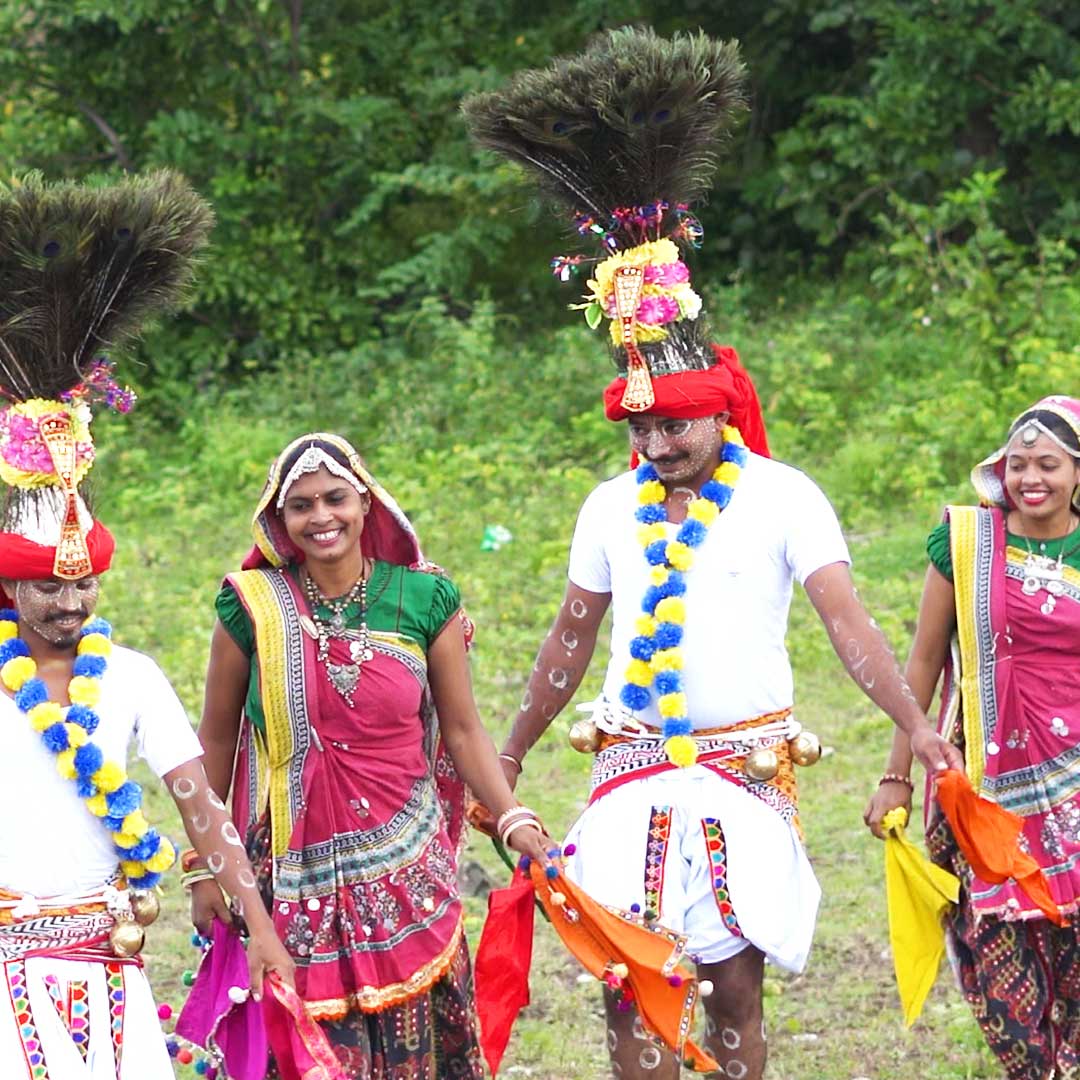
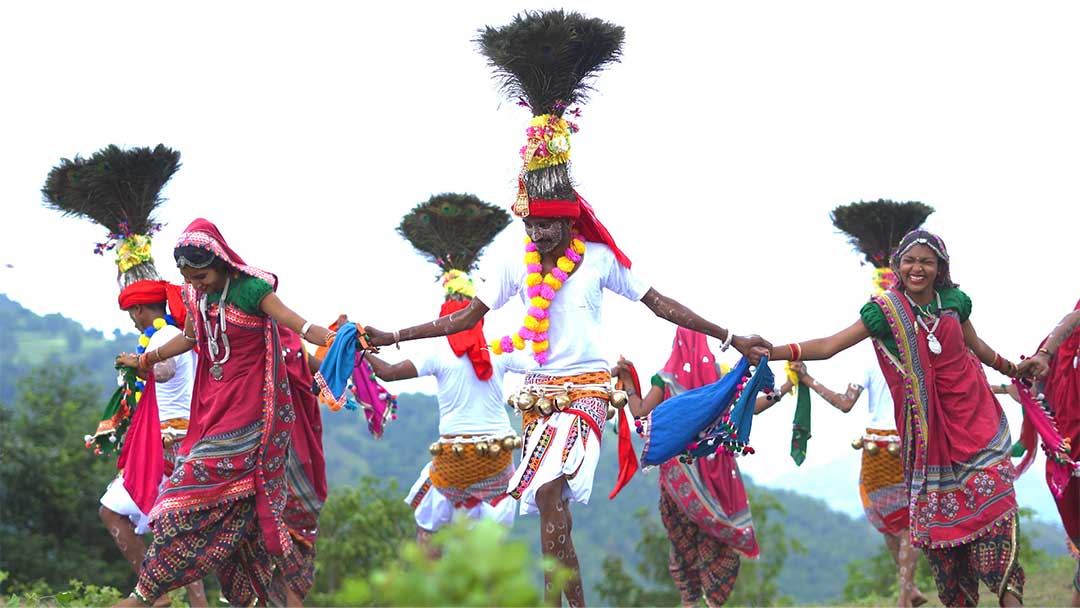
Both male and female dancers wear attractive and colourful costumes in Rathwa dance. The male dancers are dressed in dhoti and kurta while the females wear ghagra-choli. The attire for this dance also has different accessories worn like ear tops, and bangles and bindis.
Style of Dance
Rathwa dance is performed in a very energetic and vibrant manner. Set in a timing entanglement, the dancers dance away, showcasing their collectivity and unity. There are various moves involving the dancers jumping, swinging and spinning in circles. Generally, this dance is performed on the tunes of traditional musical instruments.
Music and Instruments
Various traditional instruments are employed in the Rathwa dance. Instruments such as Dholak, Bada Dhol, Harnai/Shehnai, Thaali and Ghungroo are used for this traditional musical form. The steps and movements of the dancer are accompanied by music, which makes the dance much more exciting.
Important Styles and Types of the Dance
Rathwa dance which is a folk dance of the Rathwa tribe of Gujarat is well-known for different variations and its features. This mostly done event in comparatively other events like celebrating festivals' marriage' harvest season' etc. The Rathwa dance is a richer and one of the oldest dance styles of India.
Serious Rathwa Dance
Masculine Rathwa dance is performed in simple and serious forma. This dance form is typically performed on occasions of religion or worship. Slow, deliberate movements emphasize the background emotion of worshipfulness. Religious music prompts the dancers to come together, dance with traditional musical instruments.
Utsav Rathwa Dance
Such dance is performed specifically in festivals. Rapid rhythmic movements are performed in this form of dance known as the Utsav Rathwa dance. The traditional costumes of the dancers, as well as the music, also contribute a lot to it. This dance has its rhythm set by instruments such as dhol, shehnai and harnai. Utsav Rathwa dance performs a little joy and enthusiasm and is group dance and performed by men and women.
Kavita Rathwa Dance
The special thing of this Kavita Rathwa dance is that the dancers always sing with the dance. The dance is generally performed during the ceremony of a wedding or other joyous events. The dancers, dressed in rich costumes from each of their regions, sing and dance to this important dance, dripping with cultural and emotional significance.
Common Steps and their Description
Rathwa dance is one of the traditional dances of the Rathwa tribe of Gujarat, characterised by its steps and postures. The dance is also a medium of entertainment, a symbol of tribal culture, and a symbol of social harmony. The details of the various steps involved in this dance and their descriptions show why this dance has such depth and its richness. Let us elaborate on the steps of Rathwa dance in general.
- Preparatory Pose
Rathwa Dance starts as an aggregation form, where dancers gather in a circle. Beyond being a symbol of unity, this posture conveys a sense of collectivity. By joining hands with one another, the dancers evoke a sense of intimacy. Even in this preparatory pose, each and every dancer soaks their body in the tempo and the feel of the melody. This is a lovely model of collectivity preserved throughout the dance.
- Clapping
After that, the dancers clap to build the intensity. It amplifies the energy of the dance and draws in the audience. The clapping here is simply a way for the dancers to keep in time. In doing so, the dancers would lift hands up and down, which keeps the balance of the rhythm and the speed. In addition to the claps, the dancers convey the emotion of the dance with their pose and faces.
- Change of pace
In executing this dance, the dancers travel from point A to point B. This action assists with expanding the basic movement of dancers marching in a single direction and back. In such a manner of a movement, the dancers are very near to one another and then are again apart giving an awesome charm to the dance. co-footwork. This step not only brings energy and excitement to the dance but also to the energy of the community together.
- Footwork
There is an emphasis on footwork in Rathwa dance The dancers twist, bend and jump, leading their feet at different angles. This adds to the lilt and the speed of the dance. The dancers bring their feet together until they all sound in unison. In this step, they ground themselves and feel their contact with the earth, which allows them to root the dance into a particular depth.
- Hand Gestures
During the dance, hand gestures play a considerable part to it. There are many hand gestures made by dancers like hands up, down and joining the hands with each other. This not only provides visual for the dance but is also a showcase of culture. The hand gesture my representing life, nature or magical items. It is through this expression that the dancers place ink to their pages, which creates harmony.
Rhythm and Beat
Rathwa dance is known for its passionate and rhythmic beats with which the dancers dance. This dance is accompanied by different types of rhythmic melodies and beats and these melodies guide and energizes the Dance of the dancers. Rathwa dance is performed to a brisk but sweet tune played with dhol, mandal and other traditional musical instruments.
Understanding the Rhythm and Taal of Dance
One such Indian tribal dance is Rathwa dance which is performed by the Rathwa tribe. Rhythm and Taal are the soul of this dance, every single move of the dancers is guided by rhythm, and makes the whole performance lively. The right combination of rhythm and taal in Rathwa dance not just creates rhythm in dancers but also entertains the audience.
Importance of Taal
In Rathwa dance, rhythm carries rare importance. Rhythm is the speed that ties together the movement of the dancer and discrimination. This dance has fast and melodious tunes and is mostly played on traditional musical instruments. The rhythm of the dance is provided by instruments like Dhol, Mandal and Timki. These instruments not only speed up the motion of the dance but also provide a unique musical configuration in harmony with the dancers heartbeat.
Tal lifts the spirits of the dancers and provides them with motivation at each step of the dance. The audience gets mesmerised when the dancers move together.
Characteristics of Rhythm
Another essential component of Rathwa dance, rhythm. “Rhythm” refers to a regular melody or cycle, the rhythm gives a basis for the dancers to execute their movements with a time oriented frame. There are multiple sorts of rhythms in Rathwa dance, similar to the speed and permanence, which give a specific captivating vibe to the dancing of these artists.As the rhythm brings stability and ease in the dance, the dancers align the body and foot movements with the rhythm.
Different types of rhythms and their use
The cultural depth reflects in the kinds of rhythms and their use in Rathwa both in the dance. Primarily done by the Rathwa tribe of Madhya Pradesh and Gujarat, Rathwa dance is one of the most prominent and widespread dances of the Rathwa community, performed especially during harvest and festivals. The rhythms and beats make the performance lively and energetic.
Different types of rhythms
1. Dhrut taal: Dhrut taal- Its one of the most common traditions of Rathwa dance. It is worn on occasions and festivals at the time of dance being performed at the very fast pace. That rhythm operates to hover the dancers and vibrate the excitement with the crowd.
2. Madhyam taal: This rhythm comes into play when one has to narrate something – a story or an emotional message. Flexibility of body and smooth transitions are reflected in Madhyam taal, giving the dance a graceful look.
3. Vilambit taal: This is a broader rhythm usually used in religious or spiritual settings. In this beat when the dancers move their steps peacefully producing a meditative peace of mind. We were enveloped in a deep sense in this
Use of Rhythm
The rhythm in Rathwa dance is not only responsible for the speed of the dancers, but also their mood and their evocation of facial expressions. Rhythm, when the dance is performed with the right rhythm, it adds to the dance and it is a treat for the eyes for the audience.
• Expression of emotions: The dancers move as per the rhythm to feel their emotions. The fast rhythm represents joyfulness and the slow represents their inner seriousness and depth.
• Collectiveness: The backdrop of rhythm used in Rathwa dance is the aspect that unifies the dancers. This is such a unifying experience when all the dancers are dancing together in sync.
• Infusion of culture: While the entire act of Rathwa Dance comes under dance skill, the rhythm of here dance imbibes the culture and traditions of the Rathwa community. Each rhythm holds a story and an emotion, a connection that takes the audience to the moments .
Costumes and Instruments
Costumes used in Rathwa dance are tribal contemporary costumes. The Rathwa men traditionally wears white or light coloured dhoti and kurta. Yes, there is a turban wearing on their head and they are his pride tribe. Most of the women are in colourful draped saris, mostly red, green and yellow colours are captured.
Traditional and Modern Costumes
Rathwa dance is an identity of Rathwa tribe and it expresses itself through traditional and modern clothes. This is a dance that not only shows their social life and cultural life, but also shows their craftsmanship and art. The costumes of this dance is the symbol of the spirit of the dance of the dancers, which merges with the culture of the people.
Traditional Costumes
Traditional Costumes for Men
• Dhoti and Kurta: The Rathwa man typically wear white or light-colour dhoti. They opt for an embroidered kurta with the dhoti, which allows them to move comfortably when dancing. In addition to the traditional dress, Rathwa men carry chaadar or shawl on their shoulders with bright colours .
• Jeweller: Rathwa men adorn themselves with different types of earrings and rings according to their taste. These ornaments not only beautify, but also signify their culture.
Traditional Costumes for Women
• Lehenga & Choli: Rathwa ladies wear traditional colourful lehenga & choli. These clothes get more beautiful when we dance in them, right? because they have embroidery and weaving work. Its length and design according to their tradition makes it very attractive while dancing.
• Dupatta:Same pidgin word, women add up lovely dupatta alongside their lehenga. They wear this dupatta in various colors that makes their movements healthier in the dance.
• Jewellery: Traditional ornaments such as nose rings, earrings and bracelets are worn by Rathwa women. They not only beautify these women but also reflect the richness of their culture.
Modern Costumes
According to Rathwa, modern dress has already crept into the dance, the costumes being worn by a lot of dancers these days. The older generation has a new appearance and is also attracting the local youth towards the dance.
1. Comfortable clothes: These days, few Rathwa dancers also wear comfortable clothes like jeans and t-shirts as this makes their movements easier during the dance. This innovation brings freshness to the dance without losing its traditionality.
2. Fashion elements:Now youth Rathwa dancers attempting to introduce some fashion in their traditional costumes It helps to keep the dance culture fresh and exciting. They are utilizing different colors and patterns under this.
3. Mix of traditional and modern: A lot of people are sporting a Like in new shoes or piece of jewellery that one uses with the old lehenga, which adds more grace to the culture of dance.
Characteristics of Costumes and Their Cultural Significance
Rathwa Dance: Rathwa dance is one of the major tribal dance of India performed by the native people of the Rathwa tribe in the state of Gujarat. Not Only The Performing Art form But Also The Cultural Identity / Tradition Of the Rathwa Community. While the community dresses in celebratory attire for a social gathering or festival, the dance costumes define the ethos of this lineage.
Traditional Rathwa Dance Costumes
Traditional Costumes of Men
• Dhoti & Kurta: The Rathwa men mainly wear a white or light-colour dhoti, teamed with a kurta. The freedom of movement afforded to them by the traditional garb encourages elaborate embroidery, the design of the kurta usually embroidered and embroidered. These men are not just wearing something comfortable — it is well known that the dhoti and kurta are symbols of traditionalism.
Traditional Costumes of Women
• Lehenga and Choli – Rathwa women often wear colourful lehengas and cholis. The lehenga is embroidered and worked, which made their beauty in dance. The identity of women can be traced by the colour and length of the lehenga she wears.
• Dupatta: The lehenga is paired up with a beautiful dupatta that is available in different colours and prints, and is traditionally worn by women. So, this dupatta is not just a piece of their outfit but a momentum into their dance.
Features of Rathwa Dance Costumes
- Colourfulness: The Rathwa dance costumes are full of colour that displays the vibrancy and zeal of the Rathwa community. The colours do bring out a strong impact on the dance with the audience focusing on a special effect.
- Local Materials: Costumes are most often produced by local weavers and artisans using their authentic approach and skills. This practice also contributes local material culture preservation.
- Medium of Expression: The Rathwa dance done by the Rathwa is not only the traditions but also the medium of expression of the emotions and expressions of the Rathwa dance costumes. The costumes worn by the dancers represent their culture, tradition and identity.
Cultural Significance
• Social Unity:Rathwa dance costumes highlight the importance of unity and collective spirit among the people. As it also means individualism becomes collectivism, there you have reinforced the collective identity, when all the dancers wear the same costume.
• Economic development:Rathwa dance attire turns into a livelihood centre for local artisans and weavers. Which helps out local economy and as well preserves our culture.
• Preservation of culture: The Rathwa dance dresses are significant from the cultural conservation aspect as well. Wearing of traditional costumes by younger generation is an excellent way to help ensure respect and mindfulness of their culture.
• Spiritual significance:Rathwa dance costume represents not only outward beauty but also carried a spiritual character. These outfits are a reflection of their faith and faith.
Main musical instruments and their identification
Rathwa dance, primarily performed by the Rathwa tribe from the Indian states of Madhya Pradesh and Gujarat, is well-known for its vibrant performances and cultural significance. The musical instruments of this dance make the dance special because they are an integral part of the musics of this dance.
Dhol
Majorly Rathwa dance is played by dhol. It is a drummostly played with hands, and the size is big. The sound of the dhol sets the rhythm & beat for the dance, boosting the energy of the dancers moving to its beats.
• Identifying Feature(s): The dhol is round and covered with leather on both sides. It requires a special technique to play it on the instrument.
• Cultural significance: Dhol is the centre of music and is one of the instruments played during the celebrations and festivals of the Rathwa tribe, so it has a significant cultural role in the community.
Timki
Timki is a small instrument and generates needed rhythm when the Rathwa dance moves on. The instrument has a loud sound that makes a magical effect on the dance performance and is played through hand.
• Identity: Timki is a circular instrument from wood or bamboo. Its sound is loud and clear.
• Cultural significance: Timki: A part of Uber Wish is also used to increase the speed of the dance, and is a uchharan of Rathwa culture.
Flute
Flute is an essential instrument that brings melodious melody in the dance. This is a wooden instrument and the sound of this instrument makes a dancer's performance complete.
• Identity: The flute is a long rounded instrument with holes on it. Plays this makes a sound shaped like a sound
• Cultural significance: Rathwa culture depicts flute as the charecter of love, peace and beauty. The sound is such that it makes dance cheerful and beautiful.
Conservation, Modern Influences and Conclusion
Rathwa dance is an essential tradition of Indian tribal culture and works as an icon of uniqueness and cultural heritage. This dance is a form of art that mirrors the customs, values and way of living of the Rathwa region. But through the years, this dance has undergone a lot of pressures from the elements of modernity that made a significant .
Conservation of Traditional Styles and Methods
Rathwa dance is the folk dance of tribal Rathwa community belongs to cultural heritage of Gujarat which is preserved over the centuries with influence of modern source of inspiration for fusion and modern thought. The value of this dance is not solely in entertainment but rather in the representation of the traditional story and identity of the community. Rathwa dance is considered even today but it is not a dance only performed on festivals and special occasions but also yo unite the community and culture.
Various aspects determine the revival of Rathwa dance. One, the main objective of this dance, is to maintain traditional stories and cultural beliefs. Through its dance, the Rathwa community will pass on their traditions to the next generation, ensuring their identity lives on. Further, Rathwa dance practicing is highlighted in regional festivals or ceremonies as a part of ritual practices.
Role in Education and Influence of Media
Rathwa dance is a folk cultural expression which is further being popularised from schools to media. It signifies the lifestyle, culture and belief of the Rathwa tribe — though in a dance form. Its education and propagation has today gained many new dimensions, which play an important role in its preservation and development of the dance.
Role in Education
Rathwa dance is gaining cute teaching in schools and schools. Various cultural programmes and events are introducing the features and ways of this dance to the younger generations. This is not only a chance for students to reconnect with their cultural roots, but also provides them with experience in discipline, teamwork, and social interaction.
1. Inclusion in curriculum: Rathwa dance is being included in the curriculum of many educational institutions. This helps the next generations to respect and continue this art. This is where the role of dance teachers comes into the picture who specialize in this art form. These efforts also engender awareness and preservation among the students regarding the culture.
2. Workshops and training programmes:Special workshops and training programmes are being conducted during which the young artists are taught the basic elements and techniques of dance. Which assist them in reconnecting with their culture. These types of events have dancers and professionals who share their art and energize the participants.
3. Cultural festivals:Rathwa dance finds a space to perform in cultural festivals. During different fests such as Teej, Holi and fairs, Rathwa dance is performed. These events are not only an opportunity for the dancer to perform and demonstrate his artistry but also a means of imparting cultural pride on those in attendance.
Influence of media
Media has taken a crucial place to play a very vital role in this digital period. Various mediums like TV, radio and social media are covering Rathwa dance. Hence, media not only popularising the dance, but also giving it the world stage.
1. Social Media: Rathwa dance videos are being shared on Facebook, Instagram and YouTube. These videos primarily show the dance, but simultaneously introduce the viewers to the culture, traditions and lifestyle of the Rathwa community. Artists are sharing their performances on the net for a foreign audience, giving a new identity to the dance.
2. TV Programmes: The Rathwa dance is being staged in various cultural programmes and reality shows. These programmes not only demonstrate the dance but also emphasise its significance in our society. Only such performances provide an opportunity for the audience to indulge in importance and culture of Rathwa dance.
3. Documentaries and Films:The Rathwa dance is being staged in various cultural programmes and reality shows. These programmes not only demonstrate the dance but also emphasise its significance in our society.
Conclusion
The Rathwa dance is one of the most popular dance types of the Rathwa tribe of Gujarat making it an integral part of the cultural heritage of the region, known for its historical background and diversity. This Dance is a reflection of the lifestyle and beliefs of the tribal people with the flairs of their traditions. Rathwa Dance Relates to tribal belief and their religious ritual, this has been an inherited process since centuries. This dance represents not only religious festivals, but the bonded spirit and cooperation of the community.
Rathwa tribe is identified by their traditional life form, agro-based economy and their culture. The Rathwa tribe takes pride in practicing their cultures and also they are part of the history which they still cultivate.