

SERJA INSTRUMENT
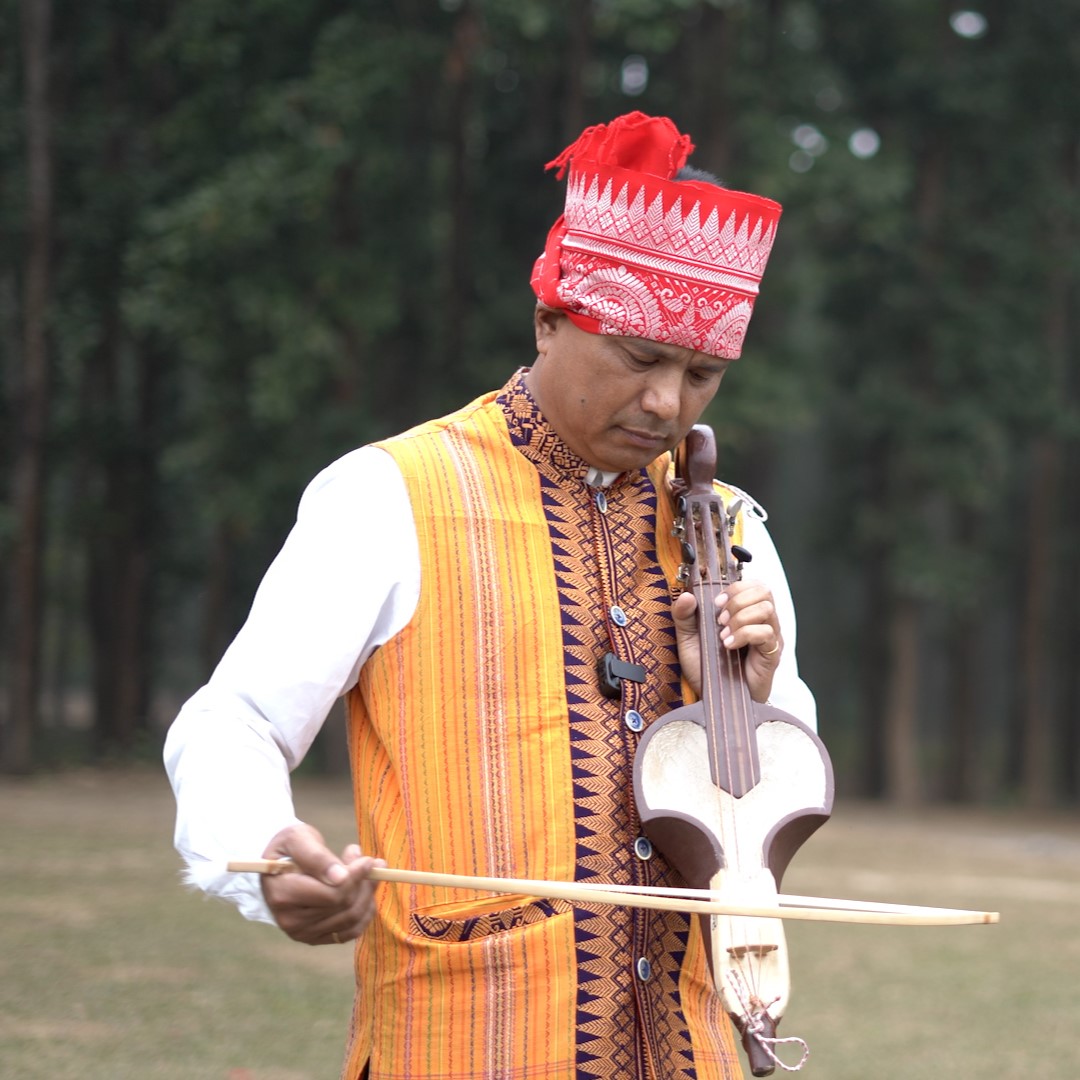
This beginner’s module introduces Serja, a traditional bowed string instrument of the Bodo tribe. Learners will explore its origins, cultural significance, and basic construction. The course provides an overview of the materials used, fundamental playing techniques, and its role in folk music and dance. Additionally, it highlights preservation efforts and modern influences. Designed for beginners, this module offers a foundational understanding of Serja’s craftsmanship and musical heritage.
 Most Viewed

What you'll learn
- Introduction to Serja : Discover its history and cultural roots.
- Materials and Construction : Learn about its unique design and craftsmanship.
- Basic Playing Techniques : Explore essential bowing and sound production methods
- Serja in Folk Music : Understand its role in traditional Bodo celebrations.
- Preservation and Modern Influence : Learn about efforts to sustain and evolve Serja.
Couse Features:
- Beginner-Friendly Content : Easy-to-understand lessons on Serja.
- Cultural Insights : Explore the instrument’s historical and tribal significance.
- Hands-On Learning : Introduction to basic playing techniques.
- Visual and Audio Aids : Engaging multimedia resources for immersive learning.
- Self-Paced Study : Flexible learning schedule for convenience.
Who Should Enroll
- Beginners interested in traditional instruments
- Music enthusiasts exploring indigenous sounds
- Students of folk music and cultural studies
- Bodo culture enthusiasts
- Anyone curious about musical heritage
Description
SERJA INSTRUMENT
Introduction to Serja and its Origins
History and Evolution of Serja
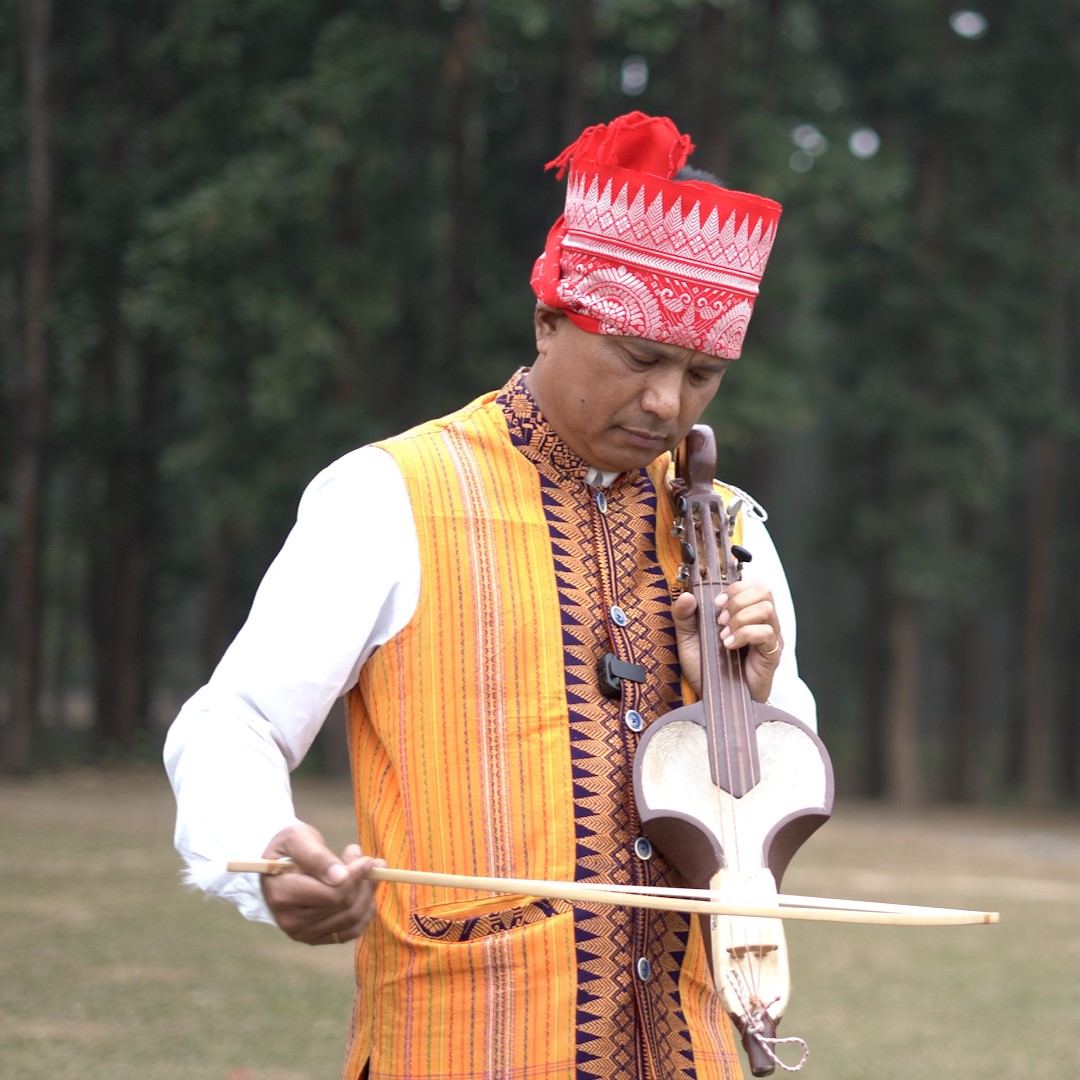
The Serja is a bowed fiddle music instrument which is highly inculcated in culture of the Bodo tribe of Assam India. Rather than a musical instrument alone, it can be viewed as a symbol of the traditions, spirituality and identity of the community. It has been evolving under the interactions between the historical tradition of the Bodo people and their creative thinking. Throughout the generations, the Serja has been a persisting symbol of cultural preservation, as it adjusted itself to the new time and still kept the main idea. This discussion gets into the creation, structure, cultural value, development and future of the Serja within the setting of the Bodo community of people.
Heritage and Early History
The Serja has a long history dating back several centuries and its growth was found in the Bodo tribe who are part of agrarian and ritualistic cultures. Bodos are one of the largest ethnolinguistic groups in Northeast India who have been closely associated with nature over history. Having settled in the green surroundings of the Brahmaputra Valley known as the land of forests and fertile plains, they used natural materials like bamboo, wood, and animal skin in making tools, instruments, and other utensils of their daily needs. The Serja therefore became an offspring of such a setting and was constructed by the use of Ejar wood (Lagerstroemia speciosa) and animal hide.The initial types of the Serja might have been very primitive since they were only applicable on occasions when the community came together or religious occasions. Like most indigenous instruments in other cultures, it could have been originally used as a medium of communication with deities, ancestors and nature spirits. Its shape and ways of play were improved by Early Bodo musicians during a time period, and it turned out to be an advanced string instrument, which could express their happiness, grief, and spiritual needs. The special structure of the Serja, which was represented by both a bowed device and percussive overtones, made it a very unusual achievement in the Indian musical cultural heritage.
Serja design
The art and the craft of the Bodo artisans is revealed in the building of the Serja. Every Serja is created manually keeping their materials selection specifically to have them sound resoundingly and uniquely. The Serja is sculpted out of the lightweight but strong wood of Ejar that is hollowed. The instrument also has skin of a goat that is stretched on the lower area of the instrument and acts as the soundboard to improve the sound production.The Serja actually has two to four strings, although traditionally they are of natural fibre, usually muga silk which as a speciality is native to Assam or in other cases horsehair. The instrument is bowed by using the horsehair to string the bow that is made out of bamboo. The strings play low sonorous melodies that blend excellently with the rhythmic beats of the Kham (A traditional drum) and the fluttering tunes of the Sifung (flute made of bamboo).Serja has been a developed by generations of people, who have kept the art of it and skills needed to make the instrument. Both the measurements of each element of the Serja are perfectly balanced to ensure that it lets the sound and beauty balance. The stability of the instrument and acoustic accuracy is the reason why Bodo households love it as an artifact.
Cultural Meaning of the Serja among Bodo People
The Serja means a lot to the Bodo community in terms of culture and spirituality. It is not just a musical instrument but also a component constituent of religious festivals, ceremonies and social get-tethering parties. The Serja is played very much when discussing a typical Bodo dance performance, e.g.:
- Bagurumba: Bagurumba or the batagata or the butterfly dance is a type of dance routinely done by Bodos women as a way of commemorating nature and community peace. Serja is the melodic accompaniment to the smooth and rhythmic dance by the dancers.
- Baisagu: It is one of the spring and the festival is held early in the New Year of Assamese community in which the Serja is celebrated in its best mood. The rituals of the festival and the dances are accompanied by the music performed by the musicians who create the melodies in which the idea of fertility, joy, and gratitude to a good harvest may be seen.
- Domasi Ceremonies: Serja is also used during rituals in the honor of ancestors, and its sound forms a channel between the living world, and the spiritual world.
It is said that the sound of the Serja has a spiritual meaning and it has the powers to evoke blessings and drive off evil. It strengthens the identity of the Bodo people to their surrounding, their gods, and their culture. The Serja interprets tales about nature, love, and victory and defeat of the community through its tunes.
Serja development
Serja has had slight changes over time yet its cultural character remains the same. Issues surrounding this change affect the very fundamental structure of the instrument which has been modified throughout the centuries thanks to similar adjustments in the construction and playing techniques along with the adaptation to cultural influences.
- Historical Methods: Since ancient times, the Serja can only be made with natural materials, consisting of wood, silk, and animal hide. The art of making the Serja was transferred through verbal communication meaning that it was kept real.
- Effects of Contemporary Materials: More recently the use of synthetic strings and better adhesives has meant the Serja is more durable and more accessible. Whereas, some artisans have adopted these materials, purists still believe that it would be better to use traditional elements to maintain its original sound.
- Musical Innovation: The current Serja musicians indulge in modern styles of music including the flavors of folk, classical, and fusion music. This flexibility has made the Serja to reach out to newer audiences, breaking out of its conventional milieu.
Culture Relevance in Bodo Tribe
Bodo tribe uses Serja not only as a musical instrument. It plays such an important role in their cultural identity as it is a point of connection with the past, spirituality, and society. The Serja is a traditional bowed string instrument and has formed the core of the cultural lives of the Bodo people several generations ago, playing an intrinsic role during the tribe festivals, rituals, socialization, and construction of identity. The cultural importance of the Serja can only be understood through examining the multiple-purposed aspect of the Serja in the Bodo society i.e., its use in the rituals, its application in community connection, and its application to maintain the Bodo heritage.
Serja in Rituals and Ceremonies
Bodo tribals cannot imagine their rituals and ceremonies without the Serja, which is considered not only as a symbol of artistic expression but also an expression of spiritual contact. The Serja plays a role of spiritual communication during many religious and cultural activities such as in the Bagurumba dance. Serja is not just a musical instrument but rather, is a source through which the community relates with their ancestors, their gods and spiritual powers that control their lives.
The Community and a Sense of Identity at Social Gatherings
Music is very central in the social gatherings of the Bodo, and the Serja is usually central during the functions. People are always united when the sound of the Serja is playing whether it is a time of festivals, or celebration, or a simple get together because of the sound of the Serja strengthens the social bond existing in the community and creates a common sense of identity. Not only professional musicians, the Serja is available to everyone especially people who have been brought up with the culture of the Bodo tribe.
Facts about Bodo Tribe
The Bodo are also called Boro ethnically belong to the state of Assam in India and are speakers of a TibetoBurman language. They belong to larger Bodo-Kachari ethnolinguistics groups family that are widely geographically dispersed in northeast India. Most of the Bodos are in the Bodoland Territorial Region of Assam, but their presence can also be seen in rest parts of Assam as well as in Meghalaya.
Language
Bodo language belongs to Sino-Tibetan family of languages with Boro-Garo branch in focus of the Tibeto-Burman. It is also an official language in Assam and Bodoland Territorial Region and is proud of being one of the twenty two languages in the Eighth Schedule to the Constitution of India.
Religion
The Bodo people had a traditional religion as Bathouism which is a faith of the supreme god Obonglaoree. In Bathouism the Shijou tree (species of a genus Euphorbia) is sacred and is worshipped as an embodiment of the god. Bathouism further lays stress on the five Great elements of God i.e. land, water, air, fire and ether which finds its place importance regarding the Bodos cultural activities.
History
The Bodo customs consist of migration and settlement of the people that goes back to a long period in northeastern India. After the fragmentation of Kamarupa, there was a settlement of different ethnic groups in other ecological zones like Bodos. With constant activities and mixing of these parties, unique yet mongrelized cultural activities emerged. Although different empires and state systems such as the Mughals, the Koch, the Ahoms and British colonialism influenced much on the Bodos, they did not allow these systems and empires to impose their rule or to be integrated into the financial webs of such empires.
Bodo Identity Formation
The construction of Bodo identity process is traced back to the colonial era when the Bodo upper caste and intellectuals attempted to contrast themselves and their Assamese caste-Hindus. A large number of Bodos did not come in contact with formal education until late 19th century. Educated, mainly traders, schoolteachers and contractors, a new educated Bodo publicists had come up by the early 20th century. Kalicharan Brahma, a Goalpara trader, went further to evolve a new monotheistic religion called Brahma-ism and to preach about a separate Bodo identity. It was a new identity that denied the dominance of caste and wanted to establish the respectability of the Bodo community. By 1921 census, the Bodos started to refer themselves as Boro language and Brahma religion.
Serja Construction and design
Serja material selection
1. This is wooden tree of Ejar Tree (Lagerstroemia Speciosa)
Ejar tree or Lagerstroemia speciosa locally referred to as Pride of India is a native to Southeast Asia and its wood is especially popular due to its strength/solidity. In the case of Serja, wood, also known as Ejar tree, is utilized in the making of the main body and the neck of the musical instrument. The tree is selected due to its strength and capability to withstand the strain and the stress that the instrument undergoes, when being played.
2. Sound board of animal skin
Extra to the wood, the Serja also makes use of animal skin that is strained on the sound box of the instrument. Historically, goat or other local animals are the traditional go-to skin to be used. The skin is also prepared methodically and picked according to the thickness, elasticity, and resonation capacity. The use of animal skin is not random since it has got the natural advantages of being acoustical.
3. Bow horsehair
Serja bow is a very important element that has a direct effect on the production of sound in the instrument. The bow is also made of horsehair to draw on the strings making them vibrate with the creation of sound through friction. Horsehair is chosen because it is the best pinch of elasticity and softness to interact softly with the strings.
4. String Material
The properties of the type of string used in the Serja may differ by the area, and the artisan; however, the strings are traditionally using well known natural materials, e.g., gut or silk. Such materials have been selected because they generate rich, resonant tone when played with the horsehair bow due to their vibrational characteristics.
Structure of Serja
Materials and Construction
Body Construction: The Serja is mostly made of wood that is taken out of the Ejar tree (Lagerstroemia speciosa). The tree is indigenous in the area and is known to be very strength and resonant and this is what the instrument needs to be made of to become a strong and durable instrument. The Ejar wood is designed because of its capacity to give deep or full notes after playing thus fitting the acoustic needs of the Serja. The body is being carved manually and tools used have been transferred through generations. The Serja body is hollowed out to reinforce the sound and the wood is not treated, only it is allowed to use the natural grain and texture which is a key feature of the tribal craft. The empty space further improves sound character of the instrument and this gives a clear and deep sound.
Strings: Serja often has four strings; traditionally these are muga silk or bark fibres of the Sterculia villosa tree. The muga silk with its high tensile strength and golden color due to the natural dyes is a relatively important fabric in Assam, and that use of the muga silk in the Serja identifies the instrument with the rich culture of the region. The tensions of these strings are well-regulated to offer the right pitch. Metal strings can also be utilized in contemporary renditions to the Serja, however the more familiar silk or plant fibers have been favored historically due to their organic, warm sounding makeup. The strings get their tension across the bridge and form part of the overall sound profile of the instrument and enables the musician to play a variety of sounds as long as they change the way they play or where they place their fingers.
Skin Covering: The lowest part of the body of the Serja is covered up by an animal skin which is usually that of a goat, but in certain instances an iguana. The skin has a number of functions: it allows improving the tonal level of the instrument and adds to the sound tone richness as an instrument is being played. The skin then is stretched and pegged down with utmost care to the body, and it shows how micro-efficient the Bodo tribe is in the use of the resources they have around, as the skin is obtained in their natural habitat. The skin wrappings also adds to the instruments durability since it protects the hollowed wood, as well, as adding to the stability of the Serja as a whole.
Structural Components
Neck and Fingerboard: The Serja has a long neck and it is an extension of the body portion of the instrument. The neck is usually made of hard dense timber, which has the rigidity required to hold the strings. The fingerboard, on which the player presses the strings in order to vary the pitch, is very smooth to an extent that the fingers glide easily on it. It is also meant to provide the musician with sufficient control of the pitch by the length and the curvature to enable the musician play the most complicated melodies in recitals. The neck fits the body of the instrument proportionally and a balance between the production of sounds and playability is achieved.
Bridge (Ghora): One of the most important pieces are the bridge, called the ghora, which supports the strings and relays the vibrations of the strings into the hollowed out body of the Serja. Historically made of a wooden material, it is carved with a specific precision so the vibrations of the strings are effectively transferred to the body improving the overall sound performance of the instrument. The design of the bridge and its position is very important in creating the tonal output of the Serja and even the slight change in its design can have a great impact on the instrument tone.
Tuning Pegs (Puthis): There exist four tuning pegs also called puthis in the Serja which are used to tune the tension of the individual string. These are normally wood pegs which get attached to the head body of the instrument. The musician is able to tune the instrument in the right way by rotating the pegs and altering the height of the strings and the pitch that they produce. The pegs play an important role of refining the Serja, adjusting the pitch, to the liking of the player. These tuning pegs can also be carved the traditional Bodo way and this gives the instrument a touch of beauty.
The bow: Horse Hair Working in Sound Production
The Bodo tribe has its own dense legacy of the Serja which is a bowed instrument used by the rest as well. Such aspects as the bow are one of the distinctive elements of the Serja since it significantly contributes to the generation of the sound. The bow is made out of horsehair, a historical favorite in the strings of bowed instruments around the globe such as violins, cellos, and native literal string instruments such as the Serja. There is a section dedicated to the significance of horsehair in the Serja bow, why it plays an important role in the production of the sound and what makes it a choice of many people when it comes to such a traditional bow.
History and Cultural overlaying of the Horsehair in the Conventional Bowed Musical instruments
Horsehair bow use in bowings is centuries old and has become part of sound production of the string instruments across varying cultures. Of the tail hair of horses, horsehair is very highly prized, and is considered an excellent material in the arts of bow-making. This is because among the Serja and most traditional bowed instruments, horsehair is not just a natural material needed to make an instrument but also has cultural context as it represents a strong bond between the Bodo people and their natural environment. The Bodo tribe has always been using materials around them to make musical instruments and so the Serja must remain a symbol of their workmanship as well as a gift of nature.
Horsehair in Sound Production The role of horsehair in sound production can never be ignored because in some respect the horizon line has always been on the upward trend. This is basically because the production of sound with the help of horsehair has been used over a long period of time. Horsehair has in one way or the other been there in the production of the sound so that the horizon line has gone upwards.
The main role of the bow in any other string instrument is that it helps to establish friction between the strings and itself, which makes them vibrate and give the sound. To the Serja the horsehair bow is a primary means of setting up such vibrations. Serja was another instrument that is drawn in the strings by pulling the bow over the strings. The string is made to move because of the friction existing between the horsehair and the string. The sound comes through the vibration of the string which is followed by the amplification by the instrument body.
Why Horsehair?
Use of horsehair instead of other form of materials like synthetic fibers or plant materials is out of the strength of it as well as its flexibility and texture. Horse hair is more resilient than most vegetative fibers, which makes them fit to endure the toughness of bowing in a string instrument. Naturally, the consistency in its grip to the string can be guaranteed because this is a necessity to create a clean and clear sound. Further, the natural stretchiness of horsehair forms enables it to be stretched without losing its shape and this makes it last long without affecting its capabilities.
Caring The Horsehair Bow
To keep the Serja bow in good condition, the musicians are required to ensure that the quality of the horsehair used in the bow remains intact because worn out horsehair can wear out. This is particularly relevant when it comes to such traditional instruments as the Serja, where the bow itself is a significant component of the sound as well. Such rehairing where old horsehair is replaced by new ones is required on regular basis to maintain bow to deliver best sound. Rehairing a bow is a specialized skill and because of the specific skills associated, the overall tone of the instrument can be influenced by the expert who rehaired it.
Tuning Techniques
Tuning Mechanism: Tightening and Loosening the Strings
Serja plays triangles and tuning is done by twisting or loosening the strings to adjust the tension in the strings. The instrument is usually comprised of two or three strings, subject to the regional variety, or depending on the needs of a particular performance. Each string represents certain note/pitch, and between different ones, the musician regulates the tension so that the instrument could be adjusted to required note/pitch.
String Tightening Process
The evolution of tightening the strings of the Serja is in tightening the position of the string with the help of the turning of the tuning pegs located at the head of the piece. The pegs are placed into tiny holes on the body of the Serja and manipulated by rotation of the pegs manually. The pegs move in a clockwise direction tightening the strings and thereby increasing the pitch of the sound that is produced when the string is played.
The Strings-loosening Process
On the other hand, relaxation of the strings is done by rotating the tuning pegs back, i.e. counterclockwise. Pulling the string out loosens it and this decreases its tension thereby producing a lower pitch. This method is applied to flatten the Serja either when tuned in too high a pitch or when the instrument requires an adjustment its pitch to that of the rest of the group.
Ear Training: The Way of Old
The instrument is tuned mostly by ear and musicians use their ear skills to determine whether the string is tuned properly. This aural method of tuning is very ancient, and it requires years of experience. The Serja unlike the modern instruments which could employ electronic tuner or definite pitches would ask the musician to listen to the sound and make corrections depending on their internalized musical knowledge of intervals between pitches and pitches themselves.
Value of Bow in Tuning
Whereas the strings are the main mechanism of tuning the Serja, the bow is an important detail to the overall sounding of the instrument. Then there is the bow which is normally made of horsehair which it is then used in an attempt to make a friction with the strings, the sound that this makes is one that would reverberate on the instrument body. Affecting the timbre, tone of Serja is also the tightness of the bow hair. This directly does not have an impact upon the pitch; however, when combined with changes in bow pressure and speed, then together with the string tension, it can affect the overall tonal quality. Musicians make follow-ups on the tension used on bow hair with respect to the required quality of sound and control of pitch.
Issues of Serja tuning
Adjusting the Serja does not go very smoothly. The wooden instrument is the body of the instrument consisting of Ejar tree (Lagerstroemia speciosa); it adds resonating quality to the sound of the instrument, but the instrument can be affected by humidity and temperature changes. Such environmental conditions are able to change the resonance characteristics of the wood and consequently the string tension. That may complicate the fine-tuning aspect, particularly when outdoor or weather conditions are uneven.
Sound production and Playing techniques.
Serjas simple playing techniques
Serja, a popular type of string instrument of the Bodo tribe residing in Assam in India, is part and parcel of the cultural heritage of the region. To learn the techniques of playing it, one has to understand the structure of the instrument, ways of tuning it, and peculiarities of bowing.
1. Structure of Instrument and Instrumentation
Serja comprises a round and wooden body and is further bent forward as a scroll-like violin. It normally consists of three strings of materials such as Alstonia scholaris and Artocarpus heterophyllus wood. The instrument can be played with a bow usually made of horsehair, and without this element it can hardly sound with its unique sound.
2. Tuning the Serja
Tuning is very essential in getting the right tonal quality. The tension of the strings is adjusted to tune up the strings either by tightening them or by loosening them. This helps in changing the tone and sound of the instrument.
3. Bowing Techniques
The bowing technique is really important determinant in the relevant sound of Serja. Players play using a horsehair bow that gives out a rich tonal tone. It is played by drawing the bow across the strings in varied pressure and speed to give the different types of dynamics and expressive qualities.
4. Considerations of Playing Basics
- Posture and Positioning: Serja is held comfortably with the instrument on the collar bone or on the shoulder. Relaxing the body will enable movement of fluids.
- Left-Hand Playing: This mode involves putting the fingers on the strings to perform various pitches. To train your fingers, use the scales and easy melodies.
- Right-Hand Bowing: Bow across the strings with the bow trying out different patterns to create the different kinds of sound in the makings. A consistent bowing should be done to produce a clear tone.
- Rhythm and Timing: A sense of rhythm has to be developed. Practice with the help of a metronome or in line with the traditional Bodo music. This assists in terms of keeping time steady and excellence in musical expression.
The role of the Bow: When melodic tones are produced
One of the most important parts in obtaining melodic notes of a Serja is its bow which is a traditional instrument of the Bodo tribe. The soulful, husky-sounded Serja is also played by drawing a bow, but with horsehair, over its strings. Due to this characteristic of interaction between the bow and the strings in the production of the unique tonal qualities of the instrument, the bow plays the important role of being an essential part of the performance of the instrument.
Construction of the Bow and Material
Bow The bow normally used with the Serja is of yielding timber, generally bamboo, strung with horsehair. The horsehair is specifically chosen in terms of its texture and resilience because it contributes to the sound production greatly. The bow is much longer and it helps the player to have control over the degrees of tension in the strings so that she can produce the different sounds at varied levels of dynamics and tonal degrees. The smoothness of the horsehair makes it important in the effort to create a detailed friction with its strings that is central in making the Serja sound.
The Way the Bow makes Sound
As the bow is used to play the Serja, the horsehair that is used on the bow rubs the string producing sound waves. Most of the quality of the sound will be the intensity of the pressure the player puts to it and the bowing speed. The horsehair, which is rough and grit-like, holds the string quite tightly, which makes it viable to play a variety of tones, including smooth and mellow, sharp and percussive, depending on how the player hits the string.
Bow Tuning and Bow Adjustments
The bow is very essential in tuning of the Serja. The tuning of the instrument concerns the tightness of the strings and is not what may affect the tonal qualities when the bow is used on the strings, particularly, the aspect of pitch. During their performance, musicians are able to adjust the sound by raising or lowering its pitch or timbre through variation of bowing. Another important factor which influences the interaction of the bow and the strings is the tension of the strings so that tuning of the instrument and bow pressure are two elements which demand each other.
The Place of Serja in Bodo Folk Rituals and Celebration
Serja, a customary bowed string instrument of the Bodo group living in Assam and being part of conventional folkette routines and occasions. It can be used in different ceremonial events as people cannot picture it without its unique sound or cultural value.
Folk Rituals and Celebrations Role Role
The Serja is a part of a number of rites and festivals of the Bodo people, in particular the traditional bagurumba dance. Hand-made percussion instruments used in this dance are called kham (long cylindrical drum), sifung (flute), jota (made of iron), serja (bowed instrument) and gongwna (made of bamboo). The Serja and the other instruments play the melody that accompanies the rhythm of the drums and the flutes thus, forming a harmonious orchestra that livens up the festivity.
Preservation, Modern Influences and Conclusion
Troubles in Maintaining Traditional Craftsmanship
Maintenance of the Serja artisanry is confronted by a number of challenges:
- Loss of Traditional knowledge: The skills which involve the complexities of the making of the Serja are being forgotten as younger people move out to urban centers to seek more in terms of vocations and livelihoods to the extent that they are not connected to the traditional practices anymore.
- Raw Materials Shortage- S. villosa tree, the material necessary to create Serja dwindles as along with shortage of forests there is deforestation and defiant use of land, therefore bringing quality raw materials is tough.
- Economic Constraints: This process is also very time-consuming and labor intensive, and as such, artisans are no longer as economical in building the Serja as ones are to the mass-produced instruments, causing them to give up these traditional practices.
Revival of the Cultural and Preservation of Instruments
Conservation and restoration of traditional musics instruments are essential in retaining culture and commit to sustainable activities. With respect to the Bodo community in Assam, India, multiple measures have been put in place to preserve tools such as Serja a traditional musical instrument that is made of a bark fiber.
1. Records and Studies
- Academic Studies: scholars have carried out researches in order to record the traditional knowledge that is related to Bodo musical instruments. To illustrate, one research pointed about the fact that: when making the Serja, the bark fiber was used to make the Serja and during marriage ceremony.
- Cultural Surveys: It has been investigated through a thorough survey of diverse musical instruments that are played by Bodo tribes and the application of one of them which is Serja so as to identify how they are made, played and their use in culture.
2. Community Education and Engagement
- Workshops and Training: It is important to organize workshops where younger generations have to be taught in the art of crafting and playing traditional instruments such as the Serja so that skills and knowledge could be passed along.
- Cultural Programs: Local culture and festivals promote traditional music and bring awareness to the younger generation in order to make them embrace it and take part in it.
3. Institutional Support
- Cooperation with Institutions: The cooperation with cultural organizations, and educational institutions contributes to conducting research, preservation, and promotion of traditional instruments.
Conclusion
Serja instrument of Bodo culture provides a learning experience of deep musical history of the Bodo community. Created by the Bodo, the Serja has been developed throughout centuries, becoming more culturally important as well as more musical. This stringed bowed instrument is used to important folk music of the Bodo people, and they use it as a representative of their identity and religious beliefs. In past, the Serja was made of such materials as the wood of the Ejar (Lagerstroemia speciosa) tree and of animal hide, providing the instrument with a unique tone. The Serja is in a round shape with a curving scroll body that was increasingly precise so that it produces a well-defined sound when sounded. The bow which is manufactured using horsehair is another key component that is instrumental in the production of the sound, hence the significance of the instrument in the production of melodious tones illustrates the skill with which the instrument was manufactured.These playing styles used by Serja, it is evident that this instrument is not only another musical instrument; it is the focus of the cultural and spiritual aspect of the Bodo. The playing method associated with the Serja is very complex, and the methods used in playing entail multiple proficiencies in using the bow as a result of which melodic tunes are reproduced by providing echoes to the traditional dances and rituals. The instrument forms an unifying part of folk rituals in Bodo including Bagurumba, Baisagu, and Domasi; it is applied to add spiritual and festive spirit to the festivals. The dances and the music played by the Serja constitute a highlight of the close bond of the community with nature, their fore fathers and their traditions.