

Teracotta Art
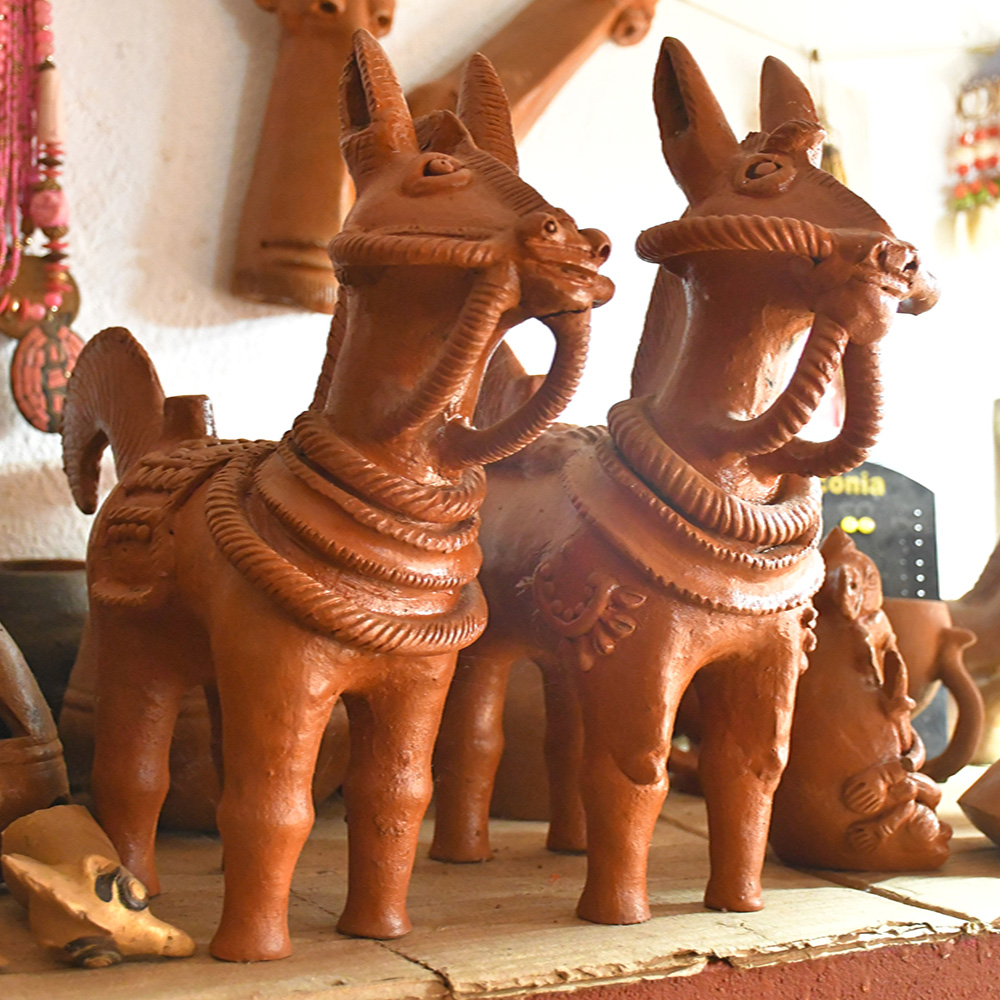
The Beginners Module on Terracotta Art provides an introduction to its rich history, techniques, and cultural significance, with a focus on the Kummari Nayak tribe. Students will explore the tools, materials, and methods of crafting, as well as the challenges faced by artisans. The course highlights notable artists, community preservation initiatives, and future trends in terracotta art. Designed for beginners, this program lays a strong foundation for understanding and appreciating this timeless craft and its role in cultural heritage.
 Most Viewed
What you'll learn
- Introduction to Terracotta Art : Discover the origins, history, and cultural importance of this ancient craft.
- Kummari Nayak Tribe : Understand the tribe’s demographics, cultural practices, and the challenges they face.
- Crafting Techniques : Learn about the tools, raw materials, and methods used in terracotta art creation.
- Preservation and Promotion : Explore the efforts of artists and communities in preserving this tradition.
- Future Trends : Gain insights into modern applications and the future of terracotta art in global markets.
Couse Features:
- Comprehensive Overview : A beginner-friendly introduction to terracotta art and its cultural heritage.
- Tribal Focus : Detailed insights into the lives and art of the Kummari Nayak tribe.
- Practical Learning : Hands-on knowledge of tools, techniques, and crafting methods.
- Community Stories : Inspirational narratives of notable artists and preservation efforts.
- Global Relevance : Exploration of contemporary trends and the worldwide appreciation of terracotta art.
Who Should Enroll
- Art enthusiasts interested in traditional craftsmanship.
- Students exploring tribal art and culture.
- Designers and creators seeking inspiration from indigenous crafts.
- Cultural heritage advocates and researchers.
- Beginners curious about terracotta art techniques and traditions.
Description
Introduction, Origin and History
Introduction to Terracotta Art
Terracotta is a type of art, made out of clay, the baked form of the term is Italian origin, and it has been an essential component of the human culture since thousands of years ago. The raw materials mainly include materials such as clay combined with other natural substances shaped into diverse forms and processed in a kiln at high temperatures in order to develop strong artefacts. The products that are formed as a result of this are commonly seated in their color (reddish-brown color) and their rough surface and these products can vary as simple utilitarian objects such as pottery and cookware to complex sculpture and decorative pieces. Terracotta manufacture is an art collective of the original art in combination with skill, so much so that it has been passed in many civilizations through generations.
Cultural Significance of Terracotta Art in India
Terracotta art is enormously cultural to the Indians as it is both a functional art and a creative arts. Centuries have passed and it has continued to produce the things we use to live in on a daily basis yet they are not only practical, they are also attractive. Terracotta works are evident in most facets of the Indian life like home and worship activities. They find use in rituals, ceremonies and festivals thus indicating their importance in spiritual and cultural life of the country.Terracotta art captures the social-economic, political, and cultural accounts of different people. Most proto-urban and indigenous people consider it as a part of their history and culture. The cultural importance of objects made by artisans is reflected as an artisan tends to implement his or her local myths, legends, and traditions in his or her work. Moreover, terracotta figurines and pottery are likely to become a means of history and narration, so that the cultural heritage could be transferred to the new generations.
Andhra Pradesh
The Kummari Nayak tribe of people is mostly linked to terracotta arts in Andhra Pradesh particularly in Araku Valley and the regions. Kummari Nayak artisans are known by their pottery which consists of a number of household items, decorative sculptures and ancient toys. Terracotta brought out here is renowned to be artistic and is colorful with traditional patterns depicting the social practices and traditions that the tribal groups practice in their daily lives. Pottery has a utilitarian and aesthetic usage in the day-to-day life and also in rituals and ceremonies.The Andhra Pradesh terracotta art is unique in a sense that it comes with a certain degree of relationship with the natural environment. Local clay is used by the artisans who may mix it with natural materials, to form various textures and finish. The art also represents the sustainable nature of the people since most of the artisans rely on the traditional methods that do not destroy the environment. This strategy will not only protect the culture but even make the artisans own the land and resources.
Historical Context
In India, terracotta art has very old origins dating back to the Indus valley civilization (c. 3,300-1,300 BCE). Excavations in established centers like Mohenjo-Daro and Harappa demonstrated abundance of the terracotta figurines, seals and pottery items, which point towards the prevalent use of the medium to embark both functional and ornamental designing. These are early terracotta products that used to be both the piece of utility and also the product that symbolized the social and religious activities of such epoch.Terracotta is valued due to the availability and flexibility. As the clay is a natural resource that is abundant, it meant that the artisans of various regions could have a possibility of trying out various forms of expression. Terracotta craft was still thriving later on with Mauryan (322-185 BC) and Gupta (c. 320-550 AD) empires. Terracotta was also frequently applied during these periods in terms of decorative tiles, sculptures, and pottery, with the decor being quite elaborate in styles and patterns depending on the social political situation of the time.
How Terracotta went through a metamorphosis of being a poor man as a craft to today being a respected art form.
In early times terracotta was sometimes regarded as a poor man;s craft which was practised by the lower classes who could not afford to use more costly media like metal or stone. This view was supported by the fact that most of the terracotta craftsmen belonged to the rural and tribal communities whose work was less of the focus as compared to more respected types of art. But as time went by, terracotta art was now accorded value not only in aesthetic abilities but as a major cultural aspect.This shift was initiated in the late 19 th and early 20 th centuries with the appearance of writers and art enthusiasts who started valuing traditional crafts and their relation with the cultural heritage of the place. The upsurge of interest in the indigenous art forms during the Indian Independence movement contributed to a large extent in elevating the stature of terracotta. The generation of admiration of terracotta artisans and their works was the result of focusing on self-reliance and how the traditional crafts formed a way of economic empowerment.The post Independence period further saw the rise of other organizations that encouraged the continuity and growth in traditional crafts such as the All India Handicrafts Board and the Crafts Council of India in the conservation of traditional crafts including terracotta art. Through these initiatives, the artisans were trained, production methods were enhanced, and the market was reached wider, which enabled terracotta to grow into a recognized art form both locally and internationally.
The Kummari Nayak Tribe About the Kummari Nayak Tribe Demographics Distribution
Nayak or Konda Kummari The Kummari Nayak are a caste of tribal Andhra Pradesh, notably the Alluri Sitarama Raju district. The demographic is concentrated in the Araku Valley that comprises of the Agency areas featuring lovely landscape and rich biodiversity. Kummari Nayak community is an example of a community where many tribes reside in this area and they have preserved their community culture and customs.The population of Kummari Nayak is distributed in various mandals which are Munchinput, Pedabayalu, Hukumpeta, Dumbriguda, Araku, Ananthagiri, Paderu, G. Madugula all these mandals are present and spread in chintapalli and G.K. Veedhi. These mandals are a combination of hilly region, forests, these regions offer resources that sustain the Kummari Nayak in particular the manufacture of terracotta pots and agriculture.Kummari Nayak people largely rely on terracotta craftwork as their significant source of income besides engaging on agriculture as well as forest-based occupation. The factor of geographical distribution of location not only marks their historical developments but also their ability to sustain the ecological aspects of the Araku valley and their skill in the artisan pieces of geographical situations, only under which they have been able to continue their artisan crafts in face of the socio-economical limitations endangering most tribal communities to India.
Overview of the Multi-Tribal Village of Madagada in Araku Valley
Madagada is a multi tribal village in the core of Araku valley, Andhra Pradesh and it is the center of Kummari Nayak tribe. Demographic make-up of the village is so diverse to accommodate volumes of different tribes including Bagata, Konda Dhora, Nuka Dhora, Valmiki, Gauda and Kummari Nayak and community of other backward classes. It is a colorful cake in terms of the cultures and, therefore, creates the rich social fabric of Madagada where people practice their customs and enjoy and live in harmony as a part of their everyday life.
Techniques, Types and Tools
Costs of tools and raw material.
The process of terracotta making is not very simple and also it demands a diversity of different tools, each of which needs to serve certain processes during production. Kummari Nayak makers employ the traditional as well as the modern tools and hence are in a position to produce quality terracotta products and save their cultural heritage.
1. Potter's Wheel:
The most fundamental instruments of the terracotta work are the potter wheel that enables the craftsmen to mold clay into symmetric and well-carved vessels and figures. The rotation of the wheel helps in the process of even shaping giving a smooth surface which is significant in employable pottery. Although there is still usage of the traditional wheels that are powered using feet, there is a possibility that some of the artisans might use the motorized wheels as well to enhance effectiveness.
2. Moulds:
The kind of design and shapes that are formed through moulds are usually complex. They may be created out of a number of materials, clay, wood or metal and they are principally helpful in the making of homogeneous objects like sculptures or ornamental pieces. With the moulds, the artisans have a chance to reproduce the fashionable designs and satisfy the market needs but they remain to employ their own artistic styles.
3. Hand Tools:
The artisans employ the use of a wide range of hands tools in order to complete and add detail to their works. Such facilities are wooden paddles, metal scrapers and wire cutters each of which has a particular task in the process of shaping, smoothing and carving of the clay. As an example, the walls of a vessel can be shaped using wooden paddle, whereas a metal scraper can be used to refine the surface texture. Wire cutters are also essential since they are used to cut off excess clay and extract finished products off the wheel or mould.
4. Kilns:
Another significant element in making of terracotta is the kiln. Once the craft is created, the pottery should be put into a kiln to harden and make it invincible. The artisans usually construct their own kilns using material at hand in the surrounding environment and firing is done at specific temperatures with precise control over temperatures so that the pottery produced could be fired correctly without cracking or deforming.Such equipment, applied together with the craft and imagination of the craftsmen, help develop the history of terracotta pottery in Kummari Nayak society.
Usage and types of clay Importance
Extraction of materials, particularly clay, is very vital when it comes to terracotta craftwork. Kummari Nayak predominantly works in two categories of clay that include Tella Matti (white clay) and Yera Matti (red clay). All types are important to both the nature and quality of end products.
1. Tella Matti (White Clay):
Character and Composition: The fine Tella Matti is also characterised by pliability, and as such serves an ideal material to achieve detailed work. This Clay contains high proportion of silica and is soft and malleable hence can easily be shaped on the potters wheel or using the hands.
Uses: It is commonly utilized to produce fine pottery, decorative objects and elaborate sculpture. The light color of Tella Matti is also suitable in application of bright natural colors, and in decorative painting which adds beauty in the end products.
Cultural significance: The tradition of using tella matti has a historical background of Kummari Nayakas. It is not only artistic, but its properties enable the use of the material to express the relationship that people have with the environment, which is reflected in the consideration of sourced material locally and helps them in the craft of their trade.
2. Yera Matti (red Clay):
Structure and Properties: Yera Matti is of reddish-brown color, rough grain and is hardwearing. This clay also tends to be enriched with iron oxide, which provides this material with its typical color and adds strength of the final pottery.
Applications: Yera Matti is commonly employed in the creation of bigger items including cooking pots, storage vessels and utility objects. This type of clay is heavy and this attribute is what makes it great at producing functional pottery.
Cultural Significance: The usage of yera matti links the Kummari Nayakas to their agricultural activities since a number of their working pottery are devised to fulfill certain demands in their day-to-day existence. The red colour is also culture and yet applied among many of the tribal communities as far as fertility and sustenance is concerned.
Craftsmanship techniques
Terracotta pottery among the Kummari Nayak community is done in a very detailed manner which requires various steps to be followed and it is during these measures that they prepare the clay to be made into them. This craft does not only bring out the labor of the artisans but also shows patience of both humanity (men and women) in the process of making pots. The following describes the key methods of pottery manufacturing in terracotta.
Pottery making step by step
1. Clay Preparation:
Obtaining the Clay: The first stage concerns the gathering of the types of clay that are the most appropriate, which includes tella matti (white clay) and yera matti (red clay) at the local riverbanks or in the forests. The craftsmen are very much selective in choosing the clay according to the nature of the clay and the characteristics of the clay that will eventually determine the quality of the pottery.
Kneading the Clay: The clay is then kneaded with water so that the clay can attain the desired consistency. This process of kneading is significant as it eliminates air bubble and makes the clay hydrated in equal measure. Craftspeople can combine various clays in a certain ratio as well to make it more flexible or strong. Normally, red clay is added to white clay to enhance its texture (approximately 20 per cent).
Aging the clay: After kneading, the clay is covered with a damp cloth or tarpaulin and left to rest overnight. This aging process allows the clay to reach a suitable level of moisture, making it easier to work with during shaping.
2. Shaping:
By the potter wheel: The wheel of the potter is utilised to work on the clay to create products like pots, brooks, and ornamentations. As the wheel spins, the potters handle the clay with their hands very expertly to form similar and beautiful shapes.
Hand-building: As well as wheel, artisans usually employ other hand-building methods like coil or slab building when making extra-large or more complicated works. Coil building is done by rolling long ropes of clay and pile them one over the other making a desired shape whereas slab building involves building boxes or containers with flat pieces of clay.
Decorating and embellishing: Having gotten the base contours, the craftsmen coat with decorative elements and details. This might involve patterns being carved into it, texture being added, or extrusive clay structures like handles or spouts being added. The Arts and crafts Decoration is a key element of an art, and it incorporates cultural designs and personal imagination.
3. Drying:
First drying Initial drying In this process, the softened pottery is left to dry cumulatively. This drying is necessary because it enables clay to harden a little in preparation to being fired. To avoid the cracking due to the sudden change in temperatures, the pottery can be allowed to dry under the shade. The drying process is carefully supervised by the artisans since it may vary in duration, last few hours during summer to several days during winter, and it also depends on the size of the piece.
Finishing touches: Once the first drying has occurred, then the craftsmen can undertake some further polishing and smoothing to add to the finishing of the object. It is a crucial step because when you are done, you cannot fail to notice that the results look good and will enter the firing process.
4. Firing:
Kiln building: The last stage is firing of the pottery into the kiln. Cow dung, rice husk, and small plant materials are collected by artisans as a combustible material to fire the kiln. The pots will be made ready to go into the kiln with care not to have them touching each other so that they will not get damaged during firing.
Firing process: Firing process takes an overnight process during which temperature is increased to allow full firing. The duration and the temperature depends on clay used and intended nature of the pots. The procedure may occupy a duration of 12-13 hrs, followed by coolance of the kiln after which the pyro products are offloaded.
Last touches: The creation that comes out of the firing process is usually then treated with natural colours; that is, it is stained with natural colours of local materials, i.e. red clay or extracts of plants, to improve the look of the products.
Forms of Terracotta Art
The Terracotta art is an ancient art, which incorporates clay as its main material, and it has manifold ways and styles in various cultures. Terracotta Art is practiced in India, mostly the field of terracotta art in the state of Andhra Pradesh, Madhya Pradesh, Jharkhand and Odisha. Terracotta art includes a number of categories which are symbolical on the cultural nature of the practiced communities as well as their expression through art. This is a summary of the main forms of terracotta arts, and the specifics of this art within the community of Kummari Nayak and their own additions to it.
1. Pottery
Among functional types of pottery, there are items that are required in every-day life in a household, e.g. pots, jars and plates.
- Water storage containers: The containers were traditionally used to store and cool water, and were generally large with small neck.
- cooking vessels: these are made in accordance with numerous cooking requirements and have thick walls so that they can resist heat.
- Storage jars: This is the jar used in preserving grains and other foods and it is made in different sizes as per the storage requirements.
b. Decorative pottery:
Such items will be those categorized into decorative items which are produced mainly aesthetically. Decorative pots could have elaborated designs as well as popping colors and could be used as home decorations or gifts.
- Vases and bowls: These items are commonly well-decorated and can be used as a show piece in house-hold decorations or as a center piece.
- Wall hangings These are thin terracotta objects with the purpose of hanging them on the walls, usually artwork to reflect local culture or folkloric landscapes.
2. Terracotta figurines
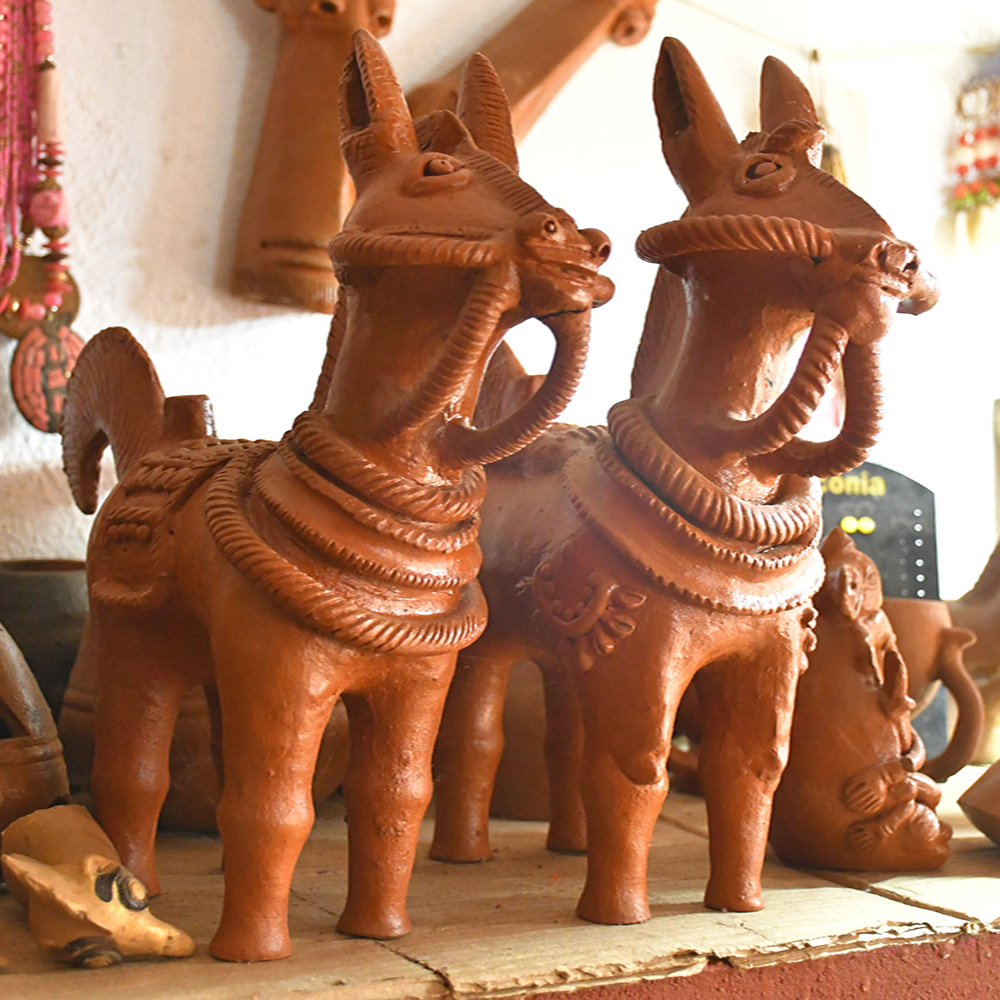
One of the most expressive variants of terracotta art is terracotta figurines which show people, animals and the creatures of the myth. Such figures usually have cultural, religious or symbolic value.
A. The figures of man:
- Gods and symbols: They have many figurines of gods; they represent significant characters in rituals and religious activities of the community of people.
- Folklore characters: Characters of local legends and folklore are also often made as figurines to work as a medium of storytelling and tell cultural stories.
Animal Figurines:
- Domestic Animals: The scenes of cows, goats and other domestic animals will depict the relation to agricultural life of the surrounding community.
- Wildlife wildlife: Local figurines are made in the shape of wildlife, i.e. Birds or Elephants which symbolize various traits attributed to the animal.
Famous Artists and preservation of the ART.
Notable Artists
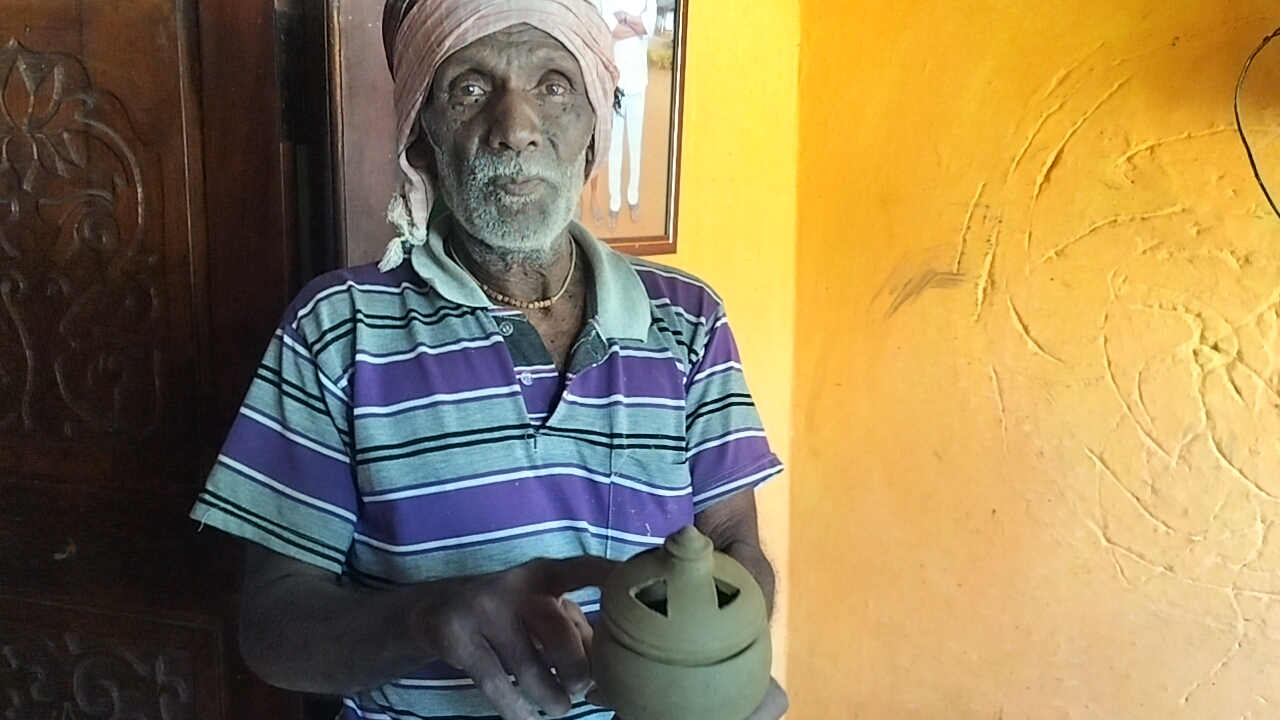
Kummari Nayak tribe of Andhra Pradesh is also famous because of its great terracotta art where the artisans live to make their living in preserving and developing this traditional art. The following is a profile of some of the renowned artists of this tribe pointing out their contribution in the terracotta art.
1. Bhimappa Kummari
Bhimappa Kummari is a renowned terracotta pottery crafts person hailing in Madagadda village in the state of Karnataka who creates very intricate designs in terracotta pottery coupled with innovative work. His father taught him the trade and he has practised it within the past 30 years. He is a pottery maker of excellence, whose talent is to produce functional pottery with aesthetic value that perfectly matches functionality.
2. Lakshmi Kummari
Lakshmi Kummari is among the very few high profile women terracotta artisans belonging to Kummari Nayak group. Having a good sense of detail and an instinctive sense of art, she majors in ornamental pieces and sculptures that tell the cultures of her tribe.
Preserving Tradition
Trainings in traditional terracotta craft remain a very difficult task to be preserved in the Kummari Nayak tribe of Andhra Pradesh in the specives of modernisation and social values. As the traditional art form keeps dealing with the modern life challenges, it becomes more crucial to concentrate on the significance of the knowledge transition across generations to save and restore the terracotta art. In this case, we speak about the difficulty in the maintenance of the traditional methods and the significance of generation-_to-generation knowledge transfer.
1. Difficulties in the Retention of traditional skills
Modernisation Effect Influence
- Threat of machine-made goods: Abundance of affordable machine-made pottery and ornamental objects and goods have not been doing well in competing with the artisans. Customers usually want something cheap, and the demand on the product that are made by round by hand falls.
- Alterations in lifestyle and choice: Making up change in lifestyles also brings change in the choice of the consumer. The next generations who have experienced modern aesthetics and facilitated living might not attach importance to traditional crafts, and this will induce the loss of the ancient value of handmade goods.
Economic pressures
The preservation of the traditional techniques is even made complex by economic obstacles.
- Reduction in artisan populace: Economic insecurity of craft-making has resulted in many artisans industrializing into more stable professions, either in farming or as wage operatives. They have also seen this interest fade and this also can result to the death of old techniques as fewer people are now ready to take up their practice of art.
- Shortage of supplies: Increasing prices of the raw materials and tools could cost artisans arm and leg to pursue their arts. Scarce availability of these sources also jeopardizes the application of traditional methods of pottery.
Migration and urbanisation
Migration of artisans to the cities in the quest of better fortune has seen them lose touch with the craft.
- Loss of community: With departure of artisans in the villages, local knowledge and expertise relating to the field that has been practised and preserved through generations may be lost. Loss of communication and cooperation between communities impairs the possibilities of learning and upskilling.
- Cultures lost: There might be no longer existing cultural surroundings to promote terracotta artwork, and the urban life may have lost the cultural context and tradition.
Future Outlook Conclusion
Future Prospects
The prospects of future of terracotta art in Andhra Pradesh among Kummari Nayak tribe is streaked with good predications, which is fuelled by the major factors of that being globalization, technologically developed world as well as rising popularisation of classical arts. With craftspeople conforming themselves to the needs of the modern market and using new technologies, there is large potential of their developments, innovations, and continuation of their culture. It looks at the opportunities of the Kummari Nayak tribe in the international market and how technology and social media can advance the terracotta art.
1. Market opportunities of the Kummari Nayak tribe in the international market
Increase in worldwide demand of hand crafts
With the growing awareness of consumers, globally, regarding sustainability and the importance of artisanal products, the demand of hand-crafted products, and terracotta artworks is at an all-time high.
Ethical Consumerism: The emergence of ethical consumerism, by which consumers want goods that they consider produce products in line with their concerns of sustainability and social responsibility, is a boom to the Kummari Nayak tribe. The artisans have the potential of leveraging on this trend and selling their terracotta art as environment-friendly products with cultural content that have a story.
Exchange of Cultures: The issue of globalization has led to an exchange of cult (to promote interest in different forms of art). Presenting their own terracotta works, the Kummari Nayak tribe will be able to interest the Liutsuk worldwide audience in admiring and promoting indigenous crafts.
B. Partnerships and collaborations.
Kummari Nayak terracotta work has greater potential, but it can advance through partnerships with designers, artists and retailers.
- Art and design integration: Joint projects with young designers may lead to the production of new product lines incorporating ancient methods and new style. These partnerships are capable of producing some special products that will be demanded by the urban consumers, both locally and globally in India.
- Fair trade and artisan networks: Establishing contact with fair trade organizations and artisan networks may provide Kummari Nayak craftspeople with marketing and other support. The collaborations will assist in providing due payment to the artisans in their line of work besides marketing their practice to more customers.
Membership of international fairs and exhibitions
To promote this art, Kummari Nayak terracotta art will have to participate in international art fairs and exhibitions.
- International stage of promotion: International art fairs are an environment where artisans meet other people who can support their product, and they also have a platform to display the art. This exposure may open up new avenues to sales and cooperation and will make Kummari Nayak art better incorporated in the international market.
- Cultural representation: By representing their unique heritage at international events, Kummari Nayak artisans can educate a global audience about their craft, history, and cultural significance, thereby promoting appreciation and support for their work.
Conclusion
The cultural meaning Terracotta art gives is not restricted to the aesthetic meaning of the art; they show off the traditions, the beliefs and values of societies in which they exist. Terracotta craftsmanship is not only a source of artistic expression to the Kummari Nayak tribe of Andhra Pradesh but an essential element of the tribe which includes their history, rituals, and the relationship that the tribe had with the environment. It is an art that is used to pass the heritage to the generation as they all share methods of doing the art and give stories that are passed on.Protecting terracotta art is a critical step towards preventing its destruction to the future generations since it safeguards cultural stories and ways in which the Kummari Nayak community lives. It is important that we save the centuries-old value system and knowledge systems as the modernisation and globalisation are bound to propose threats to the traditional crafts. Making terracotta objects is more of a lifestyle that holds on the philosophy of sustainability, community, and resilience. Promoting this kind of art will save the diversity of cultural heritage because our children will be able to see the path of their ancestors.