

Dhemsa Dance
In this Advance learning course, you will investigate Dhemsa, a traditional group dance of the Gadaba tribal of Odisha. In interactive modules, you will be able to discover where it originated from, its cultural significance, the rhythmic rhythm of the Dhemsa dance, its importance in festivals and rituals, how it enables bonding and expression in the community, its music, attire, and how it continues to remain important in the lives of tribal culture.
 Most Viewed

What you'll learn
- Overview of Dhemsa : Discover the roots of Dhemsa and its cultural significance among the Gadaba and other tribal communities.
- Dance and Music : Understand the unique movements, rhythmic patterns, instruments used, and group formations.
- Ceremonies and Festivals : Discover how Dhemsa plays role in agrarian activities, festivals, and ceremonies.
- Social Connection : Understand the nature of Dhemsa as a support for collective identity and social cohesion.
- Preservation and Change : Look through the local, regional and national efforts to preserve this tradition.
- Modern Context : Discuss Dhemsa's role in today's sense of identity and heritage.
Couse Features:
- Foundational Modules : Five well-structured modules teach the origin, movements, music, and cultural backdrop of the Dhemsa dance tradition
- Movement-Based Learning : Working sessions of Dhemsa group formations, dancing, and rhythmic pattern
- Cultural Immersion : A deep dive into the festivals, weddings, and rituals wherein Dhemsa is practiced
- Indigenous Knowledge : Understanding the tribal aesthetic, musical instrument, and group dance symbolism
- Interactive Reflection : Reflecting on cultural resilience, community identity, and social purposes of dance
- Led by Tradition Bearers : Session led by Dhemsa performers, tribal elders, and cultural practitioners from southern Odisha
- Capstone Experience : Final project either directed toward performance, choreography, or documentation of Dhemsa in its cultural context.
Who Should Enroll
- Dancers and choreographers interested in traditional folk forms.
- Anthropologists investigating tribal rituals and community action and practices
- Ethnomusicologists dealing with indigenous rhythm and embodiment
- Cultural historians investigating tribal identity and tribal expression
- Performers interested in tribal dance and ways of grouping (as a community)
- Conservationists and cultural activists interested in fostering intangible heritage
- Teachers, and students of the performing arts, and cultural studies
Description
Introduction and History
In its deep history and culture of Gadaba Tribe of Odisha is the Dhemsa dance, a performance full of color and life. It has a long history of its creation and there are several stories explaining how it came to be. The dance is called Dhemsa, which is derived supposedly out of the Gadaba terms Daesa or Deinsa Dega, which means “a style of jumping”, hence it is very dynamic in nature. Traditionally performed by the Gadaba community, also known as the Dhemsa or Gadaba Dance community, it holds a significant place in Gadaba culture.
According to historical records, Gadaba tribe who used to serve as palanquin bearers to kings of Nandapur and Jeypore region used to Dhemsa in courtyard of the kings. Others believe that the kings of Nandapur invented/developed this dance and taught it to the tribe in the name of entertainment and fun in their courts. The others associated its origin with the tribal musical instrument called Tamaka or Nagara which is a single faced drum playing with the dance and to the other music/song is the Mohari which adds rhythmical force to the dances.
Dhemsa Dance has also its origins in the agrarian traditions, which is considered to be a ritualised form of celebration of the harvest time. Gadaba people used to dance in order to praise their gods and to give thanks to them because of good harvest. Vigorous actions and dancing spirits represented the meaning of happiness and togetherness, so it was a part of their religion and culture.
Cultural Significance and Symbolism
Dhemsa Dance is culturally priceless to the Gadaba tribe since it is just not a sporting activity, but a resource of potency on account of which their social organization, their cohesiveness and their self-identification gets strengthened. The dance based on the tradition and values of the Gadaba community is an essential event of their daily lives since they celebrate their happiness, commemorate their milestones, and assist the community in processing emotions such as grief. Through this medium, the Gadaba tribe relates to its past and to their ancestors as well as transferring its rich culture to upcoming generations.
It is normally done in groups and has penetrated various tribal celebrations and other life-cycle ceremonies. Use of say Gutob Parab, Bandapana Parab, Dasahara Parab, Pusha Parab and Chaita Parab are some of the festivals where the Dhemsa Dance is used in the different seasons to announce the onset of farming process, harvest and appreciation of the changing seasons. Every performance is not only a celebration but also the indication of how strongly the tribe is tied to their land and agriculture cycles which is the support and the pillar of Gadaba life. Rhythmic patterns and the expressions of life in the dancing represent the process of planting and harvesting that signify the appreciation the tribe has on nature and the fertility of the land.
Introduction to the Gadaba Tribe
The Gadaba tribe is an original community realized mainly in the eastern part of India in the districts of Koraput, Malkangiri and Nabarangpur in the state of Odisha and some portions of Andhra Pradesh. The total Gadaba s population is estimated to be about 84,689 in Odisha and 38,081 in Andhra Pradesh according to 2011 Census. The name of the tribe, Gadaba is thought to be the origin of "Gada" the name of a stream in the Godavari valley, and points at the potential relation with the area. They are also known as the Gadaba s in some linguistic nuances, which makes them be related to the geographical region of the Godavari River.
Gadaba folks are linguistically very rich with their two main languages; these are Gutob (which is an Austroasiatic language) and Ollari (Dravidian language). This diversity in the language holds the history of migration and culture among the tribe. The Gadaba tribe consists of some subgroups namely Bado Gadaba , Sano Gadaba . The subgroups have different cultural practices although they both share some of the practices such as their unique culture- specific dances, songs and way of life.
The Gadaba people connect with their land strongly as they are basically agricultural. They are involved in slash-and-burn farming and farming with plow; they depend so much on agricultural means as a source of their livelihood. Other than farming they also engage in daily strenuous work and forest collection activities that also maintain their economic activities. This style of life is strongly in touch with the surroundings of the natural environment and they have a sustainable relation with the land and the forest resources.
Role of Dhemsa Dance in Gadaba Community Life
Dhemsa dance is considered to be the center piece of the entire Gadaba tribe mostly located in the tribal regions of Odisha and Andhra Pradesh. The dance is only not entertainment, but indicates the identity, spirituality, and social structure of Gadaba people. It is also conducted in different important occasions like and festivals, religious occasions and community functions. The dance reveals the relations of Gadaba tribe with the nature, their Gods and one another as well as serves as the mean of expressing joy, sorrow, respecting for collective solidarity and harmony in the society.
Style and technique of Performance
This dance is distinct in that the dhemsa dancers personify musicality by connecting it to the vibrant cultural sounds that are part of that dance and the vibrant costumes.
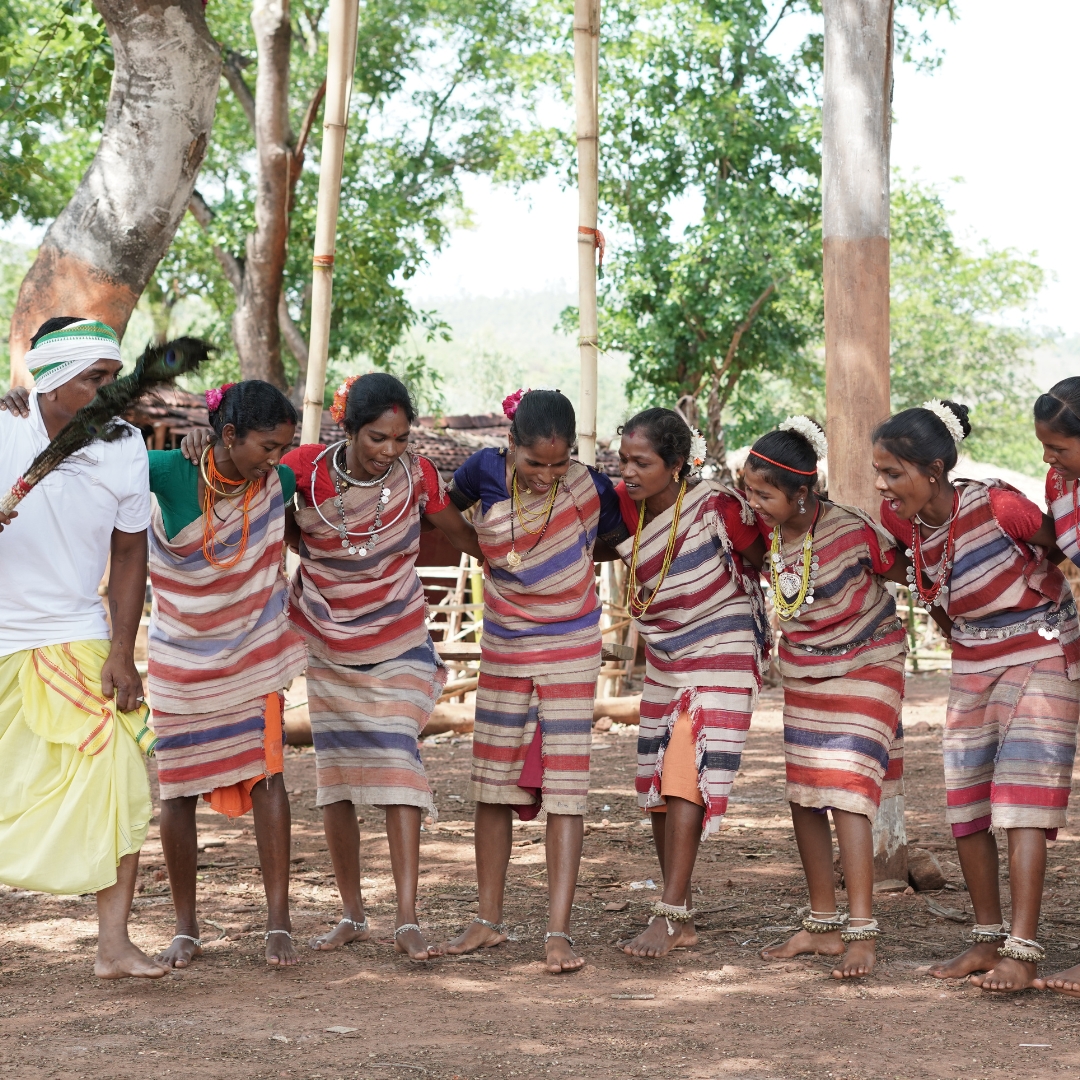
• Choreography and Formation: Normally, a dance is done as a group of dancers together in a circle or semi-circle. The dancers will sometimes hold on to each other's shoulder or waist for support if they needed. The round movement is also a symbol of the life circle, time flow, and everlasting bond of all the members of the community. The dancers are more often based on the imitation of movements of the nature, animals, or gods and are characterized by the estimation of fluidity and gracefulness with complex steps.
• Music: The traditional tribal instruments used to play along with the Dhemsa dance and form the background percussion of the dance. The dhol is the largest drum, which establishes deep and resonant beat and forms the rhythm. The melody is played by a flute known as the mahuri and it is usually played by a musician who determines the course of the music. Their voices are accompanied by the sound of the instruments, and they can sing old songs during the performance.
Festivals and Ceremonial Occasions
Dhemsa dance forms a part of various significant rituals as well as festivals followed by the Gada people. Such festivals have also been found to commemorate major events in the agricultural calendar, or shift of seasons, or acts of religion.
• Pusparab- Dhemsa Dance is done in the honor of gods, to bless them with good health and good harvest.
• Chait Parab: During this festival people in the community gathered to enjoy the results of their hard work and perform dhemsa dance.
Marriage Ceremonies: The Dhemsa dance plays an important role in ग़दाबा marriage ceremonies, where it is performed to celebrate the union of the couple and the coming together of their families.
Characteristics of Dance
Key Features and Unique Movements
Dhemsa dance is one of the most culturally rich traditional dances of the Gadaba tribe which is majorly located around the southern parts of Odisha, India. It is a vibrant dance that is part of the Gadaba tribe itself and is thus danced during several social gatherings in the form of festivals, weddings and communal events. The dance is distinct in the kind of movements used, costume, and music, which carries a lot with cultural and symbolic agendas.
1. Formation of groups and motion:
- The Dhemsa dance is usually practiced by a number of dancers in most cases arranged in a circle or partial circle to provide an illusion of group membership. The dancers put their hands in the waist or shoulders of one another, marking solidarity and unity.
- The dancers are in a beautiful but natural pose, they move being on their heels, which is quite tempting and difficult at the same time. The spiritual and celebratory character of the dance is supported by the mobility of the movements and movements in the same rhythmic footwork.
- The dressing of the dancers is also significant in the Dhemsa dance and it portrays the culture that the tribe holds. Women normally attire kerang saree, which is a traditional wear woven using the fiber of the kerang tree. It has this elaborate work done on this two piece outfit; its color and decorum depict various aspects of nature and beliefs of the tribe.
- Men are highly likely to wear plain clothes consisting of cotton and are not well dressed yet they can be found wearing beads or other things that match the clothes of the women.
4. Traditions and Religious Value:
The Dhemsa dance is entrenched with the spiritual and cultural life of the Gadaba people. It is done at the significant tribal festivals like Pus Parab and Chait Parab when changing of seasons are celebrated through the festival of nature worship. The wedding ceremony is another place where the dance is an important asset since it represents a celebratory play and a means of celebrating the couple.
Dhemsa is also a kind of social bonding. It unites the tribe during festivals and other events of communal merriment and strengthens the feeling of unity and community which is a fundamental aspect of Gadaba culture.
1. Rhythmic footwork: The rhythmic footwork should make music sound. Rhythmic footwork must create music.
The intricacy of footwork is one of the most typical characteristics of Dhemsa as it is performed in harmony with the music and the beat produced by the instruments.
It is an energetic and meditative footwork, in which dancers have to rest on their heels gracefully and at the same time they should coordinate strictly with the rest of the group. This coordination gives a feeling of togetherness in the sense that each step is to help build the bigger collective rhythm.
2. Formation Variations:
There are some variations of Dhemsa, which can be solo dance, where dancers demonstrate their abilities to use their feet to perform, and others can be more interactive with group formations, where dancers break into groups to perform a certain accumulation and then returning to the bigger circle.
The musicians are very important in the play of Dhemsa. The mohuria or the flute player plays a very special role because he provides the beat and tempo of the dance. The hypnotic sound of the flute keeps the dancers in a proper mood and gives the spiritual overture, which determines the flow of movements. The dhol and tamak beat makes sure the dancers do not have any issues with the rhythm.
Variations of Dhemsa Dance Based on Occasion
Gadaba tribe in Odisha, India has a colorful and vibrant culture and the culture has survived a long way due to the nature of the recovering dance of Gadaba tribe Dhemsa. This is an old folk dance most commonly played by women and is characterized by rhythmic steps, the group effort and it is accompanied by various types of special instruments. Differences in the dhemsa dance are well attached to certain events and festivals which are celebrated by the Gadaba people.
Gadaba tribe which majorly inhabits the Koraput district of Odisha performs Dhemsa dance during several festivals and various other social occasions. Women during such celebrations dress in their traditional clothes like the Kerang saree and also put different jewelry things like neck rings, rings, brass bells on their toes and heavy brass bangles. The dance itself consists of the formation of a chain of people by holding each other (shoulder or the waist), and moving according to the rhythm of traditional instruments. The band consists of usual musical instruments; dhol (bass drum), tamak (bongo), changu (tambourine) and mahuri (a kind of clarinet). That man who plays the mahuri or, as he is called, the mahuria heads the music and through movements and positions directs the dancers.
The Dhemsa dance varies in correlation to various occasions and the variation is unique:
- Description: This festival is celebrated in Pus month and it is a harvest festival.
- Dance Variation: The dance is used to give thanks to the harvest as well as requesting blessings to the future crops. Dancers are usually arranged in a circle, and the pattern of their movement is also circular to display the idea of the nature of agriculture and life cycle.
- Definition: It is a celebration in worshipping the deities and Ancestors held in the Chait month.
- Dance Difference: The dance when chanting Chait Parab is more serious and the consumers are dancing in semi-strip which depicts praises and devotions. The styles are more leisurely and the songs tend to be storytelling about gods and ancestral lore.
- Description: Marriage is an important moment in the Gadaba society; it is usually accompanied by rituals.
- Dance Variation: In weddings, Dhemsa dance is performed as the celebration of marriage. The dance is very vivid, and people are connected in chains, and they move holistically showing that this marriage brings joy and welfare you know.
4. Gutob Parab:
- Description This festival is a celebration to worship local gods and blessings to the society.
- Dance Variation: The dancing in Gutob Parab is fast paced and people dance in huge circles and take steps together. It has quick-paced rhythm and is full of energy as the songs go with the casual atmosphere of the celebration.
- Description- A festival of worshipping ancestors and to get their blessings.
- Dance Variation: Dance is solemn; it is performed at a slow rhythmic pace involving movements of the participants. This is concerned more with the expression of respect and gratitude to ancestors that include songs of ancestral tales and traditions.
3: Tal and Rhythm
Rhythm Patterns in Dhemsa Music
A vibrant traditional dance form part of the cultural identity of the people of the Gadaba tribe in Odisha, India is called Dhemsa. It is not just an entertainment means and on the contrary a very important social and cultural transition of the tribe. The main focus of Dhemsa is its special music which has a very special rhythm which leads the dance of the performers and depicts the rich tradition of the Gadaba community.
Instruments and how they helped in the rhythmic contributions.
The sound of Dhemsa music is played on ancient instruments, all of which play a role to create a rhythm of the dancing tempo:
- Dhol: A bass drum that gives bass beat with resonance which creates base rhythm.
- Tamak: This is a variant of bongo drum, and it introduces more rhythmical structure to the music making it more complex.
- Mahuri: A clarinet where the melodic sound line is interwoven with the percussive ones, it sets the tune of the musical performance.
The combination of these devices forms the stacked rhythm pattern that is fascinating at the same time and is part of the performing rhythm of the dance itself.
Rhythmic Structure and Dance Movements
It is mid-tempo and hence the movements of the group may be synchronized. Dancers join together by grasping the waist or shoulders of one another and the rhythmical beats are stepped forward in unison. This type of dance has a succession of hops and springs in and out of the center and rhythm with the upbeat of the music forming a chorus of motions and tunes in harmony.
Types of Tal and Their Role in Performances
Dhemsa dance is a colourful feature of Gadaba community in Odisha in India. This dance is done in occasions of festivals, marriage and community outings and it represents the customs, feelings, and social affiliations of the tribe. The rhythmic formation of the Dhemsa dance can be considered its most defining feature, managed by a multiple set of different variations of the so-called tal (rhythmic cycles), which determine the dance movements and makes the performance overall look more appealing.
These instruments together produce different rhythms or tals which determine the tempo of the song and rhythm of the dance. Although particular names of the tals are not clearly grouped like in the classical Indian dances, the difference in the rhythms is brought out by tempo variations, beat accentuations, and instrumental mixes. These music rhythms are usually created in the Gutob language which is the language backup of the tribe.
Role of Rhythm in Dhemsa Performances
Rhythm is the heartbeat of the Dhemsa dance, it affects other elements of the dance performance in the following ways:
1. Synchronization: The rhythmical beats make dancers synchronize, so they do not promote the individual character of the dance, but the collective one. Generally, a chain has 15 to 20 women that join hands and move in synchronicity with the rhythm and that makes them feel like they are participating as a collective unit.
2. Emotions Expression: Various rhythms enable dancers to express various emotions, whether it is happiness during the necessary festivals, The rhythm and the pace of it can reflect the inner feelings of the community, enjoyment, love and desire.
3. Structural Framework: The rhythm presents a structure on which the dance is organized and transitions between different positions and dances are maintained. Dancers usually form a semi-circle and dance three- and four steps bending their bodies downwards and demonstrating dexterous poses on their heels following the rhythm of the music used.
4. Cultural Identity: The special rhythmic beats belong to the cultural identity of the Gadaba tribe and the Dhemsa dance stands unique among other regional dances. The rich culture of the tribe is evident through the traditional clothes where people march in rhythmic steps and attract the audience with their body language which was also in sync with the rhythm.
Costumes and Musical Instruments
Traditional Costumes of Male and Female Dancers
The cultural features of the Gadaba tribe are also elaborated in the forms of their traditional costumes, moreover, particularly displayed in the Dhemsa dance. Such garments do not only speak about their ascetic lives but also about their colorful personalit Norm.
Male Gadaba s have a piece of clothing which is referred as lenguthi, a highly simplified dressing that connotes their simple and practical way of living as a people. Lenguthi is a clothing piece with a flap that will go in front and is put between the legs going round the back of the waist. This convenient but simple dressing does not hinder any movement too, and it is imperative since the movements in the Dhemsa dance are very advanced and rhythmic. Men can also wear the smallest forms of accessories such as beaded ornamentation or tribal jewelry which further prove their belonging to nature and their culture.
The women of Gadaba wear fancier and colorful clothes since they are leaders in the Dhemsa acts. Of two pieces of clothing, of two pieces of fabric, of 5 feet by 1 1/2 feet each:
- Keranga: A colorful striped cloth which is tied around the waist and continues up to the knees. This has been worn over the hips and is usually decorated with colorful and aggressive designs so that it will be visible during the dance.
- Upper Cloth: The second walking cloth is placed so that it would be under the arm on the right side and over the chest. The ends are to be wound so that it ends with a knot on the left shoulder. Besides enhancing comfort and mobility, this specific way of draping also gives a reflection of their traditional art of weaving fabrics.
Importance of Costumes and Ornaments
The dresses and the decorations the Gadaba tribe uses usurp an unlimited culture. These factors are not only functional but are closely related to tribe identity, past, and faith. All pieces of clothing and ornaments point to the connection to the nature, ways people are organized socially and to the traditions of the Gadaba people.
Costumes
1. Simplicity and Nature: The traditional dress code of the Gadaba men especially the lenguthi is a testimony of how simple and economical the tribe has to be. The loincloth that was tied around the waist and it had a flap in the front shows the strong attachment of the tribe to the land. The dress code provides them with flexibility of movement that is very important in farming and dances. Practicality of their garments holds well with the fact that the tribe believes in coexistence with nature, as they utilize only what is needed.
2. Celebration of Feminine Beauty and Strength: the costume of the women in the Dhemsa dance is both beautiful and powerful, because women use the Keranga and the upper cloth. The much needed fertility, growth and prosperity, are the main principles in the Gadaba society and represented by the Keranga, which is a brightly colored cloth that is held around the waist. The rather complicated way the upper cloth was draped on the chest is a reference to modesty, although this person could still move easily supporting the dance. The garment further enhances the theme of community- the women have been depicted to dance together hence creating a closely-knit social group, and this theme is also embodied in the attire.
The Gadaba women have been greatly recognized with their unique ornaments and these ornaments serve well in beautifying their traditional outfits during their performance. The major ornaments and accessories are:
- Earrings: -Gadaba people have nice earrings adorned in silver, brass or aluminum. A unique style is a big brick wire circle in the earrings which appears to be clinging down the long earrings collection with ear piercings extending to the shoulders. This kind of earring is not only used as an ornament but also they help to show cultural pride and identification to the community.
- Metal Neckband: Women wear upon themselves strikingly traditional metal necklace with large round pendants and intricate engravings. The central piece is added with flamboyance, shining along with the other pieces--a bold presence of ornament. Such necklaces are usually wearing in festive occasions and cultural gatherings to showcase beauty and traditional values. It shows the wearer is deeply connected to his or her heritage and generally handmade by local artisans via old techniques. The very layers enhance the visual impact and pride in traditional identity.
- Yellow beads neckpiece _ Women were ornaments of color-enhancing style made with multiple strands of yellow beads or threads. They carefully layered it for a strong visual impact. It highlighted a dash of brightness against her haze and completed the metallic jewelry she wears. For many women, such typically handmade neck ornaments are only reserved for auspicious times or cultural events, signifying beauty, grace, and pride in one's traditional craftsmanship and heritage.
Significance of ornaments
- Silver, brass, aluminum are the decorations that are represented as silver, brass or aluminum large earrings which also represent state and status in the tribe. The popular earrings particularly the long circles made of brass wires have cultural pride incorporated within the same and they have a cultural significance showing the status of an individual in the tribe.
- Beauty As a symbol of Celebration of Femininity: Ornaments that are used in the process of dancing Dhemsa make the performance as important as it is because it becomes a visual symbol of femininity, fertility, and grace. Women are usually regarded to be the people who carry tradition and their decorated presence is a festivity of life itself.
Musical Instruments
The instruments employed in the Dhemsa dance of the Gadaba tribe are very significant to boost the pace and the vigor of the dance. These musical instruments do not only form the underlying beats around which the dancers dance but also form the spiritual and cultural background of the event. These instruments are the Dhol, Mahuri, Tamak among others that have characteristics and cultural values.
Dhol
The most noticeable instrument in the Dhemsa dance is the Dhol which is the major source of rhythmic base in the dance. It is a big, two-headed drum usually of wood with one side skin covered of cowhide. Dhol emits powerful low sounds that induce tempo to the dancers. The Dhol is more of a hand drum and in some cases, it is accompanied by the use of sticks where the strong beats are used to support the rhythm and this is important as it creates coordination among the dancers. Rhythms of the Dhol also create the feeling of harmony and group spirit and symbolize the core value of group spirit in the Gadaba tribe and strong cultural bonds. Its low tones, which others in the audience sometimes interpret as symbols of the awe and spirituality that a performance called forth are also symbolic too.
Mahuri
Mahuri is wind instrument, closely identified with a kind of clarinet. The Mahuri is a wood-made instrument that produces a melodic sound, which differs with the Dhol that uses a lot of percussions. It plays the melodic layer to the rhythm in Dhemsa dance which brings about a balance between the percussive and melodic aspects of the music. The sound produced by the Mahuri is mesmerising and loud and this sound accompanies the steps of the dance with gentle flowing tunes. Mahuri is normally played by people who are good musicians and are conversant with the music and beats of Gadaba . The spiritual setting of the dance is promoted by its music that allows one to feel close to nature and ancestors.
Tamak
The Tamak is a bongo-like small high pitched drum. It is made of metal or clay and has sharp and clear beats that makes the rhythm rich and complex. Usually it is played by the hands or by sticks and it is used to either reinforce a certain rhythm or introduce diversity into the music. It has sharp resonance that can enhance the vigorous movements of the dancers and this will give a sense of intensity and rapidity during the performance. The more serious notes of the Dhol complement these most piercing tones of the Tamak, marking a vivid and energetic rhythm to drive the dance.
Preservation, Modern Influences, and Conclusion
Efforts for Preservation of Traditional Styles
Dhemsa is the folk dance of Gadaba tribe of Odisha. The dhemsa dance is performed in groups, and it involves rhythmic movements, which are usually practiced in yearly ceremonies, like Chait Parab and Pus Puni. The dance is accompanied by traditional instruments such as dhol, tamak, changu and mahuri.
Preservation Efforts:
- Documentation and Research:
In Odisha, there is Tribal Museum in the Scheduled Castes and Scheduled Tribes Research and Training Institute (SCSTRTI). It has exhibits about the tribal dances such as Dhemsa and gives live demonstration to the visitors to create awareness of tribal culture. - Community Initiatives:
The local groups and cultural associations have also played a major role of conducting workshops and performances to propagate Dhemsa dance. These efforts are directed at attracting younger people so that the dance can be continuous. - Challenges:
In spite of these, there is a still issue in maintaining Dhemsa dance:
- Cultural Erosion: Traditional art forms are under threat because of the influence of modern day entertainment and urbanization since young generations are not as active as before.
- Resource Limitations: Financial and infrastructural limitations may not allow preparation of cultural activities and workshops and can adversely influence sustainability of preservation efforts.
- Documentation Gaps: The traditional dance forms should be well documented to allow doing the research and education purposes.
Role of Festivals and Media in Promoting Dhemsa
Dhemsa is a folk dance by the Gadaba tribe in Odisha, famously known to be rhythmic and cornucopia of cultural expression. This dance is done in important events like Chait Parab and Pus Puni to bring out the cultural heritage and ethical sense of the tribal community through dance.
Role of Festivals in Promoting Dhemsa Dance
To preserve their culture and unity, there is a great aspect of festivals where Dhemsa can be promoted. National Tribal Dance Festival (in Bhubaneswar) will give the Gadaba artists an opportunity to show their traditional dances to both the national and international audiences. These festivals are not only a festival that celebrates this dance form, but they are also in a position to include cultural exchange as well as tourism.
Dhemsa is shown in the National Tribal Dance festival organized once every year in Bhubaneswar, wherein tribal dances of various parts of India are shown. The festival unites artists and society and generates high appreciation of the tribal cultures, and preservation of the traditional forms of arts.
Media is very significant to increase the sphere of influence of Dhemsa dance outside its conventional boundaries. The cultural relevance of the dance is covered by news networks and documentaries and having covered it, the press draws attention to the dance and to the heritage of the Gadaba tribe and its artistic quality.
There is also the National Tribal Virtual Art & Culture Portal (ADI KALAKAR Portal) which hosts the tribal Art forms, such as Dhemsa, on the virtual arena. This project can be used to have more people know about and treasure tribal cultures since it can cross geographical lines.
Incorporation of Modern Elements in Dhemsa Dance
Dhemsa Dance considered to be a Vibrant and versatile tradition of the country located in the state of Odisha, has a long history that has obtained time and has colourful elements that have influenced this tradition over time through the rich culture of the land of Koraput and yet rendering up to date which offers its own interpretations to it. Having numerous variations like Sada Dhemsa, Daudani Dhemsa, Kunda Dhemsa, Godi Betni Dhemsa, Bagh Dhemsa as well as Sira Dhemsa, the dance has stood the taste of time and spans all generations. These types are characterized with unusual motions, such as running tracks, circular movement, change of direction, kneeling and rhythmic binding. The variety of musical melodies and notes of every style will also contribute to the richest nature of the dance, thus offering it as a part of the culture of the community. The absorption of the modern feature has however had great impact on the Dhemsa Dance whereby it has caused certain innovations but also it has raised concerns over the dancing losing its traditional element.
Among the most conspicuous transformations in the Dhemsa Dance is the availability of the current musical instruments, which presents electronic keyboards, drum sets, and loud speakers, in addition to the traditional musical instruments, such as the dhol, madal, and flute. These instruments coupled together have given them a newer livelier sound appealing to modern listeners that might not have liked the old fashion folk music. Even though this innovation has brought a new charm in the dance, it has raised controversies among the purists of the culture. Arguably, the application of gadgets in dances undermines the authenticity of the dance and music that has been played using natural and handmade devices. Others regard it to be the natural development, which enables the dance to be applicable and reachable in the current globalized world.
Variability in Choreography in Dance
Dhemsa Dance has also undergone changes with regard to the choreography. The classic versions of Dhemsa contained definite movements and patterns which were being transmitted with generations. In the recent years, however, new movements and formations were presented, being mostly based on the contemporary trends of dance. Such innovations seek to make the dance look and feel more interesting to the eyes and appropriate to the current performance especially in a contest or on main stage productions. Although these changes give diversity and creativity to the dance, it has aroused the concerns of traditionalists that the original style and purpose of the dance are at risk of being lost. Other people are frightened that the implementation of difficult, stylized actions may cloud the spiritual and communal nature that the Dhemsa Dance actually symbolized.
Modern Changes in Traditional Costumes
Performer costumes of Dhemsa Dance have not been spared some changes. Costumes were locally and traditionally produced using materials like cotton and silk which was mostly elaborate handwork with inbuilt designs and symbols that had cultural meaning. In contemporary times, there is an inclusion of modern fabrics even synthetic materials that make the costumes to be more comfortable and amazing in look. These changes enable the dance to be more practical performed in the modern buildings and raise the question of appropriation and loss of original craftsmanship and cultural meaning of the original clothes. Also, the costumes can sometimes lose their cultural heritage as a result of the influence of bright, artificial colors and commercial patterns and design.
Conclusion
Over this course, we have had a well-streaming exposure to the Dhemsa Dance based on its origin, relevance in our culture, and other aspects that make it unique. We started with learning of the historical picture of Dhemsa, the rich meanings, which it has had in the life of the Gadaba tribe and the meaningful role it had in the social and spiritual life of the community.
We studied the peculiarities of the dance like their complex dancing and symbolism. The adaptability of this dance to various social and cultural greetings is witnessed in variations of Dhemsa which are performed on different occasions so that this dance remains relevant over generations. Well-recognized steps and rhythms which are the part of the performance also bear profound symbolic messages and associate the dancers with their cultural heritage.
The course has also presented us with the music applied with Dhemsa so we can grasp the combination of rhythms and the dynamics which the various tal (beats) bring to the dance. The music is composed using folk instruments such as dhol, mahuri, and tamak and they form the soundscape that constitutes the musical identity of performances produced in Dhemsa.
Lastly, we examined the presence of festivals and the media in support of Dhemsa, which allowed the dance to be known to more people. Such events do not only commemorate the dance but also its preservation through the documentation and the presentation of the rich history, and cultural significance of the dance. Dhemasa has successfully worked through this and they have grown but have not lost their cultural roots. The future of Dhemsa Dance seems bright and efforts are still going on to give the right balance between tradition and innovation and make Dhemsa Dance an intriepart of the cultural aspect of Odisha.