

Bhil Painting
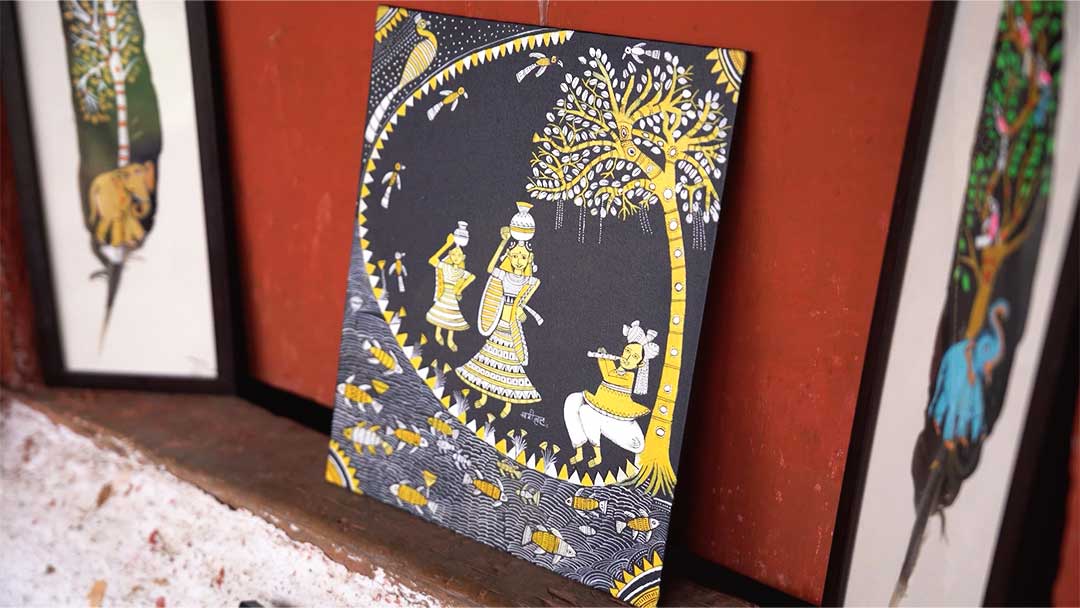
This Advance course on Bhil Painting offers an insightful exploration into the rich tradition of this indigenous art form. Beginning with an introduction to the history and cultural significance of Bhil Painting, participants will delve into the distinct characteristics of the art, including its use of dots, patterns, and vibrant colors. The course covers essential materials and techniques, highlighting the tools and methods employed in creating these intricate works. Attendees will also learn about prominent Bhil artists and their contributions, and examine the contemporary influences shaping the art today. The course includes a discussion on the depiction of folklore and myth in Bhil paintings, as well as the fusion of Bhil art with other contemporary forms. Concluding with a summary of key points, this course provides a comprehensive overview for art enthusiasts, educators, and anyone interested in the intersection of culture and creativity.
 Most Viewed
What you'll learn
- Historical Context : Understand the origins, evolution, and cultural significance of Bhil Painting.
- Artistic Characteristics : Identify the distinctive features of Bhil paintings, including the use of dots, patterns, and color choices.
- Materials and Techniques : Gain practical knowledge about the tools, colors, and methods used in Bhil painting.
- Prominent Artists : Learn about notable Bhil artists and their contributions to the art form.
- Contemporary Influences : Explore how Bhil Painting is integrated into modern art, including its presence in exhibitions and its global impact.
- Folklore and Myth : Discover how Bhil paintings depict folklore, religious themes, and cultural stories.
- Fusion Art : Examine how Bhil Painting interacts with and influences other contemporary art forms and techniques.
Couse Features:
- In-Depth Historical Overview : Provides a comprehensive understanding of the origins and cultural significance of Bhil Painting.
- Hands-On Techniques : Includes practical insights into the materials, tools, and methods used in creating Bhil paintings.
- Artist Spotlights : Highlights prominent Bhil artists and their contributions, offering inspiration and context.
- Contemporary Relevance : Examines the role of Bhil Painting in modern art and its presence in exhibitions and global art scenes.
- Cultural Exploration : Delves into the folklore, myths, and religious themes depicted in Bhil art, enhancing cultural appreciation.
- Fusion Art Exploration : Investigates how Bhil Painting is blended with other art forms, showcasing innovative contemporary experiments.
- Interactive Learning : Engages participants with discussions, visual examples, and opportunities for questions, enriching the learning experience.
Who Should Enroll
- Individuals with a passion for various art forms who wish to explore traditional painting styles.
- Those studying art history who want to understand the unique aspects and historical context of Bhil paintings.
- People interested in studying the cultural aspects of indigenous tribes and their artistic expressions.
- Aists looking to incorporate new techniques and styles into their own work or gain inspiration from traditional art forms.
- Educators who wish to integrate diverse cultural art forms into their curriculum to broaden students’ perspectives.
- Collectors interested in expanding their collection to include tribal art forms.
- Anyone curious about different cultures and art forms to gain a deeper appreciation of Bhil painting and its significance.
Description
BHIL PAINTING
Objective
This course aims to familiarize yourself with the heritage, craft and sentiments of Bhil painting. In this blog, we will talk about — Introduction, Bhil painting style, Bhil painting materials techniques, Most famous Bhil painting artists, Contemporary Bhil painting influences, Bhil mythology (folk tales) and more and Bhil total fusion art so that you get familiar with this unique art. Now in the beginning, it is important to know the place where these Bhil paintings are made.The Bhil paintings are created mostly in the central and western parts of India. This tribal art is traditional to the Bhil Tribe. Mostly practiced in the states of Gujarat along with Rajasthan and Maharashtra. This art is also popular in Rajasthan's Dungarpur, Banswara, Udaipur, Pratapgarh, Chittorgarh Rajsamand districts. While this art is prevalent in Patan and Sabarkantha, Aravalli districts of Gujarat, Bhil painting is visible in Nandurbar and Dhule districts in Maharashtra.
History of Bhil Painting
Let's have a little introduce about the history of Bhil painting.An integral part of the cultural heritage of the Bhil tribe, Bhil painting has a history of centuries. The Bhil tribe is one of the oldest tribal communities of India, has been showcasing its stories, beliefs and traditions through its art and culture Earlier, Bhil paint had natural colors and few tools which involved colors prepared from tree barks, earth, ground pigment stones, plant flowers, etc.If Bhil painting and that of prehistoric painting are placed together, then we get to see a few interesting similarities.This art was originally made on the walls during rituals -- religious or social -- and festivals, and narrated stories of gods and godesses, nature, and tribal life. Other than fine dots, lines and few geometrical shapes, no other figure has significance in the style of Bhil painting unlike other tribal painting. 3 LINES have a peculiar grandeur in the Bhil painting of Rajasthan. Today Bhil painting is not just significant to Indian art, but it is also a mirror to the depth of tribal life and its traditions.The exact history of Bhil art is not known but it is assumed to be an ancient art form that began centuries ago. Introduction Bhil painting has evolved from an art that was painted on the walls of the mud houses into a much sought after art. It is a tradition that has been handed down from father to son, with many of the painters doing it as it has been taught to them by their fathers or grandfathers and so on and it makes the style unique. The walls of their mud houses in the village were covered with the traditional art of the Bhil community. Beautiful paintiings would be done by the branches of neem, bamboo, date palm, khakhra etc and the colours applied would be natural. The grinding was done using turmeric, flour, vegetables, leaves and oil, and the bright colour that resulted was used to paint beautiful pictures on the floor and on walls. It was a language the Bhil artists had created to tell their stories.There’s that look of a Bhil painting; you know it’s not any other form of art. Figures are painted in large shaped, unnatural forms, and plain bright colour drawing upon earthy reds, bright greens, etc. of the landscape. These letters are then painted over with designs of fine, even dots and lines, which form bold relief from the background. These dots and lines can be utilized by the likes of Charlie, to symbolically represent anything from the ancestors to the deities. These patterns become the signature style of the artist and it is only rarely that one Bhil artist's work can be mistaken for another.Bhil art is pure and original, depicting the Bhil tribe’s affinity to nature from time immemorial. Most of the Bhils are cultivators and closely attached to the soil. This is an art that is handed down for centuries, and most of these artists learn the same from the mothers or elders. Themes27 Bhil painting is depictational in nature mostly ritualistic aspects of life, the common subjects of Bhil drawing are land scape, trees, human figures, figurative drawings of Animals, birds, insects, god and goddess, festivls, etc. The paintings are also an event in life, the latter being an aspect when they are used as offerings of gifts to deities during festivals, and to commemorate births and deaths.Now in modern times, Bhil art has brought the attention in the mainstream. The medium is no longer clay and natural colours, it is canvas and acrylic colours. Artists who once painted on the walls and floors of their village houses are now receiving national and international acclaim, with their art selling for hundreds of dollars. However, regardless of the medium or identity politics, the truthfulness of this art is undiminished by the fact that this is indeed the way it is in real life.Recent Bhil Painters still paint traditional stuff, and also adding modern elements like buses, etc. It is this which authentic reaches life in the picture, which documents the flow of life.
Introduction to Bhil Tribe
Now, we can move to the Bhil tribe.The Bhil tribe is one of the largest tribal communities in India one of the oldest and richest in history and in culture. They mostly inhabit forested and hilly regions in the states of Madhya Pradesh, Gujarat, Rajasthan, and Maharashtra. Bhil Tribe: The Brave And Freedom-Loving Bhil Tribe Bhils were once warriors (many of us were the keepers of the territory). Apart from this, Bhils are very good in wild herbs and plants and Ayurvedic doctors (Bhill Tribal Medicine).The Bhil tribe attaches its lifestyle on long relations with nature. Rely on agriculture, hunting, and products from the forest. A native religion system of Bhil society, it is very much attached to the relics of nature, ancestors, and all kinds of gods and goddesses. Bhil art culture, particularly Bhil painting, depict the Bhil life, beliefs and local understanding. This tribe is also modernizing while maintaining its tradition.The Bhil community speaks several types of Indo-Aryan languages, known collectively as Bhil languages, perhaps owing to language shifts. The Bhils are divided into many regional groups, which in turn are subdivided into numerous gotras [Kachhabis], clans and additional lineages.In the States of Rajasthan, Gujrat, Madhya Pradesh, Chhattisgarh and Maharashtra the Bhil tribe comes under scheduled tribes. These states are all in the area called Western Deccan and Central India. Also, They are found in Bengal and Tripura in eastern India, adjacent to the Bangladesh border. In shape or form many of the Bhils nowadays speak the principle languages of their geo-region like Marathi, Gujarati, Bengali, Rajasthani or an area Bhili dialect.According to some scholars, the word 'Bhil' was derived from the Dravidian word 'bil', or 'billu', which translates to bow (as in weapon). It is used to refer many tribal communities that live in the mountains and forests of southern Rajasthan and some adjacent areas of western India. The name since bows and arrows were synonymous with these communities and even the natives in the region are referred to as Bhils.Historian John Samuel, on the basis of myths and realities, has stated that from the 11th century to the 15th century, a large part of Gujarat was controlled by the Bhil tribe and thereafter by Rajputs in this place.
Subdivisions
On the basis of gotara and ohi (ancestry) the Bhil tribe can be classified into at least regional groups. The Bhils of Rajasthan are divided into numerous sub-groups; these include the Garasia, Dungri Bhil, Bhilwa or Billawa, Gameti, Ahari, Katara, Kalasua, Kasauta, Koted, Kharari, Khetad, Khair, Gamar, Garasia, Ghoghara, Charpota, Dagar, Dani, Jagatia, Damar, Damor, Dindor, Dodiyar, Tabiyar, Tawad, Darangi, Dama, Nanoma, Ninama, Padiyar, Parmar, Pandor, Pargi, Bamania, Bhagora, Bhanat, Mandot, Maida, Rawat, Rot, Vadera, Khant, Makwana, Bhilal, Vasava, Bumbaria, Hadat, Kharia, Limbat, Hirat Rawal Bhil, Tadvi Bhil, Bhagalia, Vasava and Vasave.
Residential Area of Bhil Community
Traditionally the Bhil live in villages built high on mounds hill slopes. These villages are called in geographical structure as "Pal" i.e. few "Phaliya" (group of villages). A Pal is normally a number of castes, and so marriage inside of a Pal doesn't produce completely new troubles.The Bhils acknowledge social limits to the pal even when it is grand. They adhere to its laws and taboos so as to achieve a deeper integration and solidarity. The suddenness of emergencies is communicated by using drums where the mode, pace and pattern of the beat is perceived by people, and they express their solidarity by rushing to the spot.The identity of the Bhils is preserved even outside the pal. They live in many multi-ethnic villages dwelling in these villages, communicating about community affairs while maintaining their own identity. While these villages have a mix of cultures, Bhils try to live beyond the caste system.This system of Bhil villages not only shows deepness of social organization but also contributes to their cultural fabric and identity. The traditional lifestyle of Bhil community is greatly influenced by the war like nature of the tribes men and their social structure.
Construction of house
If a couple belongs to Bhil community and wishes to construct a house for themselves, they approach their family members, elders in the family and choose the place where they want their house to be built. They begin gathering the resources wanted to construct the home i.e. wooden poles, stones, Kelu, bamboo and soil. And their brothers and relatives assist them too. In old times, they used to get wood and bamboo from forests, but at present the availability of these materials is from market as forest regulations does not allow it to be used freely.The Purjai Bhopen decides which day is suitable for constructing the house with the person who planned to build the house. On the day chosen (or auspicious), the builder arrives at the site with some puja items, namely, sindoor, rice, and jaggery, coconut, thread, and a coin. His family, and neighbours also go to the event. A new way of offering, Kelu (Ghaprel) is used in foundation. Currently, they are also being built concrete roofs. Everyone working on the building hopes that the work goes well The couple and family are help with the work, and sometimes a mason is also hired by step son. A master carpenter directs the construction of the roof.Once the house is ready, on an auspicious day – mostly Monday, Wednesday, Thursday and Saturday, the family enters the new house. That first thing that a family brings in to a house is wheat or barley in a basket, and the wife brings water in a pitcher on the top of her head. Hence, both the ritualistic and the tradition-associated part hold significance in the house-making process of the Bhils.
New Means of Communication
Bhil tribal families read newspapers and listen to radio, while the better off families own a television. Such modes of modern communication have a considerable impact on the consciousness of, especially, the Bhil youth. All the tribal districts have academia whilst some well known universities.The mobile phone has been pivotal in enhancing connectivity and uniting the Bhil community. Mobile phones are used for many purposes like the transmission of information like seeking, seeking job, disease, place of treatment, accident, contacting relatives, caste people etc.,Not only have these modern means increased their information but they have also empowered many of their other aspects of life. These ways are also essential to socially and economically unite them so that they can emerge into the new world but not let go of their traditions.Anything that changes the nature of a house or communication reflects the cultural and social life of the Bhil community. When family and tradition plays causal in when building a home On the other hand, modernization, that is, new ways of communication and socialization has also given them a new perspective through which they had benefited socio-economically. Hence, the Bhil tribe is demonstrating a blend of tradition and modernity.
Occupation
Agriculture: Agriculture remains the primary occupation of the Bhil community. As the monsoon arrives, this is the 2nd or 3rd week of June, the ploughing of fields starts. The Bhil farmers plough their fields after the first rain that is greeted with joy in order to start afresh. Everyone starts work at dawn, they work till sunset. Currently, most farmers use tractors for plowing, and other farmers do not have a tractor and enter into a contract with tractor owners. For small fields traditional oxen are ploughed using a wooden plough with iron piece at the end. This plough digs the soil at a depth of 4 to 5 inches. Men will plough, while the women follow behind to sow the seeds. Work is divided by principle the heavy work by men and the light work by women. Now only 20 percent of the farmers use the tractor in the Bhil area, but more number of farmers use thresher. In the farmwork, machine is used by wealthy farmers and big farm houses.During the rainy season: Maize, urad dal Sowing by Bhil farmers Among the major crops sown in the rabi (or winter) season are gram and some varieties of pulse, and of course winter wheats. Vegetables such as ladyfinger, onion, garlic, ginger, potato, sweet potato, carrot, radish, gourd, pumpkin and cucumber are also grown in small quantity during both the seasons. Most of the Bhil farmers are sharecroppers and have other lines of work.According to the tradition of the Bhil community, gods and goddesses will take care of the crop and animal. Sometimes Viwan, the farm deities Khetlo, Khetpal Bavji are worshipped as well.
Cattle, Poultry and Other Animals
Living in one place such as Bhil families have Cattle also as it is permanent agricultural. Even after tractors have reached the Bhil area, 80per cent of the farmers have bulls to plough and irrigate. Cows, buffaloes and goats — that are milk-producing animals; These animals dung also are very useful for fertilizer, they are also use as fuel. During Diwali festival cattle are painted and a tantu (custom thread) is garlanded around their neck. Here, ghee and butter are used in the family and sold into the market. Goat milk has low fat and is specifically used for kids. Cattle fairs are markets where domestic animals are purchased and sold. Bhil people rear cattle for agriculture and milk as most of them are involved in sustainable agricultural practices.The occupations of the Bhil Community which includes agriculture and cattle rearing are an expression of their cultural life. A hybrid mix of traditional and contemporary agriculture practices.
Cultural Significance
There is some meaning in each art. Now we will understand what is Bhil painting- cultural significance?Cultural Context Bhil painting is inextricably linked to the Bhils as a tribe and their way of life, customs and religion. This Art doesn’t only act as beauty form but a beautiful reflection of the Bhil community’s way of living and living with the nature and dealing with spiritual understanding. The Bhil painting is full of dots and lines and geometric designs that depict nature, gods and stories of tribal life using colours.This painting is not only a ritualistic painting but is in fact a means to maintain the uniformity and community spirit of the Bhil tribe. Painting is a medium through which the Bhil community hands down its tradition to the younger generations. Besides, Bhil painting has proved its presence in the international art world, bringing global attention to the culture of the tribal group. As a result bhil painting is an integral part of their cultural being and their identity.Religion and beliefs The Bhil Religion or in other words the religious beliefs of the Bhhil community bear close association with nature. All the villages have the Gramdev, and each family has its Adidev, kuladev and kuldevi, which is worshipped in an iconographical form with stones. Their principal deity are Khakal Dev, Bhairu ji, Kala ji gaura ji, Bhainsasur, sira bhavji, Ramdev ji. And the Bhil people worshiped the buffalo in the form of Bhainsasur.Religionally: religiously y most of Bhil are Hindu though there have been conversions to various other religions) and Sarna but some community of Bhil still regard nature as their own.Many other festivals such as Rakshabandhan, Navaratri, Dussehra, Diwali, and Holi are celebrated with lots of enthusiasm by the Bhil people.Village head (Gameti) is the head of the communities in the traditional political hierarchy, who takes action on the local disputes or a village level issues.The primary language spoken by the Bhils is Bhili, which is widely spoken in their region. Dialects Bhili has approximately 36 dialects, with upper dialects being more influenced by Sanskrit, and standard Bhili being less influenced by Sanskrit. Bhili is derived from Gujarati, the Bhili dialects blend into South into Marathi and North into Rajasthani to form the Adiwasi Marathi and Adiwasi Hindi dialects respectively. Bhili speakers are designated as Bhil by the census, about 10 million were self-reported of this language.Small languages such as Bhili have estimated number of speakers to be wrong, with nontrivial fraction having been counted as speakers of either Marathi or Gujarati. Sindhi, Bhili and Dhatki are spoken by the Bhils in Sindh.
Culture
The customs of Bhils are very special and original. Ghoomra is a dance form of the Bhil tribe, a folk dance of the animistic and patrilineal Bhil tribe that represents the phenomenon of feminity. Young girls were taught to do this dance as a confirmation of their going into womanhood. Ghoomra dance is a traditional dance in which both men and women take part. Valar, Gavari, Dangdi and Ger dance are the other dances of the Bhils.
Art
Udaipur Bhil paintings are very much colorful which has dotted and linear pattern and also geometric lines. Bhuri Bai became the maiden Bhil artist to be honored with the Padma Shri award. She produced paintings with colors and papers that were used in the past. Famous Bhil singers of Raja-sthan are Phulaji Pargi, Gomaji, Dr. Yashpal Baranda, Dimple Chandat, Dr. Wajhing Maida, Prabhu Lal Gameti, Praveen Baranda, Chandrika Parmar, Seema Damor, Ramesh Chandra Asoda, Mangilal Gameti, Chanda Damor
Food
Corn, onion, garlic and chilli, the primary food of the Bhils, are cultivated in small fields of their own. They gather fruits and vegetables from the woods around them. They carry homemade bows and arrows, swords, knives, axes and so on for self-defence and hunting. They drink wine prepared from the blossom of Mahua (Madhuca longifolia). Special arrangements such are making some dishes from maize, wheat, barley, and rice are also made on festivals. Bhils are a nonvegetarian by tradition.
Clothing
Men's Attire: Turban, angarkha, potya, feta, dhepada, bandi, shirt, kurta, dhoti, and gamchha. Sari and lugra/odhni and ghagra-choli are conventional wear for women.
There are a lot of traditional ornaments of the Bhils. Kada, bajuband, chain, ear rings and kardahani are mostly worn by Men. Different ornaments like hansali (ring), zele-zumke (earrings), narnia (bangle), nathni (nose ornament) are being wear by women, tattooing is a traditional practice and women goes for tattoo before marrige.
Dance
Folk songs and dances are the primary form of entertainment for the Bhil tribe. On occasions such as birth ceremonies, marriage ceremonies and a few festivals; the women dance to the beats of dhol and the kudi in customary Bhil style. Lathi (danda) dance, dhol and kundi dance, wedding dance, war dance, bhagoria dance, holi dance, gaur dance, saajoni dance, deepawali dance and hunting dance are among their dances. Rajasthan's Ghumra, a folk dance of Bhil tribe, personifies womanhood. This dance is performed by the girls as a sign announcing that they are now becoming women. Ghumra, is a men and women group dance. The Bhil tribe dances include Ger, Gavari, Ghumra, Dangdi and Dhol dance.
Important musical instruments of this jatra are dhol, kundi, manjira, ektara, chhatara, harnai, flute, algoya, ghoria, thali, mandal, harmonium, (peti) dhak etc. This is typically done with local materials.
Marriage
The Bhils are also divided into subcastes and lineages, and marriages are endogamous. Marriage alliances are not made five generations back in either line of descent and generally not until adulthood. Traditionally, marriages are arranged by means of negotiation and bride money, known as 'daapa', are usually paid.
Marriage Process:
In this kind of marriage, parents or guardians of the girl and the boy negotiate and manage the marriage. It is generally initiated by the family of the boy. Even prior to the marriage, boy's family checks the looks and behavior of the girl. The one thing that matters above all else: is there a prior claim to the girl?In some cases, the youngsters enter into wedlock sans consent from their folks. A mediator helps the date of marriage is fixed. After the date of marriage is decided, the boy's party goes to the village of the girl. Once they reach the girls village, the boys in-laws and the wedding troupe are received by the girls father.The marriage of a Hindu couple is preceded by three significant ceremonies. First worship of the family deities In the Gugdi Sangrah ceremony, all heads of the extended families gather at the respective house and contribute to the marriage ceremony. The groom and his party gathers in front of the bride house while the groom has a sword. The groom performing pooja in the room of the deities after few rituals by the bride mother. The groom along with his party went back to their village taking the bride after other rituals are over. During the Mahruti, the groom or bride is paraded with much gaiety in the village in a mare or buggy, singing and dancing or 'Vanauli,' in the local terminology.
Family Property:
All sons are equal heirs to the parental property, with the eldest son having the right to inherit his father's property. But the youngest son retains the right to the ancestral house.
Characteristics of Bhil Painting
Use of dots and lines and patterns
Other than the hustle bustle of their life, Bhil painters give some time to their art which is a medium of sharing community emotions, moments of happiness and fun through the strokes of their paintings. Bhil painters have complete liberty to choose a style for their painting, hence it is individual in form.
Use of dots and lines:
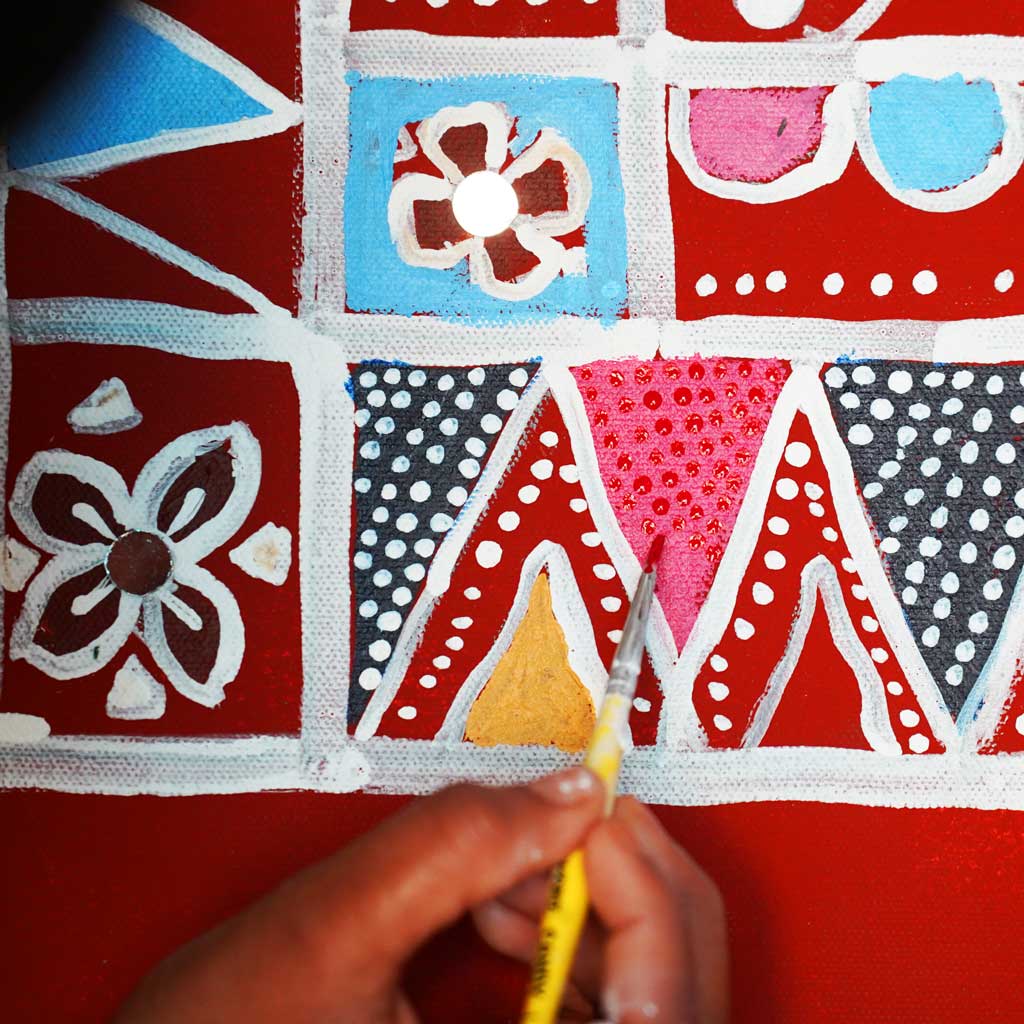
Bhil Painting uses dots and lines (dot line) to make pictures. One section of the these would be dotted and these dots would be colourful and another section will be in a specific pattern, Bhil painters get the subject matter for their paintings out of the physical, biological and environmental things.
Use of Patterns:
The motifs of bhil painting are primarily natural and geometrical. Tree branches, leaves, flowers and other geometric shapes are all found in these patterns. The Bhil tribe and their surroundings are mirrored in these patterns in a way. They do not do anything special before making their painting, but whatever they watch around them they absorb it all, and then it reflects on their canvas.Dots and lines are combined to create patterns, which produces a harmonious and balanced composition.Thus, dots, lines and patterns are used in Bhil painting not only to enhance the aesthetic sense, but it also symbolizes the cultural heritage and life approach of the Bhil community.The most distinctive feature of Bhil paintings is definitely the dotted patterns used to create these beautiful creations. The images are recognizable by the simplicity of their shapes and simple line drawings. They are impossible to ignore and are instantly recognizable by people.The images of Bhil art embody religious rituals, ceremonies and festivals and are deeply rooted in their social and cultural beliefs, lifestyle and natural surroundings.
Ritual of Gaal-Vapsi/Gol-Ghadelo
This colourful art features Gaal/Gol an ancient tradition practiced by Bhil on second day of Holi. This ceremony is performed in the path of the main God Gaal Dev who gives a solution to the main disturbance, pain and diseases. In this ritual, the ritual performer hang himself from Gaal pole and from Gaal pole circumambulate around to 3, 5 or 7 times as a token of appreciation.They erect a solid post and build a scaffold for the ceremony. For balance, a long horizontal wooden block is attached to the top of the pole. One end of this pole is attached to the person who is scheduled to perform the ceremony and the other end is tied with a rope to the end to keep it well controlled from bottom.A crowd of people gathers to watch the ceremony Women often dance in groups, elders smoke chillum, and sit on the scaffold to support the performer. It also here depicts the ritual of sacrifice of the Badwa (who is a religious person).
Gad-Ghadhera/Gad Parva
Through this clay relief, Bhil artist Bhuri Bai remembers going to the Gad-Ghadhera ceremony when she was a child and using to live with her parents in Navapara, Khangera, Gujarat. This social custom is in search of a matching partner. The Gadh festival is celebrated on the day of Akadasi, after Holi, wherein young eligible men are tested for physical strength, stamina and endurance.For the day of this rite, there is a great wood pillar which is greased and proof with oil. A pole is raised and then a bag containing jaggery, coconut and some coins is placed on top of it. Unmarried girls dance round the pole which is being waved with sticks and brooms. You have an outer circle of boys who are dancing and attempting to break through the inner circle of girls. Finally, whoever gets up the pole to retrieve the bag earns the right to marry whichever girl he wants. That piece has representations of puppets, puppeteer's fingers, a man hoisting a flag with his outstretched elbow as a symbol of support for his friend, men making music, men making drumming sounds with their hands. Finally, the sacrifice scene, which confirms that the ceremony has been carried out successfully.
Colour Selection: Natural and Synthetic Colours
Colour selection is an important aspect of Bhil painting, which adds vibrancy to the painting and adds to its cultural identity. Traditionally, Bhil artists used natural colours, but in modern times, synthetic colours have also started being used. Let us see how natural and synthetic colours are selected:
Natural Colours:
Traditional Bhil paintings used natural colours, which were obtained from plants, soil, and minerals. For example,
- Red colour - from ochre (red soil),
- Yellow colour - from turmeric,
- Green colour - from leaves or flowers,
- White colour - from lime or mortar,
- Orange colour - from flowers of teshu (khakhara),
- Black colour - from coal or burnt wood.
- Some colours are also obtained from minerals.
Not only are the colours easily available to them, but they also reflect the deep connection of the Bhil tribe with nature. The use of natural colours gives the painting a traditional and cultural look.
Synthetic colours:
Nowadays, Bhil artists have also started using synthetic colours. These colours are easily available and can be used with different depths and sheen. Synthetic colours, such as acrylic paints, watercolours, have a long-lasting durability and a wide variety of shades, allowing artists to expand their creativity.The use of synthetic colours makes the painting more bright and vibrant, but at the same time it also takes it away from the legacy of traditional natural colours.
Common Themes: Animals, Birds, Nature, Religious Depictions
The common themes of Bhil paintings reflect their tribal life, deep connection with nature, and religious beliefs. Let us discuss these themes in detail:
1. Animals: Bird Paintings
Animal representation is important in Bhil paintings. Generally local animals like deer, tiger, elephant, goat, cow, horse and other animals are painted. The tribal paintings illustrate the wildlife in their traditional style of lifestyle, and thus, represent the Bhil community's tradition of relationship with animals and birds. The creatures within the canvas are frequently embellished using dots, strains and styles which beautify their form and make it'll seem vivid and eye-catching.Bird painting is also a prominent feature of the Bhil paintings. The peacock, parrot, rooster and other birds enjoy a prominent placein the painting. Beautifully and histogram-ed The word nature is seen from the world of birds. The birds represented in the depiction reflect the sensitivity of Bhil people toward nature and their religious values.
2. Nature depiction:
Bhil painting revolves around nature. Very beautiful beauty trees, plants, flowers, rivers, mountains and so on. Gavadi painting will show others how to dot, it is art, especially through trees which is depicted by Bhil painting. The illustration doesn't merely represent a slice of nature, but underscores how closely rooted the Bhil tribe is with nature.
3. Religious depiction:
These Bhil paintings cover a lot of religious and spiritual topics. Painting all about Gods and Goddess, Kalash, Nag Devta, Shiv Parvati, Swastika, Durga Mata, Panja, Trikon Puja rituals and mythology? This illustration portrays the religiosity of people of the Bhil community. The religious representation employs conventional symbols and themes to provide a sense of spirituality to the art.
It conveys not merely the stories of their life but the celebration of their culture — the common themes of Bhil painting foreground the spirituality of their life.
Materials and Technique
Colours, Brushes and Other Tools Used
Following are the colours, brushes and other tools commonly used in Bhil painting:
Colours:
- Natural colours: Traditional Bhil paintings use natural colours obtained from plants, soil, stones and minerals. These colours usually include red, yellow, green, blue and black.
- Synthetic colours: Contemporary Bhil painting also uses synthetic colours, which are more vibrant and stable. These colours increase the durability of the painting and provide brilliant effects.
Brushes:
- Handmade brushes: Traditional Bhil paintings use brushes made from bamboo cane or Tesu Palash (Khakhra) branches or other natural materials. The size of these brushes is individually customised to the artist’s requirements.
- Style and size: Painting techniques and patterns are created using different brush styles and sizes, such as small dots and intricate patterns.
Other tools:
- Pens and pencils: Pencils and other writing instruments are commonly used to help outline an image in sketching.
- Metal and stones: Some traditional artworks also use metal objects and stones to apply colour or decorate the image.
Method and Process of Painting
The method and process of Bhil painting is part of a rich tradition that has been passed down from generation to generation. The process of creating this art requires patience, precision, and creativity. Let us understand the method and process of Bhil painting in detail:
1. Surface Preparation:
Before creating a Bhil painting, the surface on which the painting will be done is prepared. Traditionally, walls, walls of mud houses, or cloth were used. In modern times, artists use canvas, paper, or other surfaces. After the surface is smoothed and cleaned, a base color is applied, which is usually white or light.
2. Outline:
The process of creating an outline involves lightly sketching the main subject of the painting. This sketch determines the structure of the various elements of the painting, such as animals, birds, trees, or religious symbols. Traditionally, coal or charcoal was used for sketching.
3. Dotting:
The most distinctive process of Bhil painting is the dotting. These dots give vibrancy and depth to the painting. The artist carefully applies small dots in a pattern that spreads across the entire surface of the painting. The colours used for the dots were traditionally natural, but nowadays synthetic colours are also used. A thin needle or brush is used to create the dots.
4. Colouring:
After the outline and dots are applied, the process of colouring the painting begins. The choice of colours depends on the theme of the painting and the creativity of the artist. Different parts of the painting are filled with different colours, making every part of the painting look special and vibrant.
5. Patterns and Final Touches:
After colouring, patterns are created. These patterns are in the form of geometric forms, natural shapes, or traditional motifs. The beauty of the painting is enhanced through these patterns. Finally, the painting is given the finishing touches, which include necessary corrections and nuances.
6. Drying and Conservation:
Once the painting is ready, it is left to dry completely. After the drying process, the painting is preserved so that it lasts for a long time. In traditional Bhil paintings, the painting was preserved using ghee or natural varnish.This method and process of Bhil painting gives rise to a unique style of art, which reflects the cultural heritage of the Bhil tribe and their creativity.
Layering and Sketching Techniques
The techniques of layering and sketching play an important role in Bhil painting, as these techniques provide structure and depth to the painting. Let us learn about these techniques in detail:
1. Sketching Techniques:
Initial Sketching:
- Bhil painting begins with sketching, in which artists make a light outline of a pre-decided subject.
- Traditionally, charcoal or a thin stick was used for sketching, but in modern times pencil is also used.
- During sketching, artists determine the position and size of the main elements of the painting such as animals, birds, trees, and religious symbols.
Planning the Motifs and Designs:
- Sketching involves planning the motifs and designs for dots and lines and patterns.
- Bhil artists create initial designs using geometric shapes, circles, triangles, and lines.
- This process of sketching serves as a guide for the final form of the painting, in which artists put their ideas into a concrete form.
2. Layering Technique:
Base Layer:
- After sketching, the first layer of the painting is prepared. In this layer, artists use a base color, which is usually white or a light color.
- This base layer helps to connect all the elements of the painting and provide them a uniform background.
Layering the Dots:
- The most important process of layering is the creation of dots and lines.
- Artists create multiple layers of dots and lines in different colors.
- In each layer, the dots and lines are arranged in a specific pattern, which brings out the depth and detail of the painting.
- During layering, the dots and lines are gradually increased, bringing variety and liveliness to the painting.
Layers of Colors and Patterns:
- In the process of layering, artists gradually add layers of colors and patterns.
- Patterns and shapes are highlighted using different colors in each layer.
- This process gives depth and detail to the painting, with each layer being placed on top of the previous layer, ultimately creating a rich and complex picture.
Final Layer and Touches:
- In the final process of layering, final touches are given to the painting.
- In this, the details of dots and lines, colors and patterns are further highlighted, so that the painting looks complete and lively.
- The techniques of layering and sketching in Bhil painting are important to give the painting an organized and intricate look. Through these techniques artists showcase their creativity, and make the paintings vibrant and attractive.
Create your own Bhil painting
Bhil paintings represent the community's daily life, religious and mythological beliefs, and cultural customs. The art usually features simple geometric patterns, wildlife, and human figures. Here are step-by-step instructions for creating your own Bhil art:
- Choose a surface: Traditionally, Bhil art is done on the walls of homes with natural colors. But you can also create Bhil art on paper, canvas, fabric, or any other surface.
- Prepare the materials: Bhil art is made with natural colors derived from plants and stones. You can make your own colors by grinding materials such as charcoal, turmeric, and indigo.
- Draw the design: Most Bhil art is based on the natural world and features bold, geometric patterns. Make a light sketch with a pencil on your surface.
- Fill in the colors: Once you have a sketch of the design, you can begin to paint using a brush or your fingers. Bhil art uses bright colors, so feel free to use bright colors.
- Add details: Once you have filled in the main parts of your design, you can add dots and lines, streaks, and waves to create more intricate details. These details can give your Bhil art piece more texture and depth.
- Let dry: Allow your Bhil art piece to dry completely and then display it. You can do this by spraying fixative or placing it in a frame to protect your art.
- Enjoy creativity: Remember that Bhil art is an ancient art form from the Indus Valley that takes time and practice to learn. When you paint, let your creativity and imagination run wild so you can create beautiful Bhil art.
Differences Between Bhil and Gond Paintings
Both Bhil and Gond paintings are Indian tribal art forms, but there are significant differences between them. India's rich cultural heritage includes a variety of folk arts, which reflect the unique identity of various tribes and communities. In this context, Bhil and Gond styles of folk art hold an important place. Both these styles are considered tribal art, and although they have some similarities, there are also many significant differences between them.The Bhil tribe is one of the largest indigenous communities of India, settled mainly in the central and western Indian states of Rajasthan. The culture and traditions of the Bhil community are clearly visible in its painting forms. On the other hand, the Gond tribe, which resides mainly in Madhya Pradesh, is known for its unique painting forms. Both these tribes have an important role in the development of Bhil and Gond painting.Gond painting has a predominant use of black color, while bright colors such as red, yellow, and blue are used only to highlight certain parts. In contrast, Bhil painting uses a wide range of colors, making these paintings appear vibrant and bold. Bhil painting is characterised by its minimal brushwork and use of geometric forms. Gond painting is characterised by intricate patterns, which are formed through dots and lines.Bhil paintings often depict elements of nature, including images of plants, animals, and rural life. These paintings not only reflect beauty but also keep alive the cultural heritage and traditions of the community. Gond paintings also depict natural scenes and creatures, but here there is more attention to intricacy and detailed details.Contemporary Bhil painters still use natural colours, which are obtained from stones and plants. However, they are now also working on more accessible mediums like paper and canvas. In contrast, Gond painters, who were earlier known for painting on the walls of their houses, have started keeping pace with modernity. They are now painting using synthetic colours on paper and canvas.Bhil and Gond paintings not only have technical differences but also have important social and cultural aspects. Bhil paintings mostly depict scenes of daily life, festivals, and religious celebrations, while Gond paintings contain complex stories and mythical elements.Both Bhil and Gond tribes organize various festivals to celebrate their cultural diversity, where paintings play an important role. These paintings narrate the story of their lives and strengthen their identity.Bhil and Gond paintings have now become famous not only in India but also internationally. These paintings are exhibited in various art exhibitions, museums, and galleries, thereby recognizing the prevalence and value of their art.Bhil and Gond paintings are two unique and important Indian folk art styles. The differences between the two are not only in color, technique, and design elements but also in their cultural and social identity. Bhil and Gond paintings are symbols of Indian tribal art, reflecting the cultural diversity and uniqueness of the communities. Their art has not only enriched Indian culture but has also made them famous on the international stage.Studying both these styles not only gives us an idea of their art form and the diversity of colours but also gives us an opportunity to understand their social and cultural life. Both Bhil and Gond paintings are an important part of our country's cultural heritage and remind us that art is not just a visual medium but also represents the stories, traditions and cultural identity of the people.
Prominent Artists and Contemporary Influences
Here we will highlight the artists who have earned the Padma Shri award for their Bhil paintings and also the names of some artists who have taken this art forward.
Famous Bhil Artists: Some Prominent Names and Their Contributions
Many artists have contributed significantly in getting Bhil painting recognized at the national and international level. Some of these artists have also been awarded prestigious awards like Padma Shri for their excellence. Let us have a look at these artists:
Padma Shri Awarded Bhil Artists:
1. Padma Shri Bhuri Bai:
Bhuri Bai is a prominent Bhil artist who took Bhil painting to new heights through her unique style and creativity. She was born in Jhabua district of Madhya Pradesh. She was the first female Bhil artist to create Bhil paintings on paper and canvas. Bhuri Bai was awarded the Padma Shri Award in 2021, which is a testimony to her contribution and recognition of Bhil art worldwide.
2. Padma Shri Lado Bai:
Lado Bai is another famous artist of the Bhil tribe, whose painting style makes special use of dots, lines and colors. She was born in Madhya Pradesh, and gave a new direction to Bhil painting. She has also been awarded the Padma Shri Award for her remarkable contribution.
3. Padma Shri Jivya Soma Mashe:
Jivya Soma Mashe is a leading artist of Bhil painting, who was awarded the Padma Shri Award for his excellent work. He is a resident of Dhar district of Madhya Pradesh and cherishes the traditional style of Bhil painting. His work has a unique use of dots, lines and colors, which makes his paintings vibrant and distinctive. Jivya Soma Mashe's art has played an important role in getting global recognition for Bhil painting.
Prominent Bhil Artists of Rajasthan
1. Dimple Chandat (Artist who received Adi Gaurav Samman):
Dimple Chandat is a prominent Bhil artist of Rajasthan, she has given a unique identity to her traditional Bhil art in the country and abroad. In the year 2024, she has been awarded the Adi Gaurav Award by Her Excellency Madam President for her outstanding work in the field of art.
2. Phulaji Pargi
Phulaji is the most senior artist of the Bhil tradition style. He mainly does wall painting work. He is a prominent artist of depicting tribal daily life.
3. Gomaji
Gomaji is a resident of the remote Aravalli region of Udaipur. He has created Bhil paintings based on subjects contained in nature.
4. Dr. Yashpal Baranda
Dr. Yashpal Baranda is a young painter of Bhil tribe. He has done post graduation in Fine Arts and has given recognition to his traditional Bhil painting style through exhibitions in Rajasthan and outside Rajasthan. He has been honoured with national and state level awards in the field of art.
5. Dr. Wajhing Maida
Dr. Wajhing Maida is a prominent Bhil painter of Banswara district of Rajasthan. He has taken Bhil painting to new heights through his unique style and creativity. Due to living in a village on the border of Madhya Pradesh, the influence of Bhil painting style of Jabua region is seen in his art.
6. Prabhu Lal Gameti
Prabhu Lal Gameti is a skilled artist of Bhil painting. Being a student of art education, his art has a unique blend of traditional Bhil painting style with originality. He creates artworks using thread, glass and bangles.
7. Praveen Baranda
Praveen Baranda is a prominent young painter who depicts the traditional life of the Bhil tribe. His art exhibitions are organized in the state and outside the states.
8. Chandrika Parmar
Chandrika Parmar is a prominent female painter of 'Gautrej' and 'Mandana' art, which is painted on the wedding occasions of the Bhil tribe. After postgraduate studies in painting, she has contributed in making the traditional Bhil, wall painting and Mandana art alive and unique.
10. Ramesh Chandra Asoda
Ramesh Chandra Asoda is an excellent artist of Bhil painting. He creates his traditional art in a very excellent way on the wall, courtyard and canvas. The saree painted by him with traditional art was presented to Her Excellency the President on the occasion of Adi Gaurav Samman.
11. Mangilal Gameti
Mangilal Gameti is a unique artist of Bhil painting. His traditional painting style has its own uniqueness. Her name is prominently taken in getting recognition to Bhil art in different states of the country.
12. Chanda Damor
Chanda Damor is the leading female artist of Bhil Mandana art. She is an excellent artist in depicting tribal cultural and artistic heritage through simple drawing.
Place of Bhil Painting in Modern Art
The place of Bhil Painting in Modern Art is important and unique. Traditional Bhil painting, which is an integral part of the tribal art of India, has now acquired an important place in the global art scene. Its contemporary influence and acceptance can be understood through the following points and lines:
1. Preservation of Cultural Heritage:
Bhil Painting has preserved the cultural heritage of Indian tribal art in modern times. This traditional style still enjoys high recognition among art enthusiasts and collectors, which preserves it as a living cultural heritage.
2. Fusion in Contemporary Art:
Modern artists have presented a new approach by combining elements of traditional Bhil Painting with contemporary art. In this fusion art, traditional dots, lines and patterns have been combined with modern colors and techniques, giving birth to new art styles.
3. Art Exhibitions and International Platform:
Bhil Painting has been displayed in many international art exhibitions and galleries. These exhibitions have brought Bhil Painting to a global audience, increasing the international recognition of its art and culture.
4. Social and Economic Impact:
Bhil Painting has empowered tribal artists economically and introduced their work to a wider market. It helps in the development of the art community and the recognition of the artists.
5. Teaching and Research:
Bhil Painting has been incorporated in modern art education, giving students and researchers an opportunity to understand the depth and diversity of tribal art. This research and study is helpful in spreading awareness about Bhil Painting.
6. Digital and Media Impact:
Digital media and social media platforms have given a new identity to Bhil Painting. Through online art community and art platforms, the reach and popularity of Bhil Painting has increased globally.Thus, Bhil Painting has an important and respectable place in modern art. It not only preserves the traditional art but also redefines it in the context of modern art.
Conservation and Future of Bhil Painting
1. Conservation
Many efforts are being made to conserve Bhil Painting, which is an important part of Indian tribal art. These efforts include the following aspects:
Preservation of traditional techniques:
Workshops and training programmes are being organised to preserve and teach traditional techniques of Bhil painting, such as the use of dots and lines and patterns, and the use of natural colours.Young artists and community artists are being taught these traditions so that the art can survive from generation to generation.
Social and Cultural Initiatives:
Bhil Painting is being included in cultural programs, performances and fairs. This spreads awareness about the art and gives it protection.Communities are being encouraged to maintain their cultural heritage so that they can save their traditional art.
Use of Science and Technology:
Modern techniques are being used to preserve colours and materials. Paintings are being stored and preserved in a proper manner so that they do not deteriorate with time.A digital archive of Bhil Painting is being created using digital techniques so that it can be stored and preserved online.
2. Future
The future of Bhil Painting is bright, and there are many possibilities and directions for its development:
Modern and Traditional Styles:
- In the future, Bhil Painting can prosper by combining modern techniques and traditional styles. New experiments and methods of fusion art can give it a new direction.
- Young artists can develop new styles and methods by combining traditional techniques with modern approaches.
Global recognition and market:
- Bhil painting is gaining recognition in global art forums and galleries. Its demand and popularity in the international market may increase in the future.
- The global reach of Bhil painting will increase through art fairs, exhibitions and online platforms, providing new opportunities to artists.
Educational and research initiatives:
- Education and research of Bhil painting can be promoted in educational institutions. This will make the new generation aware about the importance and techniques of this art. The Government of India is also trying to promote its online education by creating a portal.
- Research and documentation will help in understanding the depth and diversity of Bhil painting.
Community development and art opportunities:
Community development programs and incentive schemes can be implemented to encourage Bhil painting.
Financial assistance and support for art will help Bhil artists to develop and promote their work.
Through these efforts and possibilities, Bhil painting will not only preserve its cultural heritage but will also create an important place in the world of art in the future.
Religious and Cultural Beliefs
Bhil Painting is not just an art form but it also symbolizes the religious and cultural beliefs of the Bhil tribe. The cultural identity, religious beliefs, and traditional beliefs of the tribe are expressed through this art. Let us discuss the religious and cultural aspects of Bhil Painting in this section:
1. Religious Beliefs
Serpent God (Naag Devta):
- Worship of the snake god is an important religious practice in the Bhil community. It is believed that the snake god provided agriculture and other essential knowledge of life to humanity.
- In the painting, the snake god is particularly depicted with colorful patterns and elaborate designs. In this depiction, various colors and symbols are used to show the religious significance of the snake god.
Ancestor Worship:
- Ancestor worship also has an important place in Bhil Painting. It is believed that the spirits of ancestors are important for the direction and preservation of life.
- In the painting, images of ancestors and scenes of their worship are depicted, which reflect the religious beliefs of the tribe.
Natural and Religious Rituals:
- Bhil paintings also depict religious rituals and ceremonies, such as places of worship, images, religious songs, and rituals.
- These paintings depict the process of traditional religious rituals and their significance.
2. Cultural Beliefs
Worship of Natural Elements:
- The cultural beliefs of the Bhil tribe show a deep connection with nature. Natural elements such as trees, mountains, and rivers are worshipped.
- In the painting, these natural elements are depicted with special colors and patterns. This depiction expresses the reverence and respect of the Bhil society towards nature.
Community and Traditional Life:
- Bhil paintings also depict aspects of the traditional life and society of the tribe. This depiction shows the diversity of tribal life and community cultural activities.
- The paintings depict traditional costumes, folk dances, and scenes from daily life, which cherish the cultural identity of the Bhil tribe.
Festivals and Celebrations:
- Festivals and celebrations are also depicted in Bhil paintings. These paintings depict the joy of festivals, cultural traditions, and mass celebrations.
- Scenes from major festivals such as Haat, Teej, and other cultural celebrations are depicted, which reflect the vibrancy and tradition of the tribal society.
Fusion Art
Fusion art is a contemporary art trend in which traditional and modern art styles are combined. In this art trend, different art forms, styles, and techniques are combined to create new and unique art forms. In the context of Bhil painting, fusion art has provided a new way of presenting this traditional tribal art from a modern perspective.
Elements of Fusion Art
1. Blend of traditional and modern styles:
- Fusion art combines the distinctive styles of traditional Bhil painting, such as dots and lines and patterns, with modern art forms to create new designs.
- Modern techniques and colours are used in traditional painting, giving rise to new forms of art.
2. Use of new techniques:
- The natural colours and techniques used in traditional Bhil painting are combined with modern art materials and techniques.
- Bhil painting is given a new direction by using digital media, stenciling, and other modern techniques.
3. Inclusion of social and cultural themes:
- Fusion art depicts social and cultural issues through art. In Bhil painting, traditional stories and myths are depicted in the context of modern issues.
- Social messages and cultural identity are expressed through art.
Examples of Fusion Art
1. Bhil elements in modern painting:
- Many contemporary artists have incorporated traditional elements of Bhil painting into modern painting. For this, new colour schemes, contemporary designs and stylistic changes have been used.
- For example, traditional dots and lines and patterns have been combined with graphic design and abstract art.
2. Mixed Media and Installation Art:
- Fusion art also uses mixed media and installation art. New artworks are created by combining Bhil painting with various media such as paper, cloth, and metal.
- These artworks combine traditional techniques of Bhil painting and modern art forms.
3. Digital and Virtual Art:
- Fusion art of Bhil painting is displayed on digital platforms. Traditional art is given a new look through digital illustration and animation.
- Interactive art experiences are created using Bhil painting in virtual reality and augmented reality.
Benefits of Fusion Art
1. Relevance of Traditional Art:
Fusion art makes traditional Bhil painting relevant in the context of modern art. It is an effective way to reach traditional art forms to a new generation audience.
2. Innovation in Art:
Fusion art inspires new ideas and experiments. It provides artists with an opportunity to innovate between traditional and modern elements.
3. Access to Global Audience:
Through modern technologies and global art platforms, Fusion Art helps to make Bhil paintings accessible to a global audience.
Summary and Conclusion
Bhil Painting is a distinctive form of Indian tribal art made by the Bhil tribe from the regions of central and western India. Culture — This art work is part of ancestral customs and legacy Features of Bhil Painting make it different from other art forms like use of dots and lines and patterns used, natural colours used, socio-religious depictions used etc.Another feature of Bhil Painting is Traditional, as all Bhil paintings follow a particular tribal tradition. It is a reflection of the deeply engrained social and religious beliefs of the Bhil tribe. This work of art has developed over time as an integral section of their lives, as it depicts these people, it also distinguishes the ethnological features of the life style and the ideology of their culture.Bhil paintings keep a key place for religious and cultural beliefs. The artworks depict snake god and ancestor worship, as well as worship of nature. These paintings prominently feature the image of the snake god who stands for life and protection as the two main attributes of this creature. Additionally, love for nature is also deeply represented by these artworks like trees, animals and water sources. The cultural and religious significance of Bhil painting is the one that distinguishes it from other forms of art and these beliefs make this difference evident.
Folktales and Myths
Bhils do have follktales and myths associated with their paintings like, "Goda and Mandavi" and "The Myth of the Snake God"' these lend depth, narrative and cultural layers to Bhil painting. The tales are not just a form of leisure but also demonstrate the ethics and principles of life. The visual portion of these narratives in the paintings creates a great visual experience for the viewers which is not only a visual experience but also an intellectual experience. The activity alongside the painting gives it layers, and immerses the viewers into the world of the rich Bhil culture.
Fusion Art
Fusion Art gave a new direction by bringing together the elements of traditional Bhil painting along with modern techniques and styles. By integrating traditional aspects and modern practices, it offers unique works of art. Fusion Art thus not only emerges new perspectives but also inspires many of the younger generations of artists. It reflects the way age-old traditions can harmonise with the contemporary to create a new artistic idiom.What makes it unique and invaluable is that a Bhil painting is a living embodiment of spiritual and cultural beliefs. Preserving ritualistic beliefs and folklore, this art form also interacts with contemporary art in the process of fusion art.
Bhil Painting in the Future
In future Bhil painting flash on art consciousness and also the future evaluation of Bhil painting it will keep cultural importance as well as it will recognized by international art platform. The coalescence of art forms from rural to urban, and modern to traditional will, hopefully, provide Bhil painting with a new route that it continues to occupy a valuable place within the dynamic sphere of contemporary art.So the colourful history, beliefs of spirituality and the experiments of present makes Bhil painting a way of life through perfect combination of its heritage technological aspect shaping further the prospects for future art. In this way, not only the identity of the Bheel tribe is being preserved, but also the identity of Indian Tribal Art is being expressed at the international art platform.