

DAAL BAATI CHURMA RAABDI
This beginner course explores the classic Rajasthani dish, Daal-Baati-Churma-Raabdi. Covering its cultural roots, ingredients, preparation techniques, and health benefits, the course offers a foundational understanding of the dish’s place in Rajasthani cuisine. Students will learn hands-on, traditional methods for a rich culinary experience.
 Most Viewed

What you'll learn
- Historical Background : Understand the origins and cultural significance of Daal-Baati-Churma.
- Ingredients & Preparation : Learn key ingredients and traditional preparation techniques.
- Serving Styles : Explore ways to present and combine dish elements.
- Nutritional Value : Discover the health benefits of each dish component.
- Modern Variations : Get creative with modern twists on traditional recipes.
Couse Features:
- Interactive Assessments : Practical activities and assessments to reinforce learning.
- Nutritional Focus : Gain insights into the health benefits of each ingredient.
- Cultural Insights : Learn cultural background for a meaningful cooking experience.
- Detailed Recipe Breakdown : Clear step-by-step instruction for each component.
- Guided Instruction : Led by experts in Rajasthani cuisine for hands-on learning.
Who Should Enroll
- Beginners curious about traditional Indian cuisine.
- Food lovers wanting to learn authentic Rajasthani recipes.
- Culinary enthusiasts interested in cultural cooking.
- Home chefs seeking to expand their skills.
- Nutrition-focused individuals exploring hearty, balanced dishes.
Description
DAAL BAATI CHURMA RAABDI
Objective
The Daal Baati Churma and Raabdi Beginners course goal is to get to know the flavor, technique, and culture of the traditional Rajasthani dishes. This course will shed lights on the right cooking, contents and dessert of the food and also the meaning of the diversity of the food and cultural issues.
Now we will learn about the importance of Daal Baati Churma:
Daal Baati Churma is the traditional Rajasthan dish which is a significant Indian culture. It is particularly common in the countryside and towns of Rajasthan and it is prepared on special occasions, holidays and at a family get together. To know about this:
Traditional meaning: The Daal Baati Churma story has strong roots attached with the rich cultural heritage of Rajasthan. Rajasthani people have been celebrating this dish as a part of the family since ancient times and this dish is prepared with love in special occasions.
- Symbol of culture: Daal Baati Churma is symbol of food culture of Rajasthan has its own special flavors and traditions. It is symbol of the hospitality and wealth of the Rajasthan.
- Taste and nutritive value: Taste and nutritive value of Daal Baati Churma is one of the key reasons that make it a famous Daal Baati Churma. Baati, the crispy part, the spicy Daal sauce and the sweet Churma make a balanced and mouth-watering combination of food.
Now let's understand what is its place in Rajasthani cuisine?
- Rajasthan food is highly diversified and rich and Dal Baati Churma is a major constituent of this diversity.
- The identity of the Rajasthani food is Daal Baati Churma. It has a special position in the traditional rajasthani thali and adds flavour to the food.
- This dish can be cooked with pride and enthusiasm when we get special occasions such as festivals (Diwali, Holi etc.), weddings and some other traditional occasions.
- Daal Baati Churma is liked in the Indian states other than Rajasthan too. It also appears in restaurants and special canteens, that is why the popularity, as well as the cultural meaning of this dish is so high. The customary blend of Daal, Baati, Churma complemented with Raabdi is the one catching a lot of buzz.
This introduction will get you familiarized with daal baati churma in terms of historical, cultural, and social terms and how it attains a special status in the Rajasthani foods.
History of Bhil Tribe
Rajasthan is a very culture bound country and this tribe is believed to be among the old tribes of the state. The Bhil community in Rajasthan lives primarily in the hills of the Aravalik range and the hills in the southern parts of Rajasthan and it is not only part of the cultural and social life of the area it is a part of history as well. These regions assisted them to stay safe against outside factors over prolonged periods. The presence of the population of Bhils is highly observed in the districts of Banswara, Dungarpur, Pratapgarh, Chittorgarh and Udaipur. Bhil tribe is one of the most ancient ones as Rajasthan has been and remains to be a freedom loving and self-contained tribe. They argued with the dominance of the rulers and preserved their own traditions. The Bhils were more powerful than the rulers in most of the places and their social structure rested on a different judicial system.
Here we will learn about the history of Daal-Baati-Churma-Rabdi
So let's start with the origin and historical background
Daal-Baati-Churma is one of the traditional foods of Rajasthan, which has a history of centuries. This dish is the identity of Rajasthani cuisine and its origin is believed to be in the rural areas of Rajasthan. Its preparation process and ingredients reflect the rich cultural and historical traditions of Rajasthan.Daal Baati Churma Rabdi is a traditional and popular Rajasthani dish with a rich and varied history. The origin, cultural significance and historical context of these foods are part of a wider tradition.
1. Now know about the history of Daal Baati
Daal Baati is the central cuisine of Rajasthan and it is speculated that it was created in the ancient days of Rajput dynasty and villages. Daal and Baati are some residents of the ancient Indian cuisine. The Daal served at it belongs to the lentil category prepared with a variety of pulses such as the masoor Daal, chana Daal, tuvar Daal, urad Daal etc. Baati is in form of round shape being cooked in a furnace and in tribal area at Baati is cooked on Kandas (Chhans).Daal Baati has the history connected to the royal foods of Rajputs. This is a food which came up when people were required to spend so long in the battlefield where they required long meals. The process of cooking the Baati in the furnace enhanced the quality of the food and this could be stored without any problems over a long time.
2. Now know the history of Churma
Churma is an important part of Daal Baati and holds a special place in traditional Rajasthani cuisine. Churma is primarily made from ground Baati and ghee, sugar, jaggery and dry fruits are added to it.The origin of Churma is also related to Rajput cuisine. This dish was prepared at a time when food had to be preserved for a long time during long journeys. Churma was prepared with invigorating ingredients which were useful for travelers.
3. Now know the story of Raabdi
The past of Raabdi is connected with the culture of Rajasthan and Haryana. This is not a new beverage but it has been living in local life since many centuries ago. Traditional methods are used in the preparation of Raabdi and these have been preserved in the family generation after generation.The intake of Raabdi is very healthy during the month of summer. It is refreshing, revitalizing and cooling to that body when taken. On the first time of consuming Raabdi, when a person tastes it, he takes pleasure in its coolness and taste.
What is Daal-Baati-Churma-Raabdi cultural significance and traditions
Daal-Baati-Churma-Raabdi is a food that strongly entrenches the culture of Rajasthan. The dish is cooked specially on festivals and marriages and other major events. It is specially cooked by the tribal community on Raati Jagran of ancestors in the time of offering to the deities during Navratri and Bolma time.Daal-Baati-Churma is ingested as a segment of special occasions and conventional practices. The use and the culture related to its use reflect in the way of life and cultural practices of the region of Rajasthan.Daal Baati Churma is a huge and great food of Rajasthan, not only it is famous by its taste but the history attached to it is very significant as well. It is particularly common in the rural and urban regions in Rajasthan. The dish is a part and parcel of Rajasthani cuisine, which is prepared on a special day, festival and during family parties. Let us learn about thisFamily and Social Unity: Daal Baati Churma does not only signify a food that is eaten, but it is also considered to be part of the family and social cohesion. When there is a special occasion such as marriage, festival or any other celebration then this dish is most definitely prepared. It is not a mere food stuff rather the making and eating of the food also reunites the families. The exchange of Daal baati churma has enhanced sharing cultures in the rural and the urban Rajasthan. Particularly, this dish is prepared at festivals by the entire family and all the members come together to cook it. It is more than on easy cooking method but the chance to talk to each other and be pleased together. Other than this, people also exchange their folk tales, songs and dances when they meet and eat Daal Baati Churma, which bind the two people together. A combination of all these factors creates Daal Baati Churma not a simple food, but a cultural tradition of the family and its people.Daal Baati Churma is an inseparable part of the festivals as it is something that is really important in the case of festivals of Rajasthan. he is made during the occasions of Diwali, Holi and Teej. It has become the symbol of festivity and it is used to spread gratification among the populace. In Rajasthan, Daal Baati Churma, is made especially on festivals in the traditional way. Families rejoice each other with this dish during the time of Diwali, and during Holi, Daal Baati Churma is tasted along with colors. These customs do not only render this dish special, but also turn it into a community-rowing dish. The variety of Daal Baati Churma is brought by the fact that it is prepared in various manners in different regions of Rajasthan. So, the dish called Daal Baati Churma is something more than a food, it is a part of cultural celebration, and tradition, and can be used to unify people around.Locality and Identity: Daal Baati Churma plays a significant role in the culture of Rajasthan. They form part of the local culture and the Rajasthani food is incomplete without it. The role of Daal Baati Churma in the cultural identity of Rajasthan is very huge. This makes the dish more special as locals are proud of offering them to their guests. There are also local variation in the recipe and in the ingredients of the Daal Baati Churma. Take the case of spices and pulses cooked in other places and the fact that it is a specialty makes it unique. Furthermore, there are so many more names under which Daal Baati Churma is referred to in numerous states, like, e.g., in Baati Churma. This indicates its preference in other destinations, and how this dish cuts across the cultural boundaries.
Cultural Significance of Raabdi
Raabdi which is a staple food of both Rajasthan and Haryana is a wonderful indicator of cultural value. It is not a mere dish, it is the sign of family and community collectiveness. It is prepared in a special store in special occasions, like festivals or celebrations which develop family bonds.Raabdi is of special importance to the festivals; during the summers, i.e., Holi and Diwali, Raabdi turns out to be a very common dish. It belongs to the local identity; it shows regional culture. Buttermilk, curd and millet/maize porridge are healthy ingredients included in Raabdi thus Raabdi is a complete and wholesome meal.Another element making Raabdi culturally significant is the way it is being presented in an earthen pot. It is endowed with various varieties e.g. Khaate Ki Raabdi, Chhachh ki Raabdi etc. and with it local culture is also included. In such manner, Raabdi is not only a food product, yet it is also a significant constituent of the traditional culture and family relations in Rajasthan and Haryana.
Ingredients for Daal Baati Churma-Raabdi (40 mins)
First, let's know about the ingredients and preparation of Daal
- Let's identify the main pulses (masoor Daal, chana Daal etc.)
- Masoor Daal: Red lentils have a substantial level of protein and fiber.
- Chana Daal: The lentils are yellow and are mildly sweet with a good source of protein.
- Urad Daal: Another ingredient in use in Daal baati Churma is black lentils.
- Tur Daal or arhar Daal: It is a yellow colored lentil and is also consumed in Daal baati Churma.
- The tribal culture is that the urad Daal is prepared by combining the chana Daal and urad Daal.
- We now discover how to make Daal
- First, clean the Daal well and make it soak in some water for a couple of hours.
- Then place the Daal in a cooker (pressure cooker) and bring it to boil and then add water, salt and spices to it. Boil the Daal in 3-4 whistles.
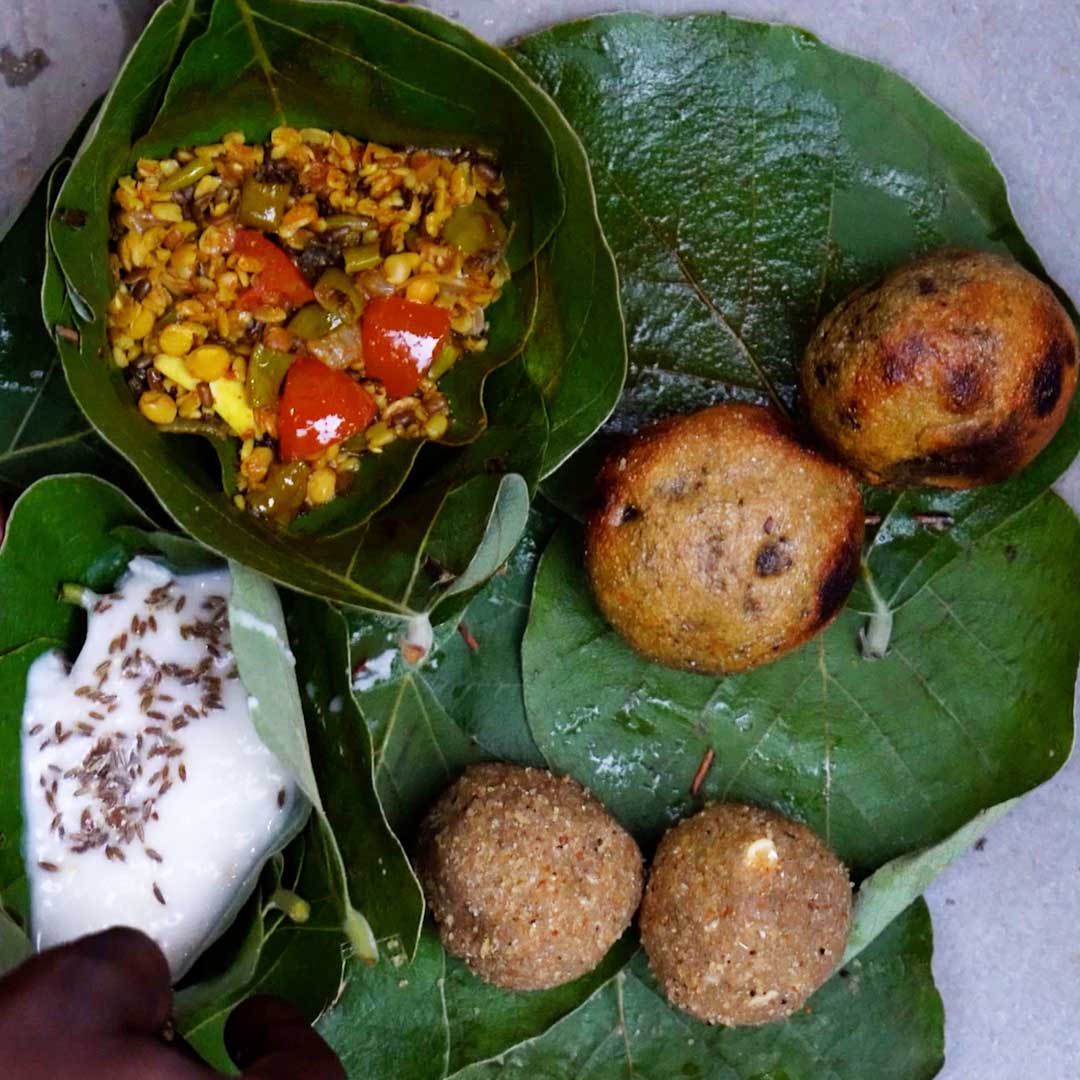
- The tribal community of Rajasthan prepares daal in a handi the traditional way.
- Tadka: To make up the tadka, warm up oil in a pan and add cumin seeds, asafoetida, green chilly and tomatoes. Next mix this with cooked daal.
- Serving suggestions: Daal can be served hot, with rice or baati.
Now let's know the ingredients and preparation of Baati
- Here we need to use flour, oil and others things
- It contains the following ingredients:-
- Flour, Flour that is used in making Baati.
- Stuffing: In order to make Baati crispy and delicious.
- Added Vinegar and salt: To make it taste better.
- Baking powder
- The tribal community of Rajasthan does not use Vinegar and baking powder.
- Baati recipe - We can prepare it in mobile gas, furnace, tandoor
- Or, it is prepared and cooked using Kandas (Uplas/Chhanas) held over fire in the tribal community of Rajasthan.
- At first beat the dough: Mix flour and ghee, salt and water and make soft dough.
- Baati: Roll a small ball of dough and cook it into a round shape.
- Baati now how to cook?
- Put Baatis on furnace or kandas to cook them properly.
Now let’s know about the ingredients and preparation of Churma
- Ingredients required to make Churma
- Coarse flour: Flour used for Churma.
- Stuffing: To make Churma crispy and tasty.
- Sugar: To increase the sweetness.
- Nuts and dry fruits: To enhance the taste of Churma
- Now how to make Churma
- Firstly, make coarse flour: Knead the dough till it forms a small ball and balls.
- Now cook these balls in a furnace or tandoor or kanda and mash them after cooling.
- Add ghee and sugar: Mix the ground Baati with ghee and sugar well.
- Garnish it: Garnish the Churma with nuts or dry fruits and enjoy.
- Churma laddus are also made by the tribal community of Rajasthan.
Now let’s know the ingredients and preparation of Raabdi
Raabdi can be prepared with various ingredients, like millet or maize porridge, and buttermilk, which make it not only delicious but also healthy. Here we will learn about the ingredients and preparation of three major types of Raabdi—Rajasthani Raabdi, Khate ki Raabdi, Chhachh ki Raabdi, and Kutedi Raabdi.
1. Rajasthani Raabdi
Rajasthani Raabdi, also known as Bajra ki Raabdi, is a traditional and delicious drink found in every second household in the Indian state of Rajasthan. It is a special summer drink that is a wonderful way to combat the heat wave and keep the body temperature cool and hydrated. Prepared with millet flour and curd, this Raabdi is a drink you cannot miss. You can drink it chilled in summers or enjoy it as a hot drink in winters. Maize porridge is made by the tribal community by cooking it with buttermilk in a clay pot.
Ingredients:
- 2 1/2 teaspoons coarse millet flour or maize porridge
- Salt as required
- 1 cup curd
- 1/4 teaspoon cumin seeds
- 3 1/2 cups water
For garnishing:
- Roasted cumin powder (2 dashes)
Method:
Step 1: Prepare the curd-flour (Daalia) mixture and cook on low flame
To make this delicious Rajasthani rabdi, take a bhagona or handi and add 2 1/2 cups of water and curd. Add salt, cumin seeds, and millet flour or maize porridge and whisk well. Make sure there are no lumps left in the mixture. Then turn on the flame and keep the handi on low to medium flame. Keep stirring the mixture continuously for 6 to 7 minutes till it thickens.
Step 2: Check the consistency of the mixture and garnish with roasted cumin seeds
When you see that the mixture is thickening, add the remaining 1 cup of water and again keep stirring well on low flame. Make sure that the bajra atta or makki ka Daalia is cooked well and there is no rawness in it. When the mixture has attained its desired consistency, turn off the flame and pour the Raabdi in a serving glass. Sprinkle a pinch of roasted cumin powder on top and enjoy.It is eaten by the tribal community of Rajasthan in a bowl or a dona made from the leaves of the khakhra tree.
Here we will learn about serving methods
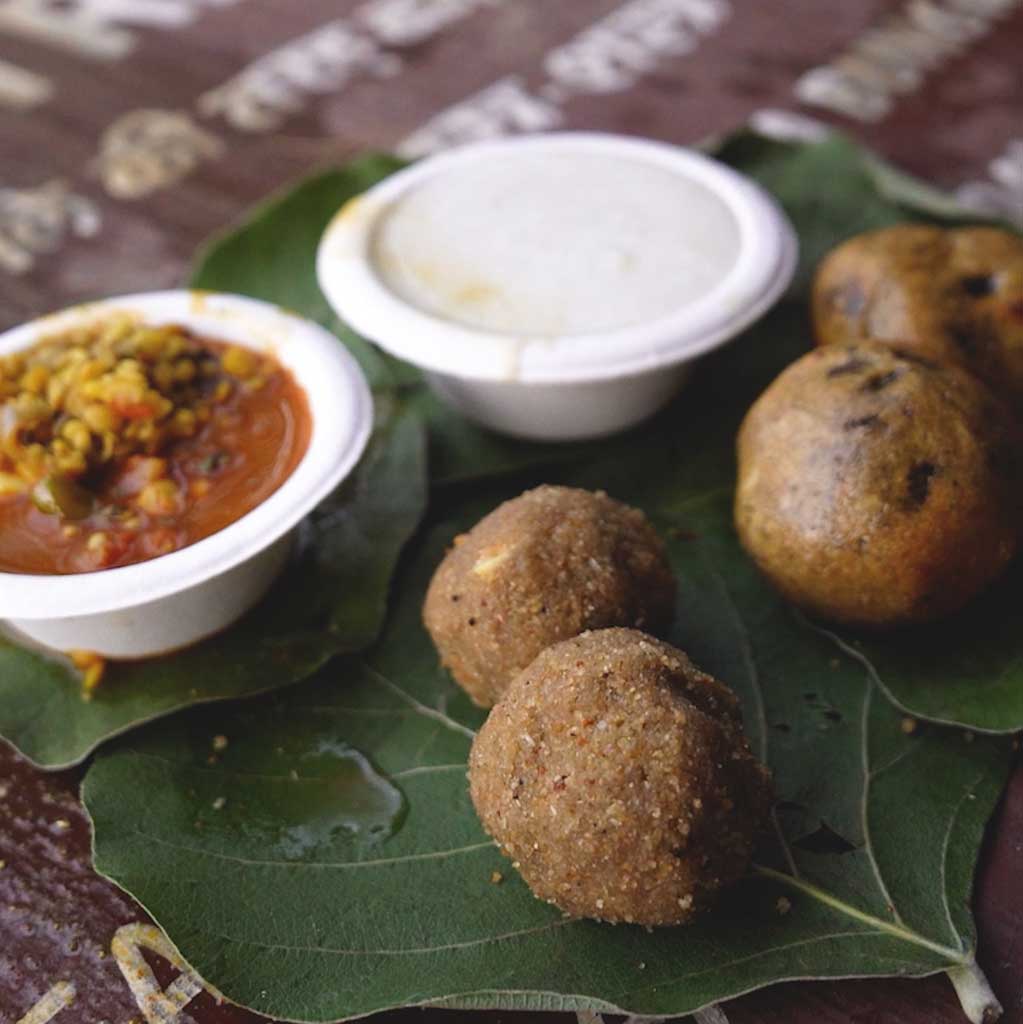
Combination of Daal, Baati, Churma and Raabdi
- Daal baati churma and Raabdi are traditional and popular Indian food which people commonly eat on special occasions and festivals. Presenting a mixture of this in the right manner improves the experience as well as flavor.
- Daal Presentation:
- Garnish the daal with a deep bowl or a copper bowl. It is also prepared on a bowl of leaves of khakhra.
- Once the daal is tempered, add some green chilies chopped and coriander leaves.
- Baati Presentation:
- Put the Baati in a plate, and cut it half of it, or into portions.
- Churma Presentation:
- Churma should be served it in a bowl or bowl. Churma laddus can be prepared as well as served.
- Decorate the Churma using the nuts, almonds, pistachios chopped.
- Rabdi Presentation:
- Chill the Raabdi and serve into a pretty bowl or a bowl.
- Add Daal Baati Churma and the Raabdi separately on that plate so that you can easily search them. Serve ghee and chutney as separate.
Traditional ways and presentation
- The food culture and serving Daal Baati Churma and Raabdi in the traditional method add flavor to the food and a right kind of serving increases the pleasure.
- The conventional delivery of Daal Baati Churma and Raabdi:
- Daal, Baati, Churma and Raabdi should be served in a glass or metal plate.
- Daal may be served with Chapati, Naan and Paratha too.
- Other than the Churma, what you can store too in the container is a bowl of ghee and a bowl of Daal.
- Conventional mode of service:
- Rajasthan uses the traditional culture to prepare its food items in earthen pots such as Kulhad and Handi.
- Present the dish on a platter or a big plate. The Pattal plates are both used in serving the tribe community.
- Historically, people break their baati by hands and dip them into Daal.
- Garnishing and presentation:
- Garnish your dishes using fresh coriander and colourful spices.
- Rabdi served chilled and Churma garnish with dry fruits.
- The presentation is traditional and adds value to the experience as well as identity. It plays a role in the making of a nice and tasty meal.
We will discuss the topic of nutrition and health benefits
What are the nutritional properties of lentils?
Pulses are an important part of the Indian diet and are rich in nutrients. Different types of lentils have different nutritional values, but in general, pulses provide the following health benefits:
- Protein: Pulses are a good source of protein, which helps build and repair body tissues. This is especially important for vegetarians.
- Fibre: Pulses are rich in fibre, which improves digestion and relieves constipation.
- Vitamins: Pulses are a good source of B vitamins such as B1, B2, B3 and B6, which are essential for energy production and brain health.
- Minerals: Pulses contain minerals such as calcium and magnesium, which are important for bones, blood formation and overall health.
- Antioxidants: Pulses contain antioxidants that protect the body from free radicals and slow down the ageing process.
What are the health benefits of Baati, Churma and Raabdi?
Baati:
- Carbohydrates: Baati contains a huge amount of carbohydrates that provide energy to the body.
- Ghee: When ghee is used in Baati, it can be a source of healthy fats. Ghee contains vitamins A, D, E and K, which are beneficial for the body.
- Fibre: Baati also contains a certain amount of fibre from the flour and other ingredients that helps improve digestion.
Churma:
- Vitamin E: Since Churma contains ghee and dry fruits, it is also rich in vitamin E, which is good for skin and hair.
- Minerals: Dry fruits used in Churma contain minerals like calcium and magnesium.
- Energy: Churma is an energetic dessert that helps control hunger for a long time.
Raabdi:
- Calcium: Raabdi has more calcium as compared to milk and khoya, and it is beneficial to the bones.
- Protein: Protein is also good and essential in the growth of muscles and tissues and milk and khoya are rich in proteins.
- Vitamin B12 and D. Milk is the source of vitamins B12 and D that positively influence the state of nerves and bones.
- Antioxidants: Saffron and cardamom have antioxidants which reduce the impurity in the body and increase immunity.
- All these foods should be taken in moderation so as to enjoy balanced nutrient-rich diet. but watch out on high calories and fat such as in confections.
Here we will learn about modern experiments and variations
What are the changes and improvements in Daal-Baati-Churma?
1. Changes and improvements in pulses:
- Types of pulses: Apart from traditional pulses, you can also use mixed pulses like lentils, chana, tur to add variety to the taste and nutritional value.
- Variation in taste: Daal can be made more spicy by adding various spices like chili powder, asafoetida and ginger-garlic paste.
- Daal can be made more nutritious by adding green vegetables like spinach, carrots and peas.
2. Changes and improvements in Baati:
- Alternative flour: Instead of regular wheat flour, you can also use multigrain flour or kuttu ka atta.
- Enhances the taste: Taste can be improved by adding onion, green chilies and coriander leaves to the Baati.
- Healthier option: Baati can also be made with oats or coconut oil instead of ghee.
3. Variations and improvements in Churma:
- Variety of flavours: Cashews, raisins and dry fruits, as well as desiccated coconut can be used for Churma.
- Healthier options: Churma can be made healthier by using jaggery or honey instead of sugar.
- Taste characteristics: Adding cardamom or cinnamon powder to Churma can give it a new flavour.
Now let's know what are the regional variations and twists
1. Regional options are Daal-Baati-Churma-Rabdi:
- Rajasthani Daal Baati Churma: The original recipe of the Daal Baati cooked in the state of Rajasthan is in tandoor and some special spices have been added to the Daal. Churma is made with the help of ghee.
- Gujarati Daal-Baati: It is cooked by adding a slight sweetness to Daal and cooked green chillies and sesame seeds are added to make Baati in the region of Gujarat. The jaggery and coconuts are also used in churma.
- Malwa (Madhya Pradesh) Daal Baati: In that Mawla Baati, such baati which is cooked in furnace and there is one kind of special spices prepared along with Gaon Biraul component in green vegetables and there is Daal.
2. What's the Modern Twist:
- Fusion Daal baati churma: A fusion of Daal Baati Churma by using international essences such as Chilli Cheese Daal, Baked Baati and Myanmar Churma can be done.
- Vegan: Daal Baati Churma: To make it vegan, one can use Coconut oil or Oat instead of Ghee and can make the Raabdi with any plant milk such as soy milk instead of cow milk.
- Gluten Free Baati:One of the options to make gluten free Baati is to use rice flour or chickpea flour instead of normal wheat flour.
Now we will summarize the main points
- Daal Baati Churma Raabdi is a traditional food of India, especially Rajasthani. This is not just a delicious combination and a nutritious one as well.
- Daal
- Important Nutrients: protein, fibre, vitamins such as thiamine, folic acid and minerals such as iron and magnesium.
- Health Advantages: It helps in digestion, it heals muscles and provides energy.
- Baati Ingredients Wheat flour, ghee and salt.
- Health Benefits: Provides a source of energy, gives carbohydrates, and useful fats to the body.
- Churma ingredients: Wheat flour, ghee, sugar, jaggery and dry fruits.
- Health Benefits: energy is supplied by Vitamin E and high calorie minerals.
- Raabdi Ingredients: Milk, khoya (mawa), sugar and dry fruits.
- Health Benefits: It is a good source of calcium and protein, helps digestion.
- Serving and the Methods of Serving:
- In traditional utensils, serve Daal, Baati, Churma and Raabdi.
- Make luminosity of the Baati in oven or tandoor.
- Cook the Daal in pressure cooker or on the gas.
- Garnish with Churma and Raabdi and serve.
- Nutritional and Health Benefits:
- Daal is a source of protein and fibre, Baati is a source of carbohydrates, Churma has Vitamin E whereas Raabdi has calcium and protein.