

Gadli Dance
This Beginners course will introduce Gadli dance, including its historical background, cultural significance, and information about the Gadli tribe. This will be followed by a discussion on the dance's characteristics, techniques, rhythm and beats. Traditional and modern costumes and major musical instruments will also be introduced. Finally, preservation of traditional styles will be discussed and conclusions will be drawn to understand the rich heritage of the dance.
 Most Viewed
What you'll learn
- Historical Insights : Understand the origin and cultural significance of Gadli Dance, including its roots in the Gadli tribe and its role in the community's traditions and celebrations.
- Dance Characteristics : Learn about the unique features and key techniques that define Gadli Dance, including common steps that embody its style and rhythm.
- Rhythm and Tal : Explore the fundamental aspects of rhythm and tal (beat) in Gadli Dance, including various types of tal that accompany the performance.
- Costumes and Instruments : Discover the traditional and modern costumes worn during Gadli Dance performances, along with an overview of the major musical instruments used.
- Conservation Efforts : Discuss the importance of conserving traditional dance styles and methods, alongside a summary of the course for further exploration of Gadli Dance.
Couse Features:
- Engaging Quizzes : Each module includes quick quizzes to reinforce learning and assess understanding of key concepts related to the Gadli dance.
- Informative Bytes : Concise informational bites are embedded throughout the modules, providing students with essential facts and cultural insights without overwhelming them.
- Concise Modules : The course is structured into five focused modules, each lasting just five minutes, ensuring that learners can absorb information efficiently and effectively.
- Interactive Q&A Sessions : Each module concludes with a Q&A section, allowing participants to engage actively with the content, fostering a deeper understanding.
- Assignments for Practical Application : The final module includes assignments to encourage learners to explore and practice Gadli dance techniques and concepts.
Who Should Enroll
- Anyone interested in exploring traditional dance forms and their cultural significance.
- Students of anthropology, cultural studies, or Indian heritage.
- Dancers and choreographers looking to expand with unique styles and techniques.
- Teachers and facilitators seeking to incorporate diverse cultural elements into their curriculum.
- Anyone curious about the history, techniques, and conservation of traditional dance practices.
Description
GADLI DANCE
Origin and Historical Background
Gadli Dance The Korku tribe, who reside in the tribal belts of Madhya Pradesh, contribute to the folk culture by performing the Gadli dance. This dance is especially popular in Chhindwara and Seoni and Mandla regions of Madhya Pradesh. Its history and source are mor vast in tribal living.
Gadli dance has its roots in tribal customs and social mores. It is considered as a ritual dance, associated with the social and religious life of Korku people. It is a dance of rural happiness, festivity, and labor of the land and is usually held on certain special occasions like the harvest, wedding, or traditional festivals.
Cultural Significance
This dance helps in the development of collectivism and social solidarity. This is a dance for social functions and feasts that unites members of the community in the joys of their culture. It promotes unity and fellowship of the community and publicises local traditions and customs through this dance. Dances are performed in which old traditions, legends, and folk-tales are expressed in a life like manner. This dance is a major contributor in the maintenance of the community's culture. Religious and intellectual value the spiritual and religious value of the dance is so much that this dance is also performed on religious and spiritual functions many times. This dance is performed in honour of village gods and goddesses, and it is a way of worshipping with joy and devotion.
The Korkus have wonderful dance called Gadli Dance. This dance represents their specialization, traditions as well as their cultural identification; through this dance the group is getting proud of its tradition and it continues to thrive in the outside world, keeping their identity. Gadli is a fun dance form performed in social gatherings and festivals. This dance constitutes a significant aspect of the celebration and joy of the festival and brings joy to the people, it entertains, and it makes people feel happy and exhilarated.
Information about Korku tribe
Gadli-Gadli dance we have already learned now we know about the people who perform this dance i.e Korku tribe Korku tribe also known as Korku Munda settled in most areas of Khandwa and Burhanpur districts of Madhya Pradesh of Korku tribe inhabit Betul and Chhindwara districts of Madhya Pradesh and around the Melghat Tiger Reserve in Maharashtra. Language The Korku language belongs to the Munda group and is written in Devvani (Devanagari). They are enumerated as a Scheduled Tribe by the Government of India.
Residence
The Korku, of primitive tribe, lives in little wooden thatched huts. In front of each house there is a tall platform structure, where such farm produce as cattle fodder is kept. They drink Mahua made liquor, which is brewed in nearly every house. An agriculturalist by tradition, 97% of the Gadlis reside in rural areas.
They have good agricultural skills in which you are in sync with the Gonds as you both love the forests. The Gadlis of Bhainsdehi tehsil in Betul district of Madhya Pradesh are trendsetters when it comes to potatoes and coffee! They also have two traditional festivals namely Hari and Jitori, during which a campaign for sowing of seeds for a month is observed. So they are addressing malnutrition and environmental disaster.
Description of Famous Persons of Korku Tribe
Sardar Ganjan Singh Korku was a renowned independence activist of the Korku tribe. A martyr born from Betul district (current Madhya Pradesh) Ganjan Singh Korku wrote his name in gold letters during the Vedic Jan-Jagran century fight of independence.
Ganjan Singh Korku was one of the leading personalities behind this forest satyagraha. On 22 August 1930, he led his hundreds of Gond and Gadli people with axes and sticks and protested in the reserved forests against the law breaking.
Dance Features and Techniques
The Gadli dance is a traditional dance of the Korku tribe in the states of Madhya Pradesh and Maharashtra. "Now I will show you the Great Fall dance.Fall dance is done mostly at the time of harvest, festivals and other special days. Gadli dance focuses on unity and people performing by wearing traditional dresses and both sex men and women will dance to it.
Key Features
This tribe is concentrated in Madhya Pradesh, mainly in Mandla, Balaghat, and Dindori districts. Besides, they are also found in certain areas of Gujarat and Maharashtra. They have their own unique language which is known as Korku Bhasha. This language comes under the Gadli-Dravidian language family. Besides this, Hindi and other vernaculars are also spoken and social set-up of this tribe is mainly tribal in nature. Village panchayat is the key of it and takes the local decisions and people matters. There are also traditional ethnic divisions and family organisation.
The economy of these people is predominantly agricultural and forest based. They are followers of traditional agriculture such as paddy, jowar and millet cultivation. Besides woodland products such as timber, medicines and handicrafts form part of their economic engagements. This tribe is rich in its culture through the traditional dance, music and folklore. Korak dance which they identify themselves is performed in festivals and village gatherings. They also love their traditional outfit and jewelry, which reflects their culture.
Main dance techniques
The chief features of Gadli dance are reminiscent of characteristic traits of tribal dancing. Yet these methods regulate different body parts and construct the character of the dance. Gadli Paplu Nur Gadli dance forms have to its credit, the following specific and common acts:
Beat and Rhythm: Just like the Rhythm and rhythm plays a vital role in all forms of dance the same way Rhythm and rhythm has significant value in the Gadli dance too. Traditional musical instruments such as dhol, mandal and flute form the rhythm of the dance. The dancer moves to and fro in rhythm and beats of the rhythm. The structure of the dance is an evolution to the left. Dancers progress with a dancing step, continuing their motion to the tempo of the dance.
Steps: Every dance has few steps with the sequence, which makes the dance with proper formation, in the same way, Gadli dance also has some special and attractive steps such as swing steps, jumps, twists. These actions give the dance life and motion. Steps performed in parallel and in a circle Dancers often do parallel steps in a line and circle, illustrating includingness and concord.
Hand and body gestures:Every dance has a theme, story and in Gadli dance, too dancers decide their own story and to narrate that part of the story, the dancers by showing hand and body gestures and special facial expressions tell the story of their dance to the audiences. The hand movements are in the speed and the rhythm of the dance. Physical expressions and dance forms depict the vibrancy and dynamism of the performer. The performance posture and action of the dancer processing the feeling and spirit of the dance.
General Steps
Now take a look at general process, Gadli dance is a folk dance that was performed by the people of Korku community in which, people perform important events of their life in the form of dance, they describe natural changes and religious ceromonies. Teamwork and camaraderie formation is the core of this dance, dancers do coordinated steps in sync with the others.
Typically, this dance comprises the following steps: Bodily swaying in time to the rhythm; The elevating and dropping of feet in a balanced manner; Move plays of the hands. The performers generally dance in a round; the circle of the dancers is an expression of the repetitive patterns of the percussive rhythms. Typical footwork consists of walking forward and back slowly, tilting the body toward and away from the partner, and a rocking sequence of steps to clockwise then counter clockwise turns. Hand movements involve dancers pointing at eachother, opening hand gestures, or symbolic hand movements.
Rhythm and Taal
Gadli Dance The rhythm and tempo of Gadli dance adds more life and vibrancy to this folk dance. Various combinations of rhythmic tunes and taals are employed in this type of dance, all of which stimulate the dancers' actions.
Understanding Rhythm and Taal of Dance
Now, let's know the rhythm of the dance and the taal. Gadli dance is a traditional tribal folk-dance form in the Central of India, originated from the state of Madhya Pradesh. Rhythm and Taal are very significant in this dance, since it sets the spirit and the power involved in this dance.
The taal, rhythm, and laya of this dance and music is performed on Dhol, Mandal, and Tasha. Dholak, being resonant, drives enthusiasm into the dancing and the entire event. The rhythm is so crucial because it allows the dancers to schedule their twirls in perfect timing with their movements.
Different types of rhythm and their uses
Dance Tala is very important in dance. Rhythm, we have already studied about rhythm. We are now going to look at types of rhythm and what they’re used for. Gadli dance includes a variety of rhythms. These rhythmic structures direct the tempo and vigor of the dance and create its vivacity. Rhythms serve to emphasize musical elements of the dance and convey emotions and stories. Tell us about each of those rhythms.
The various types of rhythms are an integral part of the structure and choreography of the dance. The pattern of the dhol, mandal, tasha and the cymbals decide the rhythm, pace and energy levels of the dance. The dancing combines both of these rhythms to create an out-of-the-world musical experience which gets the crowd astounded and the dancers on their toes. So, the use of beats also contributes in preserving and keeping Gadli dance alive with its various techniques and methods.
Costumes and Instruments
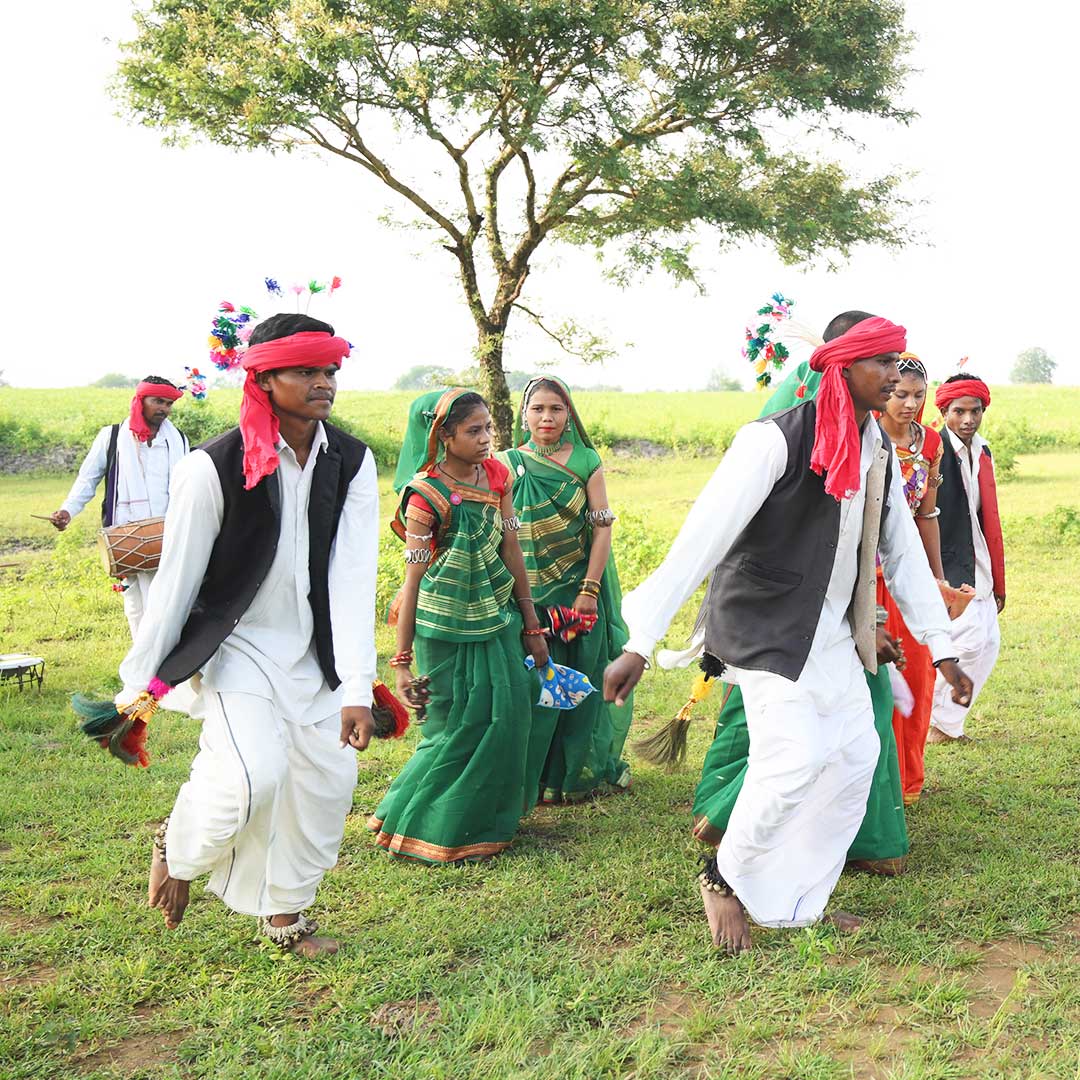
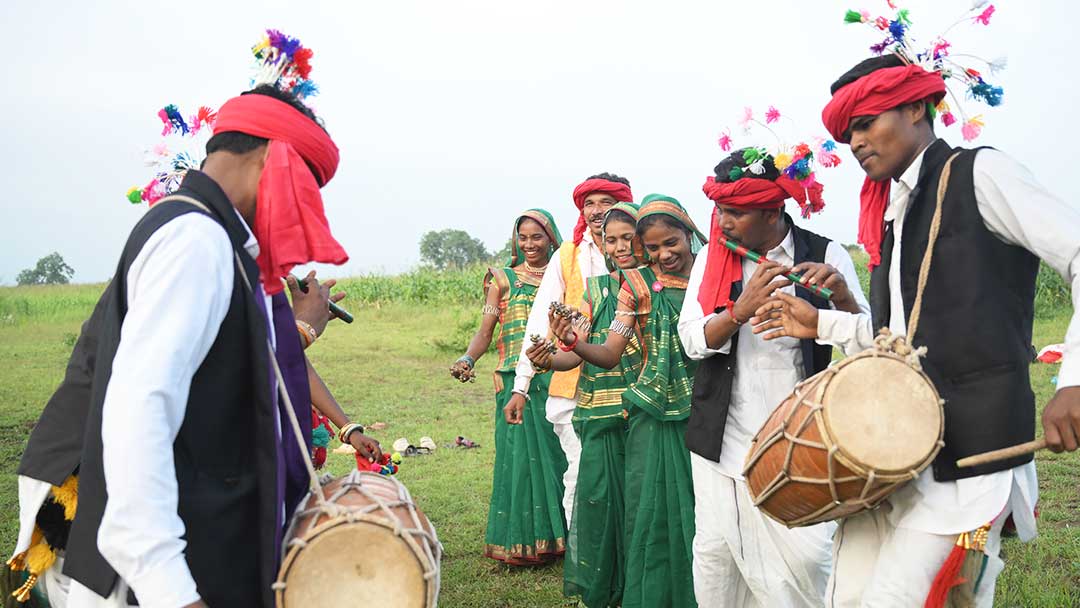
Costume The attire for the Gadli dance is traditional that symbolizes the tribal culture. The men of the Gadli community wear the traditional dress of dhoti and kurta, in white or light coloured. They wear the turban on their head to reflect their tribal pride. The women are wrapped in bright saris, largely red, green and yellow. They usually have saris worn in traditional kachhi style, along with silver necklaces, bangles, and anklets.
Traditional and Modern Costumes
Traditional Costumes
The typical dresses used in Gadli dance are an intrinsic part of their culture and identity. These dresses not only enhance the beauty and charm of the dance but also represent the social and cultural norms of the Gadli community.
Men's Costume:
So for this dance, men wear what is called dhoti, which generally are white or light in color. The dhoti is tied around the waist and folded up to the knees to facilitate free movement of the body during the dance. Men also drape an Angochha or Gamchha on one shoulder and this is a tradition they have maintained. On the head, they wear a typical turban which is usually colourful and artistic. The turban has varied colours and designs and varies according to the class and the kind of event.
Women's Costume:
The women wear the traditional sarees in Gadli dance and they are very bright and colourful. The way of tying the saree is little different here, i.e., pallu over the head, tightly wrapped around the body and since it is the dance form, so comfort is must. The blouse (choli) completes this outfit along with the saree.
What is women’s costume without jewelry? Therefore, jewelry too has a special place in it. Their wrists and ears are adorned with bangles and earrings and around the neck is a necklace. Other than that, they also wear anklets and toe rings in their feet that is their ancient identity. They wear the Maangtika on head and the Kamarbandh on their waist, which make them more beautiful.
Modern Costumes
Traditional dance, gadli dance, performs their cultural heritage. As it has evolved, the costumes associated with it have also transformed. These days, the attire for Gadli dance is more modern and relaxed yet traditional.
As by way of change, the dhoti and kurta have given way to more comfortable and attractive costumes and the men performing the dance no longer looks or feels odd. The contemporary ensembles are a full-length kurta or shirt with the pyjamas, which they customize in different shades of colors and patterns. Many may choose not to wear a traditional turban but a headdress or cap instead.
Modern Costumes for Women:
There have been advancements to women's costumes through the years as well. Traditional lehenga choli or sarees have now been replaced by handy and comfy outfits. These days women are seen wearing salwar or churidar along with kurti as it is loose, comfortable, doesn't hinder them when they are dancing and looks attractive as well. The costumes also include bright colours, embroidery and tribal motifs, to also keep the classical vibe intact.
Today, women wear jewelry and ornaments while performing Gadli dance. Today, women are wearing contemporary fashion jewellery also and traditional silver jewellery like earrings, bracelets and necklaces. Men also adorn themselves with their traditional jewellery like bangles, beads, etc. No these are worn to bring glory to the dance and to showcase all that they stand for. “Introduction of the modern costumes have further added to the performance of this dance. These costumes take their tradition into a contemporary realm that is true to the free and flowing nature of the dance. This is also conducive for the young generation to remain in touch with their roots and uphold their culture and traditions with pride.
Characteristics of Costumes and Their Cultural Significance
Men’s Costumes:
The attire for men while performing this dance style is the traditional dhoti and kurta, which provides ease and comfort to the movement of the dance. The men of the Jana community wear the dhoti as an easy and comfortable dress, which makes it convenient to use the limbs in different movements of the dance. In the dance the kurta is long and loose so the dancer can be at ease while dancing, and is free with the movements.
Men wear an elaborate turban or pagri, which adds significantly to their identity and represents the culture and tradition of reverence and respect. During the modern era, a cap or other headgear is worn, while traditional jewelry such as kadas and beads is common. These dresses come with bright and vibrant traditional embroidery that reflects their traditional culture as well.
Women's Costumes:
Women's Gadli dance dress typically consists of lehenga-choli or sari; however, this dress has also been transformed in contemporary times. In the modern time, the women's dance costumes consists of kurtis and salwars ( or churidaars ) which are easy to wear and makes movement of dance steps easy.
Women use embroidery and particular tribal designs in their costumes that differentiate their culture. Because bright colours such as red and green and yellow common in traditional dress were also incorporated as part of the grandeur and charm of the dance there is nothing to stop it from being done in any festive occasion.
Jewellery is another necessity for women's outfits. Hyderabadi traditional silver jewellery comes with contemporary fashion jewellery like earrings, bracelets, and necklaces. These are decorating that beautify the dance and give a symmetry.
Cultural significance:
Community unity and harmony:
The Gadli dance promotes unity among the people. This dance is being danced in a group, in which all the people from the whole village are gathered. Children join hands with adults surrounding them and wit this they develop social relationship and social group. Group dance in a form of social gathering that solidifies the social fabric of the tribal society.
Religious and Spiritual Significance:
Failure to respond instantaneously to a question about marriage or the presence of the line 'stranger monk alive' makes her gods furious. & raquo; Gadli dance often includes religious ceremonies and celebrations. This dance represents worship of gods, reverence for nature, and traditions of beliefs. The postures and movements executed as part of the dance, convey religious beliefs and legends, which form an important aspect in the lives of the tribal community. That is to say, the dance is a spiritual experience which buttresses the religious views of the society.
Main Instruments and Their Identity
The instruments farther played in this dance keep not only the rhythm and beat the dance, but are also illustrative of the depth of tribal culture and tradition. The extraordinary of these instruments and their application adds charm to the dance and uncovers the local color.
Main Instruments and Their Identity:
Dhol:
One of the most important instrument used is Dhol in the Gadli dance. It belongs to the so-called ballon instruments with a big, round corpus. It is normally played with a wooden stick or with the drummer’s hands. Its tone is bassy and echoing, and it gives power and life to the step. The rhythm of the dhol causes the dancer to time into the rhythm, thus acting as an opening to the dancer for dance.
Mandal:
Another vital instrument in the Gadli dance is the mandal. It is also a kind of dholki, with a round and shallow body. It is a hand-played mandal with sharp melodic sound. In between the time intervals in the dance, the music of the mandal keeps the rhy
Taasha:
It is a small drum played with one hand, called a taasha. The instrument gives clear loud sound, used in festivals and gathering of large assemblies. The sound of the taasha add vibrancy and vigor to the dance and is used in vigorous parts of the dance. It is there to keep the dance alive and moving, and the audience engaged.
Preservation and Modern Influence
The classical forms of Gadli dance narrate the cultural heritage and folk-tales of Korku community in central India. Importance of these dance forms is not merely for entertainment but it has deep roots in their social composition, religious beliefs and community life. These dances are performed on different festivals, rituals and important life events and makes their cultural and spiritual life livelier.
Preservation of Traditional Styles and Methods
Traditional Styles:
The Korkus are a tribal group reported to have been found in the Melghat area (Madhya Pradesh, Chhattisgarh and Maharashtra). Culture The San community's history and traditional way of life are characterised by deep respect for nature and a reverence for their ancestors.
Thapati Dance
Thapati – This dance is one of the important traditional dances of Korku tribe. Men and women dance this dance. The reside in the hands of men holding a pancha (a specific sort of small drum) and women holding a chitkora (piece of stick or wood). During the dance, the dancer, or dancer, also proceeds in a general circular shape, inclining to the right or left as the rhythm takes/ieg him. Unity and synchrony are two great words for this dance.
Danda Naach
Another key dance form of the Korku is the Danda Naach which is particularly performed on the day following the Jiroti festival held on the Hariyali Amavasya of the month of Shravan. On this festival day, all Gadli people eat together and on the next day of Padwa Danda Naach are performed. This dance is with sticks and done together with group. Danda Naach, is the Gadli community's way of depicting unity and culture.
Preservation of Methods
Well, so much for the survival of Gadli dance and let’s finish this lesson. It is a necessity to carry on the cultural heritage of this dance that traditional style and methods are preserved. A number of steps are being undertaken to ensure the relevance of this dance, and its cultural legacy, are not lost. These means are effectively upholding, teaching and spreading traditional styles and technologies.
Teaching and Training:
Teaching and Training: The first method used for the conservation of traditional styles and methods is teaching and training. The local gurus and dance teachers teach the traditional methods and techniques to the new dancer generation. The regular workshops and training by the teachers help to conserve the tradition dance forms. The training itself involves the correct method and techniques of traditional steps, rhythms and posture.
Documentation and Recording: The second method of documenting preservation is to document and record the traditional styles and techniques of Gadli dance. The special dance postures and techniques and musical instruments and traditions are video documented and audio recorded. These video recordings are references to the future generation and conserve the traditional styles. Gadli dance is a traditional tribal dance performed by Korku tribes in central India. Role of education and media on Gadli dance: Gadli dance is a traditional tribal dance by Korku tribes of central India. Education and media are a vital tool for the conservation and propagation of Gadli dance:
Role in Education and Influence of Media
1. Cultural education and training: for the conservation of traditional art forms, especially in local tribal communities, Gadli dance training is vital. The traditional gurus and dance teachers train the local youths on the dance methods and rhythm and postures. This training has two importance, first, it develops the technical expertise of the dance and secondly it educates the depth and necessary of cultural heritage. The training classes are offered in the workshop, dance schools and community centers for conservation through the training of traditional dance methods to the future generation.
2. Social and cultural literacy:
Gadli dance training develops social and cultural literacy. The dance presents local tribal life, traditions and religious belief. They learn about their culture and history, and learn the steps that help keep them connected as members of their own culture.
Influences of Media:
- Promotion and Awareness:
Media is an important agent of promotion of Gadli dance. The technique and tradition of Gadli dance is disseminated to the masses via television and radio documentaries and dance performances on digital media. Visibility:The significance of this dance is demonstrated in the media, thus bringing awareness to various sections of the society. - Cultural Exchange:
Through the power of media (Gadli dance) performances and such are now played worldwide. That?s why cultural exchange happens in global level and Gadli dance is also recognized and liked by the people of other culture and countries. This becomes an encouragement to the cherish of the dance and more respect and attention for the selected dance.
Conclusion and Evaluation
Now let's know the gist and steps of Gadli dance. The above described significant things prove that this dance is not only of cultural and historical importance but it is a part and parcel of the identity of the tribe Korku. We knew all about the dance, the music, the instruments and the religious and social history behind it.
Review of Key Points and Techniques
The Gadli dance is recognized as significant part of culture among the tribals of Madhya Pradesh. This is not just a dance for entertainment but is a serious traditional art form containing several salient points and techniques. The rhythm, short rhythmic beats and also dance movement and style of the Gadli dance makes it different from the other tribal dances. Knowing the different parameters associated with this dance not only shows the depth of the culture but also that this dance is a way of life in the identity of the Korku tribe.
Rhythm and beat: The rhythm and beat of Gadli dance is the first characteristic. The sound of Dhol, Mandal and Tasha sets a different beat to the rhythm of the dance. These instruments set the mood for the dance and increase its excitement. The beats and rhythm of the dance are synchronized with those of the dancers' movements and postures, thus ending up in a sangeet on stage.
Rhythm and beats also need to be assimilated well by the dancers which makes them able to execute every step of the dance in an organized and harmonious way. The rhythm has both the dancers and audience hypnotized with its primitive undertones.
Cultural representation Gadli dance consists of special body posture and hand of gesture, and as already explained they symbolize the religious beliefs, the natural things, and the cultural stories. The dancers contort their bodies, expressing emotions in strange and varied postures. For instance, certain poses of the dance embody the reverence, affection, and attachment to nature while other poses reflect the social and cultural values.