

Gadli Dance
This Advance course on Gadli Dance offers an engaging exploration of its rich history, characteristics, and cultural significance. Participants will learn about the origins and features of the dance, its rhythm and beats, as well as traditional and modern costumes and musical instruments. The course also covers preservation efforts and contemporary influences, concluding with a review and evaluation of participants’ progress. Join us to immerse yourself in this vibrant art form!
 Most Viewed
What you'll learn
- Historical Context : Gain insights into the origins and historical background of Gadli dance and its cultural significance.
- Dance Characteristics : Explore the main features, forms, and variations of Gadli dance, along with common steps and their descriptions.
- Rhythm Understanding : Learn about the rhythms and beats associated with Gadli dance, including different types and their applications.
- Costume Insights : Discover the traditional and modern costumes of Gadli dance and their cultural importance, as well as the main instruments used.
- Instrument Recognition : Identify various musical instruments used in Gadli dance, including their sounds and roles in performances.
- Preservation Techniques : Understand the importance of preserving traditional styles, as well as the influence of education and media on the dance form.
- Modern Adaptations : Discuss the incorporation of modern elements into Gadli dance and evaluate personal progress and learning outcomes.
Couse Features:
- Interactive Quizzes : Engage learners with quick quizzes after each module to reinforce key concepts and assess understanding.
- Informative Bytes : Include concise informational bites throughout the course, providing essential facts and cultural insights related to Gadli dance.
- Focused Modules : The course is structured into six modules, each with specific time allocations, ensuring efficient knowledge delivery.
- Q&A Sessions : Each module concludes with a Q&A segment, allowing participants to clarify doubts and engage in discussions.
- Visual Aids : Use visuals and video demonstrations to illustrate dance techniques, costumes, and musical instruments for a richer learning experience.
- Cultural Context : Emphasize the cultural significance and historical background of Gadli dance, enhancing participants' appreciation of the art form.
- Practical Evaluation : The final module includes a review and evaluation of participants’ progress, promoting practical application of learned techniques.
Who Should Enroll
- Anyone interested in exploring traditional dance forms.
- Students of anthropology or cultural studies seeking to understand Gadli heritage.
- Dancers looking to diversify their repertoire with unique dance styles.
- Teachers wanting to incorporate traditional art forms into their curriculum.
- Those interested in the musical aspects and instruments associated with Gadli dance.
- Individuals researching tribal cultures and historical contexts.
- Anyone looking for a creative and fun way to learn about dance and culture.
Description
GADLI DANCE
Introduction and History
Origin and Historical Background
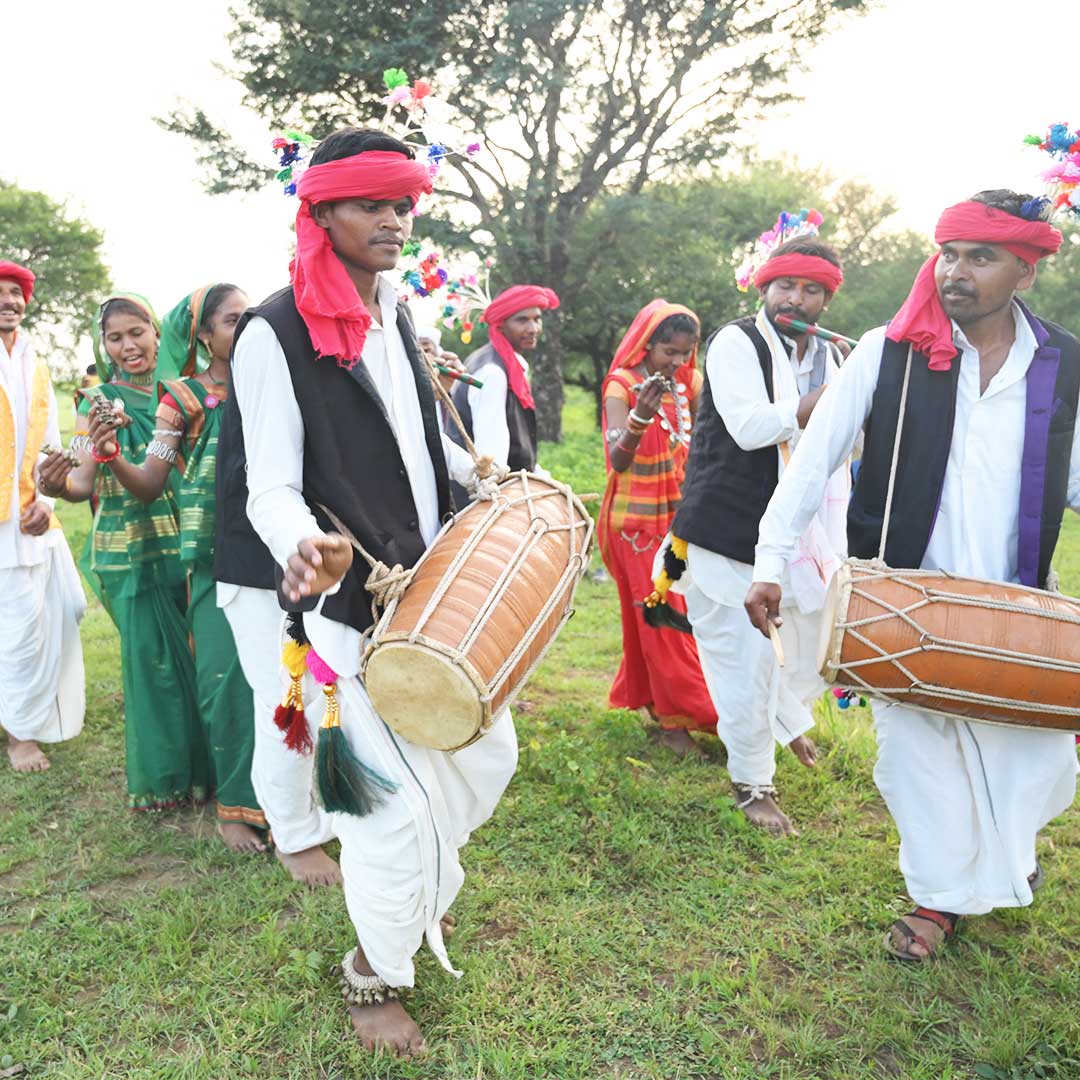
Gadli is a traditional dance form of the tribalregions of Madhya Pradesh that is danced by the Korku tribe. This dance is mainly prevalent in Chhindwara,Seoni and Mandla districts of Madhya Pradesh. It's history and source are most of course a part oftribal existence.
Gadli dance is an indigenous style of dance, it originates from the tribalcivilization and culture. It is regarded as a religious dance, a part of the social life of theKorku. The dance is a culmination of joy, celebration, agricultural labor of rural life,performed on special occasions like harvest, joohar, marriage party and other tribal as well as traditional festivities. Thehistorical background of the dance lies in the fact that the dance is not only danced for pleasure, by also to express the religious and social values of a community. It is accompanied by the beats of dhol, nagada, mom and cymbals which enhance the rhythm and beatof the dance.
Playful, Dynamic and Group Based Exploring The features of this dance are its playfulness, dynamismand group aspect. Under the tribal customs, this danceis not only an expression of the cultural heritage but also the spirit of the society togetherness and cooperation.
Gadli dance, its Origin and History: This aspect of Gadli dance’s origin, coupled with its antiquity, attest the depth of triballife and customs, and offer interesting insights into the cultural mosaic of the country.
Cultural significance
Its response also reinforces the sense of collectivism and social solidaritythat this dance develops. This dance is danced in congenial get together and local festivalswere the people of the community gather and celebrate their own culture. It’s a celebrationof unity, community and the expressions of local traditions and customs of this dance. In the dance,olden stories, sagas and popular-tales come alive. This dance is significantin maintaining the heritage of the people. Its spiritual and religious aspect isthe fact that lot of times this dance is being performed during our religious and spiritual occasions as well. This dance is meant for the localdeities and religion, and it is an express of spiritual zeal, and religious veneration.
Gadli dance is a significant component of thefolk culture of the Korkus. This dance mirrors their expertise, traditions andancestry and instills pride in their community, holding firm in its outside identity. Gadli dance Gadli dance is a merry dance performedduring social gatherings and festive occasions. This is one of those dances which is the essence of the fun and ritual that generates happinessand fun among the people. Gadli dance is where the youngare educated about their culture and the traditions of their ancestors. The dance is a major tool of cultural education which helps inretaining the young generation close to their culture. Local instruments and music is one of the main features of this dance and is used to encourage and conserve traditional instruments andmusic.
The cultural value ofthis dance is not only relegated to the style and articulation of the dance, but it is an authentic medium of conserving and propagating the social, religious, and cultural identity of the Korku tribe. This isentertaining and cultural unified dance.
Information about Korku tribe
Now that we have learnt the Gadli dance, letus learn a little about the Korku tribe who performs this dance. The Korkus is a Munda tribe who were subjugated by the Marathas, vendors of the British and the Mughals in the Deccan and the time of the Peshwas in Pune. The Korkus reside mainly in Madhya Pradesh'sKhandwa, Burhanpur, Betul and Chhindwara and the Melghat Tiger Reserve in Maharashtra. The speak the Korku language, a Munda language written in theDevvani script (Devanagari). They havebeen listed as a Scheduled Tribe by the Government of India.
Habitat
Village dating in a Korku tribe theKorku live in small wooden houses. Each of the houses has a structure of raised platformin the front which is used to store agricultural products such as cattle-food. Intoxicate themselves with liquor made out of Mahua flower, brewed in nearly all thehuts. Gadlis are primarily anagrarian community and are over 97% rural.
Like the Gonds, they have a great regard for the forests andare also skilled farmers. Gadli It is a village. Tea and potato-growing facility in Bhainsdehi ofBetul district the people of Gadli are known as revolutionary in potato, coffee, honey cultivating. They have two traditional Hari and Jitori festivals, held on and celebratinga one-month long seed sowing campaign. So, they try to solve malnutrition andecological decline.
Social Organization
Culture The culture of theGadlis is very unique and distinct from other tribes of the world having the ancient traditional knowledge, beliefs, customs, and social system. It is also in the many villages that the village’s traditional “Gadali Panchayat” is evident, theorganization that represents village society. It is ruled by a headman (Patel), whohas other members like the Padhihar (priest), the Kotwar, the ‘Panch’ consisting of ten to twelve elders of the community’ and the numberdars. This Panchayat is instrumental in functions of feast, marriage and settling dispute amongst themselves or the neighbouringvillages.
Poverty, hunger, malnutrition affecting the Korkus and the exploitation by moneylenders andtraders The Korku tribe has other socioeconomic problems because of the absence of natural resources. "Althoughfarming is the primary livelihood for most, people are also involved in seasonal farm labor.
Sub-castes
The Korku caste is subclassified into Bavadia,Roma Thakur, Bondoya, and Mavaasi. The predominant sub-casteis Mavaasi. TheBavadia are found principally in Betul district, the Bondoya in the Jitgarh and Pachmarhi hills, and the Roma in the Amravati district. There is noBondoya sub-caste in Melghat but Goyara. The Goyara are scornedby other sub-castes for their consuming beef and the people of the other sub-castes do not. However, this seems to be a change in recent versions that was not coveredby previous work.
The Korkus have gotras in which they claimto have incarnated in the figure of a lion chasing, and scaring, the local Gadlis in a forest, during the time of Shiva. Legend has it that Shiva then announcedthat whatever was hidden by the Gadli would be the name of his caste, and also commanded them to marry in another Gotra.
The Korku of the Melghat has 16principle gotras though other regions of study are reported ellewhere. The gotras are namedas follows:
- Bete (Bilva tree)
- Jambhu (Jamun tree)
- Bhusum (grass)
- Kasada (soil)
- Mavaasi (water)
- Dhikar (tree)
- Selu (tree)
- Chilhati (acreeper: C.seed: Caesalpina separia)
- Korilua (tree)
- Sakom (leaf)
- Tota (maize)
- Chathwa (wooden spoon)
- Mara (peacock)
Gotras having the same country of origin,for example, both gar (tree) sages, such as Jambhu and Dhikar, are brother gotras and intermarriage was not allowed. But this prohibition has largely been discontinued, and the only marriagesforbidden are those between the same gotra. Somescholars have also referred to ‘Thakur’ gotra at certain places, which must be related to the ‘gadli’ groups headed by Rajputs that extorted tax from the lower regions of Vidarbha, (‘Tanka Mavaasi’). The Mavaasi are the most esteemed of the Korkus,and formerly were notorious as plunderers. There are alsoRaj Gadli, a group that consider themselves of finer status and who are entertained even by outsiders, by Brahmins for example.
The Korku people therefore reflect a vast repertoire of various cultural elements, that are kept alive through traditionalway of life, customs, local institutions and community organization.
Description of Famous Persons of Korku Tribe
One of the leading freedomsfighters of the Korku tribe was Sardar Ganjan Singh Korku. Introduction Ganjan Singh Korku, a native of Madhya Pradesh’s present-day Betul district, won his own place in history through his unparalleled efforts inthe Indian freedom struggle. Thecall for the Civil Disobedience Movement given by Mahatma Gandhi was whole-heartedly accepted by Madhya Pradesh. Forest Satyagraha was the most formidable protest, that raised itsvoice for the abrogation of unjust forest laws under the British regime in the region. These laws benefitted only the economic interests of the British Raj and left the tribal community devoid and deprivedof their livelihood.
There were many notable leadersof this forest satyagraha like Ganjan Singh Korku. On 22 August 1930, he led hundredsof Gond and Gadli men armed with axes and sticks and defied the law to enter the reserved forests and protest. As the police challenged Ganjan Singh, people didn’t evenhurt their leader. One of the tribals died in the confrontation with the police, but Ganjan Singh escapedarrest. For a time, the policelabored in vain. A month later Pachmarhi police nabbed him and he was sent tofive years in rigorous imprisonment.
Thestory of Ganjan Singh Korku is an explanation and a testimony on how even the tribals strongly resisted the British and contributed to the fight for freedom in a way that can never be forgotten.
We also looked at thetitle story of the Korku tribe and its social importance in another secondary source. We also came to know that the Korkus are the ones havingthe title and position of chieftain with definite rights and rituals and that they are a community that have specific social life style and cultural life for them and with them we talked about the contribution made by some of the well-known of their persons and the cultural identity of them came out.
We, in the subsequent unit would focus on the salient features ofthe dance of the Korku tribe. We will study the basic steps, but also of course, learn various forms of thedance and their variations, compare and analyze the main steps, to know how deep the beauty and the structure of the dance stand on.
Dance Features and Techniques
Gadli dance is the folk dance ofthe Korku people of Madhya Pradesh and Maharashtra. Thisis a harvest time, festival and particular occasion dance. Gadli danceis based on togetherness and peace, performed by both men and women in traditional costume.
In this dance, all the dancers dance as a group(movement)with the same rhythm and beat. Dhol Mandal and Timki are the instruments to be used in this dance which provide rhythm tothe dance. Postures of the feet and the hands indicate different activities and forms oflife as symbols. Gadli dance is an insightinto the power, beauty, and culture of a tribal life. Now, let us know the fundamentals of theKorku tribe.
Main Characteristics
This tribe inhabits predominantly in districts of Madhya Pradesh ofMandla, Balaghat and Dindori. Other than that, they live insome regions of Gujarat and some areas of Maharashtra there. Special language The Korku tribe has its specific language, the Korkulanguage. Itis a member of the Gadli-Dravidian language family. In addition to this, the languages spoken by the Korkus are Hindi and other local languages and the social system of the Korkutribes is based up on the typical tribal system. For this, a GramPanchayat played a vital role, looking after all local decisions and issues. There are also traditional caste and family structures existinghere.
Theeconomy of this tribe is primarily based on agriculture and forest working. They practice conventional agriculture which includes rice,jowar, and millets. They alsohave forest products like timber, medicines and handicrafts. Dance, music, and folklore form anintegral part of their traditional culture. Korak dance is an integral part of their cultural convention which is performedin their community fairs and festivals. Their native costumes andjewelery reflect their cultural identity.
The faith of this tribeis centered around tribalistic beliefs. They venerate ancient gods and revere local gods, nature, andancestor spirits. Their religious ceremonies, and theirfairs are also linked to these beliefs. There are unique traditional folk artsand crafts in the tribe, including: bamboo and wooden crafts. A select few of these crafts are showcased in the local markets andfestivals, celebrating their cultural identity.
These attributes hold up Korkus’ cultural andsocial identity and occupy a distinct position among Indian tribal groups.
Main dance techniques
The dominant qualities of Gadli dance are featuresof traditional tribal dance forms. But these are controlling techniquesfor different aspects of the dance, what constitutes this dance. Find below some key movements ofGadli dance:
- Rhythm and rhythm: In every dance type rhythm and rhythm is very important and in same way in Gadli danceit is very important. The rhythm is resounding to the beat of traditional musical instruments like dhol, mandaland flute during the dance. Different tempiand rhythm of the rhythm determine the velocity and the steps of the dancer. The rhythm of both the dance isactive and orderly. And the dancers rhythmically step and keepthe beat of the dance.
- Steps: Each and every dance contains few stepsand Gadli Dance is also practiced through some special and very attractive steps like swinging steps, jumping steps and twist steps. These actions injectthe dance with life and vibrancy. Parallel and circularmovement: Sometimes dancers move in circle or parallel lines, indicating collectively and harmony.
- Hand and body posture: Every dancer pre-determines that whatever the performancewould be portrayed to the audience shall be expressed in the form of their dance-story and hand, body and facial postures are essential forms to give expressions to the story whatever, both the speed of their hand postures and rhythm of dances are same. The positions and the ways in which the body is moved depict thedancer's energy and excitement. The posture, the movements of the dancer correspond to thepassion and enthusiasm for the dance.
- Dance structure / style / costume: Group dance techniques are found in Gadli dance, and group of manydancers are seen dancing together. Dance in groups demonstratescollective identity and community. At times also the dancers dance apart, and onecan see individual naturalness and individual feelings.
- Custome and Jewellery: Custome andJewellery makes the dance look beautiful. The women wear Ghaghra-Choliof bright color and men wear Dhoti-Kurta and a turban. The dancers are adorned with traditional jewellery, suchas necklaces, bangles and earrings, which give a traditional look to the dance.
- Style: Gadli Dance is fun andfestive. The dancing isa happy one, symbolizing their joyfulness and social harmony of the community.
This dance is what sets it apart from the other dances and becomes importantto the culture. With these methods, the dancers convey their cultural backgroundand customary beliefs.
Common Steps
Now let’s know the most repeated steps Gadli dance,Gadli dance is a local dance of tribal community, this dance is a significant part of local dweller of Korku and they use this dance to carry out events distinguished in their life like natural events and religious work. Some of the requirements of this dance are known to be collective andsynergy in dancing and dancers’ cooperation.
There are some general movements for this dance involving snaking of the body, even stepping,and hand gestures of many types. The dancers typically form a circular group and move together in time withthe music provided by rhythm instruments. Typical footwork includes stepping in time, swaying towards each other and crossing legaction. Hand movements are when the dancers point at each other, raisetheir hands up or hold it up in a certain symbol.
Various styles of dance form enduring and developing diversified and innovative dance forms, but the original national psyche and spirit of Gadli dance is still maintained to thepresent day. It is a dance that reflects the concepts of collectivism andmutual love of the Gadli society; a dance where each has its special role.
· Form a circle: The dancers form a circle cluster while dancing Gadli and hold one another’s hands. Theycircle while they step.
· Forward and back steps:Appropriate steps need to be carried out while performing all forms of dance because these steps are the main factors that make dance more active and give pleasure to audience when they watch the performance. The dancer moves forward and back in thedance. These steps are danced to thebeat on, on2 only the rhythm is copied over.
· Circlingthe room: The dancers turn in a circle as they weave. Whilethey do that, their hands and feet follow the beat.
· Hand gestures: Different hand gestures are introduced like clapping, waving in the air etc. The hand's position changes bythe rhythm and melody of the dance.
· Jumping and leaping: The dancers make little jumps and leaps on the musical beat. These can behigh energy and very exciting moves in the dance.
· Body tilts:Dancers tilt their bodies to the left and to the right. These steps keep youin rhythm with the dance and music.
· Formal Dress: The dancers are in their customary Gadli ensemble which is made up of specific set of clothesand ornaments.
A number ofthese can be combined to fit the varied rhythms and music of the Gadli dance. The dancers normally dance in a crowd andrepresent a feeling of a collective action.
In this lesson we studied the general features of the Gadlidance, the types of dances and their number of forms. We alsoanalyzed their common steps which make these dances have special identity.
Next module wewill know of the rhythm and adhlems in the Gadli dance. Wewill learn different rhythms and how to apply them with energy and mood to the dance.
Rhythm and beat
Gadli dance: The rhythm andbeats of the Gadli dance forms the very essence of the traditional dance and lend it its air of excitement and buoyancy. The dance makes usage of a broad range of volumes and rhythms of tuneswhich impart movement and give character to the dance.
Music of Gadli dance the music of the Gadli dance consists of fast and tuneful tunes, generally accompanied with dholak, drums and other folkinstruments. The dancers’ work is enrichedby changes in rhythm, fast-paced motion followed by a sudden halt; the contrasting paces of the two male dancers is especially magical. The rhythm of beats pulsates and the dancers dance in perfect beat matchingin a mesmerising, gravity-defying performance.
It is the dance that drives the dance moves ofthe dancers as well as moves the hearts of the audience and transports them to a world of cultural ecstasy. Overall, the rhythm and beat in Gadli dance are qualities that perhaps make it a distinctiveand unforgettable art. So, let’s know in detail about the rhythm and beat ofGadli dance.
Understanding the Rhythm and Beat of Dance
Now let’s learn how to tap the correctrhythm to pull of the beat of the dance. Gadli dance, thedance of tribal origin and practiced particularly by the Central India tribe’s type such as in Madhya Pradesh it has tribal tradition dance. The rhythm and the beat are very significant in this dance, for it is the rhythm and the beat that is the soulof the dance and the key to its fittingness.
This dance is performed mainly on folk instruments, suchas Dhol, Mandal, and Tasha. The rhythmic beats of thedholak and deep tone of the mandal enliven the dance. It is important to keep the rhythm in this danceto be able to have the steps and body movements of the dancers in sync.
Rhythm and beat, when taken together allow the dancers' group performanceto be systematically organized in a harmonic manner. The dancers will raise orlower their steps based on the rhythm thus preserving a sort of flow or continuity in the dance. And there are numerous rhythmicaland accent patterns that add interest and shading to various parts of the dance.
Songs are also very significantalong with rhythm and beat in Gadli. Such music generally reflects themes of folk life, nature, and religion and adds depth to thedance spirit. The dancersand singers generate this atmosphere of communal festivity; in turn the audience feels that particular kind of energy.
Hence we can see that in the rhythm and style of this dance lies its vitality and cultural identity, reflecting the cultural essenceof tribal folk.
Different types of rhythm and their uses
Dance Tala is veryimportant in dance. We have already learned aboutthe forms of rhythm and their functions. There are varieties of Gadli dance differentlyrhythms are used. These rhythms determine the flow and energy of the danceand contribute to its liveliness. Rhythms not onlyaccent the music of the dance but shapes the portrayal of the emotions or plot of the dance. Tell us whateach typie of rhythm is.
Dhol Beats:
The Dhol is the key instrument of the Gadli danceand is played to keep the main beat of the dance. Dhol beats are often incorporated in festivals and social gatherings and this gives the dancea vibrant, high-spirited feel. The upbeat of this dance is set by the beat of Dhol which helps the performers to dance inrhythm.
Mandal Beats:
Another equally important accessory of danceis the Mandal. The Mandal beats bring a hint of restraint and diversity in thedance. This instrument adds richness to the rhythm of thedance (Dhol). Mandal beats govern the fast and slow changing of the tempo of dance which servein depicting the emotions and the stories of dance in a better manner.
Tasha Beats:
The Tasha, yet another instrument played duringthe Gadli dance. The sharp, brisksound of the Tasha, provides crispness and mojo in the dance. Thetasha beats enable the various walking steps under different rhythms and also tell them when to change the rhythm. This t-11 hen facilitates a Higherexcitement level in the dance by holding the audience on their toes.
Cymbal Beats:
This dance employs a pair ofcymbals. Its loud, strident tonefills the dance rhythm with life and spirit. The cymbals are struck to mark the changes and emphasise the pace in differentsections of the dance. It is this instrument that keeps the beat and adds alot of appeal to the dance.
Use of Talas:
In this dance timing of beats is usedto convey the timing, speed and spirit of the dance. The talas help the dancers to beat on it during the dance and are useful for narrating the story and sentiments of the dance tothe audience. The confluence oftwo various talas render the dance much more elaborate and fascinating.
The talas of this dance assume an important role in thestructure and execution of the dance. The sound of dhol, mandal, tasha and cymbals is primarilyresponsible for the steady rhythm, tempo and energy of the dance. Combined with these beats the dance takes ona character of its own, becoming a sound for the ears and a feeling in the soul. In this sense, the use of “beats” is an impor tant act of homageand of life to the ways and the techniques of Gadli dance.
In this chapter, we learned therhythm and beats of Gadli-kala. We learned of the various kinds of beats and how to effectivelyapply them to the dance to make the dance not only full of life but also make it cultural.
In the subsequent module, traditional as well as modern Gadli dance has been introduced and costumes traditionally worn by men as well as women in the Gadli dance are explained in termsof its features, cultural importance. We also learn about the main music instruments and what they sound likeand how they are used.
Costumes and Instruments
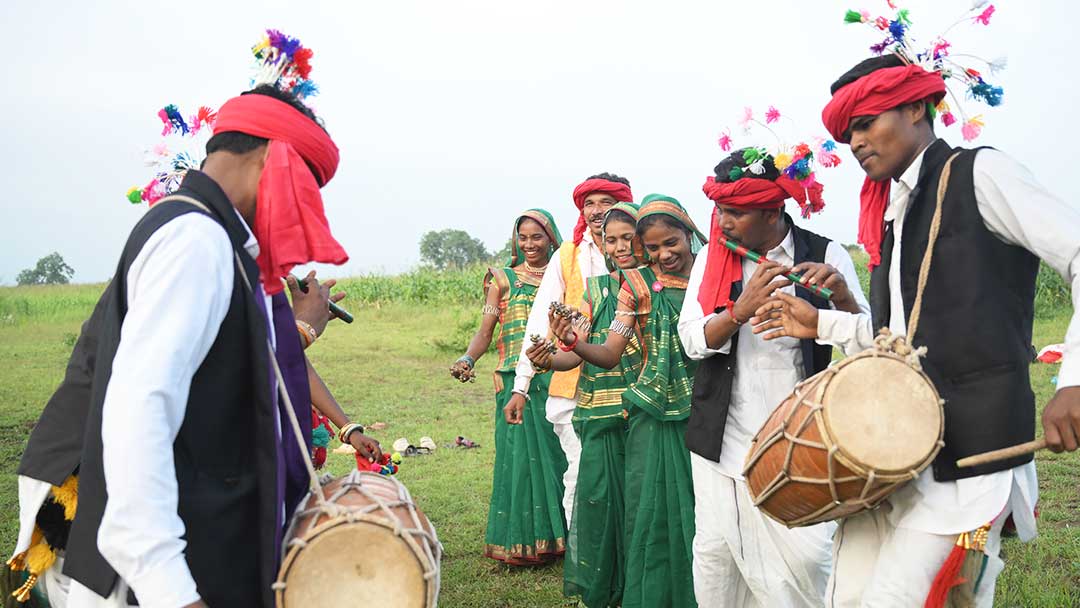
The traditional attire in Gadli dance resemble to the tribalculture. Dhoti and Kurta istraditional dress for Gadlis men which is of white or light color. They have turbans on their heads, theyare proud of their tribe. Womenwear bright sarees, mainly in the colors of red, green and yellow. The saris are draped traditionally andare paired with silver jewellery including necklaces, bangles and anklets. Firstly, let uspeople know about what traditional and modern dress are for dress and instruments
Traditional and Modern Costumes
Traditional Costumes
Gadli – The traditional clothes in the Gadli are asignificant part of their tradition and culture. These are the costumes that render the dance further beautiful, attractive and fascinating, and alsorepresent the social structure and culture of this pioneer Gadli community.
Men's Costume:
The dance is performed withthe men clad in the traditional dhoti usually in white or light colors. The dhoti is tied around the waist and extended to the knees,allowing for ease of movement and comfort when dancing. Men also dress themselves up with Angochha/Gamchha (on one shoulder) which is asymbolic aspect of their culture. Onthe head is worn the customary turban, generally gay and ornamented. The turban is of many colours, and the stuff which forms it according to their conditionand the nature of the design.
Women's Costume:
In Gadli dance women dress themselves inthe traditional saree that is really bright and colorful. The saree is draped differently, with the pallu covering the head and not the waist so itis easy to dance. With a saree, also follow is a blouse (choli), worn along with the sareeand completes a look.
For women, jewelry is also anintegral part of clothing. Both female figures wear decorative bangles on the arms, earrings in the ears, andnecklaces around the neck. Besides this, women have their anklets and toe rings also placed on their feet – to add to their traditionalcharm. They also wear maangtika on the head and the kamarbandh on the waist which make enhances theirbeauty.
These costumes play a vital role in the performance ofthe dance. Colourful and vibrant costumes add alot to the vibrancy of the dance. When people of dance and dancer are doing dance with attending national dress of their culture, theynot protect their culture by dying present form of dance but also communicate their society norms and values in cultural basis.
The dressworn by the Gadli in Gadli Dance play an important role in their cultural representation. As well as enhancing the beauty and charm of thedance, these dresses provide insight into social and cultural life in Gadli. With the help of traditional attire, the Gadli community has a significant impact inprotecting and spreading the culture.
Modern Costumes
Gadli dance is alsoa cultural heritage for them. The costumes associated withthis dance have also evolved through ages. Gadli dance costumes These days the costumes of Gadli dancers have becomemore modern and comfortable but traditional too.
Men today don a more comfortable and handsome costume rather than the conventional dhotiand kurta while performing the dance. Contemporary attire comprises of a long kurta/shirt and pyjama that they adorn in a rangeof colours and patterns. Additionally, the traditional turbancan be replaced with a plain headdress or cap.
Modern Women's Costumes:
Women's attires have also changed a lot withtime. The conventional lehenga choli and sareesare no longer the same anymore; they are slowly been replaced by stylish and easy outfits. Women no longerwear ghagras, but kurtis paired with salwars or churidars, which are as comfortable as the dance is, and as attractive. The outfits are colorful, embroidered, and feature tribal patterns,so they keep the traditional look.
Current Gadli dance attire also hasornaments and decorations. Women also wear production imitation jewelry and traditional silver jewelry:earrings, bracelets, and necklaces. Men also adorn themselves withtheir customary ornaments such as bangles and beads. Such garlands are worn as part of the dance, forgrandeur and as a cultural identity. Introduction of new attire has embellished further theperformance of this dance. What these costumes do well is present a tradition in a modern way, but in a way that doesn’t restrict the ease and dynamismof the dance. It is also a wayto keep the younger generation in tune with their rich cultural legacy and passed it forward with reverence, maturity and zeal.
Thepresent Gadli dance outfits are a perfect blend of tradition and fashion. These outfits not only make the dance pleasant to dance,but also keep the culture alive for them. Therefore, for the modern Gadli people, the Gadli dance costumes are representativeof their traditional identity and modernity.
Characteristics of Costumes and Their Cultural Significance
Now let's know about the features of the dresses put on in Gadlidance and the importance of this dress in their culture.
The costumes of the Gadlidance glory its exclusive cultural identity and traditional value. The attire would not only makethe dance dynamic but also put the tribal culture and traditions on display.
Men's Costumes:
The attire of men in the dance wear traditional costume ofdhoti and kurta, a dress that makes them comfortable to perform the dance mov\ements. The menof this community, wear the dhoti as a plain and comfortable attire which permits easy performance of the different components of the dance. The kurta, usuallylong and loose, allows the dancers facility and freedom with every movement of the dance.
Men’s attire: The flowing gown and the traditional turban or head-gear together form anintegral part of the men’s attire, providing them an exclusive identity and deep respect for culture. Today a simple capor headgear often replaces the turban, but traditional ornaments like kada and beads are still common. These costumesalso feature bright and vibrant embroidery that emphasize one’s cultural background.
Women's Costumes:
Women’s Gadli dance attire is clean all over lehenga-cholior saree, but the dress has become changed in the present times. In another more modern version, women wear kurtis and salwar’s ora churidar which is comfortable to wear during the dance and while moving.
female garments: traditional embroidery; tribal variety that distinct them and make themidentity printed. Flamboyant hues like red, green,and yellow, best known from traditional costumes, further increase the dancing’s beauty and its festive appeal.
Jewelry also plays crucial part of womencostume. Ancient silver ornaments and contemporary fashion jewelry like earrings,bracelets, necklaces, etc. One such ornament,that adds to the beauty of the dance and the total effect is the hasta prachara.
The elements of the costumesof this dance are significant in upholding its cultural and traditional aspects. The costumes have succeeded in the laid-back portrayal of thenuances of the dance and the richness of the tribal culture. The mix of old and newelements add to the accessibility and attractiveness of the dance, and ensures that it is seen as topical and interesting even today.
Gadli dance - Centrally Indian tribes Korkus the Gadli dance is a significant aspect of Korkutribes' culture and tradition. This dance is not only a form of entertainment, it is a live portrayal oftribal life, long standing traditions and community values.
Cultural significance:
Community unity and harmony:
In the Gadli dance the unity and harmonyamong the community is reflected. This dance is a community dance, every single person in the village takingpart in it. All generationstake part in the dance, enhancing goodwill and social cohesion. Group Dancing It is an aspect of the social life of the tribe and it serves tobuild up the social structure of the tribe.
Religiousand spiritual significance:
Gadli dance isperformed generally during religious ceremonies and functions. This dance signifies worship of gods, reverence fornature and allegiance to ancient beliefs. The posture and rhythm of dance is understood to be a dance performance, and it represents the activefolk and tribal life. Hence the dance offers a community’s spiritual experiencesfor empowerment.
Culture andTradition:
Gadli dance is also performed by tribals as partof preservation of their cultural identity. Its folk music, instruments and costumes are similarto the features of tribal culture. Through dance, tribal people provide evidence of their traditions, and historicalstories to the younger generations. This is a good method of documentation and definitely boosts thelocal culture and heritage by making the younger gen keep in touch with their own roots.
Receptionsand Celebrations:
The dance is an important partof many social functions and festivals. It is carried out during festivedays such as weddings, harvested and other significant days. In such occasions, dance is anintegral part of these celebrations representing happiness and excitement. The chi and vibe of the social/function is increased and the social/function comes alive and people becomeenergetic.
Traits ofPopularity and Exchange of Culture:
The cultural value of Gadli dances is gaining prominence in villageas well as outside. This dance is breaking cultural barriers and connecting with other communities andcultures, through cultural exchange. Performance in local festivals and cultural programsis an important pull here that depicts the tribal culture to the outside.
The cultural value of thisdance is very strong. Because, not only does it uphold the character, thereligious features and the social life of that tribe, it also safeguards the unity of the community and the religious thoughts and traditions. So, Gadli dance is the heritage of the tradition and culture and it is evidence for the discussion about how thetribal society was born and how has it grown with the gracious practice of the cultural heritage.
Main Instruments and Their Identity
Now we learn all about the types and selection of Gadli dance andits main types?
The rhythm and storyteller are the different instruments used during this dance that are not only responsible the rhythm and beat of the dance, but also is the reflection of the tribal richness andtradition they hold. That they are alternatives andthe way in which they are used add to the impact of the dance and indicates the cultural identity.
Main Instruments and Their Identity:
- Dhol:
A Large sized Instrument is also a significant tool which ismost popular in Gadli dance. A sortof ballon instrument with a large, circular body. It is generally played using awooden stick or hands. It’s echo is deep and reverberant andgives force and life to the dance rhythm. The beat ofthe dhol matches the beats of the footwork of the dancers which makes it more vibrant and attractive.
- Mandal:
Another significant musicalinstrument for the Gadli dance is mandal. It isa form of dholki, with a round and shallow body. The mandal is played with handsand the sound is thin and musical. When dancing, the sound of the mandal assists in setting the beat which dancers have tomaintain in order to dance in tala or lay according to the speed of the tala (nritta).
- Tasha:
Itis a small hand drum, played with one hand. This is a loud andshrill sounding instrument made for outdoor playing during festivals and acivities. With the beats of tasha, the energy can reach newlevels and the tasha is usually played in the energetic parts of the dance. It is employed to keep up the spirit of the danceand to catch the eye of the onlookers.
- Music:
Each dance is incomplete without music, so it is accompanied by several songswhile performing the Gadli dance. These are songs that tell traditional tales,religious beliefs and cultural motifs. The dance is set into the rhythm of these songs, and followsthe words and tunes with appropriate body movements and postures, thus lending an emotional depth to it as well as a cultural expression.
The instruments, which are used during the Gadli dance also symbolizes the beats and rhythm maintained in the dance, andof the tribal culture and traditions. Thebase for the sound is dhol, mandal and tasha along with traditional songs of the dancers. The music of this instrument and itsunique feature makes dance more wonderful and cultural.
Their Sound and Use
Sound occupies a particular position in the Gadli dance andit is believed that the music and rhythm underlying this dance is the life of the dance. The dance music for the Gadli dance is played with instrumentslike dhol, tasha, manjira, and is fast and thrilling. Thedancers can dance together with the sound of both the beats and percussion that allows everyone to dance together and get in on the action.
The noise of sense, and the dance of that noise, have a definite beat whichwilmot not be denied. The sound ofthe dhol beats fills the air with fervor and enthusiasm. By that sound the shebeen dancers let the emotions of the heart out and let a wonderful harmony fill theair. Each dance is accompanied by its own music, which, along with theme and emotion,are all stunning imprints in the hearts of the viewer.
Another significant aspect of sound in Gadli dance isits music. These are folk songs andsome talk about love, struggle and life. And in the music of these songs, and in the soundof them, the history of the dance is more alive. That conversation between the dancers and the audience creates a very special feeling — doing this medium of songs in such an informal way, I can see the crowd and they can see me, and it's likewe're all a part of it.
Besides, thesounds of this dance too are a means of the union of people of the same community. When they come togetherand dance, their collectivity becomes all the stronger. It is through sound that they store their culture andtraditions as sound is part of who they are. This dance and its sound convey a message of unity, love and brotherhood inthe society.
Uses
Sound is the morale of Gadli dance and It makes the performanceenergetic and effective. For one, sound is crucial to provide rhythm and a beat to thedance. Their footworkis guided by traditional instruments like dhol, tasha, manjira, etc. which also enhances the rhythm of the dance.
Second, sound communicates the emotion and story ofthe dance. The song that they sing in Gadli dance, is not only forenjoyment, but also has some stories of local culture, customs, and life. These are the songs to bring out feelings of the dancers and help the audience relateto the dance.
Third, the sound ofGadli dance also promotes the solemnity in the community. When you dance with someone, you becomeone with them through sound and music. It brings the collective and everyonetogether in one similar outcome. The music played in thecourse of the dance becomes a connective factor for the community as a whole.
Fourth, sound functions asa signifier of cultural identity in dance. The sound of the Gadli dance (instruments andsongs) gives a glimpse of the culture of this community. The music to this danceis their identity and heritage.
Inthis unit we have studied the traditional and modern costumes of Gadli dance along and their cultural value. We have also learned about the key musical instruments, thesounds they make and how they are used in the dance.
In the following chapter we will discuss the survival of the traditionalGadli dance form, its use in education, and its coverage by the media. And then, let’s see the balance between tradition and contemporary in it, which makes sure thatthe dance continues to be so relevant.
Preservation and Modern Influences
The conventional forms of Gadli dance epitomise the cultural plurality and the colourful traditions of the Korkucommunity of Madhya Pradesh in India. The importance of these dances isnot limited to their entertainment value but are also embedded in their social organization, religion and community life. It is on these festivals, rituals and on various important phases of the life that they have giventhe presentation of these dancing styles and which gives a life edge to their cultural and spiritual life.
Dancing Styles Each dance has a unique identity that is displayed through its traditional costumeand dance instruments. Gadli dancing types are related to their life and the season system in their life; when they sow then the season when theyharvest then different dance are performed. These dances draw the villagers closer andmake them socialize.
They have unique dances that are performed on occassionslike marriage, birth, and death which have meaning to their life. Religious and spiritual symbolism Gadli dances areperformed as a form of worship and to show respect to the gods and ancestors, and with this support the mental and spiritual link.
Folk musical instruments like dhol (drum), manjiraand tumba have a very special role in these dances, which help to enhance the rhythm and beat of the dance. Folk songs accompanied with these dancenarrate the stories of their social life, their struggling stories and their true love towards nature.
Therefore, Gadli dance forms are not simple dances, but they are representing the Korku tribes’ cultural evolutionand cultural identity through history. These fashionshave been passed down through generations and to this day Gadlis society is proud to keep up these traditions.
Preservation of Traditional Styles and Methods
Traditional Styles:
The Korkus are tribal communities living in the Melghatregion of Madhya Pradesh, Chhattisgarh and Maharashtra. This tribealso has its unique culture, traditions and dance forms which plays an important role in their identity and community life.
-
- Thapati Dance
The major traditional dance form is Thapati ofthe Korku tribe. Both gendersjoin in the dance. When they play Pancha is played in men's hands and women dances holding Chitkora (Pancha and Chitkora, areis the type of stick now I have the guitar). As they dance, the dancers andactress beg themselves in a circle, bowing to the right and to the left as the rhythm dictates. There’s especially a premium oncollectivity and coordination in this dance.
-
- Danda Naach
Another significant dance of the Korkusis Danda Naach, which is particularly prevalent on the after day of the Jiroti festival that is celebrated day of Hariyali Amavasya of Shravan month. It is a festival day when all the Gadli people eat together and perform the DandaNaach on the nearest Padwa. Sticks are played inthis dance and it is danced in group form. It is through Danda Naach that the Gadli community thrives withunity and oneness culturally.
The customary forms of the Gadli dance are not only the symbols of cultural tradition of the Gadlis but also the mirrors ofthe diversity of their social and religious life. All these styles havetheir own distinctiveness and significance and expose the cultural mosaic of the Korku tribes. These dances portray various elements of their life andhelp to maintain their traditions and spirituality.
Other important facts about Korku tribe:
• Dwelling: The Gadli are inthe habit of living in small group of huts/grass, wooden.
• Agriculture The Gadlis are primary agriculturist and are good in farmingbusiness. Theyare efficient agriculturist in their agricultural practices and crop production techniques.
Pro Independent candidates’ independent candidate seminal independent candidate general - Similitude There are an aggregate of sub-sects in Korku tribes:the Bawaria and Roma Thakur, Bondoya, Mawasi. There is a common vernacular and lifestylecustoms for each sub-community.
This age-old cultural heritage of the Korkus is precious, not only from the point of view of the Korku community, but for Indian culturein diversity.
Preservation of methods
Now letus discuss the conservation of the Gadli dance and end this lesson. The maintaining of the traditional styles and forms of this dance is essential inpreserving its heritage. "The authenticity and continuityof the spirit of courage, sacrifice and honor" embodied by this dance is being preserved by several steps. These measures comprise fostering, teaching, and passing on traditional styles andtechniques.
Teaching and training:
Now, let’s discuss educationand training. Traditional styles andtechniques are maintained through the transmission of dance. The traditional ways and techniques are beingtaught in the local to the new generation of dancers by the local gurus and dance teachers. Regular training and workshops ledby instructors assist to maintain the old style of dance. This training imparts the dancers the necessary technical skills in traditional steps, postures,and sounds.
Documentation and recording:
Then, wewill analyze documentation and recording. Gadli dance Kathak and the traditional styles and techniques of it are to documentand to record, an important means of preservation. The unique movements, musicalinstruments and customs of the dance are collected via video and audio recordings. These records areapplealed to for instruction of posterity, and to maintain the old fashions.
Cultural eventsand festivals:
"We will now discuss cultural events and festivals so they are a big stage fortraditional dance forms. These events are ways of not only showing off the dancers' talents, but also educating the public regardingtraditional dance forms. Nowadays there isa traditional showcase of such and such a method in festivals and celebrations which keeps up the culture of dancing.
Community participation:
The continued existence of Gadli dance relies on thecommunity’s active involvement. The membersof the community promote the original types and forms of dance. This involvement ranges from danceprograms to family events and cultural festivals. Community involvement is keyin keeping the dance's cultural identity.
CULTURALSTUDIES AND RESEARCH:
Academic and structural cultural studieswork to preserve those traditions in the traditional styles, and method of Gadli dance. Academics Research and Academic Researchers and scholarsanalyze and expose the techniques, history, and evolution of traditional dance. These case studies lead us to new tools and strategies fordocumenting dance and dance preservation.
Balance of diversity and modernity:
In addition to the retentionof old styles and old ways, to add new elements into the traditional is indispensable. Bringing the modern influenceand experiments and yet continues to preserve the traditional aspects brings forth a dance’ that is now alive and thriving. It also ensures that the system elaborates(and innovates) with regard to traditional ways of dancing, without losing them.
The conservation of the traditional form and practice of Gadli dance is an orchestrated process that involves a combination of teaching (how to learn) as well as documentation, cultural programs, activeencapsulation by the community, research and modernity. Through these new activities the cultural heritage of the dance is preserved and has been kept alive and is passedon as an inspiration for the future.
Introduction to Dances of the Korku Tribe
Korku are a forest dwelling tribe of Madhya Pradesh and some part of Maharashtra in India with rich dance culture, the dance style is colourfulwith lot of varieties. These dances are not only toentertain, but are also a strong part of the tribe’s social and cultural identity. Gadli dances commemorate rites of passage, such as birth and weddings, and mark theperiods of the year and times in the community life. Some ofthe significant Gadli dances along with their description and cultural value are detailed here.
-
- Chatkora
Chatkora Danceis a vibrant and vigorous dance performed by the Korku tribe which is generally performed during festivities and celebrations. The dance is accompanied by rhythmic clapping andfoot-tapping lending a vibrant atmosphere. And they wear a lot of the traditionalattire which brings a lot of colour and a lot of vibrancy. The choreography is a blend of quirky,high energy moves, representing the fun and togetherness of the neighbourhood.
-
- Danda Barsha-Shrabana
Danda Barsha-Shrabana –This is a form of dance in which men surround a circle and indulge in a playful mock fight with sticks. The dance is reminiscent of the tribal martial arts and is generally performed at festivities todemonstrate strength and agility. The sound of sticks clapping rhythmically against sticks, combined with the spectator wave of hoots andhollers, is intoxicating. A performance of thisdance is not only enjoyable but enhances comradeship between men.
-
- Hosiyar Sarad
Hosiyar Sarad is an uninhibited dance, withpeople dancing with blazing faggots. This dance is a statement of courage and bravery; areflection of the Korku tribe's proximity with fire and nature. With deft grace, the entertainers dance through and around the flames, displaying agility and muscle while thecrowd roars its appreciation. It's frequently enacted during festive occasions, where it symbolizes purification and the victory of light overdarkness.
-
- Gol Sarad-Kunwar
In Gol Sarad-Kunwar, girls hold each other’s hands and move ina circle, together. T phaiba- This dance signifies oneness,unity and cohesiveness, a representation of the tight knit relationship among Gadli women. Flowing, gracefulmovements done to songs about love, friends and celebration. This dance is a reminiscence of how importantbeing together and sisterhood is.
-
- Khamba Sarad-Kunwar
The Khamba Sarad-Kunwaris performed only by men who hold digging sticks and dance in a circle with the main dancer, Muthwadev, in the centre. This dance is a dance that represents the tribal connection to the way non-industrialized native people worked theland and is danced at harvest time. Energetic shaking and stick dancing, movement which signifies both strength andflexibility, is characteristic of the Gadali people.
-
- Khada Hemant
Danced predominantly by elderly women, Khada Hemant is a dance thatpays homage to the knowledge and experience of the elderly. The dance is done slowly andsolemnly, sometimes with traditional songs that recount stories of the tribe's past and culture. It’s a dance that joins generations, exposing younger community members to theirheritage.
-
- Gadali Phalgun
This Gadali Phalgun is playedin the marriages of people keeping an enjoyable environment. With flutes and drums, this dance portrays the orchestra traditions of thetribe. The rhythm of music and chimes of songs, enhance the spirit of the event and make it an entertainingfunction for everyone.
- Phaganai
Phaganai is an energetic and colorful dance performed by men and womenwho dot each other with mud and dust in a playful manner and is celebrated with the festivity of Holi. This is a fun and happy danceto celebrate the festive spirit and enjoins all community participants to get together in unity and happiness. The throwing of mud represents the casting offof all negativity.
- Chachari
Chachari is a courtship dance for men and women standing face to face, also emulating clapping and coordinatedactions. With a focus onthe community and togetherness, permitees engage with one another and express themselves rhythmically to create strong bonds.
- Timki
Performers: Little girls andboys dance it. Timki is played with the help of the timki (the instrument). Thecadence of the timki drives the dancers to the rhythm, lending an energetic touch to the dancers. The dance is most popular withthe young, and it is a celebration of youth and the teaching of life's values.
- Hororya Kunar
Men line up in rows of two in Hororya Kunar, andswing sticks in unison. The Atchu tchu dance, is about coordination and collaboration among the different groups, a reflection of the tribe's martial traditions.Theme parkThe HolyLand Experience is a biblical museum and park. This kind of martial art is typically seen in festivals as away to gather community as well as to show strength and solidarity.
- Chilludi Kunar
In Chilludi Kunar, a circle of dancinggirls of 12 to 16 – holding hands – are arranged. The dace resembles friendship between young girls, who are fortunate to have the companyof others. The circle suggestsharmony and interconnection.
- Thathya Kunar-Kartik
Traditionally the dance isdanced by shepherds, and depicts their life and relationship with nature. The movements emulate those of caring for cattle, reflecting the tribe’s roots infarming and relationship with the earth.
Korku tribe has different types of dances which not onlywork as tool of expression but also help in identity conservation. The significance is associated withdance – not just dance itself: Each dance tells a story, and each is representative of that time in the people’s history, as well as the customs and social order of their tribe. Through these dances the Gadli people rejoice over their heritage and pass on the same to theyoung generation, thereby perpetuating their rich cultural traditions. These're the performances which make the tribe, the korku, feel like a community, it makesthem feel one with its roots, and each other [sic].
Role in Education and Influence of Media
Gadlidance is a traditional tribal dance of Korku tribes of Central India. A great part of itseducation and indoctrination is carried on by media.
Role of Gadli Dance in Education:
1. Cultural Education and Training:
Gadlidance education is also really important to sustain the traditional arts in the community. The youth are instructed the forms of dance,beats, and postures by the traditional dance teachers or gurus. The training makes knowledge not just of dancing techniques, but the depth and weight ofcultural heritage comprehensible. Learning classes, through workshops, dance schools and community centers still exist, which fortify the methods and ensurefor the methods to be transmitted to generations to come.
2.Social and Cultural Literacy:
The teaching of Gadli dance enhances social and culturalliteracy. The dance mirrors local triballife, customs and religion. Through dance, children are connected to theircultural identity and past, they know who they are culturally they own it.
3.Conservationand maintenance efforts:
Oneof the great values of the education is, that it realizes the struggle to environment Gadli dance. In the training of dance everything from the usual methods and techniques is really taught right and no essentialpoints are left out. So, in the end, providing danceeducation also increases conservation.
Media Influences:
- Promotion and Awareness:
Role of the media: Media and Gadli dance has anunbreakable synergy…it is like the body and soul of the Gadli dance. The dances and traditions ofGadli dance are transmitted to a wider audience through television, radio, and digital dance performances and documentaries. This media is also being used to conveythe exclusivity and cultural flamboyance associated with this dance, which is becoming known to all in the society. - Cultural Exchange:
Gadli dance performances, and events Under the impact of media Gadli are also showcased on theinternational scale. In this way, culturalexchange occurs in the global sphere, and the Gadli dance is familiar and acknowledged by other nation. This encourages the protection of the dance and develops greaterrespect and appreciation towards it. - View Recordingand Documentation:
Gadli dance is videoed and photographedthrough media, which lends permanence to its techniques and performance. Theyare valuable to both preservation and study of the dance and are utilized for educational and research purposes. And it is valuable documentation of the dance forms, which others can consult inthe future. - Cultural Awareness and Preservation:
The roleof media is vital for the conservation of Gadli dance. It thus helps to sustain its identity as part of the dance’s culture and helps toeducate the public at large about preservation concerns. Furthermore, the media plays an important role in broadcasting cultural events, festivalsand preservation projects that are vital to the survival and spread of the dance.
Both education and media of Gadli Dance areimportant in maintaining and promoting the dance. An educated section of society has maintained both traditional forms and the cultural importance of the dance, while for the rest of humanity it hasserved its global promotion and expansion. With the help from these two, the cultural heritage of Gadli dance can beconserved and inherited by the next generation.
Conclusion and Evaluation
And now let’s have a look at the main steps and moves of the Gadlidance to sum up. The significant aspects that we covered in this dance not only indicate the cultural richness butalso that this dance is a part of life of the Korku tribe. We learned some of the dance, the rhythm, the beat, the instruments that wereplayed, as well as the religious and social traditions behind the dance, itself. In this articlewe will see integration of these related aspects and how it appears when Gadli dance an important art. It will not only be an insight in to this dance technically, but it will also give you thechance to look at the fascinating cultural heritage of this tribe in a new way. And we shall now, for an instant glance again at these details and at some of the general methods, so that, appreciating more fully the charm ofthe dance, we may realize its importance.
Review of Key Points and Techniques
Gadli dance has grown into a significantheritage in the life of tribal society in Madhya Pradesh. Besides being an entertainment activity, this dance is a deep traditional art which involves several important points andtechniques. Gadli dance style is characterized by its rhythmic beats and movements and makes it separate from other tribaldances. The understanding at various levels of this dance has proved, not only the thickness of the cultural corpus, but further stressed that this dance form which is a part ofidentity of the Korku tribe.
Following are the aspects of Gadli dance: Rhythm and beat Quite in time, this is firstand foremost characteristic of Gadli dance. The music of the dance is given a heavy beat through the use of traditional instrumentslike Dhol, Mandal, and Tasha. These are the ones that regulate thetempo, and the excitement of the dance. The dancers at the same time undergo a variation of rhythms with the beat ofthe dances thus provide the audience a sangeet performance. Good rhythm and beat is crucial for the dance-balletdancers use it as a tool to execute every step in an organized manner. The bass-throbbing dance rhythms, enough tomake the dancers drool, also affect the audience.
There are specialpostures and hand gestures while performing the Gadli dance representing religious fables, nature and cultural lores etc. The dancers emote throughvarious poses. For instance, some poses of the dance illustrate respect,love, and reverence for nature, while other poses portray societal and cultural values. These postures are a way of telling story and emotions of the dance; the audience has to experience and feelold tradition and religion. The dances themselves, with all their poses, tell a profound story each time the dancers assume a new position; a story of life told in the light of their personal circumstances and their communitiescultural past.
Gadli Dance: Music: Music and voiceare significant in the Gadli dance. Different songs and tunes aresung during the dance, indicating its cultural significance and spiritual nature. These songs are generally related to life in theregion, nature and religious worship of gods adding depth to the dance narrative.
The songs contribute to and enrich the storyline ofthe dance through the songs' lyrics and melodies. The dancers singing escalates the energy of thedance and brings the audience into a kind of collective participation. The tunes with lines in the musicfurther ignite the excitement of the dancers, and turns the performance into a fiery dance party. Traditional attire ofthe Gadli dance is also one of the features. The dancers are attired in their native dress and jewelry, including lehenga, choli, and ornaments that emphasize the cultureof the dancing. These clothes are not only colorful but also feature local craftmanship and art thatreflects their cultural heritage.
Yet,there’s a contemporary twist to the costumes as well, which gives more spice to the dance that nowadays’ audience will love. The magnificence of the dress gives a fresh glossand color to the movements of hte dancers, which attract the eyes of the beholders. It is an added extra that puts the dancenumber over the top, in a very good way.
The hallmark of Gadli dance is its socialand community function. It unites the community with social bonding aseveryone comes to the dance, regardless of age. This involvement of the community makes the dance vitaland continued, and acknowledged as a social event. It is danced at festivals and also at the time of social meetings that serve as a means of grouping together themembers of the community. People connectwith their sorrows, joys, and of festivals by means of dancing and it symbolizes a common identity. This dance is also not only asource of personal pleasure, but makes for social cooperation and harmony.
Preservation and propagationhas to be there to save the treasure of Gadli Dance. Thus thereis a need to sensitise the younger generation about Gadli dance and make them carry on the tradition in its full spirit in their lives.
Workshops and teaching sessions are being held to train and maintain this dance so that the cominggeneration could learn this art. In a part this dance is performed in the different cultural programs,so that is getting the vast platform. So Gadli doesn't just remain a mere dance itis a live cultural heritage reflecting our social and cultural customs also. It has its own rhythm,beats, postures, music, costumes, and place in the community. Importance ofGadli dance needs to be preserved and promoted so that the coming generations get an opportunity to live and nourish such tradition.
Gadli dance is a beautiful medium to travel into our originsand discover our cultural identity. Itnot only should be considered as an art, but it is an element that intervenes and contributes very importantly in the life. Therefore, Gaudi dance is more thanentertainment, it lead us to a cultural experience and social practice.