

Baiga Karma Dance
This advanced course on Baiga Karma Dance offers a deep dive into the rich cultural and artistic traditions of the Baiga tribe. Designed to refine your skills, the program covers the dance’s history, cultural significance, and intricate elements such as steps, rhythm, music, and costumes. Participants will learn performance techniques and strategies for preserving this heritage art form. Engaging sessions and interactive activities ensure a holistic learning experience. By the end, students will be equipped with the knowledge and expertise to perform, teach, and promote the Baiga Karma Dance, ensuring its survival for generations.
 Most Viewed
What you'll learn
- Historical Context : Understand the origins, history, and cultural significance of the Baiga Karma Dance.
- Dance Elements : Learn key steps, postures, and the body language integral to this dance form.
- Rhythm and Music : Explore the rhythms, beats, and melodies that drive the Baiga Karma Dance.
- Traditional Attire : Discover the significance of costumes and their role in performances.
- Instruments and Songs : Understand the use of traditional instruments and their contribution to the dance.
- Performance Techniques : Master group and individual techniques for performing Baiga Karma Dance.
- Conservation Strategies : Learn methods to conserve and propagate this traditional art in modern contexts.
Couse Features:
- Expert Guidance : Learn from seasoned practitioners deeply rooted in Baiga traditions.
- Step-by-Step Tutorials : Clear demonstrations of movements, rhythms, and techniques.
- Rich Cultural Insights : Gain an in-depth understanding of the Baiga tribe and their cultural expressions.
- Multimedia Resources : Access video content showcasing dance elements, costumes, and instruments.
- Interactive Activities : Participate in group sessions, practice drills, and engaging discussions.
- Feedback and Assessment : Receive constructive feedback on your performances to refine your skills.
- Practice-Based Learning : Engage in activities designed to deepen understanding and enhance proficiency.
Who Should Enroll
- Enthusiasts of traditional and tribal dance forms.
- Students and researchers of anthropology or performing arts.
- Artists seeking to diversify their repertoire with indigenous dances.
- Educators and cultural curators aiming to expand cultural knowledge.
- Heritage conservationists passionate about preserving tribal traditions.
- Individuals interested in learning about the Baiga tribe and its cultural practices.
- Anyone curious about exploring unique dance forms.
Description
BAIGA KARMA DANCE
Introduction and History
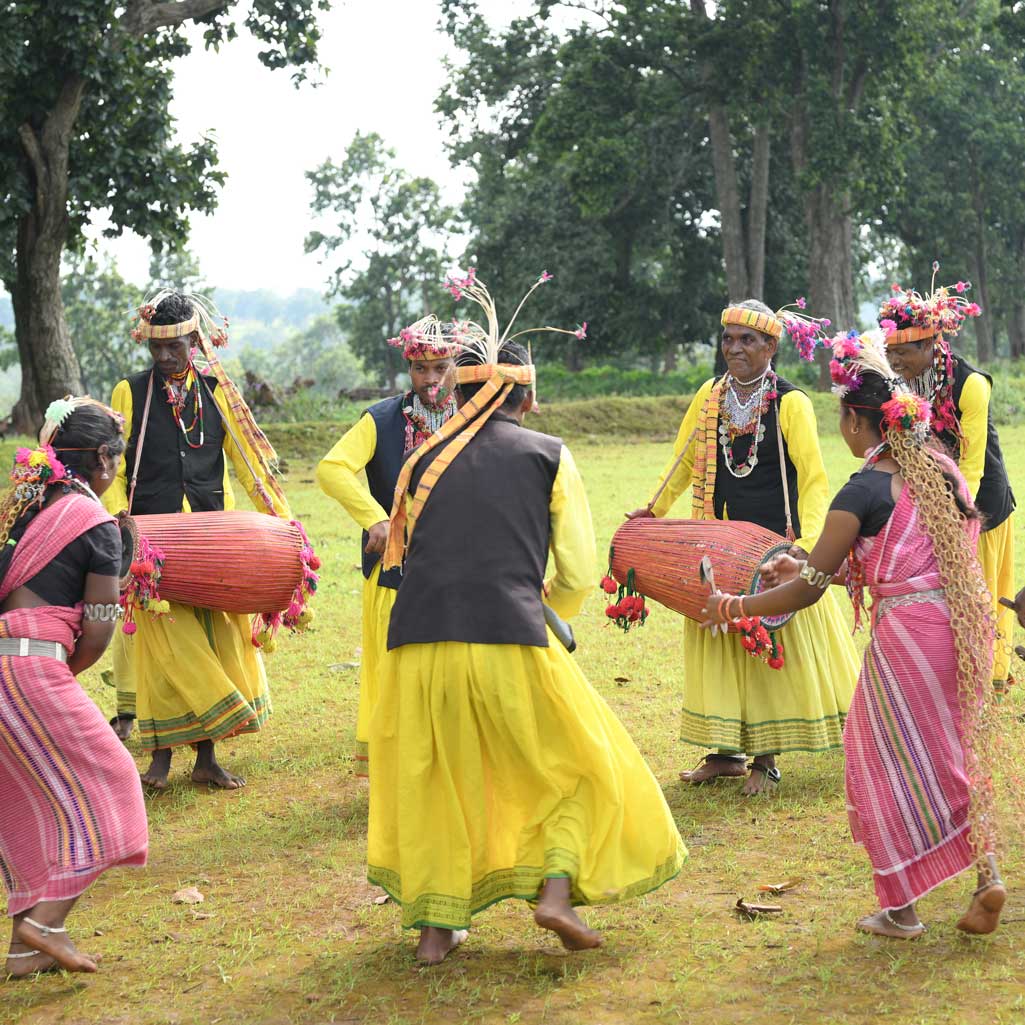
Madhya Pradesh so is the Baiga Karma dance of the Baiga tribe. In this dance, they showcase their absolute trust in nature, tradition and collective life. The dance of karma is planned vina masika after harvesting, to convey the message that we must not forget nature. This is a colorful festival dance which showcases the rich cultural and the spiritual values of the Baiga community. A sight to speak of, a bright clad women and men wearing ornaments and dancing in rhythm to beat of drums. Through various forms of nature, every dance pose and tempo demonstrates how through the concept of coexistence and collaboration, the different components of society come together.And so, to decode the intimacy of this dance, we must lend an ear to the cultural identity of the Baiga community and their history. The tribe has lived in the forests for hundreds of years and has a unique relationship with nature. Karma dance represents an opportunity for these people to celebrate nature and celebrate together. The sacred tree considered by them as 'Karma' is the main symbol of this dance and through this tree the message of plantation and proper preservation is given by them.Karma dance is more than just a source of entertainment; it is a way to impart tribal education and tradition to the next generation. The dance gives emphasis on the role of religion, culture and social structure in their lives. Thus, Baiga Karma dance not only expresses their cultural existence but also their love towards nature and the essence of collective life.
What is Baiga Karma Dance?
So first of all come what is Baiga Karma dance? This is romal dance that was made by Baiga tribe of Madhya Pradesh and Ronal is a tribal dance of Baiga tribe, called Baiga Karma dance. Baiga Tribe is a noticeable tribe of Madhya Pradesh and enjoys its own special tradition of dance. We have to respect how that shows their love for nature, and their way of living. This dance is often done post-harvest to celebrate the labour that has been put into doing the work. This dance also delivers an important message to plant trees and care nature. The men start playing the drums, and the women dress in bright, gorgeous dresses — sparkling necklaces around their necks → this is the dance. The participants dance in a big circle, reflecting their emotions. Baiga dance is a symbol of Bhil tribe love for nature. The dance has movements and positions that resemble some aspects of nature like trees, and animals. It also demonstrates the tribe's collaboration together that they find joy in simple pleasures of life. The karma dance is more than a mere dance for the Baiga people; it is an important method of transmitting traditions, stories and customs to the children and grandchildren of the community.
History
Now, we move to the history of Baiga Karma dance. So anAs we all know that Karma dance is a sacred dance of the Baiga tribe in the state of Madhya Pradesh, if we talk about this dance, it is a very long-standing tradition of this tribe. The Baiga are an indigenous tribe that has a unique relationship with nature, having spent 100s of years living in dense forests. In this dance, they express their love for nature and as a community They love to live together. The Baiga tribe began the Karma dance a long time ago to pay their respect and commencement for their gods and nature. They dance Karma to worship their gods/goddesses to get their blessing. They used to do this dance during the harvest season as a form of asking for alms. For the Baiga tribe, the 'Karma' tree is believed to be very special and sacred, which is the reason behind naming the dance as the Karma dance. It is a unique dance that the Baiga do to tell us how true it is that we should plant trees and take care of nature. This is a dance of togetherness, of oneness, and of celebrating the different colors of life. This dance has held significance for their religion and culture for decades. Happiness stays together, works with the same community supported by close people.When the Baiga tribe lived in the forests and were in tune with nature, they have created a dance called Karma Nritya. As the love for this particular dance took off they began to perform them day in and day out through the lives. This dance is done on special occasions. Karma dance is quintessentially Baiga, not just today but even in the distant past. And this special dance also reminds them about their traditions and culture, which they share with their children. Teaches about.
History of Baiga Tribe
Now which Baiga tribe history - this tribe is a very old tribe of the Dravidian group and this tribe is one of the oldest tribes of India. Madhya Pradesh is home to them Baiga India. The Baiga tribe is famous for its social system and customs. The culture of the Baiga tribe is as old as the tribe itself. Purity of culture is preserved by baiga tribe.They have a very simple style of living and eating. Trees and Budha Dev are the two things that the people of the Baiga tribe worship. And he is their god Dulha Dev. The Baiga clan believes in a practice of exorcism and witchcraft. Their attire is very minimal. While Baiga men wear a loincloth and towel on their head, Baiga women wear a sari and shawl. They use Polkha. However, nowadays, the youth of the plains have begun to don shirts and pants as well.Women from this tribe love jewels. Apart from ornaments, tattoos are also done on Baiga women. Tattooing : This is looked to be very important in their culture. Tattoo on different parts of body By baiga woman The primary livelihood of this tribe is gathering of forest produce, animal husbandry, agriculture and performing as a shaman. Now modernity has also been assimilated in the culture of Baiga tribe. Now the Baigas are coming out of dense forests and caves and hunt and have started living in plain areas and doing agriculture. So they think they are the king of a jungle and the king of a forest. This makes them the first humans. According to them, they were created by Lord Brahma.This tribe is at a very primitive level and fears meeting people of civilised society. Its tribe is an untamed tribalist, living a free life with its tribe. They prefer to dwelling in secluded hilly locations. The men of that tribe only wear the long loincloth, their hair coal black. On shoulders, bows and arrows and axes cling.TribeThey reside in the Satpura mountain ranges of Mandla, Balaghat and Bilaspur districts of Central IndiaTheir habitats are high and dense forestsIt is only possible to reach them through a single clear trail. Which is why they are at times reported when they have work to do with a merchant or a dull-witted goods seller.Baiga now moving ahead wearing loincloth and some clothes and slowly their lifestyle is changing. Baiga tribe is a tribal in wilderness and as a tribal, this tribe likes to live alone.This is only estimated somewhere, derive out of the base sob when we say folk tales are existed, in and around, society about the roots of this castes so that, it is not possible to prove their origin with historical facts. Some of the famous myths about the origin of Baiga tribe are – " Initially God created Naga Baiga and Nagi Baigin, " Naga Baiga and Nagi Baigin went to live in forest. Reham had two kids after a while; so did this bitch. As a result the first born was called Baiga and the second one was called Gond. They both married their sister. Then, from these four people, the race of humans began. The first couple gave rise to Baiga and second couple gave rise to Gond.Though this tribe believes their descendant is Naga Baiga the actual facts remain registered centuries ago and it is very difficult to back up the history and habitat of Naga Baiga. And according to a Baiga legend, the origin of Baiga tribe listen to this – in the beginning there was no land, only water and God sitting in leaf. Over time, God wanted to find the earth but could not find it, so Brahma ji created a crow from the dirt of his chest and asked him to go and find the earth and then the crow started flying. Indian tiger story: On flying, he saw a crab, went to the crab crow and said do not represent and give me the soil of the earth. The crow was transported by the crab to the void of darkness, where the king presented the soil to the crow. The crow with the crab emerged from the underworld and the crow went up to God and delivered the earth species. God moved the soil here and there and alighted that as earth.The earth quaked and trembled when God came to see the earth. So then God made Agaria, Agaria made iron nails and then in the four corners to be hammered God made Naga Baiga. Then Naga Baiga hammered nails on the entire earth, from that time on Baiga is safeguarding the earth. As per this folklore, Brahma ji had created Naga Baiga who is safeguarding the land. Naga Baiga is believed to be an incarnation form of Lord Shiva.Similarly in the Baiga habitats, another folk tale related to their origin is common as mentioned below- Long time ago there was water everywhere. It had merely a lotus and some leaves in the water. The gods would sit on those leaves.At the time, once very strong wind continue blowing causing the leaves to be filled with water, as causing to the gods to be ranged. The gods became angry, they began to contemplate a solution to this and considered to search for the earth on the water but they searched and could not found the earth. One day, when they were in search of the earth, they found out an Island where Naga Baiga used to live. Having encountered the gods, Naga Baiga made a promise to seek the earth, and the gods returned to where they belonged. The last one — Naga Baiga knew nothing about the earth. After a little while, Naga Baiga remembered the crow and the crow arrived. Naga Baiga told the crow to search the earth.The crow flapped its wings and flew away, staying puffed like a giant. And so the crow flies for years and years. It spotted a mound which looked like a tower to rest on and settled on it. That tower belonged to a crab. And at that time, it was crab season, worshipping the Sun. The weight of the crow managed to break the crab's jaw. The fuming crab clamped it's other jaw around the crow's throat.Lets now listen to the tale that crow had to say. The crab, hearing the story, offered to help the crow. Then the crow sat on the crab and went ahead and soon enough they both came across King Haadan. They saw Naag (Naga) girl, both thought as earth. Crab was beckoned at him and he obeyed to it and they went ahead with the girl. They were approached by a demon called Kechua who used magic to eat the girl. Seeing that they did not find the girl with them, the crab and the crow felt worried and started to look around. This happened at the same time a squirrel aunt guided them toward the demon. The crab jabbed its pincers into the worm's belly and the worm let go of the girl. With girl in tow he was getting back on track, as was she. And the crab and the crow carried the girl away to the gods. The crow and the crab greeted the gods.The gods planned a swayamvar on the water for the girl. No other gods were chosen by the girl which struck all gods, and Naga Baiga too was respectfully invited. Because only had Naga Baiga girl chosen. He was Naga Baiga, a sadhu, who used to cover his body with ash.The Naag Kanya wore a garland (mala) around the neck of Naga Baiga. This made Naga Baiga angry. Ek to me apni beti ki tarah samajta tha to chheesra kyun aisy paap kiya Naga baiga ne naag kanya ko apne kulhaadi se do hisso me kat diya. And then girls blood started walking harder all over the water and Baiga and the Gods spread that blood and patted on that blood and it got conserved after solong. And that was the crust of the earth. The high places were now less and the low places were now more sea and lake. Bhumiya was so called because Naga Baiga created the land. Hence Baiga does not plough the chest of her daughter Naga Baiga — Earth — Earth had waited long enough to be married.Earth went on to hold a wedding and Cloud became her groom. The cloud started all dressed up and at the same time wind starts blowing so strong that cloud flies away. Then a mountain was sent to the cloud and the mountain stops the cloud and takes it back with him and since the mountain would stop the cloud and bring forth rain and the earth is flourishing.There are many such myths in the Baiga tribe, due to which it becomes clear that the Baigas have some relation with the earth since the ancient times. There are many myThen concerning this tribe here are many hoe about its origin but historical fact is not realized. A part is learned from the writings of different scholars, for example, it is stated by Russell and Hiralal that the Baiga which was initially a part of the Bhuiyan of Chhotta Nagpur has now been known with the name of Baiga. Word Bhuiyan itself gives sense of an earth and the roots of Bhuiya (earth) makes Baiga an important place among the tribes of this region from the beginning.Baiga legends state that during the era of Ramayana, the Baiga tribe was given the duty of health security of central region. The word ‘Vaidya' implying a medicinal person made sense to refer to them and over a time period, it gained a popularity or say corruption, it changed to 'Baiga'. Currently, from studying the regions inhabited by the Baiga tribe, it is known that even today, this majority of the Baigas, still does the work of traditional disease treatment. The Baigas have inherited this work. The Baigas pass on the knowledge of medicine from their ancestors to their descendants over generations. A Baiga shaman teaches the art of medicine to a young shaman in the Guru-Shishya institution. For centuries, this tradition has existed.Per a legend, when 'Lakshman Ji' had injuries in the battle, 'Sushen' (Baiga (Vaidya)) treated him. Sushen is said to be the ancestor of the Baigas. Like in Hindu religion, the first human being to come, to created by Brahma Ji was Manu and Shatarupa, similarly, the Baiga tribe people consider Naga Baiga and Nagi Baigin as their first human. Because they believed that Brahma Ji created them. There are multiple legends told by the Baiga tribe regarding their origin, however it is known from all these legends that, Baigas are “primitive (ancient) tribes.If one was to draw some conclusions based on the above legends, it could be said that the Baiga tribe believes that it is one of the descendants of a large-hearted Adipurush and hence, the pride to be a Baiga is reflected in Baiga tribe.
Cultural Significance
Now, here we would like to introduce you with the cultural importance of Karma dance, which is the main dance of the Baiga tribal community.Hence, this dance is not only a dance but also emblematizes the history, customs and life principles of the Baiga people. This dance is not only of cultural importance to the people of this society, but it also reflects their traditions, culture and beliefs of the society, therefore it has a multi-faceted importance.
First and foremost: reverence for nature. The Baiga tribe sees nature as an origin of life, Karma dance is a true example of their love for nature. In this dance the people of this community worship the Karma tree which is a sacred tree in their culture. So this dance also teaches us to save the environment and live a sustainable life.In Karma dance, all togetherness is also a big cultural section. This dance unites the members of Baiga community, no matter what age or class group they fall into. Everyone else all gathers around and dances, so there is a form of group work or cooperation there working in unison, so that really speaks to the collectivism and the solidarity. Answer: This dance is a symbol of social gathering and social interdependency of the Baiga people.Karma dance therefore makes a very deeper, religious, and spiritual sense. The Baiga dance to pray for their gods and ancestors. This is not just a dance of faith but also they channel it through this dance to avail of grace and prosperity in their lives.This dance also contributes to the conservation of cultural heritage and customs. The Baiga tribe, like the one above, maintains its cultural heritage and passes it on from generation to generation through the dance form called Karma. A dance this is a mixture of each of the traditions, songs legends they have inherited over the years.Karma dance is also part of art and music. The dance is accompanied by musical instruments like Dhol, Manjira and Fagudi, the instruments commonly used by the Baiga community tell about their musical tradition. The sound and rhythm of the Baiga touch down inside the contours of the Baiga from the outside only when the Baiga dance to their tunes.This dance is an integral part of their life which depicts the culture, faith, and collectiveness of the Baiga community. This dance also help in entertaining the people but it acts as the identity of the baiga community and preserve its culture.
Dance and Music, Elements Of, Instruments
Baiga Karma dance is a part of the tribal life in Madhya Pradesh, and bears a ton of the culture and heritage wrapped up in plenty of glittering traditions. This is more than just an entertaining piece of activity but it depicts their life within community, religious life and attachment to nature. Throughout the frame of time right within the Baiga Karma dance, each and every step and posture interior a dance portray the aggregate spirit, spiritual faith and deep attachment of the tribal community with the rhythm of life.What makes this dance special is that it is done in a circle and as a group. The dancers are arranged in a circle and perform as a representation of togetherness. This circular arrangement reflects the sense of communal nature of tribal life where individual works get merged in the advancement of the society as a whole. It starts with the softer tones of the drum which eventually transforms into more higher tempo pulsating rhythm and dance. It gives rhythm to their steps and postures while showing us the festive spirit of this dance.The essential characteristic of Baiga Karma dance is the mudras, which share the beauty of art accompanied with social and spiritual messages. These mudras are similar to the elemental forces of nature from trees blossoms to river waves. A live figurative image of nature is made by moving the body and hands of the dancers. It represents the tribal community reciprocity towards their surroundings and follows their beliefs. They also convey prayer and respect in some mudras which is the religious aspect of the dance.The quality of coordination of steps and postures is one of the most important qualities that should be present during the dance. The dancers move to the beats of the drums and other musical instruments. For example, right and left steps, turns, and circles make the dance dynamic. This dynamic is both entertaining for viewers — and an indirect reminder of the value of togetherness and solidarity.While the postures and steps of Karma dance echo the beauty of the tribal life, its liveliness gives them a unique identity. It is a combination of movement and emotion that lives in the hearts of the people in the tribal society and represents not only their cultural customs but the overall attitude of life and the common spirit of the people through this dance. The ideas that are concealed in the message of each movement and position in the dance convey the affection and devotion of the tribals to nature, society and spirituality. Saving this dance and practicing it will be one of the crucial things to save our culture.
Basic Steps and Postures:
Introducing the steps and moves of Baiga Karma dance. The dance has a dance circle to start. The dancers form a circle and dance in unison. They are in a circle to represent unity and oneness in community. The dances are whimsical and correspond to the beats of a drum. They move their steps with the rhythm that is playing. As the steps progress, the pace begins to quicken, adding a new vitality and excitement to the dance. In this dance, right and left steps are moved alternatively. In this one, the dancers move one step forward with the right foot, and then bring the left foot forward together. This is needed to keep the steps in the rhythm and in beat. The dancers also use some flips and turns during the dance. This provides some attractive movement to the dance. During the flips, the dancers spin their body round in one direction and then come back in a circular path. The dance also has a connection with its hand gestures as well. Hands of the dancers in various postures above. This sense of being alert and lively in the dance with the help of hand gestures.
Mudras of Baiga Karma Dance:
Many of the mudras in this dance also represent shapes in nature. Thus the dancers move and bend their hands and body that they give the view of trees, plants, flowers, and other types of natural elements. These are Mudras that augments the cultural aspect of the move. And, there are mudras that show prayer and respect. The dancers lift their hands, folded in prayer-like positions, which conveys religious and spiritual emotions. The dancers will also use few mudras to communicate with each other during the dance. These mudras are communicated to each other and unveil the spirit of the group. Karma dance also expresses happiness and enthusiasm through its mudras. Mudras by dancers conveys the feeling of joy and enthusiasm, thus making the festivity of the dance more powerful. Hence, these simple steps mudras of this dance not only provide a particular shape to the dance but also convey the cultural religious sentiments of this society.
Rhythm and Taal
Next we move on to the essential features of rhythm and taal of Baiga Karma dance. Baiga Karma dance is highly energetic and a well co-ordinated dance which has a special rhythm and taal.
Rhythm and Taal:
In this first we will learn about rhythm and taal, the taal tune is made with the help of drums and other instruments in this dance. The sound of drums and the tinkling of the manjiras set the movement speed and the beat. The taal tune is typically upbeat and vigorous, which prompts the dancers to perform in a specific rhythm. In rhythm — the dancers move to the rhythm of the dance moves. Moving in time with the beat allows the body to move gracefully with the coordination of the feet. The steps of the dancers connect to the taal tune, creating a rhythmic dance that is effortless.
Dance tempo and transitions:
Let us now discuss the tempo and transitions of the dance, the Karma dance traditionally begins with a slow tempo and then accelerates. Now, with this shift, the dancers get faster and more vigorous. The steps also get faster with the rhythm increasing in strength, giving the dance a more vigorous and spirited element. Another basic of the dance is to turn, flip in a circle. These movements are dictacted by the pulse and given life to the dance. As the dancers circle one another, the circle represents community solidarity.
Collective rhythm:
While this is true, the importance of collective rhythm is also paramount with this dance. The dancers are in step with each other, creating a microcosm of unity and collectivity, flowing in rhythm to the beat, all connected Invisibly with threads of energy, vibrancy, and movement which appear only in this moment. This rhythm maintains all the dancers in a common rhythm and also turns the dance into a musical phenomenon.The beats and rhythms of this dance not only keep the dance from being dynamic and full of life but also reflects the features of community culture of the Baiga people.
Traditional Costumes
Traditional Costumes of Baiga Karma dance So here we go with Traditional Costumes of Baiga Karma. The costumes of the dancers indicate the cultural roots and religious importance of this dance.They never dance by putting makeup on only, they do have special costumes for the dance. A few of the songs concerning the dance of Baiga are sung together in groups by male and female dancers. In this dance song, men wear sarong with sarong wrapped up his body. The salukha (shirt) and body black jacket is on the body. A chak-like turban on the head, peacock feather plume on it, coral necklaces in various colours around the neck, gilt or brass coins and coral-pearl earrings in the ears and iron or brass anklets on the feet. They wear an embroidered Pichora on the back having red and blue printing. They have a hand thikki. For dancing, lugra coral is worn by women on the body. Young girls have their hair outfitted a greater amount of the time. In the bun hair on the head they put the peacock feather plume.Bagai puts a heap of something like 'Ladda' made by stitching small rings or loop of grass in the bun, which dangles down to the waist. The dancer adorns colourful garments around the neck, Tarkal and Moong on the ears, Gilt Chura on the hands, Mundri in the palm, Pairi or anklets on the feet, feature on the toes etc. and indulges in dance and songs.
Decoration and Features:
Costumes are based on this dance, where colourful clothes are used. Artistry In Motion: Dancers wear clothes that reflect the energy and enthusiasm they will bring to the actual dance. There are classic colors along with red, green, blue that hold the highlight. In these costumes too, symbols of culture are used. These symbols represent the cultural and religious relations of the dancer and convey unique spiritual experiences during the dance. The embroidery and other traditional art being done on the costumes gives the costumes of the dancer uniqueness. These designs help describe the cultural background of the dance and showcase the artistic talent of the people. These costumes further reinforce cultural identity of Baiga Karma dance. It represents the cultural values, traditions and religious fundamentals of the dancer. Traditional attire is viewed as sacred and respected during religious practices. Through their costumes, the dancers convey their respect for the gods and beliefs. The costums reveal cultural, religious, and colorfulness of the dance itself. The costumes of both the men and the women makes the dance performance fairly spectacular and realistic, and also preserving the cultural traditions.
Language and Body Language
We talk about the language and body language in the Baiga Karma Dance. This dance has been a part of the cultural legacy of the Baiga tribal society and clearly articulates the dance with its language and body expressions.These are the traditional folk songs, the tradition of this dance is in singing these songs while this dance is on. The lyrics of these songs are in the native tongue of Baiga community, most of the songs are in local dialects of Baiga language or Hindi. These songs synchronize the rhythms, beats and emotions of the dance and preserve the identity of the culture of the community-bound.Their folk songs often relate to nature, gods, harvest and tribal life. These songs show the dance as emotional and give the dancers emotions that go with the dance. Their songs, too, incorporate messages around collectivism, cooperation, and social unity. They reflect the social norms and traditions of the community where they come from.
Painted mudras and gestures of the dance:
The mudras and gestures are also a significant part of the language of this dance. These mudras convey certain feelings and social messages during the dance. The dance gives us images of nature such as mudras depicting trees, plants, flowers, and animals. These mudras show this community of how much they respected and had a connection with nature. At other orientations, certain mudras mirror religious and spiritual signs also. There are also gestures of the hand and body expressing the worship, prayer, and blessing of the dancer.Feet coordination and rhythm- In the choreography, the feet of the dancers move on the ground in accordance with the beat. Next, alternating left and right steps bring the beat and rhythm of the dance consistent. Size of human circle: stepping in a circle symbolises collectivism and togetherness. Dancers dance to one another at a round table, representing solidarity between them and cooperation.Body postures and movements: In the course of the dance, the dancers within the dance flip their physique round and transfer; this helps the dance be energetic and stylish. These movements bring life to the dance and captivate the audience. By flapping their hands and body, the dancers dance and this rhythm adds grace and fluidity to the dance. This body language adds an element of beauty and tenderness to the dance.Facial expressions: Happy and enthusiastic students with shining faces. Happy and celebrating seems to compare to every Smiles, every shining eyes and every enthusiast face expressions. There are postures and expressions of devotion and faith. The dancers display looks of intensity and piety on their faces, as the dance is a religious one.Model of charity: The dancers work together and stay in sync with each other. Even the body expressions—sending signals to each other and moving to the same rhythm—indicate community spirit and social unity.BAIGA KERMA DANCE The body language of the Baiga Karma dance not just brings the enthusiastic and attractive dimension of the dance but it also educates and expresses the cultural and religious sentiments of the Baiga community. The dancers perpetuate their customs and beliefs primarily through these bodily expressions.
Baiga Karma Song
Followed by this you will be informed about the Baiga Karma Song. This song is a part of Karma, an important folk dance of the Baiga tribal and is a cultural and religious value of society. Baiga Karma song is a religious faith, and community tradition song sung in Karma dance. This song preserves the cultural identity of the Baiga society and their customs.Song Format: Baiga Karma song is generally consists of folk type song in which natural, religious and social related characteristics sung in folk songs. The song is a in the Baiga language and is heavily influenced by the local dialect and traditions. May you enjoy nature's way, worship gods and goddesses, and have good crop production. The song talks about richness, tranquillity and commitment. The song typically starting off with a group united chorus that is found in the same dancing. This chorus speeds up the tempo and excitement of the dance and brings all of the dancers together.When Karma Dance, Baiga visibily karyam through dance-song, this above song is called Karma. It is all about karma dance starting from Vijayadashami till monsoon starts. Baiga men ply Mandar and other instruments and womans made group and put their hands on waist of each other and dance while singing songs and these midfielders have thiski in hands and dance. This is a group dance performed by women and men. There are many parts of karma dance according to this song.Karma Khadi, Karma Khap, Karma Jhulni, Karma Lahki etc. Baiga boys and girls form groups and perform Karma dance by visiting each other's villages. In present times, when Baiga groups go to dance, they welcome each other like guests. This dance goes on almost all night. In the evening, the dance troupe enters the village. The villagers arrange for food and they dance all night to the tune of Mandar and other instruments. The style of dancing is the same in all types of Karma, the only difference is in the singing of the songs, for which the dance is done by mixing rhythm with the ups and downs of the rhythm. The songs of Karma are something like this.Karma Geet worships and honours the gods and goddesses. This song is a part of religious rituals and worship methods, which reveals the spiritual feelings of the Baiga community. Through this song, the people of the Baiga community dance and sing together, which promotes community unity and social cooperation. The beauty and glory of nature is also depicted in the song, which reveals the reverence and love of the Baiga community towards nature. Baiga Karma Geet is not only a cultural expression but it also keeps alive the traditions, religious beliefs, and community sentiments of the Baiga community. Through this song, they cherish their cultural heritage and pass it on to the next generation.
Musical Instruments
Musical instruments used in Baiga Karma dance: Now we will learn about the musical instruments used in Baiga Karma dance. This is a very important traditional dance of Madhya Pradesh's Baiga tribal community, where different kinds of musical instruments used for making the dance into music and rhythm.
Dhol: The dhol is an essential musical instrument that provides the primary sound track for this dance. An immense, round drum that is beaten on both faces The dhol leads the pace and rhythm of the dance with its beats. Its mixes and tones make the dance excitement, and the dancers follow the beats in perfect coordination.
Mandar : The mandar is a type of traditional dholak which is among the main instruments in the Baiga Karma dance. It is in the form of a dhol, but is smaller and lighter in size. A mandara, who is an essential part of the dance, maintains the beat of the dance. The tune and rhythm are essential for the dance to be performed and preferably create a musicality and rhythm for the dancer to follow with the beats.
Manjira : Manjira are the small metal chime which is played during the dance. These are a series of circular metal pieces joined together in the shape of a loop. The chimes of the manjira also resonate beautifully with the rhythm of the dance. It perfects the rhythm of the dance and assists the dancers to keep time to it.
Fagudi: Fagudi is a traditional flute-like instrument are used in the Baiga Karma dance which is performed on the opening of the Gaoal. The sound of this instrument sounds clam and good in the music of the dance. The notes of Fagudi create an emotional connection with the dance. This instrument brings an easy-to-feel calm to the dance that magnifies the emotions felt by the dancers.
Dholak : Dholak is also a traditional dholak which is played with two hands. This instrument is usually played to maintain the beat of the songs sung with the dance. The khamoshi of dholak adds in the force of rhythm of this dance. The dancers are in charge of their speed and have a steady rhythm and beat to dance to with this instrument. Through the music of the dance, the instruments of this dance also highlight the cultural identity of Baiga society. These instruments create an attractive sound and they resonate nicely with their tone, which subsequently brings energy, rhythm, and exuberance to the dance, while keeping the dancers synchronously together.
Importance of Music
We are now going to talk about the music associated with Baiga Karma dance. Music is highly relevant in this dance style. But ther are several types of dances are there which are have cultural and have social and religious feelings and music.
Social Life: The music of this dance is an inseparable part of restorative function in the contest of social life through-out the Baiga society. In addition to folk songs, drums, mandar, manjira and other instruments feature in the dance, which reflects the cultural depths of the dance and keeps the traditions and beliefs of the Baiga society alive. This dance is also said to celebrate the gods and goddesses with a worshipful music accompaniment. This music is used in worship, both religious ceremonies (in an area where there are various religions) and the dancers convey their faiths and beliefs using music.
Community Unity And Cooperation: Music fosters community unity and cooperation in this dance. The dancers who move together to the music promote a collective spirit and social cooperation. Song and music ties the dancers and the audience together. The music both helps the dancers stay in time and also entertains the listeners.Its sensei atmosphere of celebration and joy: the music of this dance. The music is joyous and festive, with their lively tunes and rhythms pouring joyousness and gaiety into the atmosphere of the dance itself. Dancer expresses their happiness and excitement by music. This enjoyment of songs and these tunes of musical instruments make the dance more cheerful.Songs and music describing the beauty and glory of nature, as well as religious dedication. In dance, It demonstrates honour and affection for nature. One of them, and perhaps the most notable, expresses religion and religious faith. Through Music the Dancers and Musicians Show their Worship and Gratitute to gods and goddesses. While in Baiga Karma dance, music plays an important role as they control the rhythm and beat of the dance, express cultural expression, community unity, and religious sentiment. Music- The heart of Baiga Karma danceOnce Baiga Karma dance begins, it makes the environment lively by connecting performers, audience, and the culture.
Performance and Technique
Grouped dance has an exceedingly major role in Baiga Karma dance. This dance represents not only an art but also that means represents the social system, cultural heritage and collectivism of Baiga tribe perfectly. This Kind of dance also depicts social and religious aspects with a sense of togetherness, collective effort, and neighborhood feeling. Here, all the participating members dance in a big circle symbolizing their collectivity and harmony.The most unique aspect of the group dance is that it works as a unit. Through the movements and positions of their bodies, there is a demonstration of collectivity in the participants dancing in a circular circle. All the dancers dance in a similar rhythm and beat, an indication of the deep cooperation and harmony that the dancers have fostered amongst themselves. This dance reinforces the idea that there must be cooperation and solidarity between the various partners in society so that no one feels alone in this collective effort.The synchronization of music and rhythm makes the group dance more effective. The performers follow suit according to the sounds of the dhol, mandar, manjira and other traditional instruments that accompany the dance. The movement, every step of the dance is bound in a sequenced framework, a composite expression of movement fused with rhythm and beat. This dance reflects the rich tradition of music and melody in the life of Baiga tribe along with his understanding of rhythm.The group dance is not just an entertainment activity, but also a live exhibition of the ethos of Baiga tribe's tradition and beliefs. In Karma dance all the circle of performers worship the gods and goddesses of indigenous people and they perform their religious faith. The postures and songs create a dance that honor of nature, community, and the collective roots of society.This dance also shows the social life and fraternity of the Baiga society. In their steps and postures, the dancers communicate social solidarity. The dance also provides a special treat as the audience with the participants share the festivity which helps sooth the society in the sense of tranquility and blissfulness.
Group Dance
At this point of the Baiga Karma dance, we will talk in terms of group dance. The mass participation and group dance elements are particularly visible in this dance.So collective unity: Let us first tell you about collective unity, the key feature of this dance is that the dancers dance in round circle. This round circle clearly represents a contact of a very collective nature. All the dancers join in one big group and so represent community and teamwork. All members dance together during the dance, no person dances alone. This joint participation not merely makes the dance vivid, but also reflects the unity and harmony of the society.Showing Synchronization of Rhythm and Beat: In Group Dance Synchronization of Rhythm and Beat matters a lot. All the dancers walk their steps along rhythm, and dance in the rhythm of music. It provides a structure and order to the dance. The group also dances and they all synchronize to the music. The dancer moves and everyone else in time to the music played by the instruments and melody of the song.Cultural background and significance: The group dance of this dance depicts the cultural identity and customs of the society of Baiga tribes. This dance is one of mass celebrations, religious rituals and cultural ceremony, where it becomes a part of the cultural heritage of the society with which every human is shown to ever be a part. The dancers offer their worship and respect to the gods and goddesses during the dance. The dance becomes like Worship of god, expression of religious sentiments that are collectively experienced while dancing refreshingly in a Group.Social coordination and cooperation: The group dance reflects the collective social harmony and coordination of the Baiga people. The intertwining movement of the dancers and cooperation of the dancers with each other creates a feeling of harmony and equilibrium in the society. Everyone is celebrating together on the group dance of Baiga Karma Nritya – the dancers and the audience as well. It encourages shared happiness, festivity, and social cohesion.Dance types and steps : If you see, then this dance has many steps, of which each step has its own specialty and rhythm. The dancers show the different emotion and the religious believes through the steps and postures in these steps. For group dance, different postures and body expressions are adopted by the dancers. The cultural and religious context of these postures brings the dance alive and the various emotions of the dancer are clearly depicted. With its group form, the Baiga Karma dance epitomizes collectivity, cultural exegesis and societal oneness.
Rehearsal Techniques:
Now we prepare for the rehearsal ways of Baiga Karma dance, therefore the rehearsal ways of this dance highlights its physical and mental preparation, so that dancers can perform well in group.
Physical Preparation: As can be seen, the dancers of each dance have to take care of their physical fitness, likewise the physical fitness of the dancers of Karma dance is also necessary. In addition, regular need to do yoga, stretching and other exercises to be flexible and strong This provides them with the mobility and energeticness you will require during the dance.
Music and Rhythm Practice- This dance occupies very important place of rhythm and music. Dancers during dance rehearsal, practicing to understand the rhythm of dholak, mandar etc and working out step to the same. One must learn the appropriate timings of the steps to be taken together, and to use the hands in coordination with the rhythm and beat.
Collectiveness: Collectiveness and group harmony are vital in the ritual. This is why, during rehearsals, dancers learn how to form a collective dance. In this, dancers are given rehearsals to match up along the group, predict each others moves and generate co-ordination.
Attire and Make-Up Practice: A traditional dance is performed in special costumes and gemstones that represent the beauty and culture of the dance. Dancers rehearse in these costumes and jewellery and move as comfortably as possible with them. This helps boost their confidence on the day they perform.
Discipline and Tradition: This dance is not simply a physical pursuit and requires significant mental preparation as well. By rehearsing, the dancers learn focus, concentration and respect for cultural traditions. They strive for more soul and authenticity in their dance by understanding the deeper religious and cultural connection to the dance.So, the Baiga Karma dance rehearsal not only enhances the physical technical skills of the dancers, but also gives the cultural roots to the dancers to keep the traditions alive through dance.
Performance Techniques:
In the following paragraphs, we will focus on the performance techniques of Baiga Karma dance. In this write-up, we discuss Baiga Karma dance which is also distinguished from its performance and technical aspect. It is a folk dance with social and religious importance and the style of its perform brings many aspects that enhance the efficiency and appealing of this dance.Number of songs and Music for Dance: The Baiga Karma dance probably starts with a unique introductory music and song. This music is wonderful for the dancers to slowly assemble in a circle and to join the dance slowly. It starts with that opening step that gives the dance its religious and cultural roots. The dancers dance in the spaced circle and this is one of the most important features of the Baiga Karma dance. The dancers dance together in a circle to show collectivity, coordination, and shared intent. The dancers will do this as they keep the circle together with their feet and how they hold their bodies.Types of steps and postures: There are different types of steps and postures in this dance. The dancers rehearse different jhoomar, tipka, and chakkar steps. These steps are in accordance with the rhythm and beat of the dance and assists the dancer in remaining at high speed and with balance. The dancers practice different poses conveying religious and cultural beliefs. These postures also makes clear the emotional aspect of the dance and how the dancer feels.Synchronisation with songs and rhythm: The beat of the instrument like dhol, mandar and manjira beats in this dance directs the steps and also the styles of the dancers. The dancers synchronize with the music and move according to the beat. A little beat looks more exciting As such, the dancers practice to follow the rhythm and beats correctly or we can say they learn dancing steps correctly. Dancing also has steps, poses, and gestures; if the timing is in accordance with the rhythm, the dance becomes great and its performance comes out easy.Expression of emotions and performance: The dance requires emotional expression. Their demeanor, in terms of facial expressions and body language, reflects religious thoughts, love for nature and emotions for the group. The fact that he expresses so much emotions while dancing adds to the dance. To captivate the viewers, the performers use colorful costumes and adornments while dancing. Traditional costumes and jewelry add to the visual appeal and help in emphasizing the cultural identity of the dance.
Teamwork and coordination: Coordination has a major importance in this dance. When everyone in the circle dances together and move steps in time with the rhythm. The coordination of this group brings a lot of organization and structuring to the dance. The dancers come together and collaboratively perform their dance. This fosters social bonding and community spirit and adds to the wow factor of the dance.
Traditional Costumes and Decorations: Traditional costumes and decorations are key elements of the Baiga Karma dance. The dancers wear traditional clothes which are symbolic and religious according to the dance culture. The dance performance appears more charming and genuine with the right costume. The ornaments, decorations and jewels worn by the dancers that embellish the performance of the dance. The decoration not only shows the cultural background and religious views of this performer but also gives the dance an immense color. From technical point of view nature and cultural point of view the performance of this dance is very important.
Performing Dance : the dancers dancing together in circles, variety of steps and postures, coordination with music and rhythm, expressive emotions coming from the dance and expression from the dancer, coordination among group of dancer, necessary tips on choosing costume and right costume, etc. make the dance performance attractive and amazing. By using these methods the dancers maintain the culture history of the dance and bring it to the seeing eye.
Preservation and Summary
The dance is an inseparable part of the lives of the Baiga tribe of Madhya Pradesh and still continues as a major cultural tradition of the community in these modern times. This dance is a way of connecting the tribal community with the nature which is a part of their lives. With the transformation of the society and the cultural scenario, Baiga Karma dance has adapted as the contemporary custom, rooted in tradition.This dance is now viewed as a heritage of culture and an identity, which not only helps in conserving the cultural heritage of the tribal community but is also performed at modern platforms. This dance has emerged as an effective tool to introduce tribal culture to contemporary audiences through different cultural festivals, tourism events and art performances. Further more with the advent of technology and change in performing styles Baiga Karma dance has also transformed itself making it more attractive and contemporary in today era. When performed in this way, with contemporary music, lighting and a stage design, the traditional form of dance takes on an entirely different meaning.Promotion and preservation of Baiga Karma dance are also required along with it so that this cultural heritage can be conveyed to the future generation. Despite having the challenges of preservation, specifically in not losing the traditional aspects in modernity, this dance still proved to serve as an avenue for the tribal community to still tribal community is an influential avenue for the tribal community to preserve their identity. So, the Baiga Karma dance can be showcased to the worldwide stage through the method of preservation and promotion of these kinds of dance forms and may get its cultural importance and extensive acceptance.
Modern times and Baiga Karma Dance
We are now going to try to comprehend the Baiga Karma in the modern context. Even as society and the culture changed over the years, this tribe continued to identify as a tribe. Hence, it is necessary to explain the importance, existence, and difficulties of this dance currently.
Cultural Preservation and Revival: Today, this dance is regarded as cultural identities and heritage. This kind of dance preserves the cultural identity and keeps the cultural heritage of this community. Today, this dance features in several cultural festivals, tourism attractions, and art exhibitions. It aims to bridge the gap between a contemporary audience and the tribal cultural heritage through a medium of expression and spreading it on world stage through the dance.
Modern Dances and Techniques of Dance: This dance has transformed with modern techniques and stage performances. Thus, this traditional dance finds itself even more appealing and relevant to modern audiences -- dancers perform it with all the lights, music and stage ships. Modern-day media and digital spaces have also made the performances of the Baiga Karma dance available to a larger audience. A plethora of videos and details of the dance are poured out on social networks and YouTube alike, allowing the dance to encompass an even broader fanbase.
Societal function and challenges: The dance is regarded as a social and cultural play activity in the current society. It is a step towards integrating the members of the tribal community to the mainstream society and acknowledging its cultural contributions, the dance is performed. Tourism and cultural events generate economic benefits from the dance. Tourism is promoted and the local economy is benefited by this dance.
Preserving the past while living in Today: The dance maintains traditional aspects in rhythm and styling during its performances. The dancers preserve the traditional Indian dance outfits, music, and steps keeping up with the cultural dance tradition. The dance includes modern elements like new kinds of music with experimental presentations and some technological upgrades as well. It also renders the dance attractive and timely for the contemporary audience.
Educational and Cultural Awareness: This dance is also being included in academic institutions. This dance form is part of the cultural study in schools and colleges, making the youth conscious of the cultural significance of this art. Different cultural workshops and programs are built upon the Baiga Karma dance, where the aspects of dance, music and traditions are also discussed. These programs help raise awareness and understanding of the culture in the society.
Preservation and Promotion
Let us take up the significance of keeping both the Baiga Karma dance alive and making people acquainted with it. These initiatives to conserve and raise awareness about this form of dance are crucial to protect its cultural legacy and ensure that it can be handed down through generations to come.Conservation: The old style of this dance, the Songs, and also the garments used in the dance ought to be recorded to be protected as an intangible cultural heritage. Videography, photo and texts document the various performances and rituals of the dance. It documents the methods employed in the dance. To keep this dance tradition, so that it does not fall asleep, and to pass on to tomorrow the methods and knowledge of dance — this, of course, is once again the duty of educators for the youngest. Teachers and common dancers carry out Workshops and Coaching Classes wherein youthful dancers are educated about numerous factors of this dance.Promotion techniques: This kind of of dance should reach to more people with the help of cultural programs and festivals. People performed this dance in cultural festivals, celebrations, and exhibitions locally, nationally, and internationally. Viewers can be informed about and presented the dance via modern media and digital platforms. Dance shooting on social media, Youtube, and digital platforms are used to publish videos, articles, and blog posts. Cultural classes and workshop on the dance are imparted in school and college to your learn the art and also the significance of the dance. It also turns the dance into an educational and research experience. The Baiga Karma dance can be presented in front of the world-level with cultural exchange with other cultural groups and countries. With various cultural platforms for international cultural exchange and travel, the Baiga Karma dance is now known and celebrated in the world over.Problem and Solutions – The modern way of living and alterations might be a part of this dance. Traditionalism can conserve, or hold on, by embedding traditional aspects of the dance into contemporary performances and by providing cultural promotion. There could be insufficient money for appropriate conservation, and marketing. Private funding, and cultural sponsorship can easily raise the required financial support. The importance of dance and heritage may not be known. Educational programs, media promotion, and cultural workshops can increase awareness.
Summary
Now, we will discuss about the summary of Baiga Karma dance. BaigaDance is a nature connected dance form performed by Baiga tribe of madhya pradesh. It is performed mostly when harvesting or during some special festival seasons. The dancer dances like this, and all dancers go to village by village and dance the dance. The dancers are well looked after by the villagers, food and drink are fully taken care of. Baiga Karma dance is performed by all women and men gather in the form of of a circle and dance and their steps resemble the movement of trees, birds and waves of water. The dance is further enlivened with the singing of folk songs accompanied by musical instruments such as dhol, mandar and kartal. The dancers are draped in ethnic dresses, jewelry, and other colored traditional dresses that represent their culture and traditions. The Baiga dances their cultural heritage and illustrates their respect for nature as an inextricable part of their lives through this dance.