

Keekri Instrument
This advanced module delves into the Keekri, a unique percussion instrument integral to the Thoti tribe’s traditions. Participants will explore the instrument’s history, cultural importance, and playing techniques. The course examines the Keekri’s role in social rituals, its symbolism of unity, and its contribution to Thoti festivals and ceremonies. Emphasis is placed on preservation efforts, challenges, and the future of the Keekri tradition. Practical sessions and discussions provide hands-on learning and deep cultural insights.
 Most Viewed

What you'll learn
- Cultural Context : History and cultural significance of the Keekri in Thoti traditions
- Instrument Construction : Materials, craftsmanship, and sound production of the Keekri
- Playing Techniques : Traditional hand positions, posture, and rhythms
- Social and Ritual Role : Integration of Keekri in festivals, rituals, and community events
- Symbolism and Legacy : The Keekri as a symbol of unity and cultural expression
- Preservation Efforts : Challenges and initiatives for reviving the Keekri tradition
- Future Directions : Ways modern musicians and youth can sustain Keekri practices
Couse Features:
- In-Depth Cultural Study : Exploration of the Keekri’s historical and cultural significance
- Hands-On Techniques : Practical sessions to learn and play Keekri rhythms
- Interactive Discussions : Dialogues on the instrument’s role in rituals and community bonding
- Craftsmanship Insights : Examination of traditional Keekri-making techniques and challenges
- Preservation Perspectives : Insights into conservation efforts and strategies for revival
- Expert Guidance : Instruction by cultural experts and practitioners
- Capstone Project : Final performance or research project to showcase learning and creativity
Who Should Enroll
- Musicians seeking knowledge of indigenous percussion instruments
- Ethnomusicologists studying tribal music traditions
- Cultural conservationists and activists
- Researchers of tribal history and anthropology
- Artisans and crafts enthusiasts interested in traditional instrument-making
- Educators in cultural and music studies
- Performers exploring tribal and ritual music forms
Description
Keekri Instrument
Introduction to Keekri
The Keekri is more than just a musical instrument, it is also cultural symbol of the Thoti tribe and the Pardhans, the traditional bards of the Gond community that were found across the the erstwhile Adilabad and Kumram Bheem Asifabad district of Telangana. Popularly known as Kingri, the Keekri is a tradtional medium for storytelling and conserving the rich oral literature of the Thoti society. This paper examines the structure and cultural significance, and practices of the Keekri and argues that Keekri is necessary part of the life of the Thoti.The Keekri is a Tribel instrument of Thoti in the larger Indian state of Telangana and epitomises the rich legacy of its folklore. Mostly made with Wood and animal skins, the Keekri is a practical and decorative product that speaks volumes of quality art handed over over traditions to generations. This extraordinary musical implement not only is an instrument, but also a linchpin in the social life of the community; the sound goes to adorn the festival, the ritual and everyday life.The Keekri had always been a very important part during joyous gatherings - like the harvest, weddings or religious functions when the rhythmic beats of kesae form and atmosphere of joy and bonding. “During the Keekri the beats of the sound and the stomping has an upbeat kind of a thing which represents the unity and the cultural expression of the tribe.In this class, we will investigate the historical importance of the Keekri while considering how it has continued to be relevant through the ages and to this day. We will talk about the instrument in rituals, the significance of the instrument and the community harmony it creates. We will also discuss the current threats see its urbanisation and the loss of traditional music practices. From learning about the Keekri’s multi-layered significance, participants will develop a sense of the wider cultural context within which the Thoti tribe exists and learn how this unique instrument endures as one of resilience and identity in today’s changing world.
Overview of the Keekri Instrument
The Keekri (also known as Kingri), is a historic and holy traditional musical instrument used by the Thoti community, a sub-segment of the Gond tribal people. It plays a core role in preserving the oral traditions of Thoti, bards (Birdal) of the Gond patrons (Dhani).Speciality The Keekri is special because of its expenditure form; it consists of two principal components: the "Dobra" and the "Kujja. The Dobra is made up of a bamboo and wood constitution, and strings which sound a melodious resonance on being plucked. The Kujja, usually a buffalo horn, is hung with bells which rattle out jingle as a rhythmic base to the music. It is especially played on the occasions of ritual ceremonies and storytelling, when the Thoti narrates myths, legends, and songs to keep up the Gond history and culture.What sets apart the Keekri is its "ability to symbolise the musical aspect of the Thotis, as well as the spiritual and cultural." Keekri is traditionally performed by elderly men who tell stories of their ancestors to the younger generation to keep the tribal oral history alive.
History and Cultural Significance:
The Thoti tribe is possibly among the oldest tribal communities of India. “They are one among the original tribes in the Indian subcontinent. The primarily lived in the then Adilabad and Kumram Bheem Asifabad districts and now-a-days, also found in the parts of Karimnagar and Nizambad districts. They come under the Raj Gonds. Their main profession is a bard who performs for their patrons the Gonds. The Gonds call the Thotis as Birdal i.e. receiver; and the Thotis call the Gonds as Dhani i.e. donor’’. The Thotis’ songs keep the oral history of the Gondwana empire, and these songs are narrated from a thousand years back. Their language “The Gondi” reflects the culture they are following. As pr the 2011 Census, Thoti’s population in Telangana is 4,811 with a 62.77% literacy rate. The Thotis were traditionally nomads, who would tour singing while on the move, narrating secret stories of the past for the people. The Keekri, sometimes called the Kingri, is an instrument concerning the traditional art form recognized by the Thoti and Pardhan communities of the Gond tribal culture. This type of music finds deep roots from the erstwhile Adilabad districts of Telangana of India. The Thotis are traditionally linked to the Raj Gonds, and they were responsible for preserving the music culture of the Gonds.Keekri’s and their origin A number of stories about the Keekri can be heard in Jabeens and the Shilohs of Kanker forests, all of which revolve around the contribution of it being thanks to the Thoti community preserving the Gond tribe’s culture. Instrument: Keekri the Keekri in itself is an amalgamated instrument with two main components– the Dobra and the Kujja, both of them having their own distinctive roles in providing the instrument its peculiar note. Its material was made from the natural resources found in the Thoti community, including bamboo, wood, cow intestines, horse hair and bison horn, which depicts how close the Thoti community is to nature.It is central to ceremonial happenings, good and bad (i.e., it is played at weddings, festivals, and funerals). In the course of these performances, Keekri serve as an accompaniment to long recitations of epic songs and legends, namely the Saana song, Sadarbeedi song and the Annoraani story, that tell mythies and histories of their Gond patrons. In this sense, the Keekri is the connecting thread between the old and the new generations, enabling to handdown of cultural values and hence the history.The Keekri figures prominently in the religious beliefs of the Thoti. The Keekri is traditionally used by Thoti men, while singing and reciting folklore and mythology at auspicious or inauspicious occasions. These songs that are an integral part of their lifestyle, are long, complex narrative songs - they tell the story of the community, their relationship to the Gond patrons. Famous songs are the Saana song and the Sadarbeedi song and the story of Annoraani.For the Thoti, this isn’t just good fun, it’s a way for them to tell their stories, remember who they are and for them to have their history played out in front of their faces.
Cultural Role:
The Thotis have served as itinerant bards in the past. They roamed from village to village, singing the praises of Gond patrons brought to they by Janis (called Dhani) in return for food and gifts. The Keekri was thus not simply a musical instrument, but it was also something that connected to their life and their identity. Further, the Thoti bards' ancestry as well as the number of deities they worshipped was elucidated by the quantity of distinctive bells that the Keekri possessed, linking the instrument with the tribe's own religious rituals and their beliefs.The oral story telling in reference to the Keekri, form the bulwark of the history of the Gonds, as it tells the epics and age-old stories of the Gondwanaland. Since literacy levels are low in the Thoti tribe, oral narrations including that of the keekri has been an important means of conveying cultural information across generations.
Music and Rituals of the Thoti Tribe:
For the Thoti tribe, music is a part of their cultural identity that flows through its festivals, rituals and ceremonies. Amongst this community, the Keekri is essentially the key instrument; the spiritual and social soundboard for a range of life events and daily community tasks.
- Cultural Identity and Storytelling: remains the mouthpiece for articulating stories of the Thoti tribe thus playing an indispensable role in the preservation of the oral heritage. The Keekri is performed during important events such as death rites, harvest season and seasonal processions as it contributes to explaining legends, myths and heritage stories. By keeping up this tradition, they don’t lose a sense of who they are and of continuity, and it binds the members of the tribe together.
- Spiritual Significance: The singings of songs and playing of the Keekri are generally the rituals of invocation which call upon the spirits and deities the tribe believes in. It is played during religious ceremonies of the deities, particularly snake god Persapane (Nagoba) as a part of rituals that evoke blessings and protection of the snake god.
- Seasonal Festivals: Music is an important aspect of Thoti festivals, which are celebrated during seasons and special occasions. Songs such as Saana Song and Sadarbeedi are important at these gatherings as they add to the festive flavour, complementing the festive mood and also serving a sacramental function. These are not just acts of entertainment, instead they are an essential part of the tribe’s way of saying thank you to nature and to the deities: a symbol of the relationship between the tribe and nature and the spiritual.
- Community Cohesion: Music promotes togetherness among the Thoti people. Participation in group performances generally involves the community leading to a strengthening of social bonds and a creation of a sense of collectively.
- Inter-generational Transmission: The elders are instrumental in teaching these musical traditions to the younger generations ensuring that culture of the Thoti tribe is protected from one generation to the next. The KEKRI is basically performed by old men (AS: heads of men), because not only are they active in the performance, they (the young people) are also educated about the meaning of the KEKRI, and of the stories that the songs contain, and so on
Integration of Keekri in Traditional Celebrations
Keekri, the traditional musical instrument of Thoti is also used in important community programmes, especially in fairs and religious events. It is more than just a musical facilitator for celebrating – this percussion instrument is a vehicle for storytelling and maintaining cultural traditions.
Role in Harvest Festivals
At the time of harvest festivity, the Keekri is generally utilized to produce melodious tunes which are sung in combination with dance. They are important because they represent the thankfulness of the Thoti for nature and the gods/goddesses for a good and plenty harvest. The Keekri's animated melodies enliven the festival and promote community involvement in a range of culture-related forms.The Keekri has a joyous and cohesive sound that brings together the people in togetherness. It is usually combined with other traditional instruments like Damaru/ Dahki and chitikes to make a fine blend of sound that reflect the life of Thoti. Such practices occur in social events, such as communal ones where men, especially the older ones, play the Keekri as a form of knowledge and cultural transmission to the younger generations
Meaning in Cultic Assemblies
In religious terms, the Keekri has great significance in worship and rituals pertaining to gods. The name of the snakes has mythical meaning, said to be deriving from springs (nagoba) and forests (nagoba is derived from the Gond king’s word kokje). It serves as a human prayer to the strips nagcao tune (nagoba master), the ghata, as found in the Nagoba’s festival, a conflict between man and the nagoba, the keekri trust feast, and many messages of spiritual power and the tribal life, which appears to be the exact bla of the keekri. The purpose of music is to bring together in one solemn and solemn collective dance various members of the tribe to pay their debt to the community and the deity.In such congregations the Keekri is not only an instrument to make music with; it symbolizes a culture that keeps it alive. The music created reflects the collective memory and history of the Thoti tribe, stressing the significance of orality in their culture.The participation of the Keekri in the community activities gives the Thoti's a feeling of unity and individuality. As families and friends unite to celebrate the festive occasion, the Keekri’s music serves as a connection, instigating social interaction, conversations, and narrations of ancestral wisdom. The socialising function of Keekri allows the Thotis to partake is a common experience that keep alive the values and cultural traditions that define them as a people.
The Legacy of Thoti Singers
Marsukola Kalavathi: A Contemporary Thoti Singer
Marsukola Kalavathi:
One of the most outstanding personalities in the Thoti tribe is Marsukola Kalavathi, foremost bard and one of the last extant traditional folk singers of the Thoti tribe. Based in Thosham village of Gudihathnoor Mandal in Adilabad district, she is keeping her fore father’s legacy alive. Kalavathi (spouse) is her husband; with four children, she is a significant force in the continuation and preservation of Thoti traditions.A beautiful voice that is captivating, Kalavathi weaves tales of ancient Adivasi mythologies. She is the daughter of Thodasam Bheem Rao, a prominent Thoti Adivasi singer who also sang in the Gondi language. Kalavathi has inherited the musical legacy of her family after losing her father and she has stepped into his shoes with dignity and determination.
Contribution to Thoti Music
In a world dominated by men, Kalavathi stands tall with topics ranging from the mythological and ritualistic tales to historical narratives of Gonds and Kolam tribes in Adilabad and the region around it, including Maharashtra. The members of her music troupe include her two daughters and two sons, with her younger son playing the Keekri and her elder son on the dahki, a small drum.It literally takes three days for Kalavathi to carefully produce a single number from an acoustically preserved song whose lineage goes back generations. Replete with devotion and history, these songs deal with life, death and the source of life. She is among thousands of Thoti women who also continue the tradition of tattooing and working in the fields in their free time.
Preserving Folk Traditions
Kalavathi acts as a personification of memory, and also nostalgia that is bound up with folk: with her is the stories of yore, stories that have been forgotten but have shaped the cultural landscape of the area. Her quest to ensure folk music never dies is important, as knowledge and skills in the genre are passed down. Passing on her musical treasures to her children, the elderly woman keeps the art alive in a world that has been modernized and affected culturally.In the module, we read about the Keekri, the traditional musical instrument of the Thoti tribe and its history and cultural associations. In Thotis Keekri is used in their festivals, rituals and religious functions. Finally, we also found out how the Keekri is used in old-time festivals and the Thoti singers.Structure and Sound Generation of Keekri Instrument will be studied in the next module. Overview including the materials and how it is made, sound quality - resonance and rhythm, traditional playing methods and an exercise for people to learn some basic rhythm and beats during a practice session.
Structure and Sound Production of Keekri
The Keekri is an ancient Thoti drum, unique in design and sound. Constructed mainly of wood and animal hide, the Keekri is usually hollowed out in the shape of a cylinder, to enhance its sound when played with a stick. The Keekri is a labour of love, perfecting it requires a master craftsman who knows the right material and has been taught to the traditional technique for a generation. “The wood, frequently cut from local trees, is intricately shaped to form a soundbox that gives the instrument its unique tone. At one end of the cylinder is a drumhead usually made of goat or cow skin, tightened and loosened with a woven cord.The Keekri’s Side Instrument Dahki: In the case of the accompanying Dahki of the Keekri, sound is the result of vibration and resonance. When the instrument is played, the drummer beats directly on the drumhead with the palms of the hands, generating vibrations that travel along the surface of the skin and resonate with the bodies inside air volume. This coupling of instruments produces a wide range of sounds with sharp, staccato like beats and dahkki rhythm, which is a must in Thoti music and dance. The dynamic quality of the Keekri and Dahki enables flexible playing styles, from melodic and soft to energetic and loud, making it an important part of many festivities and rituals.Furthermore, old-fashioined playing methods are required for the intended sound. Every hand position and stroke style of the drummer brings a different feeling to the drum set sound. Describing the form and sound of the Keekri not only points to its musical relevance but also to the social and artistic expressions inscribed in its place among the Thoti.
Design and Construction of Keekri:
Traditional Keekri is a drum of the Thoti tribe, mainly of the then Adilabad disctrict in Telangana. And we think of it as a beautiful blend of handicraft, culture and acoustic design.
Structure of the Keekri
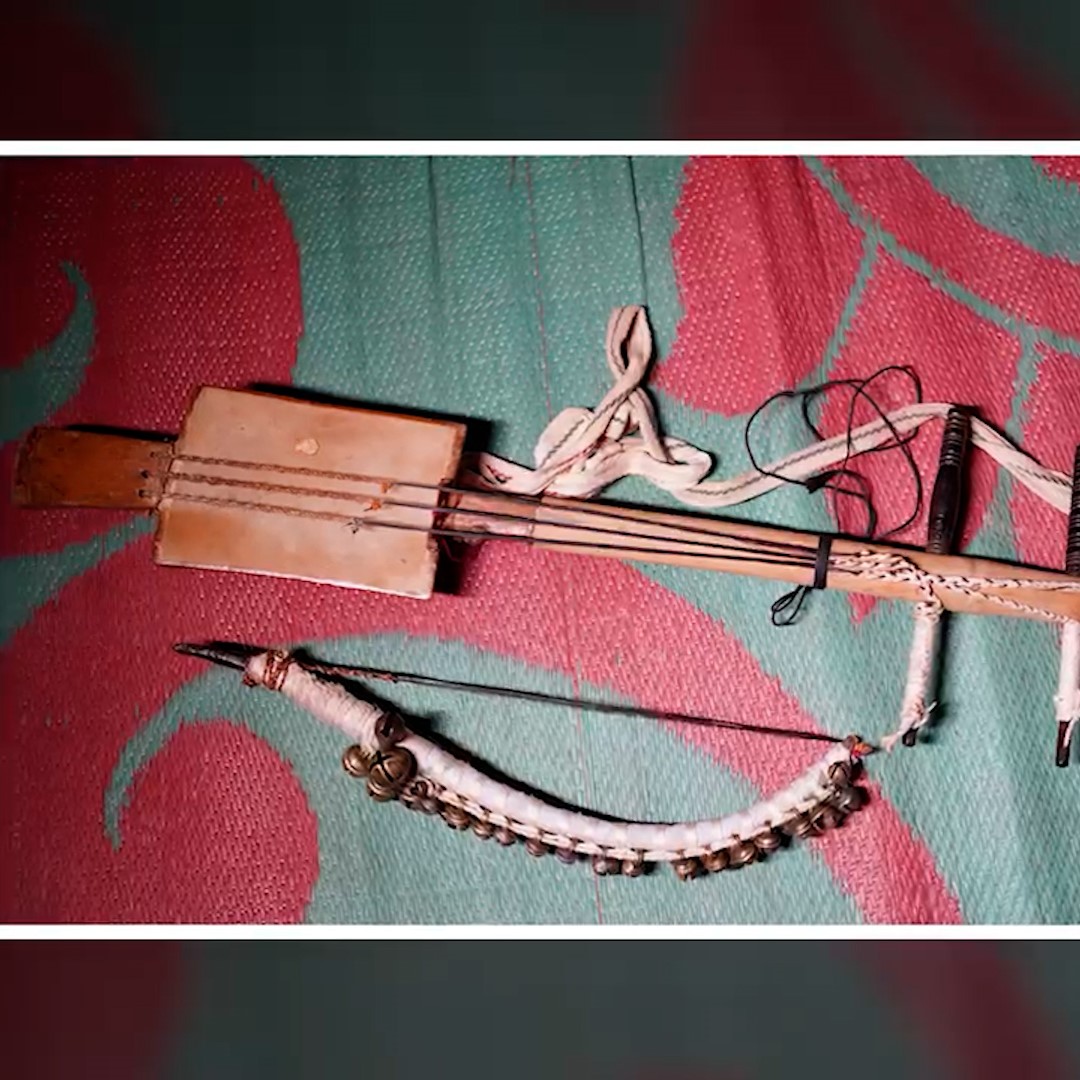
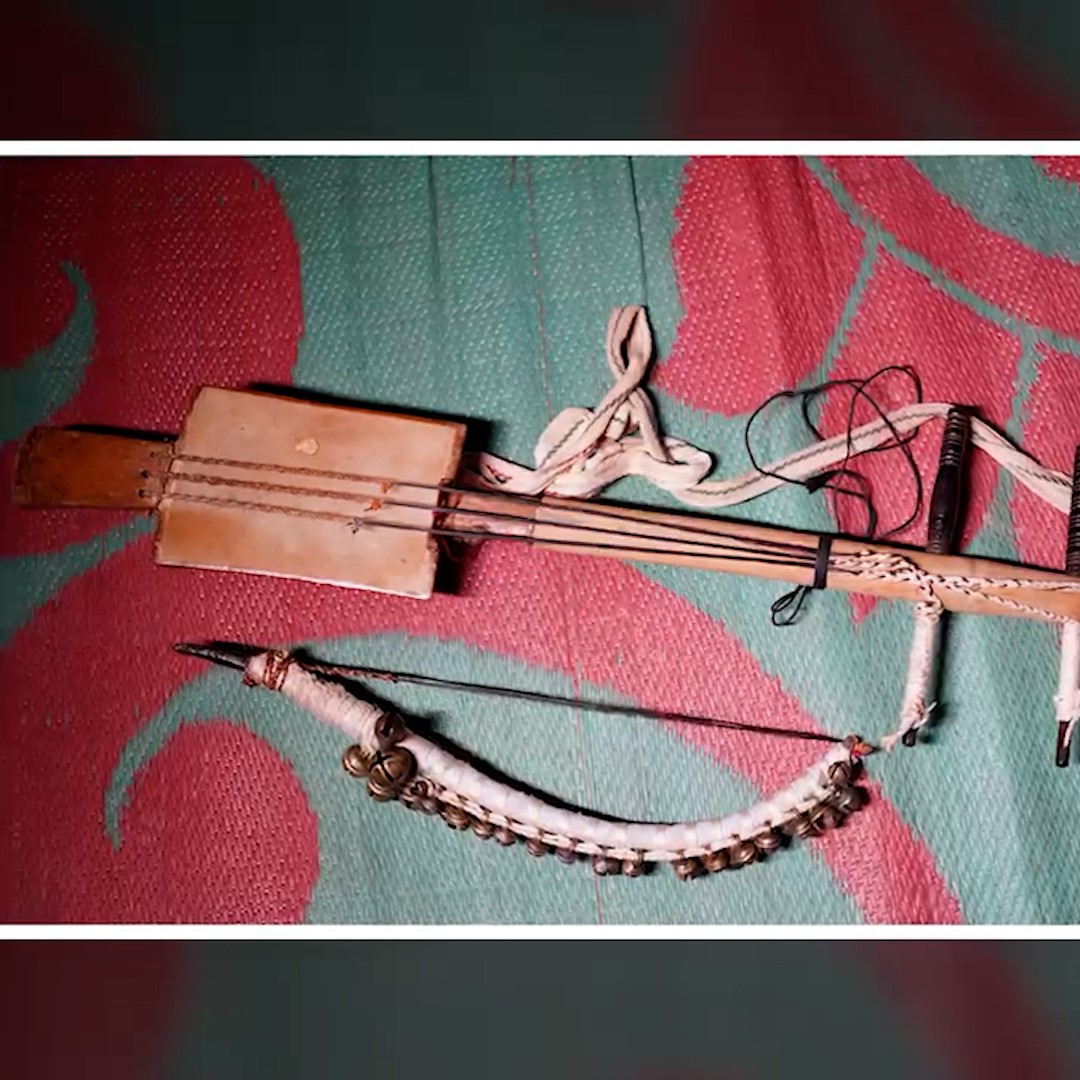
Keekri is two instruments in one: a compound instrument consisting of two elements, the Dobra and the Kujja.
Dobra
Description: The Dobra is a 30-inch-tall vertical instrument, consisting of two parts: a bamboo hose and a wooden body. The first part is a 20-inch Bamboo stem attached to a 20-inch-long wooden Dobra (excavated in the shape of an oblong conical bucket) which serves as the body. The open end of the Dobra is carefully covered with the inner membrane of the intestines, or uthri, of a cow destroyed by a tiger." This unusual wrap is thought to improve the voice of the instrument.The two sides of the Keekri are tied together by three strings: an iron wire and two horsehairs. These cords run from the wooden riser, or koda, upon the Dobra to the mod (or pidi) upon the bamboo-pipe. For tension setting and sound quality, three 10-inch-long wooden rods, called pidi, are inserted in the hollow inside of the bamboo hose. These rollers can be used to do up the strings in order to get the right sound.
Kujja
It consists of two parts: the first, Kujja, of wood, is of the form of a transplanted bison's bone with the second, Kujja, obtained from the horn and is of the shape of a sickle. One of the two ends of the Kujja is bound with a horse-hair rope to form a handle. Rhythmic jingles are produced in playing by the chuduk gaagrang, a set of small bells fastened to the spine and by the persaang gaagrang, which are larger, and laid along the back between the spine and the handle. The big set of bells is equal to the seven (7) number of gods or velpus believed by the bards to have been adored. For example, a bard from a four-God worship tradition adds four large bells to his Kujja.
Materials Used:
Dobra:
The Dobra is usually built from bamboo and wood. The middle section of bamboo — about 20 inches long — has been hollowed and serves as a resonating body. It is coupled to a wooden container, which functions as a sound booster. The use of bamboo is indicative of the natural resources they have access to, and also of their close ties to their environment.
Kujja:
The Kujja, which is an important part of the Keekri, is made of a bison horns in the shape of a sickle. This horn is of much use in creating the unique notes, which are staid with the Keekri. It’s got strings of horse hair, which expand the tones when playing.
Strings:
It uses a triangular set of three strings, two of which are horsehair strings, which are tightened to change pitches. The strings are crucial for sound generation; they are carefully tuned so that the instrument is in tune.
Membrane:
The wide-open mouth of the Dobra is sealed off with a thinly stretched inner membrane from the intestine of a cow (preferably picked up from animals that were killed by a tiger, it is a traditional belief). This special material is largely responsible for the tonal characteristics of the Keekri.
Bells:
The Kujja is adorned with small and large bells which jingle and improve the metrical nature of Kujja. There are as many big bells as gods the bard venerates, proportional to the sacred nature of the instrument.
- Stringing and Tuning: The strings are carefully fastened, tuned to the desired pitch, a kind of deep musical theory and acoustic knowledge.
Keekri is a cultural token for the musicians from Thoti community more than anything musical. It is commonly used for occasions such as festivals, rituals, and community talaquets. TheKeekri Making process is a community activity and mirrors the tribe's collective approach to life and cultural roots.
Sound Mechanics and Acoustic Features of the Keekri
Material, design and playing technique combine in interesting ways to produce the incomparable sound of the Keekri- a traditional Thoti percussion instrument. The anatomy of the Keekri, how it produces sound, and the acoustic characteristics that cause its distinctive tone are described.
Sound Production Mechanism
It is generally made from sound-enhancing materials such as wood or bamboo and especially when made from wood has a hollow in the middle of the body which amplifies the sound. When the Keekri is hit, the surface vibrates, sending vibration through the air as sound waves. These oscillations, you can think of them as fast particle back-and-forth movements in the substance, produce sound waves with certain properties, including amplitude, frequency and wavelength.
- Vibrations and Sound Waves: When Kujja strikes the Keekri, the force with which it strikes causes the Keekri's surface to vibrate. This motion disturbs the air around the speaker, generating sounds waves that travel to the listener's ear. The height of these waves is the volume and their rate of return is the pitch. In Keekri, lower pitch creates deeper sounds, and high pitch carries shriller sounds.
- Acoustic Features: The sound of the Keekri is explained with relation to its specific design and playing methods. All Keekri's have their own unique sound depending on size, shape and the type of materials used. Thicker or heavier materials may produce a fuller sound, and lighter ones may offer a brighter sound. The interaction between partials and harmonics results in the richness of the sound
Playing Techniques
Also, the way the Keekri is played is very important for the sound. Musicians use different striking positions (hands) and Kujja play angles in order to obtain various tones and rhythms. Its tone is colored by the player's technique and by the guitar's construction. Its local crafta is complex, differentiating the beats made by the Keekri and weaving it into the Thoti cultural fabric.
Traditional Playing Techniques of the Kee
Its distinctive playing technique is steeped in the traditions of its community, the Thotis, who have been the keepers of the culture for centuries. The skills of Keekri players include knowledge of the proper style of holding the hands, sitting position, knowing the hand-strokes and rhythm patterns of its music.
Basic Hand Positions
- Grip Technique: The Keekri is usually played with one hand placed on the wooden body, Dobra of this instrument and the other hand is used to manipulate the strings by a closed ivory scroll, Kujja. Grip should be firm, yet relaxed to easily transition between notes.
- Finger Placement The fingers should be placed correctly to make the sound clear. Plucking the strings is done with the index and middle fingers--the thumb may provide some action. This setup helps strike the right balance between the raw power and subtleness, allowing the player to switch between softer chords and aggressive rhythm guitar.
Playing Posture
- Seated Position: Players generally sit in a comfortable position, cross-legged on the floor or on a short stool is common. This ensures solid support and unrestricted arm movement -- a must for performance.
- Alignment and Relaxation: Keeping your back straight and shoulders down will aid your in breath control, which is particularly useful as Keekri performances have one singing along. Correct placement helps alleviate fatigue for long gigs while facilitating good airflow for vocal projection.
Rhythmic Patterns
- Basic Rhythms: The traditional Keekri music involves different types of rhythms which are the basis for all accompanying dances and ceremonies. These patterns can be anything from relatively simple one-beat patterns to more complex phrases, typically expressed with the word “ta-ka” or a similar formation.
- Improvised: High-level players often improvise, incorporating their own style into predetermined patterns. This also serves to feature one's extraordinary talents, as well as an opportunity engage the audience and other musicians.
- Collaborative Playing: The Keekri is frequently played by groups of musicians and is a unison instrument. This collaborative process works not only to establish a collective identity, but to nurture community ties by uniting people in musical celebration and ritual.
Practice Session: Basic Beats and Rhythms on the Keekri
In this rehearsal, students will participate in activities created to learn the basic rhythms of the Keekri which are necessary to playing traditional Thoti music. The Keekri’s patterns can be used as a base to accompany dance routines, stories, and community events with drumming. This practical approach will not only increase their technical master of the rhythms, but help them to appreciate the cultural importance of the rhythms as well.
Objectives of the Practice Session
- Understand Basic Rhythmic Patterns: Learners learn to feel some primary rhythmic patterns related to Keekri. These are sort of stock beats typical of Thoti music which can be modified according to one’s need be it function like rituals, festivals, and so on.
- Develop Coordination and Timing: By keeping the hands busy, this tambourine exercise will improve the coordination and timing of students on any percussion instrument! This will also help emphasis the interdependence between voice and other instruments of Thoti’s collective music making.
- Encourage Improvisation: Though the emphasis of the course is on learning basic beats, students will be encouraged to play with improvisation – to take the learned patterns and riff. This may also serve to emphasize the organic process of folk music, the form of expression in which it blooms.
Practice Steps
- Warm-Up Exercises: Begin with simple warm up exercises to make the students acquainted with the touch of the Keekri and its strings. Playing Dobra and finger placements You can do this by practicing (no set rhythm) the Dobra and exploring finger placements.
- Learning Basic Beats: Teach three to four basic rhythms like:
- Single Beat Pattern: Emphasizing a solid "thump" on the Dobra combined with a snappy string pluck.
- Syncopated Pattern: Introducing pauses and off-beats to a collection of sounds which forms a much more complex rhythm representing the spontaneous nature of Thoti music.
3.Group Practice: Place students in small groups to work together on the rhythms. This will promote cooperation and provide a chance for them to listen to how different components can sound together.
4.Performance and Feedback: Following practice, each group will perform the rhythm for the class and receive helpful feedback. This is crucial to reinforce learning and increase performance in skills.
The rhythmic exercises that have been taught in this screenshot are not just technical exercises, but belong to the Thoti tribe’s traditional practice. Each beat and rhythm carries historical and emotional significance, often associated with storytelling and the assertion of communal identity. Studying these rhythms will help students get a feel for how significant music is in Thoti culture, which will deepen their learning.In this module we learned about the physical construction of the Keekri, its material and the process of producing sound in the instrument. The special sound of the Keekri, its acoustics, traditional playing techniques, hand positions and rhythmic patterns were dealt with. The students next learned about rhythm and tempo.Juice Privacy Next Class Social and Religious Importance of Keekri We will study, in the next section you will know about the social and religious importance of Keekri. It will concentrate on the religious aspect of Thoti tribe, importance as a symbol of social solidarity and Keekri’s role in significant social activities like marriage.
Social and Ritual Significance of Keekri
The Keekri is a deeply social and ritual instrument for the Thoti tribe of Telangana and a crucial part of their cultural character, in unity and identity. The Keekri, not just an instrument, but the soul of Thoti culture– used in all the religious rituals, festivals and marriages. At harvest festivals, weddings and other such gatherings, the syncopated beat of the keekri fills the air with a sense of merriment and camaraderie, bringing people together in celebration through shared cultural experience. The sound makes by the Kikri is interactive and encourages participation, which is thought to create a feeling of togetherness and oneness with tribe members.Ritually, it is commonly played to provide music for the spiritual practices and as the Keekri’s sound sounded in the spiritual ceremonies, it is considered to attract blessings from the gods and ancestors. It's very important for traditional dances as it helps form the beat that facilitates the synchronization of the dancers' movements and leads to a harmonious situation that allows dancers to give oneself to the spiritual and emotional experience that the entire dance is. It's is how cultural storytelling is passed on keekri are carriers of the trib's history-values-beliefs.Also, Kukri represents social harmony, reflecting the interrelation between tribes. It participates in public festivals where it identifies its members with common origins and mutual obligations. As tradition is menaced by modernity, the role played by Keekri in rituals and the social setup underscores the necessity for its conservation. If we acknowledge the social and ritual significance of Keekri and give it its due we can prevent it from dying and make it a living monument of Thoti's way of life for cast generations to be identified with truth and social struggle.
Ritualistic Importance of Keekri
Ritualistic Significance of Keekri Awake Not the Conqueror in Ancient Indian Culture, life and death are energized by the seasons and it has important bearing on human existence and is reflected in their festival, rituals, myths, astrology and in their calendars.Keekri is a traditional musical instrument for the Thoti community, which is used in their religious and seasonal activities. The Keekri in the Religious Life of the Thoti: Rituals and Festivals This section focuses on the spiritual dimensions of the Keekri in the life of the Thoti people, particularly with respect to its role in rituals and festivals.
Role in Religious Rituals
- Spiritual Connection: Keekri is significant to a number of religious rituals and occasions during which it is used by the practitioners to seek blessings from the gods and forefathers. The beatings of the Keekri sound create a religious ambiance between this world and hereafter. The music in such rituals helps transport participants into a state of trance—affecting a spiritual experience, relationships, and the like.
- Ceremonial Functions: Life cycle rituals, like marriages, births and initiation are performed with Keekri. It is offered alongside prayers and sacrifices serving as a representation of the community's thankfulness as well as reverence for the gods. In the harvest festivals, Keekri is used to enjoy the abundant with rhythmic music to which everyone continues with fast beats with singing.
- Mythological Narratives: The music being played on Keekri depicts mythological stories key to the identity of Thoti. They are told and retold in ceremonies, buttressing cultural values and collective histories. So, the Keekri is also a medium to maintain these stories and these story-tellers alive and to live with them as integral part of the spiritual life of the society.
Seasonal Festivals
- Celebration of Cycles: Keekar is particularly important during the changing (of the wheel of) agricultural seasons and is used to mark the rites and rituals. Not only are these festivals about the harvest, they are also a reminder of the community's reliance on the natural world and the gods who control it. It is the rhythmic beat of the Keekri that infuses the gala of Dussehra with heart-felt joy and thankfulness.
- Community Identity: The Keekri festivals also encourage community identity among people of several families and sub-clans. The common music and dance promulgate unity, for people engage in communal rituals that acknowledge their cultural heritage. So, the Keekri is serving as a boding factor, augmenting the social attachment and village solidarity.
Symbolism and Communal Harmony
The Keekri Social instruments are greatly used to establish unity and solidarity in the Thoti community. Its application at different community occasions develop unity, enriches cultural life and stimulates collective cooperation. Here's a look into the way these themes are embodied by the Keekri.
1.Symbol of Unity
- Shared Identity: The Keekri is a common cultural identity for the Thoti tribal community. It acts as a gathering place that festivals and other rituals dot its scenes are made for community gatherings. Keekri makes the play more cooperative in these get-togethers and thus makes the tribe bond more and helps in making them feel as the people of the same tribe.
2.Promoting Social Cohesion
- Collective Engagement: Keekri fosters community spirit, it is a team activity Players Share Their Tags or Links. Their inclusion in dance and music at social functions improve social relationships and strengthens the community network.
3.Identity and Resistance
- Cultural Continuity: The role that the Keekri plays in preserving the Thoti cultural heritage is important to the Thoti identity. In mastering the instrument, they bring their instrument to life, not just in preserving something, but in connecting with culture. This continuum is crucial for coping with the challenges of modernisation.
- Adaptation and Relevance: which is still redefined by the Keekri, as it is being influenced by modern trends. This flexibility provides the Thoti with an opportunity to represent their cultural identity and stay in touch with their roots, and thus sustains their sense of community.
Keekri's Role in Social Events and Celebrations
The Keekri is a musical instrument of much local social importance, it is played on the occasion of Thoti festivals and rejoicings. It’s central to major life events, from the moment a baby starts gurgling its first “da-da” to the last breath an ill person takes. Here’s how the Keekri gives you more of these social interactions!
1. Community Bonding Activities
Festivals and Gatherings: Keekri is the focus of many community festivals such as spring harvest festivals and religious congregation etc. The rhythm creates a sense of community, promoting cooperation and shared experiences. The collective playing of the Keekri acts as a social cement and ensures that important cultural roots in the Thoti community are kept alive.
2. Rituals of Connection
- Healing and Unity: The music by the Keekri is sometimes a type of medicine that is used to unite people when people are sick or getting better, or to also unite people after fighting. The music of the Keekri is said to bring about healing, reconciliation and restore harmony among the members of a tribe. The sense of unity and the comeback story feed into the broader narrative of community>s downfall and rebuild.
- Educational Role: Other than being a festive occasion Keekri has an educational character as well. It also serves as a way for the younger members of the community to learn to play the instrument and pass on their musical traditions and techniques. There are two cultural mechanisms at play in the process of connection and pride boosting between generations.
In this unit, we studied how important the Keekri was for the religious and social life of the Thoti. The Keekri tree unites the members of Thoti caste together and is an inseparable part of all their religious functions, seasonal festivals, marriages and social affairs, and as such, fosters social solidarity in them.Next Fill in the blank will be on the Decline and contemporary challenges of the Keekri culture. We will talk about the conservation, the role of cultural institutions and the public, profile of Keekri artist community and possibilities of younger generation taking it forward in future. A summary will be given, and a conclusion will be drawn.
Preservation and Revival of Keekri Tradition
The preservation revival of the Keekri tradition among the Thotis is an imperative and timely initiative as this unique drum instrument is now facing several threats in the evolving scenario of increasing modernization and industrialization. Urbanization, modernization and changing cultural patterns have eroded the traditional use of the Keekri and risk loss of importance in society rituals and festivals. But there are efforts to revive this cultural legacy and keep the decibel of Keekri loud and clear across generations.Local organisations, including NGOs and cultural bodies, are making efforts to propagate the significance of the Khekri and the traditions woven around it. Training programs and workshops are being held in order for the next generation to be schooled in the making of the instrument and its musical idom. These projects are designed to inspire young people to learn traditional playing styles and perform in local festivals that play Keekri. What's more, new partnerships and joint recordings with modern artists are giving its traditional rhythms a modern twist, making the Keekri appeal to younger generations too.Artisans and workers who make the Keekri are also central to the revival efforts - their skills and creativity are essential to keep the instrument in quality and authenticity. The community can also play a part in maintaining tradition by promoting their works in exhibitions, cultural events and supporting these artisans so their skills can continue for generations.“Finally, it is about collective initiatives to appreciate and enjoy the cultural identity of the Thoti tribe.” The Keekri is very well capable of becoming once again a unifying and resilient symbol for the people of Telangana through learning, inclusive community participation, and creative linkages that will ensure it is there for Posterity on the cultural map of Telangana.
Decline and Modern Challenges
The age-old practice and transfer of Keekri instrument under the Thoti community has undergone a lot of stress and strains due to impact of modernization. A number of issues have led to the diminishing of this cultural heritage, and that involves how the Keekri is played as well as how the Keekri is woven into community life.
1. Impact of Modernization
- Changing Lifestyles: The way of life among tribal community in general and the Thotis in particular underwent changes as a result of the Cultural Revolution and the Urbanisation which transformed the process of living in tribal communities. Younger generations, affected by the modern way of life, are not into traditional pursuits as much anymore, which in turn has led to a weakening of the process of inheritance of the music of the Keekri. The music is dying out with more people leaving the traditional places and moving to towns for better prospects.
2. Decline in Practitioners
- Aging Population of Practitioners: The pool of skilled Keekri players is shrinking as most of the today’s musicians are old and less of the young folks are interested in learning the instrument. This shortage of experts, is affecting the continuity of Keekri playing as well, which is central to preserving cultural depth of the instrument.
3. Economic Pressures
- Changing Economic Structures: Shifting economic structures: The economic travails that the Thoti community is compelled to face have made the choice of alternative livelihoods, which generally come at the cost of practices like that of playing Keekri. With traditional music seen as less of a viable option, a traditional activity must also be less so
Preservation Initiatives
Culture conservation and revival efforts of Keekrfi amongst Thoti are undertaken by different actors including cultural groups.
1.Community-Led Initiatives
- Cultural Events and Workshops: Local community-based organisations organise culture events and workshops on the importance of the keekri in the Thoti culture. These could include opportunities for younger generations of musicians to hear the instrument in action, play it in hands-on sessions, and interact with elder musicians who share their skills, techniques, and tunings.
2.NGO Involvement
- Funding and support: A few NGOs are dedicated to cultural conservation and provide financial assistance to the project initiatives for the promotion of instruments like the Keekri and other tribal instruments. This funding is often used to provide support to organizing festivals, craft fairs and education programming, drawing attention to the community value of the Keekri.
3.Profiles of Keekri Craftsmen
- Artisan Challenges: The artisans of the Keekri come with their set of challenges that throw them off from making it to the market.… Artisans if Keekri From the list of challenges that they face, viability of raw materials and genuine craft recognition the most challenging. Local materials, like the ones many luthiers need, are becoming more and scarcer, putting the production of the instrument at risk.
4.Collaborative Projects
Intergenerational Learning: Many preservations activity takes place on inter-generational learning, the idea of young members learning directly from Keekri players and craftsmen. The purpose of these features is to make sure a strong link between past and present is established so that traditional skills may be transferred.
Future of Keekri in Modern Times
The Keekri, an ancient durable instrument of the Thoti's rich cultural heritage has its own problems and prospect in the contemporary society. The fate of Keekri depends on the way the younger generation and modern-day musicians approach this traditional instrument.
1. Engagement of Younger Generations
- Cultural Education: Schools and local programs can be important to the education of the younger Thoti in their musical heritage. Introduction of the Keekri in school curriculums, especially in the form of music classes or cultural workshops, can result in sensitivity and liking towards this traditional instrument. Local NGOs typically run these programs to ensure that culture is retained; children learn not only how to play the Keekri, but also its meaning and history.
2. Integration with Contemporary Music
- Fusion with Modern Genres: You won’t have to worry so much about your favorite lute ending up in the historical storage museum if it gets integrated into some other modern music genre form. Musicians can reach larger audience by mixing western/cultural sounds with a mix of pop/fusion, or any other genre associated in world music. This combination not only introduces a new life into the landscape of Keekri but also a younger audience who would not otherwise be familiar with tribal music.
Collaborative Performances: Joint Performances between traditional Thoti musicians and modern artistes can provide a new platform to the Keekri.
3. Use of Technology and Social Media
- Digital Platforms for Exposure: Social Networking Sites: The original form of Keekri and Thoti musical tradition can achieve tremendous visibility through all social media sites. Younger musicians can reach worldwide audiences through platforms like YouTube, Instagram and TikTok, which offers them the ability to share videos of performances, tutorials and behind-the-scenes footage. This exposure can help in drumming up interest in the Keekri for collaborations and for performances at all kinds of events.
4. Cultural Festivals and Community Engagement
- Promotion Through Cultural Festivals: Organizing or participating in cultural festivals are powerful means to unite the community and the audience passion about traditional music. Programmes can include Keekri performances, workshops and exhibitions of the rich Thoti culture, generating a vibrant atmosphere for interaction and learning
- Local and Global Partnerships: Building a partnership with cultural institutions and organisations will enable spread and meaning of the Keekri to be beyond the boundaries of locality destroyed.
Conclusion
As we inspired the Keekri, Thoti tribe’s traditional percussion instrument from Telangana, it is important to look at its historical significance, struggles, and the few avenues of hope that it has, and encompasses hurdles that are stifling its voice. The Keekri is more than an instrument, it’s an indispensable fragment of the Thoti people’s identity expressing their history, beliefs and their shared purpose of being in existence with its lively beats. To appreciate its significance, one needs to have an acute sense of the context in which it operates and to acknowledge the different dynamics that endanger its perpetuation.It is essentially a part of the vibrant Thoti tribe culture. It has been the centerpiece of their celebrations, rituals, and community gatherings for centuries. The unique sensory of the instrument has become a beautiful background for the wayang (traditional dance forms) to increase the performances that tell love, harvest, and social unity stories. The Keekri helps to allow people to belong, to be a part of their community and family, through bass lines and treble lines. An art form that captures the feelings and stories of the Thoti, it is an integral aspect of their culture.Keekri tradition has continued in the face of a number of obstacles, making it's survival no less miraculous. Urbanization and modernization, especially rapid in recent decades, have in turn eroded traditional practices, with young people nowadays more drawn to contemporary entertainment and music. This change not only downplays the significance of the typical instruments but hinders the passing on of cultural heritage from one generation to the next.Also, the demand for modern instruments has overtaken the Keekri, causing artisans to struggle for their livelihoods. With the market for handmade instruments on the decline, the knowledge of how to make the Keekri is at risk, adding another layer of disconnection between the community and their cultural history. this reduction in workmanship reflects on the quality and distinctness of the instrument which is so crucial in maintaining the individuality of the sound of the Keekri.Thankfully, there are currently a number of projects aimed at saving and revitalising the Keekri tradition. Local NGOs, arts organizations and tribal councils are working to educate Thatis about the value of the Keekri. They are planning workshops and education programs to educate younger generations about the history, construction, and playing techniques of the instrument. Through pride in their cultural heritage such projects seek to inspire and encourage the younger generation to be proud and maintain the traditions of the Keekri.One of the means to revive the popularity of the Keekri could be to include it in modern music trends. If traditional musical partners with contemporary music, more audiences can be appealed to. Through the representation of the Keekri in contemporary music, it becomes important, relevant and attracts younger generation who don’t consider it culturally significant.Artisans are contributing immensely towards reviving of this craft. Their skill in manufacturing the instrument is priceless, and it is important to sustain them with likeable programs. Through showcasing their work at cultural festivals, exhibitions and online forums the community can make certain that the skill becomes known and valued. And training programs can also be introduced to pass on the traditional crafting secrets so that the art of Keekri instrument making can be preserved in the hands of a new generation of craftsmen.However, highlighting the role of craftsmanship and intricacy required to create the Keekris is a critical step towards preserving the instrument. Every craftsman has a unique style and technique which could be documented and represented as an essential aspect of the craftwork. Every individual has a story, a unique journey crafted into the very Keekri it ultimately ends up creating, and the process deserves to be appreciated, emphasized, and celebrated. This not only brings into alignment a feeling of mutual respect and appreciation from the community to the craft, but also from the craftsman’s end towards the craft and the very community they sell to. Our school has actively collaborated with the UNC students to integrate these findings into our curriculum. Community members must be actively engaged so they learn how to play the Keekri, recognize their new role as “masters” and henceowners of this culture, and take pride in their culture. Engage with local homosexual events, among others. If children learn the history of the Keekri from a young age, they will have a better foundation for cultural participation and identification and could get a good understanding.:Event: spread these and other events on a regular basis depending on the time and availability of the affected parties.Sustainability is fundamental if the Keekri tradition is to be sustained. This involves not only saving the instrument, but also the knowledge, stories, and ceremonies surrounding it. By recontextualising the Keekri with new age cultural narratives, we can make relevancy also appeal to local and global followers. The Keekri is beautiful and rich in culture diversity, and as the world struggles with matters of identity, culture and community, it indicates that diversity is beautiful and it often makes us richer.To conclude, the Keekri is a very potent part of Thoti tribe culture, and it’s utmost preservation is essential for preserving the soul of the tribe's identity. In the face of modernization and urbanization, challenges persist, but the concerted efforts of the community, craftspersons and cultural sangams, may win the battle to revive and sustain it as a cherished tradition. Tradition and innovation The Keekri on one hand can keep its tradition and on the other hand it has to be accepted as an innovative step that can add value in the lives of the Thoti people which in turn can perpetrate as a binding force of the past, present and future.” If through dedication, collaborations and shared understanding, we can make the rhythms of the Keekri echo for generations to come, we can celebrate not just Thoti tribe's past, but also its future.In this module we have learned about the influence of modernity on the Keekri practice. The initiatives taken by cultural organisations, NGOs and the community to save it, the condition of Keekri artisans and the hurdles being confronted for keeping it alive were deliberated upon. Its survival in contemporary society, meanwhile, is also questioned.