

SERJA INSTRUMENT
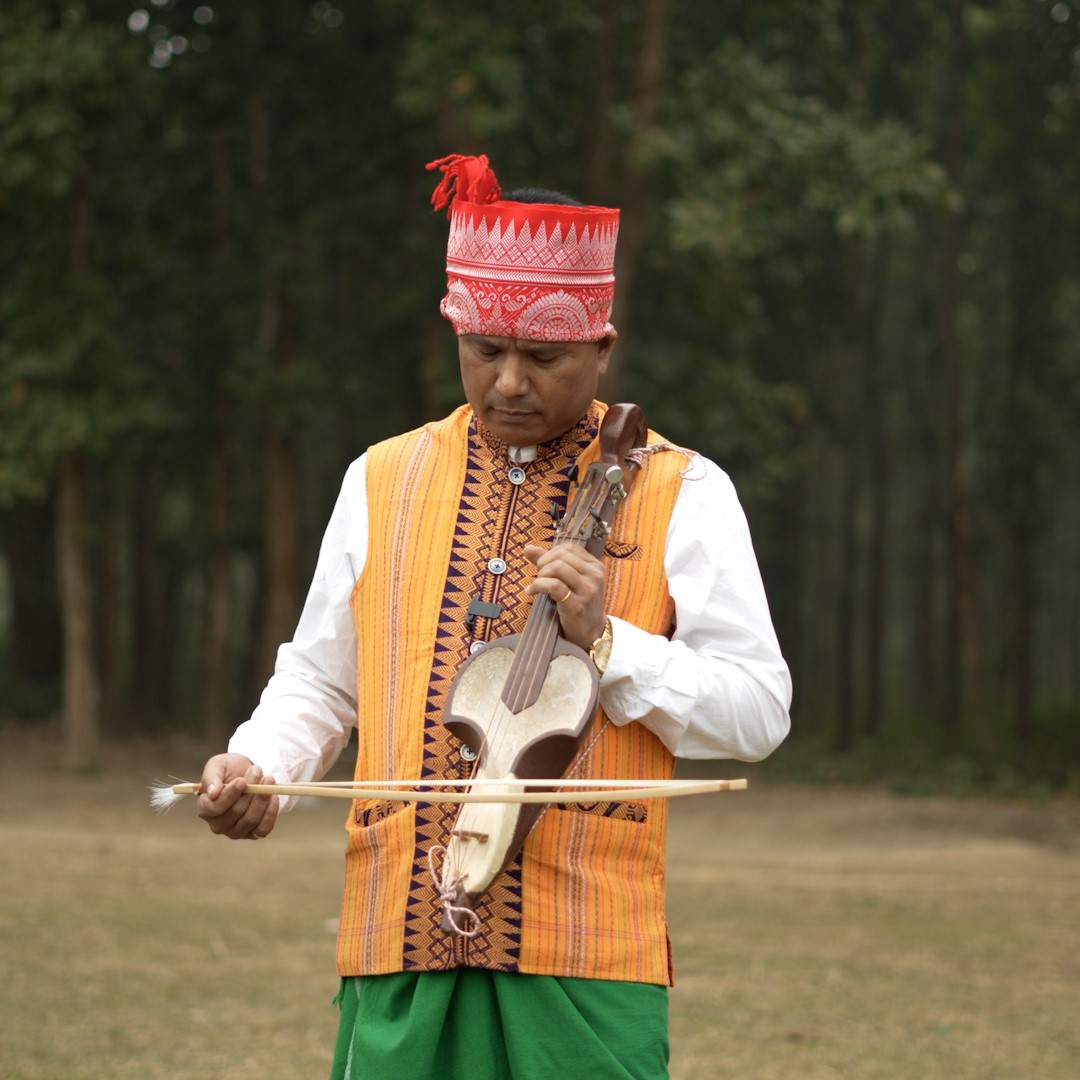
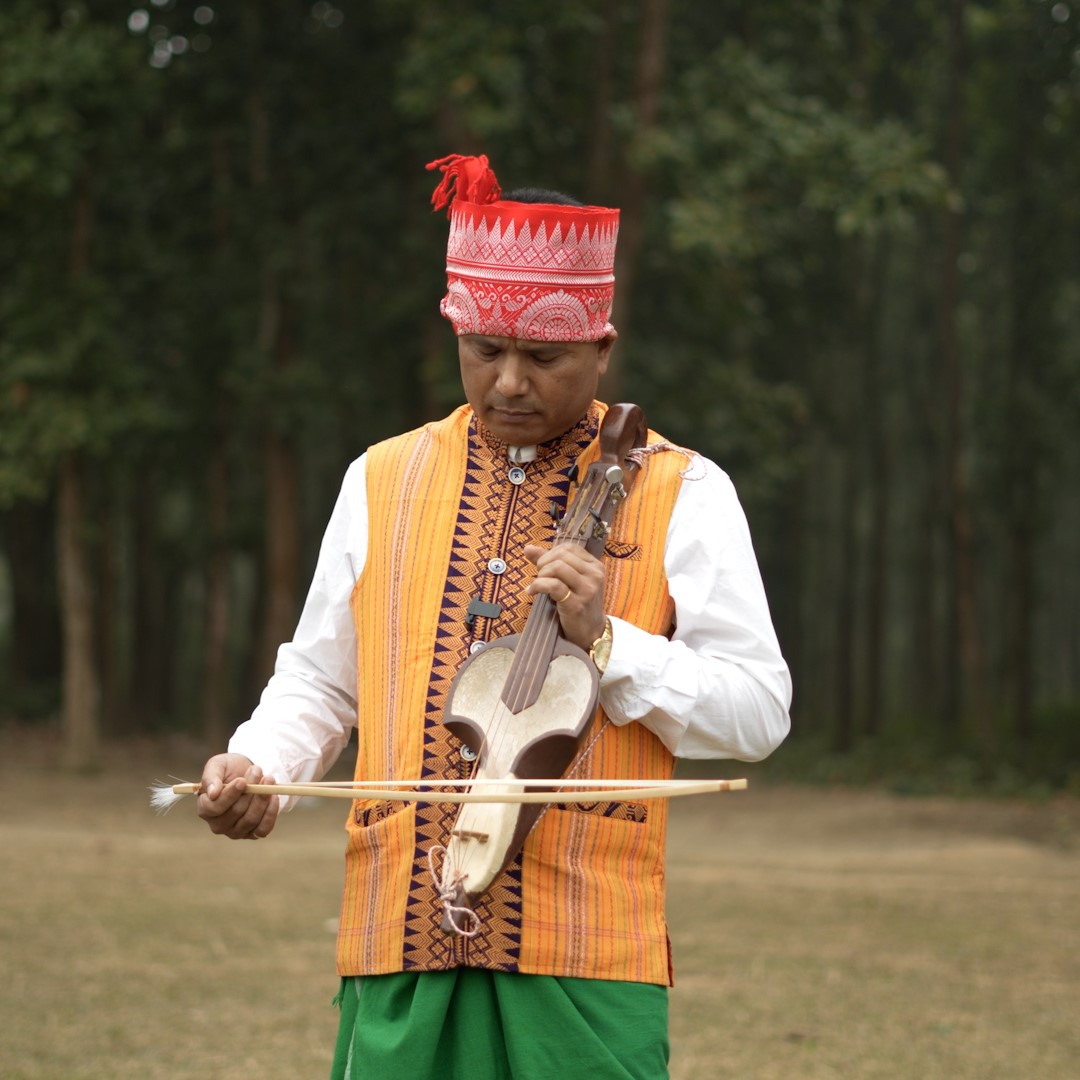
This advanced module explores Serja, a traditional bowed string instrument of the Bodo tribe. The course covers its historical evolution, cultural relevance, and intricate craftsmanship, including the materials and techniques used in its construction. Learners will gain practical insights into playing techniques, tuning methods, and the instrument’s role in Bodo folk traditions. Additionally, the course examines modern influences, preservation challenges, and ongoing revival efforts. Designed for enthusiasts and scholars, this module provides a deep understanding of Serja’s musical and cultural legacy.
 Most Viewed

What you'll learn
- History and Cultural Relevance : Understand Serja’s origins and its role in Bodo traditions.
- Construction and Materials : Learn about the unique materials used in crafting Serja.
- Playing Techniques : Explore bowing methods and sound production techniques.
- Role in Folk Music and Dance : Discover Serja’s significance in Bodo rituals and celebrations.
- Tuning and Maintenance : Learn traditional methods for tuning and preserving the instrument.
- Modern Influences : Analyze how contemporary music impacts Serja’s usage.
- Preservation Efforts : Understand challenges and initiatives in sustaining Serja’s legacy.
Couse Features:
- In-Depth Cultural Exploration : Comprehensive insights into Bodo heritage.
- Detailed Craftsmanship Study : Step-by-step breakdown of Serja’s construction.
- Practical Demonstrations : Guidance on playing techniques and tuning.
- Folk Music Integration : Understanding Serja’s role in traditional performances.
- Expert Insights : Contributions from musicians and cultural historians.
- Multimedia Learning : Engaging videos, images, and interactive content.
- Self-Paced Study : Flexible learning tailored to individual needs.
Who Should Enroll
- Musicians interested in traditional string instruments
- Ethnomusicologists studying indigenous music
- Cultural heritage researchers
- Instrument makers and craftsmen
- Bodo culture enthusiasts
- Folk music and dance practitioners
- Anyone passionate about preserving traditional arts
Description
SERJA INSTRUMENT
Introduction to Serja and its Origins
The rarity: The Serja is a special musical instrument which signifies the generous tradition of the Bodo tribe. During this part of the course, we shall explore history, origin and cultural relevance of the Serja. The Serja musical instrument is more than that to the Bodo community since it is a religious and cultural tradition. It is mostly performed when using traditional Bodo dances and rituals like Bagurumba, Baisagu and Domasi dances, in which, its sweet music adds some mystery, therefore, making it sacred and emotionally satisfying.
History and Evolution of Serja
Serja is a string instrument mostly bowed which has a very strong legacy in the culture of Bodo tribe of Assam, India. It is more than a musical instrument as it acts as an expression of traditions, spirituality, and identity of the community. Its development has been a result of interaction between the historical tradition of Bodo people and their artistic creativity. As it has changed to keep up with the times Serja has been a firm pillar of cultural continuation going though generations without losing its essence. This quest seeks to find out the history, the creation, and the cultural role of the Serja in terms of Bodo society, the evolution, and the future of Serja.
Origins and Early History
The Serja history dates back centuries ago having been developed in the line of the agrarian and ritualism activities of the Bodo tribe. In Northeast India, Bodos which is one of the largest ethnic linguistic group have long been close to the nature. They used the natural resources wood, bamboo, animal skin to make their everyday requirements including tools, instruments, things of daily uses by living amid the green forests and fertile plains of Brahmaputra Valley. The Serja has thus come into development due to circumstances in this environment: it is made of Ejar wood (lagerstroemia speciosa) and animal hide.
At the very beginning, the Serja must have been rather primitive, and could have been utilized in the course of communal meetings and during religious acts. Like, most native instruments in other cultures, it could have been originally used as a means of communicating with gods and spirits of ancestry and nature. Its form and playing styles improved with time as early Bodo musicians made it a complex string instrument that could convey the joy, sorrows, and spiritual aspirations of the community. Serja possessed a special design that made it very unique in the sense that it also incorporated a bowed mechanism with percussive undertones which made it very outstanding in terms of enhancing the musical inheritance in India.
Design of the Serja
The Serja is a cogent manifestation of the Bodo workmanship and artisanship. Every Serja is handmade scrupulously where the selection and use of materials to guarantee its level of resonance and unique timber is carefully observed. The Serja is hollowed out of wood that is light, but strong, called Ejar to make the body. Stretched at the lower side of the instrument is goat skin thus becoming the sound board that augments the tone of the instrument.
Traditionally the Serja will have three or four strings, which were usually made with natural fibers, muga silk (a highly regarded material indigenous to Assam) or horse hair. The bow is made of bamboo and hair of a horse is used to make strings which gives the instrument the unusual bowed effect. The notes played in the strings are deeply, rich and resonating which matches the rhythmic bangs of the Kham (a traditional drum) and the light notes of the Sifung (a bamboo flute).
Members of the Serja take the skills of artisanship through the generations where the skills and knowledge needed to construct the instrument are handed through generations. Every bit of the Serja is well balanced to create harmony between the sound and aestchartics. Its construction, robustness and calibration of sound makes the instrument a valuable possession among Bodo home.
Cultural Significance of the Serja in Bodo Society
They use the Serja in the Bodo community and it has a lot of cultural and spiritual significance. It is not only a musical instrument it is incorporated into religious practices and festivals and other social gatherings. During the traditional Bodo dances and performances the Serja is mostly performed, including:
- Bagurumba: Bagurumba or the butterfly dance is danced by the Bodo women to glorify nature and cooperation in the community. The Serja lends the lyric framework of the beautiful rhythmic dances of the dancers.
- Baisagu: One of the popular springtime festivals, held in this season at the beginning of the Assamese New Year, the Serja is presented in its most colourful version. The rituals and dances of the festival are accompanied by the music performed by musicians that stimulate the themes of fertility and happiness as well as thanks to a good harvest.
- Domasi Ceremonies: Rituals Beliefs in the ancestral role is a ceremony, so the Serja is also performed with a ceremony with such rituals. The musical sound of Serja establishes a connection between the real and the spiritual world.
Sound of the Serja is considered to have had a spiritual meaning, able to bring blessings and shoo away negativity. It strengthens the Bodo people with its relationship with the world around them, their gods and their customs. The Serja tells stories about the nature, love, and victories struggled by the community through its sounds.
Evolution of the Serja
The Serja has experienced slight changes with time yet does not lose the cultural identity. Its simple form has always been the same over several centuries, yet some changes in the elements of the construction process and playing skills can be noted due to the change in the cultural influences.
- Traditional Techniques: In a traditional way, the Serja was made only of natural materials so wood, silk, and animal hide were used. The creation of the Serja was initiated with the transference of knowledge through word of mouth between the artisans to their apprentices; hence, authenticity.
- Effect of the modern materials: New materials have emerged such as synthetic strings, better glues which have made the Serja stronger and less expensive in very recent times. Some artisans have adopted these kinds of materials, but there are still purists who believe a traditional use of components should be used to maintain its original sound.
- Musical Innovation: The present-day Serja band players have adapted to new forms of music in terms of innovation, where they combine age-old Serja music with one featuring folk, classical, and fusion music. Such flexibility has translated the Serja to the newer audiences, surpassing its familiar settings.
- Cooperation: Other Traditions: The music of the Serja has been affected by the wider settings of music of Assamese and Northeast Indian. Examples of string instruments are violin and sarangi that have made the Bodo musicians to design and come up with new playing styles and compositions.
Revival Efforts
Other musicians and cultural activists have over the years made a critical contribution in keeping the Serja alive. There is still a number of traditional musicians who are habitually trained by their families; they preserve the musical legacy that goes with the instrument. These artists can perform their skills in local festivals and cultural gatherings which gives them exposure and encourages young generations to sculpture.
Efforts to revive and promote the Serja include:
- Workshops and Training Programs: To display the art of Serja playing and crafting to the younger generation, workshops are arranged in cultural places and educational institutions in Assam.
- Documentation: The history, the method of construction and technique of performances of the Serja have been documented by the scholars and researchers in both written and digital formats ensuring the survival of Serja in these forms.
- Cultural Festivals: Festivals including Bodo Sahitya Sabha and local dance festivals include Serja performance with the aim of promoting Serja as a part of Bodo culture, along with popularizing it to a large audience.
Modern Adaptations and Challenges
Although the Serja is still a fundamental element of the Bodo culture, it is being under pressure in the modern world. Globalization, urbanization, and young people are less interested in it impose a risk to its existence. The skills of handcrafting and performing on Serja are threatened to be lost as many of the traditional artisans can find no markets to sell their handmade craft.
Nevertheless, the Serja is not disintegrating too, and this is made possible with cultural enthusiasts and musicians who are introducing it in contemporary music. Theologies That The Serja has given new opportunities to reach more people include performance with international artists and the rising popularity of the world music scene, fusions. This has also been contributed by online platforms, documentaries and social media platforms who have raised the awareness even more leaving one to renew their interest in this classic instrument.
The Serja is the demonstration of the great cultural heritage and artistic creativity of the Bodo tribe. Having centuries of traditions, the instrument is a symbol of affiliation of the community with nature, spirituality, and ancestors. The Serja has a long history and has evolved since its modest beginning as a primordial bowed instrument to being a modern day instrument used in modern music, but has maintained its colors and roots. Its tunes still elicit life into Bodo festivals, dances, and ceremonies tying togther stories of happiness, devotion and togetherness.
The survival of the Serja will demand such a social action towards its preservation of history, its education, and its cultural appreciation. By preserving the Serja through revival activities, performances, and education, the Bodo people can be able to sustain the entity as a living testimony of their existence in future generations. This way, this amazing tool will remain an instrument of inspiration, connection, and symbiosis with people of different cultures and in other periods.
Cultural Relevance in Bodo Tribe
The Serja is more than just a musical instrument to the Bodo tribe. It is a crucial part of their cultural identity, representing a bridge between the past and present, spirituality and community. The Serja, a traditional bowed string instrument, has been at the heart of Bodo cultural life for generations, playing an integral role in the tribe’s festivals, rituals, social gatherings, and identity formation. Understanding the cultural relevance of the Serja requires exploring its multifaceted role within Bodo society, especially its significance in rituals, its role in community bonding, and its function in preserving Bodo heritage.
The Role of Serja in Rituals and Ceremonies
The Serja plays an indispensable role in Bodo tribal rituals and ceremonies, symbolizing not only artistic expression but also spiritual connection. In various religious and cultural ceremonies, such as the Bagurumba dance, the Serja becomes a vessel for spiritual communication. The Serja is not merely a musical instrument, but a medium through which the community connects with their ancestors, deities, and the spiritual forces that govern their lives.
Social Gatherings and Community Identity
In Bodo society, music plays a pivotal role in social gatherings, and the Serja is often at the heart of these occasions. Whether during festivals, celebrations, or informal get-togethers, the sound of the Serja brings the community together, reinforcing social bonds and fostering a collective sense of identity. The Serja is not just played by professional musicians but is an instrument that is accessible to all, particularly those who have grown up in the cultural tradition of the Bodo tribe.
Spiritual Connections and Symbolism
The Serja is not only a symbol of Bodo musicality but also holds deep spiritual significance. In the Bodo worldview, the relationship between music and spirituality is profound, and the Serja acts as a conduit for invoking the divine. The act of playing the Serja is considered a form of worship, where the music produced is believed to carry the community’s prayers and desires to the gods. The instrument’s resonance with nature’s rhythms—whether in the forests, fields, or rivers—represents the deep connection the Bodo people have with the natural world.
Intergenerational Transmission of Knowledge
The Serja also plays an important role in the intergenerational transmission of Bodo cultural knowledge. Elders in the Bodo community serve as custodians of the musical tradition, passing down the knowledge of how to construct and play the Serja to younger generations. Learning to play the Serja is a rite of passage for many Bodo children, as it represents their connection to their ancestors and their cultural legacy.
Information about the Bodo Tribe
The Bodo, also called Boro, is a Tibeto Burman speaking ethnolinguistic community indigenous to the north eastern Indian state of Assam. They belong to the larger family of the ethnolinguistic group of the Bodo-Kachari and are scattered in northeastern India. Most of the population of the Bodo inhabit principally in Bodoland Territorial Region in Assam, even though the Bodo people are also present in other parts of Assam and in Meghalaya.
Language
To give a language example, the Bodo language belongs to Sino-Tibetan family of languages, in Boro-Garo group of Tibeto-Burman branch. It is an official language in Assam and the Bodoland Territorial Region and a distinction of being one among the twenty two languages of the Eighth Schedule of the Indian Constitution.
Religion
The natives had the Bathouism faith that involved the worship of the highest god Obonglaoree. Shijou tree (belonging to the Euphorbia genus) is the sacred tree of Bathouism and is worshipped as god- representation. The other thing that Bathouism stresses on is the five powerful and mighty aspects of God, that is, the land, water, air, fire, and ether, as everyone is important in the cultural life of the Bodos.
Bathouism further postulates that prior to the establishment of universe, there existed nothing besides a huge empty space where the supreme being, also referred to as Aham Guru or Anan Binan Gosai or Obonglaoree, resided formlessly. Aham Guru wanted to exist in a physical form and fell into the nothingness in a human form to make this universe.
History
The Bodo are an ancient ethnic group that migrated and settled down in north eastern India. When Kamarupa was torn apart in 12 th century, the different ethnic people like Bodo occupied the different ecological areas. The frequent visits and mixing of these groups resulted in the creation of unique yet merged culture in form of culture. Although these rulers impacted the Koch, the Ahoms, the British colonialism, the influence of such state organisations as the Mughals on the Bodos was not so strong so that Bodos could avoid assimilation in the financial system of these powers.
In the 16 th century, Koch dynasty reinforced itself in the areas inhabited by the Bodo people. The Ahom kingdom also reached western Assam in the 17 th and 18 th century, where it made settlements with Bhutan to share the administrative rule. The traditional way of life that existed among the Bodos was however severely affected by the colonial British regime, which in the late 19 th century prohibited the farming practiced in the forests due to which a large amount of habitat near the forests was lost.
Demographics
Bodos is estimated to have a total population of 1.45 million with 4.53 percent of Assamese population. Most of the Bodo people (nearly 68.96 %) live in the Bodoland Territorial Region of Assam, while the total population of Bodo region is of 3.15 million. With 25 percent of the population being Bodo, their population in Kokrajhar the capital city is very low.
Folk Tradition Mythology
There is not just cultural importance of Bodo folklore and mythology. The Padma Bhushan winner Suniti Kumar Chatterjee had held the Bodos as a lineage of Vishnu (particularly the avatar Baraha) and Mother Earth (Basumati). During ancient times they were called Kiratas during the Epic period.
Social Groups
The Bodo community has many clans that are distinguished by the role they play and the contribution within the society. Some famous Bodo clans are:
- Swargiary: The priestly clan responsible for religious duties.
- Basumatary: The land-holding clan.
- Narzary: Associated with jute cultivation and supply.
- Mosahary: Known for the protection of cattle.
- Goyary: Associated with areca nut cultivation.
- Owary: Responsible for the supply of bamboo.
- Khakhlary: Known for the supply of Khangkhala plants used in Kherai Puja.
- Daimary: Associated with rivers.
- Lahari: Involved in the collection of leaves for festivals.
- Hajoary: Inhabited hills and foothills.
Construction and Design of Serja
Material Selection for Serja
-
Wood from the Ejar Tree (Lagerstroemia Speciosa):Ejar tree is another species found only in Southeast Asia commonly known as Lagerstroemia speciosa or Pride of India and is especially one that is admired because of its solid and hard wood. The main body and neck of the instrument of the Serja is made out of the wood of the Ejar tree. This tree is selected because it is strong and will allow it to bear the stress and tension which the instrument will be going through when performing.
-
Animal Skin for the Soundboard:The Serja makes use of animal skin besides wood, this skin stretches over the resonating body of the instrument. Normally, goat skin or any local animals are used. The skin is well tanned and chosen according to its thickness, elasticity, and resonance ability. The animal skin does not become a victim of choice as it is aimed precisely at its acoustic qualities.
- Bow hairs, horse hair:An important part of the Serja is the bow that is directly related to the production of the sound of the instrument. The bow is constructed of horsehair, and is used to pull the strings in a direction across the strings producing friction and vibrating them producing a sound. Horsehair would be preferred since it contains the right degree of flexibility and texture required in effortless interaction with the strings.
- String Material:Although the exact type of the string used in the Serja can differ according to the region and craftsman, the strings should characteristically be of natural fiber, i.e. gut or silk. The materials of choice were vibratile and they would give the sound a rich resonant tone when bowed with the horsehair bow.
- Other Materials:Depending on the variant of the Serja, the craftsmen can apply other elements, including copper or brass to adorn or to further customise the instrument. As an example, the tuning pegs or another piece of the mechanism might be made as the metal to guarantee a certain durability and accuracy of the tuning procedure. The artistic taste, such as inlays and decorations, testify to the artistic taste of the Bodo tribe, proving once again the interdependence of the purpose and the shape in the sphere of traditional instrument making.
Serja structure
Materials and Buildin
Body Construction: The Serja body is mainly made of wood extracted in the Ejar tree (Lagerstroemia speciosa). Born in this area, this tree is highly appreciated by its strength and resonance that are the keys to producing a robust and long-lasting instrument. The Ejar wood selected is because it will deliver full, thick sounds when played, which is essential in acoustics needs of the Serja. The carving of the body is manual and traditional tools are used which are handed over generations. The Serja has been hollowed at the back of the body to give better sound and the wood has not been treated and the natural grain and texture of the wood is visible unlike being covered by a finish which is the hall mark of the tribal craft. The exciting cavity complements the tonal quality of the instrument that makes sure that the sound produced is clear and deep.
Strings: The Serja has usually four strings and historically, the muga silk or the fibres of the bark of the Sterculia villosa tree were used to make the threads. The strength of this silk, muga, known popularly as golden in color, is particularly a great material in the state of Assam and the adoption of serja with this material connects the instrument with rich culture of the state. The tension of such strings would be set correctly so that the pitch can be right. In contemporary versions of the Serja, metal strings can also be applied, although contemporary musicians desire the original natural, organic sound of silk or plant strings. The strings are stretched across the bridge and play a determinant part in the overall sound of the instrument, so that after the musician can create a filthy to being a .
Skin Covering: The lower part of the Serja body is covered with the animal skin, that can be usually goat and sometimes it can be iguana as well. There are multiple purposes of the skin since it contributes to the tonal richness of the instrument and also to the resounding performance of the instrument when being performed. The skin is very carefully pulled and attached to the body, and was a part of the sustainable attitude of the tribe in its finding of the material by utilizing what is up in their natural surroundings, which is done by the Bodo tribe. The covering of the instrument also increases durability, because hollowed out wood is covered and the safety of Serja is strengthened in general.
Structural Components
Neck and Fingerboard: The Serja has a long neck which they are attached through the body of the instrument. The neck is generally cut out of a hard dense wood, which of course needs to be sufficiently stiff, to support the strings. The fingerboard or the part on which the player presses strings in order to alter the pitch is polished to perfection to enable the movement of the fingers. The Neck length and its curvature is crafted so that the musician has sufficient control of the pitch so that he/she is capable of playing fancy lines in the music performance. The instrument has a balanced sound production with its neck matching that of the body.
Bridge (Ghora): Bridge or the ghora as it is commonly called, is an important part, which carries the strings, and conveys the movement of the strings to the body of the Serja. The bridge is traditionally made of wood and it is sculptured to perfection to make sure that the vibration of the strings is translated most efficiently into the body, improving the overall quality of the instrument sound. The layout and arrangement of the bridge is also very important in giving the tonal product of the Serja, and even the rather slightest alteration of the design, can make important difference to the sound of the instrument.
Tuning Pegs (Puthis): The Serja has four tuning pegs or puthis to be precise which is used to tighten each string. These pegs are usually wooden and they are mounted into the headstock region of the instrument. The musician is able to rotate the pegs (therefore pitching the strings lower or higher) to help him or her tune the instrument properly. The pegs play an important role in making the Serja sound at the right pitch, since it gives the player the precision he wants. These tuning pegs are normally carved by the traditional Bodo craftsmen in an eye catching nature enhancing the beauty of the instrument.
The Bow: Use of Horse Hair for Sound Production
Serja is a type of traditional bowed instrument belonging to the tribe Bodo and it has strong cultural background and creative workmanship. The bow is one of the characteristic attributes of the Serja, and it is significant in sound production. Its bow is made with horsehair, a traditional most commonly used bow string material on the worldwide bowed instruments, such as violins, cellos, and native stringed instruments, such as the Serja. In this part; we shed some light on the significance of horsehair on the Serja bow, its significance in sound creation and why it has remained such a favorite among this ancient instrument.
History and Culture of Bowed Traditional Instruments on the use of Horsehair
Horsehair on bows is an ancient and has become part and parcel of string instruments sound production in various cultures. The tail hair of horses is treasured and has special properties that make the horsehair the best instance to use as bowstrings. To the Serja, as with most of the traditional bowed instruments, the horsehair is not just a thing but rather part of their culture which gives the feel that the Bodo and the surrounding nature are very close to each other. The Bodo tribe with whom the Serja is made has always employed items available in the surrounding to create musical instruments thus making sure that the Serja is as much a representation of their art as that of their environment.
The place of horsehair in Sound production
The main purpose of the bow in the work of any string instrument is to frict (with the strings) in order to make it sound. To the Serja, the horsehair bow plays an important role in bringing about these vibrations. As the bow is placed over the strings of the Serja, and pulled over them, this creates friction between the horsehair and the string; and the movement of the string is not much unlike that produced by the bow on a violin. The strings actually vibrate emitting the sound which is amplified by the instrument.
Why Horsehair?
The use of horsehair over other substances, i.e. synthetic fibers or natural fibers made out of plants, is due to the set of properties that it brings to the instrument, which are strength, flexibility and texture. Horsehair is stronger than most plant fibers, and hence was suitable to the physical demands of bowing a string instrument. It has a natural texture that guarantees a stable grip on the string, hence, necessary to give a clean and clear sound. Also, the natural elasticity of hairs enables it to stretch and get back into its original form giving it high durability in the long run and no effect to its effectiveness.
The Horsehair Bow maintentance
When taking care of the Serja bow, the musicians are to ensure that they save the quality of the horsehair because it may wear with time. This will be quite essential with instruments such as the Serja which have a conventional instrument structure the use of the bow being an essential component of such an instrument. It has to be rehaired on a regular basis, i.e. the old horsehair has to be replaced by new strands to guarantee that the bow still produces the best possible sound. Rehairing of a bow needs a special skill and the degree of rehairing can influence the overall tone of the instrument.
Tuning Techniques
Tuning Mechanism: The Tension and the Slackening of the Strings
The Serja attains required tuning by means of the string tension that can be tightening or loosening of the strings. There are normally two or three strings in the instrument but this remains dependent on the geographic difference or nature needs of the performance. Every thing has its own particular note or pitch and the musician tunes the instrument to the required pitch by tensioning the strings.
Tightening the Process of the Strings
The process of tightening the strings of the Serja is the process of making the string to have tension on it by turning the tuning pegs on the top of the instrument. The pegs come in small holes into the body of the Serja and these pegs are adjusted manually by turning the pegs. As a response to this, by rotating the pegs, clockwise, the strings will tighten therefore increasing the pitch of the sounded note when the string is struck.
Path to Untying Strings
On the other hand, tightening the strings entails turning the tuning pegs in the contrary way, anti-clockwise. By loosening the string this connects the string in the opposite direction, causing it to produce lower pitch. The method is employed to bring down the tone of the Serja when it is tuned very high or when the adjustments need to be carried out in adapting it to the general pitch of the ensemble.
Tutelage by Ear: A Conventional Way
The tuning of the Serja is mostly based on the ear and musicians have their ears that help them in determining that the strings are in tune. This form of ear tuning is in the form of traditional practices and requires years to master. The Serja lacks electronic tuners or pitched notes; unlike the current instruments which rely on tuners or fixed notes a musician playing Serja needs to listen to the sound and apply changes basing on memory knowledge of music intervals and the seesionisms of notes to one another.
The role of the Bow in Tuning
Although the strings of the instrument represent the main way of tuning the Serja, the bow is also very critical in the overall production of sound of the instrument. To generate the sound, the bow traditional made of the horse wool is rubbed on the strings, and the strings generate the sound that is produced on the body of the instrument. The baroque Serja can also be affected by the tension of the bow hair affecting the timbre and the tone. This may not have a direct influence on the pitch but changes in how hard one is bowing with changing speeds and string tension may influence the general quality of the tone. Musicians use varying tension in the bow hair according to how or how well they want to be heard pitchwise and in terms of sound quality.
Problems in tuning of the Serja
Serja tuning goes at times not easily. The wooden body of the instrument, which is made of Ejar tree (Lagerstroemia speciosa) adds to the resonance of the sound, but it also refers to the fact that the Serja is subject to variation of humidity and temperature. These environmental elements are capable of influencing the resonating capacity of the wood and, consequently the tension of the strings. This may add difficulty in fine tuning, particularly, during outdoor concerts or weather changes.
Sound Production and Techniques of Playing
Simple playing techniques of Serja
The Serja, a classical compilation of a few strings instrument of the Bodo tribe in Assam, India, forms part of cultural heritage of the land. In order to master playing techniques of it one has to learn about its structure, ways of tuning, and the differences of bowing.
1. Instrument construction and arrangement Instrument measurement and assembly
The Serja has a round shaped wooden body with an- forward bent Whale scroll, like the violin. It usually contains three strings that are conducted with the subject of Alstonia scholaris and Artocarpus heterophyllus timber. It is activated with the help of a bow made of horsehair without which the instrument cannot achieve the sound that provides it with its established acoustics.
2. The Serja playing tuning
Close attention is to be paid to the proper tuning that is important to reach the necessary tonal quality. The strings are tuned by turning the tension, this is by either tightening or loosening the strings. It is a modification, which influences pitch and resonance of an instrument.
3. Bowing Techniques
Sound is highly affected by the bowing technique that is used on Serja. The instrument is a bow consisting of horsehair used by the players in order to enhance the tone, which is deep and resonant. The bow is also pulled across the strings with more or less pressure, and at a different speed thus producing various types of dynamics and expression.
4. The fundamentals of Playing Techniques
- Posture and Positioning: Serja should be taken comfortably; the instrument should be placed on the shoulder or on the collarbone. Keep a free posture to ease the flow of fluids.
- Left-Hand Fingering: Fingers are to be placed along the strings to give higher and lower pitches. Use practice scales and easier melodies to strengthen and develop finger strength and finger dexterity.
- Right-Hand Bowing: Bow across the strings using the bow experimenting with different patterns of bowing to make your sounds. Regular clearing is also important so that clear tone is attained.
- Rhythm and Timing: Acquire a sense of rhythm by playing the instrument with the help of a metronome or by accompanying any Bodo music. This assists in keeping time and adds expression in music.
5. Advanced Techniques
- Vibrato: Create a tinge of differences in pitch by shaking the left hand as you press on the string to create some warmth and life in the sound.
- Double Stops: This is when two strings are played at the same time to make the musical composition sound more interesting through harmonies.
- Pizzicato: Here the strings are plucked against by the left hand, it adds flavor to the performance.
6. Instructions in Maintenance and Care
The regular maintenance process makes Serja to be in the right playing situation. Wash the strings and the bow after every playing and store the instrument in a dry, secure place as a structural damage occurs.
The bow: Melodic production
The bow happens to be one of the most important parts when it comes to the production of melodic sounds in the Serja, which is a traditional bowed instrument of the Bodo tribe. The Serja is a soulful and resonant instrument and the sounding achieves playing it by bowing over the horsehair strung strings using the Serja. Interaction between strings and the bow is vital in the production of unique tones of the instrument and therefore the bow presents an essential component in the performance of the instrument.
Material and Bow Outfit And Construction
Bow employed in the Serja is generally of elastic wood generally bamboo, and fastened with horsehair. The texture of the horsehair must also be chosen well when it comes to its durability as it has a great role in the production of sound. The bow is shaped in such a way so as to give the musician the capability to apply tension to the string of his/her accord thus enabling him/her to produce different degrees of dynamics as well as tones, which the musician can use to create an impression of a given musical piece. The horsehair is smooth and this is necessary in creating a steady friction with the strings on the Serja which is a significant part of sound production.
The Production of Sound with the Bow The simplest mode of sound production with the bow is, of course, the mere touching with it of the various strings The slightest touch of the strings is sufficient to produce on the ear the sensation of a musical note
As the bow rubs along the strings of the Serja, string rubbing with clothes horsehair, this produces vibrations, apparently through the vibration of the string with the help of sound waves. The sound will greatly be determined by the amount of pressure the player exerts and speed at which the bow is drawn. The rough, textured horsehair catches the string and plays tightly; a variety of sounds, smooth and mellow to sharp and percussive, is available to the player to rely on the technique.
Bow Tunings and Adjustments
The bow is vital in tuning of Serja. As the instrument is tuned itself, by means of placing varying tensions of strings, so the pressure of the bow upon the strings may affect the timbre by means of its relation to the pitch. The musicians may also adjust the pitch or the timbre of sound by manipulating the bowing characteristics while playing. Tension of the strings also influencing interaction of the bow with the stuff so it is clear that tuning the instrument and taking care of bow pressure are intertwined.
Part in Melody Expression
The Serja is frequently employed to create both musical as well as rhythmic lines in the Bodo music with the bow playing an imperative role in composition of the music. The player weaves with his bow across the strings and draws melodic lines with the flow of which the accompaniment music is in tune. Modulation of the bow can bring in slight variations in the dynamics, vibrato and tone color sections, which enables the performer to put emotional perspective in the piece. Such differences tend to be crucial during ceremonial situations where the music functions both as a worship and a cultural expression.
The place of Serja in Bodo Folk Rituals and Celebrations
Serja, one of the typical bowed string instrument used in Assamese traditional ethnic group, The Bodo, engages in customary interactions and events conducted by the community. It is culturally important and one of the reasons as to why it cannot be done away with during some ceremonies because of its unusual sound.
Part to play in Folk Rituals and Celebrations
The Serja is also a part of various Bodo festivals and rituals, one of which is the Bagurumba dance that is a traditional dance of Bodo people. The dance is accompanied by percussion instruments made by hand, like a long cylindrical drum named as kham a flute and named as sifung, an instrument made of iron referred to as jota, a bowed instrument also known as serja and a bamboo-made instrument called as gongwna. Serja and other instruments, have the melody which is usually used to accompany the rhythmic sounds of drums and flutes thus forming a melodious team into the party mood.
The beginning of Serja in Traditional Bodo Dances
The Serja, a local bowed string instrument of the earthly inhabitants of Assam (India) plays a centralizing part in the cultural fabric of Assam. The uniqueness of its sound enhances the Bodo dance forms especially Bagurumba, Baisagu and Domasi, an indication of strong attachment of the community to nature and spirituality.
Role in Bodo Dances
- Bagurumba Dance
Bagurumba literally meaning butterfly dance is a tribal dance of Bodo which imitates the smooth dancing or flight of butterflies and birds. The dance is largely female and the performers are elegantly dressed in the colorful clothes, beats are accompanied by handmade drums including: kham (long cylindrical drum), sifung (bamboo flute), and Serja. The Serja offers the melodic background enriching the poetic and smooth moves of the dance.
- Baisagu Festival
Baisagu is an important festival of the Bodo community and great believers in it and therefore it is greatly celebrated in the month of Baisakh (April-May). Bright music, dancing and cultural shows celebrate the festival. During these festivities, the Serja and other traditional instruments have a significant role of adding the sweetest music to the holiday and accompaniment of its rhythms.
- Domasi Dance
Another prototype of the traditional Bodo dance is the Domasi which comprises the Serja. This dance, as any other dance, is featured by the rhythm of moves and is supported with the melodic tunes of the Serja, which makes the performance much deeper and emotional.
Preservation, Modern Influences, and Conclusion
Challenges in Preserving Traditional Craftsmanship
Preserving the craftsmanship of the Serja faces several challenges:
- Decline in Traditional Knowledge: The intricate skills required to craft the Serja are being lost as younger generations migrate to urban areas for better opportunities, leading to a disconnect from traditional practices.
- Scarcity of Raw Materials: The S. villosa tree, essential for making the Serja, is becoming scarce due to deforestation and land-use changes, making it difficult to source quality materials.
- Economic Constraints: The time-intensive and laborious process of crafting the Serja makes it less economically viable compared to mass-produced instruments, leading artisans to abandon traditional methods.
- Cultural Erosion: Globalization and urbanization are eroding traditional practices, with younger generations showing less interest in preserving cultural heritage.
- Lack of Documentation: There is insufficient documentation of the Serja's construction techniques and cultural significance, hindering efforts to preserve and revitalize the craft.
Influence of Modern Music on Serja’s Usage
- Fusion with Contemporary Genres: Musicians are integrating the Serja into modern music genres, blending traditional melodies with contemporary rhythms. This fusion has led to innovative compositions that appeal to a broader audience. For instance, artists have incorporated the Serja into fusion music, creating unique soundscapes that resonate with both traditional and modern sensibilities.
- Increased Popularity and Performance Venues: The Serja's inclusion in modern music has expanded its presence beyond traditional settings. It is now featured in various performance venues, including music festivals and concerts, introducing it to diverse audiences and enhancing its cultural significance.
- Collaborations with Contemporary Artists: Collaborations between Serja players and contemporary musicians have become more common. These partnerships have resulted in innovative musical pieces that showcase the instrument's versatility and adaptability to modern music styles.
- Integration into Film and Media: The Serja has been featured in modern media, including films and television shows, often used to evoke a sense of cultural heritage or to add a unique auditory element to contemporary narratives. This exposure has introduced the instrument to wider audiences, increasing its recognition and appreciation.
- Adaptation of Playing Techniques: To align with modern musical styles, Serja players have adapted their techniques. This includes experimenting with different playing styles and incorporating electronic effects, allowing the instrument to blend seamlessly with modern music productions.
Efforts for Cultural Revival and Instrument Preservation
Efforts to preserve and revitalize traditional musical instruments are crucial for maintaining cultural heritage and promoting sustainable practices. In the context of the Bodo community in Assam, India, several initiatives have been undertaken to safeguard instruments like the Serja, a traditional musical instrument made from bark fiber.
1. Documentation and Research
- Academic Studies: Researchers have conducted studies to document the traditional knowledge associated with Bodo musical instruments. For instance, a study highlighted the use of bark fiber in crafting the Serja and its role in marriage ceremonies.
- Cultural Surveys: Comprehensive surveys have been carried out to catalog various musical instruments used by the Bodo tribes, including the Serja, to understand their construction, usage, and cultural significance.
2. Community Engagement and Education
- Workshops and Training: Organizing workshops to teach younger generations the art of crafting and playing traditional instruments like the Serja ensures the transmission of skills and knowledge.
- Cultural Programs: Community events and festivals provide platforms for showcasing traditional music, fostering appreciation among the youth and encouraging participation.
3. Institutional Support
- Collaborations with Institutions: Partnerships with cultural organizations and educational institutions facilitate research, preservation, and promotion of traditional instruments.
4. Media and Digital Preservation
- Documentaries and Publications: Producing documentaries and publishing articles about traditional instruments like the Serja help raise awareness and preserve knowledge for future generations.
- Digital Archives: Creating online platforms to showcase performances and tutorials ensures wider accessibility and interest in traditional music.
5. Sustainable Practices
- Material Conservation: Promoting the use of sustainable materials in crafting instruments like the Serja helps in environmental conservation and ensures the longevity of the instruments.
- Eco-friendly Techniques: Encouraging traditional crafting methods that are environmentally friendly contributes to the sustainability of both the instruments and the community.
The Future of Serja in Bodo Society
The Serja, a traditional Bodo musical instrument, holds a significant place in the cultural heritage of the Bodo community. As we look toward the future, several factors will influence its preservation, evolution, and role in Bodo society.
1. Cultural Preservation and Revival
- Documentation and Research: Efforts are underway to document and study traditional Bodo instruments like the Serja. Research highlights the importance of preserving this knowledge for future generations.
- Cultural Programs: Initiatives by cultural organizations aim to revitalize traditional music, ensuring instruments like the Serja are played and appreciated in contemporary settings.
2. Integration into Modern Music
- Fusion Genres: Musicians are blending the Serja with modern genres, creating fusion music that appeals to younger audiences while retaining traditional elements.
- Collaborations: Collaborations between traditional musicians and contemporary artists are introducing the Serja to diverse musical landscapes, broadening its reach.
3. Educational Initiatives
- Workshops and Training: Educational programs are being established to teach the art of playing the Serja, ensuring its skills are passed down to new generations.
- Curriculum Integration: Incorporating the Serja into school and college curricula can foster appreciation and proficiency among students.
4. Technological Advancements
- Digital Platforms: Social media and streaming platforms are being utilized to showcase performances featuring the Serja, increasing its visibility.
- Online Tutorials: The availability of online tutorials and resources is making it easier for individuals to learn and practice the Serja remotely.
5. Community Engagement
- Festivals and Events: Traditional festivals and cultural events continue to feature the Serja, reinforcing its importance in community identity.
- Local Support: Community support for artisans and musicians who specialize in the Serja is vital for its continued existence.
Conclusion
The Serja instrument of the Bodo culture provides us with a good experience of the exploration of the Bodo tribes in terms of musical art. The Serja is a dance that originated in the Bodo community and has developed throughout the centuries achieving cultural importance as well as musical sophistication. The instrument is a traditional bowed instrument that is a part of the folk music of the people of Bodo since this instrument is a badge that identifies the people and their spirituality. The Serja was traditionally made out of such materials as the wood of the Ejar tree (Lagerstroemia speciosa), and the hide of an animal, which provided the instrument with a very distinctive sound. The Serja is made up of a circular body and a curved scroll which have been designed to perfection in order to give out a unique voice when strung. Another important element is the bow that is made of horsehair and was vital in the creation of sound and the fact that the bow is used to generate melodic tones enhances the workmanship of the instrument.Serja has demonstrated her playing techniques when it is evident that this instrument is not merely a music tool, but rather the main instrument of the Bodo people as far as cultural and spiritual life is concerned. The methods of the Serja playing are rather complex and one has to know how to make a musical sound on the bow reaching the melodic sound by performance in traditions and ceremonies. The instrument is also left at the centre of the Bodo customary events like Bagurumba, Baisagu, and Domasi, by which they use to better the spiritual and festive mood during these ceremonies. These dances and the music they create due to the Serja is an embodiment of how closely the people of this tribe feel connected to the nature, their forefathers, and their customs.Design As far as the design is concerned, the Serja is a very fragile affair which requires expertise of the material with knowledge of acoustics. The choice of the material such as the Ejar tree used to make the body of instruments and the preference to use animal skin to make the resonating membrane have the feature of traditional knowledge passed down between generations. The possibility to adjust the Serja by tightening or loosening the strings is yet another indication of how much detail one would have to pay attention to in order to create a fully functional and appealing instrument in terms of playing melody.Although it constitutes cultural significance, the Serja is threatened in the contemporary world. The situation of the existing traditional craft is endangered by contagions of modern music and loss of inherent knowledge of traditional means by which instruments are made. The emergence of modern musical instruments and music has reduced the status of the Serja in the daily life of the Bodo people particularly the younger generation. There are however efforts that are geared towards restoring the instrument and this is done through workshops, cultural festivals and education. Such attempts are to preserve the instrument in the Bodo society as much as possible through imparting the knowledge and skills to play and make Serja to the next generations.