

Dhimsa Dance
The Dhimsa Dance Advance course explores the traditional tribal dance in detail. The context begins with the origins of Dhimsa Dance and its cultural significance and relationship with the Konda Dora tribe. Then, the course looks at basic components such as music and instruments, movements, and attire useful for the Dhimsa Dance. The course looks at forms, choreography, movements in rhythm pattern, participating as a group and as an soloist project, and presents the process to help the students develop an understanding about Dhimsa Dance in its entirety. The course also discusses change contemporary ideas of Dhimsa Dance, challenges to tradition, development and in present day influences in the form of technology and media. Finally, the course ends with insights into the future, a recap of learning from the course, and summarizes the holistic understanding of Dhimsa Dance.
 Most Viewed

What you'll learn
- Origins and History of Dhimsa Dance : Investigate the origins, transformation, and cultural context of this dance of the people.
- The Konda Dora Tribe : Appreciate the culture, livelihood, and purposes of the Dhimsa people.
- Music and Instruments : Recognize the historical style, musical accompaniment, and rhythm of the Dhimsa ensemble.
- Dance Movements and Techniques : Practice the distinct sequences, formations, and mudra.
- Traditional Costumes and Accessories : Identify the costumes, jewelry, and ornamentation used to tell the story and add to the visual element of the dance.
- Modern Influences and Challenges : Critically reflect on the ways in which Dhimsa has evolved for modern experiences, while ensuring the manner in which it is performed remains intact.
- Performance and Choreography : Demonstrate confidence, while leading both solo and group Dhimsa performances.
Couse Features:
- Comprehensive Curriculum : Comprehensive coverage of the history, techniques, and cultural significance of Dhimsa dance.
- Practical Training : Detailed instruction on the Dhimsa movements, formations and choreography.
- Expert Instruction : Knowledge and experience of the instructors as dancers and cultural practitioners.
- Cultural Immersion : An immersion into the world of Konda Dora tradition.
- Preservation Insights : Knowledge of current actions in support of preserving and promoting Dhimsa dance in a modern world.
- Interactive Learning : Discussions, group learning, and performance response as a group.
- Performance Readiness : Prepare to perform Dhimsa dance in both solo and group performances.
Who Should Enroll
- Folk dance enthusiasts eager to learn and perform Dhimsa.
- Cultural researchers exploring indigenous dance traditions.
- Choreographers and dancers interested in tribal movement styles.
- Music lovers keen on traditional Dhimsa rhythms and instruments.
- Heritage conservationists dedicated to preserving tribal art forms.
- Event organizers and festival planners promoting folk performances.
- Fitness enthusiasts seeking an energetic and rhythmic dance workout.
Description
Introduction to Dhimsa Dance
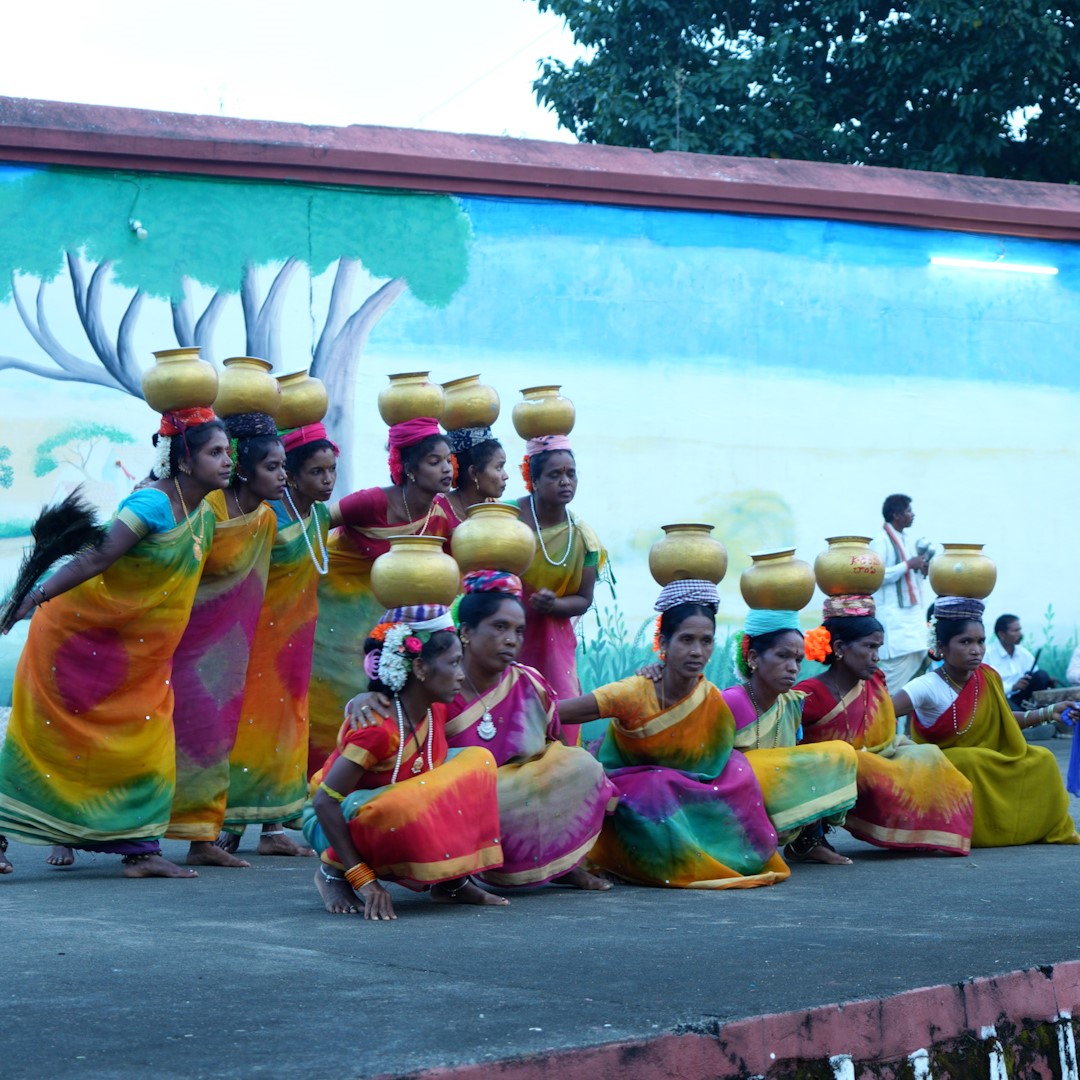
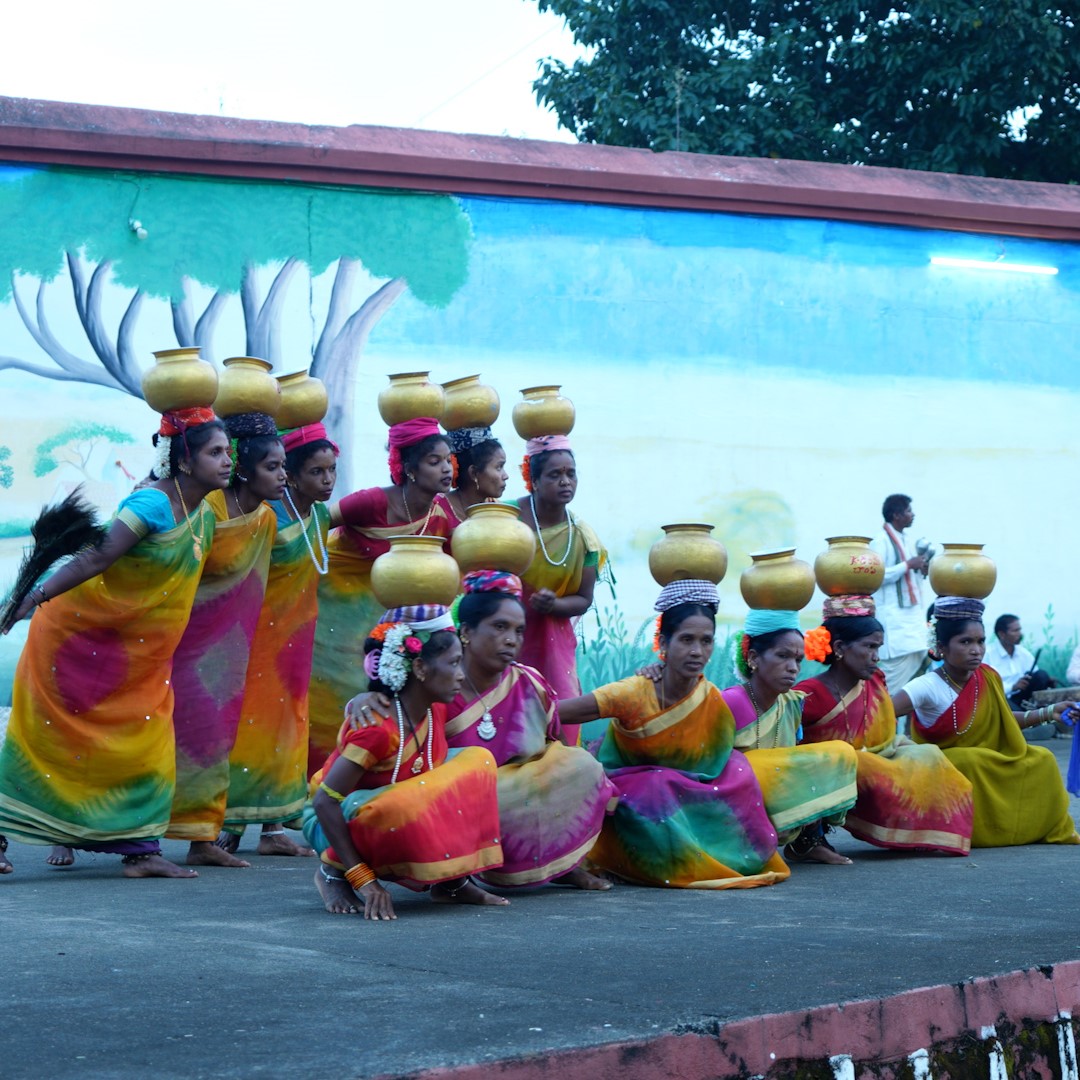
Chompi village, situated in the vast Araku range in Araku Valley Mandal, Visakhapatnam district of Andhra Pradesh, is inhabited by Konda Dora tribe.The Konda Dora's men and women perform the Dhimsa dance which is one of the most well-known dance forms in Andhra Pradesh. The Dhimsa dance originated from the Koraput district in Odisha, and is one of the true tribal dances that completely embodies an attribute of Indian cultural value as the Konda Dora females dance and the males play the music.Dhimsa is performed for any occasion, including weddings, pujas and other ceremonial occasions, takes many forms, and can be performed under many circumstances. It is performed to a background of sound using traditional instruments such as Kirdi, Jodukommulu, Dappu and Mori.Normally, a performance would include 15 to 20 women forming a circle, dancing in praise of the deity for the welfare of their domestic life. They also perform at weddings, wherein the women pray for a peaceful and happy married life. The leading dancer has a peacock feather and brightly colored earthen pots, though they provide interesting visual stimuli in a performance.Dhimsa is performed by 22 different tribes in Andhra Pradesh that conduct each of their unique rituals, which represents the tribal unity of the region. This cultural performance represents the heritage of the tribes and demonstrates how the tribes have maintained their cultural practices.
Origin and History of Dhimsa Dance
Dhimsa Dance is a colourful and lively representation of the Konda Dora peoples' culture, who primarily live in Araku Valley, Andhra Pradesh. Dated and traditional, Dhimsa Dance has historical and ritualistic backgrounds, but dates back to the Koraput district of neighbouring Odisha. Understanding the story and history of Dhimsa Dance provides deeper meaning to the culture of this region and the people.
Roots in the Konda Dora Community
Konda Dora is only one of the tribal population groups sited in eastern India, particularly in Andhra Pradesh. The nature of this community encompasses a variety of bonds that identifies them culturally through unique traditions, customs and art. The Dhimsa Dance is a part of their culture and identifies the community in two ways: as entertainment and as a way to identify and express values of the community collectively.Dhimsa Dance not only performed at religious festivals but also at significant transition points in one's life, i.e., weddings, pujas, festivals that celebrate agricultural seasons, etc. The dance is primarily performed by women and men who are performing the role of musicians. No matter how we choose look at the gendered nature of the dance, it is evident that men and women are equally important participants in the Konda Dora's extrinsic expression of their culture. Women decorate themselves in beautiful colorfully traditional garments, achieve actions that are both elegant yet stuck, as an expression of their soul as a community.
Historical Context and Influence
Dhimsa Dance can be dated back to Koraput district in Odisha, which is home to various native tribal people with rich traditions. Concluded history, Koraput has sustained to host a varied range of tribal influences and has even cleaned into the tribes of the state of Andhra Pradesh, such as the Konda Dora.It is likely that Dhimsa Dance developed from the various tribal dances that belong to the neighbouring states of Odisha and Andhra Pradesh. As the dance evolved, its repertoire of movements, music, and rituals involved the practices of different culture groups absorbing the practices of tribal neighbours. The dance form demonstrates its agrarian base while focusing on the relationships between the Konda Dora and their cycle of agriculture. The rhythms of nature and the rhythms of planting and harvesting are still evident in the dance, as well as the community’s connection to their land.
The Dance’s Structure and Symbolism
The Dhimsa Dance represents a celebration of life generally in reference to themes of fertility, wealth, and togetherness of people. The dance ultimately is performed in rounds typically by a procession of 15 to 20 women, positioned in such a way to result in geometric figure eights. A dancer’s performance is not only a dance; it also is an artistic performance where the dancers’ movements carry meanings. For example, the peacock feather is held by the leading dancer indicating beauty and grace as a component of the dance. The colourful earthen pots carried by the dancers signify fertility and plenty.The accompanying music employs traditional instruments including the Kirdi, Jodukommulu, Dappu, and Mori. This music contributes richness overall to the performance. The music is rhythmically unique to the Dhimsa; accordingly, it guides the dancers’ movements. Music guiding dance performances always happens but this connection illustrates the relationship between art expressions in tribal cultural.
Ritualistic Aspects and Social Functions
Dhimsa Dance is not simply a performance. It is woven deeply into a spiritual and social terrain for individuals in the Konda Dora community. Dhimsa is performed as part of a ritual to invoke blessings on behalf of the Konda Dora community and their members. For example, Dhimsa may be performed during a wedding to invoke the blessings of a happy and prosperous married life. A performance of Dhimsa may also take place during an agriculture festival celebrating a harvest and invoking blessings for future crops. The Konda Dora community dances together, reminding each other of their bonds. When they join together to dance, there is a communal aspect which reinforces their identity while allowing them to celebrate together. It is an occasion for celebration, enjoyment, and cultural expression. The Konda Dora community performs Dhimsa to tell stories that pass along tradition and values. The dance helps community members learn about their heritage, to instill pride in their identity, and continuity.
Cultural and Religious Significance
The Dhimsa Dance performed by the Konda Dora tribe of Andhra Pradesh is more than a form of entertainment due to its deep cultural and religious importance. This traditional dance is a representation of the beliefs, values, and social fabric of the community. Dhimsa Dance is an essential part of the tribe's cultural activities, which include tribally organized ceremonial events like weddings, pujas, and community gatherings. Understanding the Dhimsa Dance's significance in spiritual and ritual ways will allow for a deeper understanding of the Konda Dora tribe culture and their connectedness to the divine.
Spiritual Connection
Basically, the Dhimsa Dance is a way to connect to the divine and connect with nature. This dance serves a purpose whether it’s honouring the deities and what they represent or requesting their blessings and prosperity, health and harmony for the community. The dance contributes to celebrating nature through rhythmic actions alongside melodious music; this creates the ideal environment to enter into a trance like state of spiritual communion with nature itself. It is believed that when a group of people dance, gods and goddesses of the people dance too, they join them in a shared space, thus showing their respect, devotion, and gratitude at this particular time.The spiritual aspect of the performance is more evident during pujas, or worship ceremonies, conducted to appease the local gods or local spirits to protect and bless the community. The dance represents a prayer ritual - every movement less of personal expression and more an aspect of life representing something associated to life itself and nature. For example, the pulsating beats of the gongs help draw a connection to nature for those within the performance. The inclusion of customary musical instruments complements the dance performance and helps enhance the experience of worship. Creating an ideal reverent atmosphere.
Role in Weddings
Weddings within Konda Dora community occurs in a delightful atmosphere filled with diversified customs and rituals. Dhimsa Dance plays an important role in this festival, where it is performed on sangeet (before wedding) event. The families of the bride and groom, their friends and relatives come organised and celebrate the union of the two couples. The dance helps as entertainment for the guests and exemplifies the joy and hope for the afresh married couples. Levirate type of marriage is usually practised in this community.As part of the wedding ceremony, family members, friends and even elders, typically, bless the bride and groom through dance. When women do the Dhimsa Dance as blessing to the bride and groom, it is for invoking good fortune, fertility, and happiness of newly married couple. The lead dancer, which typically has peacock feathers shows off her beauty and grace, embodies beautiful spirit for the bride to invoke purity and all that new journey in being an offsprings. The dancers again form circular formation symbolising togetherness, which is important in tribal communities and social life is the biggest circle of family.The spirited movements and lively sounds embody celebration and love, reinforcing the communal dimension of weddings for the Konda Dora. The act of dancing together further builds shared connectedness and highlights the significance of communal love and support as couples embark on new lives together.
Rituals and Festivals
Dhimsa Dance is performed along with weddings, but also other cultural rituals and events. For example, harvest festivals are sometimes celebrated together with the seasonal celebrations, such as winter harvest festivals. Each festival or celebration has the purpose of commemorating, beliefs, and values on behalf of the agricultural cycles, expressing gratitude for plenty, and providing opportunities for prayer in hopes of good things for the future. These dances are performed as group dances by the local community, at localized events, in a communal space such as a field, a grove, or a water site, which are generally considered relational spaces where local deity is acknowledged. The dances can be part of a larger festival.The dance has many functions in these celebrations: it is entertainment, an expression of faith, and an assertion of cultural identity. The beats and songs of the Dhimsa Dance touch on the connections to nature, fertility, and the ties to the community through the land and the seasons. The dances also embody their environment through physical representation using movements to resemble the flows of the river, the whispers of the leaves, and the elegance of animals - thus establishing a bond with nature.
Introduction to the Konda Dora Tribe
Found primarily in the stunning Araku Valley in the Andra Pradesh state of India, the Konda Dora tribe is unique both in its culture and social status. Most are found in the Visakhapatnam district of Andhra Pradesh - wherever a range of villages intertwine into the hills, including Paderu and the Chompi villages. Konda Dora is part of the indigenous tribes of India that comprise a mixed assemblage of ethnic groups that have their own languages, customs, and ways of life.
Historical Background
The Konda Dora tribe originates from the overall distribution of the histories of the tribal people of Eastern India. This part of India has been one of the important areas of different tribal cultural synecdoche because of the presence of the tribal people.The Konda Dora tribe is depended on agriculture, gathering forest produce and handicrafts. The tribe grows millets along with rice and vegetables according to their traditional methods they learned from their ancestors. The tribal way of life is primarily tied to the natural environment that encompasses their way of living and their customs and rituals.
Language and Identity
The Konda Dora speak a dialect ‘Konda’, but they also speak Adivasi Oriya and Telugu. The Konda Dora identity is defined by language; language is a means of communication through stories and oral tradition that preserve the Konda Dora history and identity. Konda Dora copy many proverbs as well as other sentences that convey the tribe's values, beliefs, and relationship with nature.
Customs and Traditions
The Konda Dora have an extensive body of customs and traditions which govern each aspect of their lives-from birth to death, and everything in between. Their sociopolitical organizational structure is usually in the form of clans which have their own customs and traditions. Marriage is a vital part of Konda Dora society, and is often fairly elaborate, and shows brightest colours of the Konda Dora culture. Wedding ceremonies are not limited to just the ceremonies that unite two families, they are a larger community event that reinforce social networks and collective identity.The Konda Dora celebrate numerous festivals during the year, many of them tied to cycles of agricultural production. Of the numerous festivals held each year, one of the most important are the Choith Porobh/Ette Panduga which celebrate the season of seed charming occurs among co-inhabitants. During this festival, the Konda Dora participate in traditional dances, singing, and feasting in front of the whole village, and showcase several features of Konda Dora culture and community.Rituals and ceremonies are also crucial parts of Konda Dora living, that situate perceptions within an environmental religious framework, and often came from worshipping natural aspects of human life. Konda Dora hold a sense of respect for the environment as they believe the spirits of their ancestors reside within the nature surrounding them. Considering this belief system, they hold different rituals related to ancestor spirits to seek blessings for a productive harvest and protect family.
Art and Craftsmanship
Art and craft are intrinsic to Konda Dora societies, and traditional handicrafts are important features of their economic and social life. The Konda Dora are known as skilful weavers and woodworkers, permitting them to make items that are often useful as well as beautiful. In their crafts, elements of nature are frequently chosen as motifs and designs that depict the Konda Doras' relationship within the natural world.The most obvious example of Konda Dora art is the traditional dances, especially the two-dimensional Dhimsa Dance, performed principally by women. As a form of artistic expression, the Dhimsa Dance incorporates intricate movements with dynamic music and song. Dances provide entertainment, tell stories and commemorate culturally significant time periods, as well as maintaining social relationships within groups.
Key Elements of Dhimsa
The Dhimsa Dance from Konda Dora, a tribe in Andhra Pradesh, is an engaging combination of rhythm, movement, culture and symbolism. Dhimsa is one of the most popular tribal dances in Andhra Pradesh and is mainly performed by women wearing traditional garments in colour and beatifully true to life national treasure. Dhimsa Dance is usually in a circular formation with a systematic foot pattern where dancers are holding hands. The tribal music that accompanies it is produced by tribals using handmade instruments which include Kirdi, Jodukommulu, Dappu and Mori - to develop a rich rhythm and background score. The Kirdi, Jodukommulu, Dappu and Mori are contributed to the music and develop a lively beat to illustrate the dhimsa dancers’ movements and develop a enjoyable atmosphere between dancers and audience. The music and dance create a beautiful experience that engages the audience in the celebration of tribal life.Dhimsa is performed at important occasions and ceremonies such as weddings, festivals and religious events emphasizing the unique spiritual and social significance of the dance within the Konda Dora community. The dances' postures and symbolically loaded movements form the basis of the performance. Dancers carry symbolic objects, which are usually colorful earthen pots or feathers from a peacock representing prosperity and beauty while also connecting the dances to nature. The dancers' formation is circular emphasizing unity, community, and connections to nature and spirituality for the tribe. Symbolically, the circular formation represents the cyclical nature of life and the notion of connectedness from one dancer to the next, individually or collectively generating a set of geometric patterns celebrating the dancers’ individual abilities and coordinated with the group.
Music and Instruments in Dhimsa Dance
Dhimsa dance of the Konda Dora tribe is not only a vibrant visual show, but also an animated auditory show, with traditional music in a dmisa dance performance. The expressive qualities of dhimsa dance in relation to rhythm and melody define the atmosphere of the dance performance, both for the dancers and for the audience. Heterogynous traditional instruments are utilized for performing dhimsa dance, and each has different sounds, corresponding to the rich culture of the Konda Dora community traditions. Below is an introduction to the main instruments because of their importance to the art of dhimsa dance.
Kirdi: The Kirdi is one of the famous instruments associated with Dhimsa dance, usually played in the dance by men. It is a kind of drum that plays deep and loud sounds that bear a steady rhythm for the dancers. The Kirdi is made out of wood and leather and is made from locally available resources according to tribal craft. The rhythm played on the Kirdi is vibrant, vivacious and energetic to closely match the dancers' steps. It creates an atmosphere that encourages dancers to take synchronized steps with the dancers. The Kirdi is not just just an instrument, but rather it springs from the natural surroundings of the people and represents the connection of tribal people to their music and social activities as a community.
Jodukommulu: Jodukommulu Another important instrument associated with Dhimsa dance is the Jodukommulu, a bamboo flute. This wind instrument produces beautiful melodies which means the dance has a more lyrical quality than if it was only accompanied by drums. The Jodukommulu was made of bamboo, signifying that the tribe resourcefully used what was available to connect with nature. The sound of the Jodukommulu is soothing and melodic, while still being distinct from the drum beat that accompanies the dance. The melodies played on the Jodukommulu can arouse emotion and change or set the mood for versatile dance displays that complement the storytelling characteristics of the dance. Musicians who can play the Jodukommulu are well respected in the community as they keep alive the Konda Dora's musical traditions, and They will help foster and regenerate its musical character.
Dappu: The Dappu is another very significant percussion instrument in the Dhimsa dance as it has a very distinctive sound. Similar in structure to a frame drum, it is a circular wooden frame with an animal skin on one side. It is to be played with the hands or sticks, and creates sharp, energetic beats. It provides an infectious enthusiasm to the performance, and revs the audience’s role of awe into spontaneous participatory engagement.The Dappu's rhythmic patterns are central to the dancers' movements and the added unity and excitement in the performance space. Dappu is also frequently used in other forms of tribal celebrations, and is a useful addition to the Konda Dora's musical expression.
Symbolism in Dance and Music
The Konda Dora tribe's Dhimsa dance in Andhra Pradesh is symbolic. Each gesture, rhythm and movement in the dance has deep meaning symbolizing beliefs, traits and his history of the community. Knowing the symbolic actions of the dance is enriching for the viewer and provides meaning to the identity and traditions of the Konda Dora people. The following is an explanation of the symbolic meanings of the various gestures and rhythms in the Dhimsa dance.
Symbolic Gestures (Mudras)
- Namaste Mudra: Dancers use the Namaste mudra when they bring the palms together in a greeting, or respect and unity with each other and the communities they are part of. The Namaste mudra reflects the cultural understanding of the Konda Dora people regarding how to connect with one another and as a community. The Namaste mudra also acknowledges the relationship between the spiritual space and the embodied earthly space where the performance unfolds. In this way, both the performers and the audience are mutually inviting the presence of spirit, and the energy of divine spirit flows freely between all of the people and the cosmos together!
- Gestures of Abundance and Fertility: In Dhimsa dance, many hand gestures symbolize abundance, prosperity, and fertility-an obvious nod to the agrarian foundations of the Konda Dora society. Extending of arms outward, with palms turned open, means the sharing of blessings and a plea for fertility from the earth. This gesture says much about the community's regard for the harvest and about nature as they celebrate the life-giving forces on which their crops and families depend.
- Expressions of Joy and Celebration: The dancing is an outlet for hand and body gestures, rejoicing, and mostly celebrating. Clap and paint broad arm sweeps with joy while the movement invites more souls into a mass celebration. As such, the symbolism fosters the emphasis on union and shared experience during celebrations, including weddings and festivals.
- Symbolic Mudras: Various symbolic mudras represent elements of nature and cultural stories. For example, the Pataka mudra, which is a flat hand, can symbolize the flow of water or aspects of nature. The Tripataka mudra, with its three parts, may represent fire or good fortune. These gestures improve the storytelling aspect of the dance. They enable dancers to share stories and convey deeper meanings linked to their cultural traditions.
Rhythmic Patterns and Their Symbolism
- Energetic Beats: The rhythmic patterns of the accompanying music, created primarily through instruments like the Kirdi and Dappu, are designed to suggest specific emotions and replies from both the dancers and the audience. The energetic beats create a sense of importance and anticipation, symbolizing the vitality of life and the joyous essence of the community. This rhythm fosters a sense of co-operative energy, influence everyone presents to engage and celebrate together.
- Syncopation and Variation:Application of syncopation and rhythmic variation in Dhimsa music symbolizes the fluidity of life in the Konda Dora community. As life goes through ebbs and flows, so do the rhythms during the dance. The variations ensure that the dancers remain attentive and responsive to each other, symbolizing the interdependence of individuals within the community and their capacity to flow with changes.
- Melodic Structures:Melodies sung on the instrument known as the Jodukommulu provide a lyrical element to the performance, which usually presents themes of nature, love, and spirituality. The melodic lines flowing in the music represent the gracefulness of the natural world and the emotional richness of the experiences of the community. They are used to enrich the storytelling component of the dance, encouraging the audience to engage with the tales being told.
- Climactic Moments:As the dance goes on, climactic peaks in the music usually intersect with important gestures or movements in the choreography. These peaks represent the height of emotional release, encapsulating the dynamic of the celebration or ritual. They establish a communal experience that speaks to the audience, putting the spotlight on the centrality of collective involvement and emotional experience in the community.
Traditional Costumes and Accessories
The peacock feather and highly colored earthen pots and used in traditional costumes and accessories for the Dhimsa dance are part of what makes the dance culturally rich and aesthetically pleasing. Every aspect of the clothing and props has symbolic functions, which add to the performance and express the culture of the Konda Dora tribe in Andhra Pradesh. The overview of the traditional costume, the peacock feather, and the highly colored earthen pots and their meaning is as follows.
Traditional Attire
- Sarees and Ethnic Wear: The women dancers of the Dhimsa dance usually adorn themselves in colourful sarees and traditionally handwoven with intricate designs and rich colours. The sarees are typically embellished with traditional designs, represent the cultural heritage and artistic work of Konda Dora people. Colours have a particular meaning, and bold colours signify happiness, celebrations and the vibrancy of life. The saree is draped in a manner that allows for freedom of movement, essential for the dynamic footwork and graceful gestures characteristic of the dance.
- Men’s Attire: The male dancers mostly wear classical dhotis or lungis with simple, stylish shirts or kurtas. They are usually made of light fabrics in instruction to enhance comfort of movement during the high-energy presentation. The men's wardrobe colors can go sideways with the women's sarees to create an appealingly appealing combination that raises the presentation worth of the dance.
- Jewelry: Ornamentsarevitalpartsofthedancers'traditionalattire. Womendecoratethemselveswithnumerouspieces of jewelry,suchasbangles, necklaces, and earrings, frequentlymadefromlocallyobtainablematerialslikemetal, glass, or beads. These ornaments not onlydonateto theaestheticbeautyof the performance but alsosignifyopulence, beauty, and socialstandupwithinsociety. The jingling ofthejewelrywhiledancingoffersa musicaltouchthatsynchronizeswiththe rhythm of theassociateinstruments.
Peacock Feather
- Symbol of Grace and Beauty: One characteristic mark of the Dhimsa dance is the peacock feather, which is usually borne by the lead female dancer. The peacock is a bird famed for its colorful plumage and graceful movements, representing beauty, elegance, and the appreciation of life. The feather represents the gracefulness and artistry of the dancer, further adding to the beauty of the performance. It is also a focal point that captures the attention of the audience and highlights the significance of the lead dancer in setting the rhythm and movements of the group.
- Cultural Significance: The peacock is a revered figure in Indian culture, being frequently connected with different gods and goddesses, particularly in Hindu mythology, where it is attributed to Lord Krishna. The peacock feather used in the dance helps to connect the dancers to their religious convictions and cultural traditions. It indicates a greater sense of connection with nature and the divine and reminds the audience of the beauty in nature.
Brightly Colored Earthen Pots
- Symbol of Fertility and Abundance: Thecolorfulearthen pots, or "matkas," arethetraditional bracesemployedin the Dhimsa dance,representing fertility,prosperity, and the gentleforcesof life.Thepots areusuallyhand-paintedwithbrightcolors and intricate designs, returning the artisticskillof the Konda Dora tribe. The use ofterracottapotsduringthe performanceshowsthesignificanceoffarmingand theinteractionbetween the community andnature. Theyrepeat usof theprovisionsof nature and the sustenance offeredby the earth.
- Functional and Aesthetic Role: At the time of dancing, the dancers can utilize the earthen pots as props and integrate them into their steps in order to achieve visually stunning patterns and forms. Balancing or carrying the pots while dancing demonstrates the performers' proficiency and imbues the choreography with an added level of sophistication. Such functionality also bespeaks the dancers' linkage with their everyday life since pots are an integral part of everyday household and agricultural tasks.
- Cultural Expression:The colorful designs and vibrant colors of the earthy pots are also an expression of culture, highlighting the skills and creativity of the Konda Dora artists. The pots have commonly been painted in traditional symbols and motifs that have meanings attributed to them in reference to the beliefs and practices of the community. Through the use of the pots in the dance, the artists are glorifying their cultural heritage and artistic history and promoting a sense of pride and identity in the community.
Types and Techniques of Dhimsa Dance
The Dhimsa Dance is a compelling traditional art form with rhythmic patterns, formations, and styles that express the social plus cultural identity of the Konda Dora tribe and other tribes in Andhra Pradesh. Generally, the dance involves around 15-20 women; yet there are numerous variations in form, each designed for specific occasions. Bridal Dhimsa, for example, is performed at weddings to impart blessings of a calm and prosperous married life. God Dhimsa honors deities, wherein the dancers’ express thanks for a good harvest or the general well-being of their community. Another highlight is Hunting Dhimsa, which illustrates the strength and agility required for hunting through vigorous steps echoing tribal life. Each style and implementation of the rhythm presents slight variations depending on the mood of the occasion.The choreography of the Dhimsa dancers is done either in a circular or semicircular formation, creating very interesting patterns. Their movements are usually from the ground, yet very graceful with elaborate footwork, swaying arms, and coordinated hand gestures. The dancer’s step on rhythms that come from unique tribal instruments such as Kirdi, Jodukommulu, Dappu, and Mori, forming lively pulsating rhythms on which the choreography evolves. Building momentum over time, the dance often begins with slower, synchronized foot placements, graduating into faster and harder ones. The pace requires endurance, impeccable timing, and well-coordinated steps from each, highlighting the unity that this communal art form demands.In some styles of Dhimsa, some props like peacock feathers and colorful earthen pots enhance the outlook of the dance and carry along a ceremonial flavor. These styles display the creativity of the tribe; however, they also stress the measure of joint celebration where the Dhimsa dancers must harmonize as an entity because the role of every dancer is paramount to the group as a whole. Hence, it becomes a strong symbol of community spirit and tradition.
The Different Forms of Dhimsa Dance
Having quite a number of styles and variations that are performed in various festivals and ceremonies, the vibrant and expressive art form of the Konda Dora tribe in Andhra Pradesh is the Dhimsa dance. Each type of Dhimsa dance represents the cultural backdrop of the occasion or festival, the sentiments of the participants, and the age-old customs of the community. Accordingly, this section will present an exploration into the different types of Dhimsa dance and the occasions when they are performed.
- Boda Dimsa: Bod means big or great in Adivasi Oriya. Prior to the performance of the dance, they invoke their village goddess, and also they invoke ‘Nishanidevatha’ or ‘Boda devatha’ because they want to be protected and shown the way in their performance. They have a raised platform known as ‘Soduru’, which is the temple of the village god where all of the villagers gather. The leader of the team is always the first man from the right-hand side the man who commands the peacock feather tuft and moves rhythmically as he dances - the click click of the anklet belts Ladies and gliding dancers are behind him. There are quick serpentine coil movements and circling movements and the emit ‘Hey and Hooi’ sounds alternating patterns of sounds, showing their work and joy.
- Gunderi Dimsa: Gunderi is a woman’s name. The male dancers sing to invite their female folk to engage with them actively to perform in the folk dance and so the dance became called the Gunderi dance. For this dance, the dance group stamped their right and left foot alternately the backwards or freely moving same leg (inward or outward fancy fashion) blasted out, and they advance in a circular fashion stamping the feet; it appears as the dance group is imitating the transplanting of paddy saplings.
- Goddi-Beta: 'Goddi' in oriya is mud or pebble, and 'Beta' means picking up. In this dancing type pick up pebbles. The dancers shall move their hands in up and down motion like picking up the stones, and performing cleanliness in the agricultural fields. They shall bow and bend the body, extend up and march amost 22 to 25 feet, and in similiar manner move backward. The movements are same four to five times and only there are many actions it seems like.
- Pothar – Thola: 'Pothar' is leaf and 'Thola' is collecting in Adivasi oriya. The whole troup is broken to two lines and behind each line the two line will have their shoulders on the other person in front of each member in the line and by using their heads to toss left and right they will advance as a group to cultivate. The graceful steps of both represents the gathering of adda leaves (Bauhinea Vaheli). The leaves are Minor Forest Produce of the forest. While dancing they sing a folk song of the husband and wife going to the forest to gather adda leaf.
- Bhag Dimsa: 'Bhag' means tiger; the tiger is the savage animal and for those residing in the vicinity of the jungle, they must all be familiar with and able to protect themselves from wild animals. The dance demonstrates how one escapes being attacked by a tiger, where half of them interlock their hands and by up and down movements of their hands and stamping feet alternately on the ground, created a large circle; the other half revolve rapidly in circles and then enter the circle and form the serpentine coil by acting out the tiger attack and escape scene from the claws of the tiger.
- Kunda Dimsa: 'Kunda' in oriya denotes the pushing of shoulder to shoulder. In this dance, the players push shoulder to shoulder with rhythmic jerks hopping on the movement to advance.
- Baya Dimsa: 'Baya' means to be in trance, which is danced by men and women through a village deity called 'Nishani Devatha'. Tribals perform that dance whenever anyone in the village is under god's spell and it continues until the man or woman is free from the trance. The dancers stand in a circle around the person who is in a trance; and move their heads like they are in trance and dance in rhythmic way.
Key Dance Patterns and Rhythms
Dhimsa dance of Konda Dora tribe is powerful and energetic rather complex. It identifies with the vibrant energy of the tribal performers and complex choreography, not separating themselves from the culture and traditions. The dance of the Konda Dors contains patterns, formations and other unique structures of rhythm which create an impression. Here is an exploration of the dancer’s choreography.
1. Key Dance Patterns
- Circular Structure: The most recognizable structure of Dhimsa dance is the circular one. Dancers usually form circular structures as a group, pawing at the ground in constant motion within a formation that signifies their community in a united stance. The circular formation allows the dancers to tessellate within themselves. It contributes to the sum of never-ending motions for watching spectators, especially when coupled with circular movements and the dancers transitioning from one foot to another.
- Interlocking patterns: Dancers interlock in order to demonstrate the synergy of steps and gestures. They join the dance in many possible interlocking patterns in the circle. This creates an illusion of making separate paths through a group movement that reinforces measures of averageness of valid cycle camaraderie. The interlocked raise basis upon their simply put "interlock", extends the dancers’ snap motion, units depend on grace potentials as an energy giving dynamic.
- Step Variations: Dhimsa Dance structure provides a plethora of footwork. The dancers can include shuffles, hops, and simple raises and low based rotations among others. The tempo is influenced not only by the sounds of the drums and motion of the dancers but on the rapidness and incantations of sweet pick up. The dancers establish foot motion in relation to base from both ends the motions are largely organized around measures of quickness and transitions to stability as displayed across structured foot movements.
- Geometric formations.: Apart from circular formations, dancers also make other geometric formations - squares or triangles for example. These geometric shapes size-up the visual complexity of the dance and also enable the performers to clearly demonstrate their capacity to navigate the space creatively. In addition to the visual aspect - the shapes indicate the dynamic quality of the performance, and the ongoing changes keeps the audience alert and interested.
Choreography and Formations
Dhimsa dance is the traditional dance of the Konda Dora tribe and reflects their vibrant physicality and choreography. The spatial arrangements and formations used in the Dhimsa still remain an important aspect in adding visual appeal to the dance, and the overall experience of performing a Dhimsa simply adds to the experience. When we think about the spatial arrangements of Dhimsa we gain insight into the cultural significance of the dance when performed and appreciate the artistry contained in the dance.
1. Spatial Arrangements
- Circular Arrangement.: Dhimsa dance as a form of dance has various spatial arrangements. However, the most significant spatial arrangement in Dhimsa dance is in a circular arrangement. The dancers usually form a circle, which signifies the community's togetherness and collective spirit. From this arrangement, dancer performers can easily interact with each other, creating momentum with each movement of the dance. It also represents the cycle of life and the community's existing relationship with the cycles of nature.
- Evolving Shapes: While the circle is a basic formation, the performance of primarily Dhimsa dance, often incorporates evolving shapes throughout the performance. Dancers may incorporate formations such as semi-circles, lines, and groupings which create a nice visual design. Evolving shapes highlight different elements of the performance as dancers may be darting around in and out of focus dancing in a group, or sometimes focus on a single dancer or common theme or issue.
- Levels and Heights: Dhimsa choreography may also explore heights and levels. Dancers can integrate movements that take a dancer to a higher level, in the air or arms are high, that is very visually appealing. Creating different levels expands the visual depth of the dance, engages the audience and creates great aesthetics.
2. Choreographic Structure
- Introduction, and Opening Movements.: Most performances of Dhimsa ideally begin with some sort of introduction that will set up the dance. The opening movements may be slow, slow graceful movements to connect, potentially to highlight their understanding and position to the music and one another, the purpose of the intro is to draw the audience where intent is not clear yet, to highlight anticipation.
- Thematic Development: As the performance develops, choreographic sequences often serve to discuss thematic or narrative content. Dancers might display agricultural cycles, celebrations, or connections to spirituality in movement. The choreography yew is composed to tell stories or convey encapsulated meaning that allows the dancers to express the cultural significance of the moment.
- Interplay Between Solo and Group Movements: Dhimsa choreography also alternates group and solo movement. The group sequences serve to highlight image of synchronicity and group energy, and the solo sections allow to dancer to display their idiosyncratic skill and artistry. In this process of alternation, the dancer's movement creation serves to add to the overall impact of the performance to engage the audience.
Changes in Formation and Transitions
- Smooth Transitions: Transitioning between formations is an important aspect of the Dhimsa dance. The dancers learn to transition in formations which are smooth and allow energy and flow to motion. These transitions are usually made by making linear, synchronous or flowing motions guide the dancers without interruption into the new formation.
- Emphasis on Rhythm: The choreographic structure in Dhimsa dance is related directly to the rhythmic structure of the dance. When musicians play, the dancers adjust their location and movements according to the rhythm of the music. The adjustments maintain the relationship between their choreography and the rhythm of the accountable organization. When the dancers are rhythmically aligned with the music, the piece is truly a combination of music and motion, and provides enhanced emotional experience for performers and audiences alike.The choreography often incorporates geometric shapes, where dancers create formations such as triangles, squares, or lines. As a visual tool, the dancers' geometric patterns demonstrate the connection the individuals share with one another as they are a community. The choreographer seems to take advantage of the idea of repetition, just as strophic form, to reinforce the idea of togetherness and harmony.
- Symbolic Movements : In Dhimsa choreography there are movements that may have symbolic meanings. Certain gestures, such as sowing seeds or collecting crops, may be used to depict more agricultural motifs and themes. These motifs allow the dance to have resonance on multiple levels, with performers being open to their cultural roots but also connected to the land.
- Dynamic Climax: The choreography usually builds into dynamic climaxes, where the intensity and vitality are heightened, by using rapid movements, more intricate footwork, or emotional displays. Engaging the dancers' energy and expression in these climactic moments is thrilling for the audience and leaves a lasting impression.
In this module we learned about the ways in which Dhimsa Dance appears different when performed in a ceremonial and festival context. We looked at the differences between group vs solo performance, discussed the primary dance patterns and rhythms, and we observed the choreography while reflecting on and recording the music.The next module will explore the evolution of Dhimsa Dance and modern influences. Specifically, we will discuss how the dance has changed with contemporary contexts, what issues we face in maintaining tradition, and how media and technology have played a role in promoting and documenting this cultural heritage.
Evolution and Modern Influences on Dhimsa Dance
The Dhimsa Dance, originally a percussive dance performed by the Konda Dora tribal people of Andhra Pradesh, has evolved over time as a popular performance form, introducing new audiences to its rich heritage while staying true to its cultural roots. Traditionally, the Dhimsa Dance was a sacred expression made to acknowledge and celebrate events like weddings, harvest festivals, and religious ceremonies. In the past, each expression of the dance was kept within a small, tribal community in the Araku Valley. Dhimsa Dance eventually emerged as a contemporary dance form while preserving its vibrant cultural nature as it was performed for broader audiences across India and abroad. Today, we see Dhimsa, which still honors oral traditions, being performed in diverse settings from cultural festivals, to state-sponsored locations, and as part of tourism.The Dhimsa dance of the Konda Dora people, a vibrant and traditional form of culture, has not only survived but has also adapted to modern meanings and impulses. The meanings and impulses of the Dhimsa dance are aligned with changing social and cultural contexts to include new forms while also remaining true to their essence. This reflection shows the adaptive resilience of the Konda Dora tribe who take modern interpretations of their dance forms as long as they remember their roots.
1. Modern Celebrations and Festivals
The Dhimsa dance has expanded beyond traditional contexts to now be a part of modern celebrations and events.
- Cultural Festivals: Cultural festivals held in India commemorate the range of traditions and Dhimsa dance has a place in (whether formally or informally) these events.
- Tribal Gatherings: Dhimsa dance continues to be a present element of various tribal gatherings, and operates as a mode of bonding, connection, socialization, and reunion. In today’s gatherings Dhimsa dance allows youth to intersect ancestral connections \ traditional culture and meaning.
2. Integration with Contemporary Music and Dance Styles
The inclusion of modern music and dance styles in the Dhimsa dance has attracted a younger audience.
- Fusion Performances: Some experiment with fusion styles of Dhimsa dance and modern dance styles.
- Creative Choreography: Contemporary choreographers are creatively reinterpreting Dhimsa and bringing together techniques of the traditional and modern form.
3. Performance Platforms
With advances in technology and social media, there are an abundance of performance platforms available for Dhimsa dance.
- a. Digital Platforms: With online platforms such as YouTube and social media, dancers can share their performances to a wide audience globally.
- b. Cultural Exchange and Workshops: Cultural exchange programs, workshops which usually include some, if not all, aspects of Dhimsa dance allow participants an opportunity to learn Dhimsa dance, its context, and its techniques, provided they have some access to dances from the Adivasi regions.
Challenges to Tradition and Preservation Efforts
The Dhimsa dance is a significant part of the Konda Dora tribe's cultural heritage and identity and; continues to face numerous issues that threaten its survival into the modern world. This and every traditional art practiced today, requires the same are concerted effort by cultural organizations, NGOs or community leaders; and the tribe to ensure it is preserved, continued and promoted. The challenges to the tradition of Dhimsa dance are discussed as well as the methods being employed to sustain, developand strengthen the art.
1. Challenges to Tradition
- Modernization and Urbanization : As modernization and urbanization begin to take shape in many tribal areas, for some traditions including Dhimsa dance, the consequence is decline.
- Cultural Erosion: Globalization and mass media may both contribute to the erosion of cultures as popular Western music and dance styles overshadow native or indigenous practices, leading to out of favor traditional art forms such as Dhimsa dance being seen as unfashionable or irrelevant.
- Economic Pressures: Economic conditions can also shape the preservation of traditional art. Many tribes like the Konda Dora may find themselves in socio-economic situations where chasing culture is secondary to immediate survival or improving their livelihood.
2. Preservation Efforts by the Konda Dora Community
- Community Workshops and Training Programs: In response to these issues the Konda Dora community have organized their own workshops and training that are looking to increase the interest in Dhimsa dance.
- Involvement of Elders and Traditional Artists: Involving elders or traditional artists is the best way to ensure authenticity of Dhimsa dance is maintained within the teachings of the art.
- Family and Community Celebrations: Community and family celebrations often involve Dhimsa dance performances, which improve the sense of pride and identity in the community at hand.
Impact of Media and Technology on Dhimsa
The introduction of media and technology has allowed traditional art forms worldwide to be promoted, documented, and preserved, including the Dhimsa dance of the Konda Dora tribe. As we increasingly use digital forms of media, we also see new opportunities for promoting and showcasing cultural expressions. In general, the influence of the media is valuable, but especially for the Dhimsa dance, where it can be more widely shared, where there are opportunities to activate the community to engage in the dance, and for the education of the traditional art form.
1. Showcasing Dhimsa Dance on Digital Platforms
- Social Media as a Promotional Tool: Social media platforms such as Facebook, Instagram, and YouTube, for example, have provided the Konda Dora communities new opportunities to demonstrate their Dhimsa dance performances.
- Online Festivals and Cultural Events: Additionally, the rise in popularity of virtual cultural festival events- especially since covid-19, provides additional opportunity to share and celebrate the dance.
- Collaboration with Influencers and Artists: Collaborations with influencers and artists with substantial followings provides yet another opportunity to elevate the reach of the Dhimsa dance. For example, the Konda Dora can introduce their traditional art to new audiences through popular content creators.
2. Documenting Dhimsa Dance
- Archiving Performances: Digital technology has made it easier to document and archive performances of Dhimsa dance. We can record good quality video to document the movements, rhythms, and costumes involved in the dance.
- Creating Educational Content: Digital technology has enabled us to produce educational content using or discussing Dhimsa dance.
- Engaging in Cultural Research: Academics and cultural researchers can find ways to use digital technology for documenting and analyzing studies of Dhimsa dance.
3. Community Engagement and Participation
- Virtual Workshops and Training Sessions: Emerging technology platforms allow for virtual workshops and training for those interested in Dhimsa dance.
- Building a Global Community: Emerging technology enables practitioners and followers of Dhimsa dance to build community in the digital world and relationships with practitioners regardless of geographic location.
- Empowering Youth Participation: Young people are becoming more evolved in their use of technology. They not only gain access to art forms like Dhimsa, but can use advanced technology platforms that digitize and archive Dhimsa dance, with the opportunity to develop interest in the traditional art form.
In this module, we discussed how Dhimsa Dance is being transformed in the present day along with changes surrounding modern celebration contexts. We also touched on the questions of the extent to which traditional practices are under threat and the valuable work being undertaken by cultural organizations, and Konda Dora community members, to promote and safeguard this unique dance.As we conclude this final module, we will discuss the future of Dhimsa Dance, new trends, and the opportunities for growth. We will return to the main learning objectives of the course, and review the history, cultural significance, and technical elements of this colourful dance form.
Future of Dhimsa and Conclusion
Dhimsa Dance could have a bright future but also faces serious challenges. As one of the most valued social and cultural expressions of the Konda Dora tribe and other tribal groups in Andhra Pradesh, Dhimsa Dance represents collective identity, history, and pride. Conversely, as India undergoes modernization, traditional art forms such as Dhimsa Dance may continue to be marginalized to recognize mainstream forms of entertainment or due to urbanized life or interaction through digital media. However, in contrast to modernity, traditional forms of culture like Dhimsa Dance may have new opportunities to create a reach for larger audiences; this brings an opportunity and new responsibility for tribal communities and cultural organizations to be custodians of the central characteristic of Dhimsa Dance.
Future of Dhimsa Dance
The future of Dhimsa dance is more uncertain, yet full of possibility and challenges, as modern life is a critical factor in the cultural inheritance of the Konda Dora tribe in Andhra Pradesh. As new ways of living and new influences emerge, the relevance of art forms such as Dhimsa dance and whether new generations of the Konda Dora can learn to practice Dhimsa dance will depend upon engaging their communities through the arts, a willingness to adapt and embrace technology when appropriate, and continued support for cultural preservation. In this section, we will reflect on factors influencing the future of Dhimsa Dance.As we conclude this final module, we will discuss the future of Dhimsa Dance, new trends, and the opportunities for growth. We will return to the main learning objectives of the course, and review the history, cultural significance, and technical elements of this colourful dance form.
1. Revitalization Through Education and Training
- Incorporation into Educational Curricula: One way to ensure the future of Dhimsa dance is to include it in the curricula of schools and universities in tribal regions.
- Training Programs for Youth: Having specific training programs for youth of the Konda Dora tribe can assist to create a passion for Dhimsa dance.
2. Adapting to Contemporary Contexts
- Fusion and Innovation: There are always opportunities for creative newness with Dhimsa dance while supporting its original form.
- Performance Opportunities in Diverse Venues: While continuing to enrich their performance opportunities would also enhance the cultural future of Dhimsa dance.
3. Harnessing Technology for Promotion
- Digital Content Creation: The future of Dhimsa dance will become more solidly linked and connected with technology. The development of digital content like tutorials and documentaries and even videos of performances will all be viable promotional and educational opportunities.
- Virtual Workshops and Global Reach: Additionally, the world of virtual workshops and online classes opens the way for Dhimsa dance to be experienced by people all over the world, and not just in their geographic area.
As we conclude our examination of Dhimsa dance, it is useful to consider the major takeaways regarding the historical significance, cultural value and technical dimensions of the dance. Dhimsa dance is an expressive art form of the Konda Dora tribe of Andhra Pradesh, with a long legacy of connectedness with their community ties and heritage.History of Dhimsa music even goes before the Konda Dora in the Koraput district of Odisha. The significance of the dance comes as one of the major forms of cultural expression by the Konda Dora tribe in the Araku Valley of Andhra Pradesh. Within this historical perspective, it is worth remembering that the dance is not simply a type of performance based on costumes, props, and choreography, but an art form celebrated across a variety of events, such as weddings, festivals and religious activities, that reflect the daily life of the Konda Dora. Thus, the movements and sounds join together to form a continuum embodying everyday folk forms transposed into a dance experience, using traditional movements and symbols to create joyous experience of celebration and spirituality. The Dhimsa dance not only acts as a source of entertainment, but the ritualistic dimension of the dance also establishes communal activities, where people can cohabitate and connect over the elements represented within the hedonistic celebrations that are shared amongst Kin and clan groups. Culturally, the significance of the Dhimsa dance represents more than solely a physical act; it is fundamentally important in identifying the Konda Dora tribe, and who they were historically and now are as a community. In this way, the dance enables the Konda Dora to create a ceremonial confinement, and discourse concerning their morals, spiritual practices, values, and nature in the explicit ability to connect with the dimensions of community. The Dhimsa dance act of coming together in participation is significant for understanding the ways in which people collectively dance when traditions are offered as an experience.