


tribal languages and literature
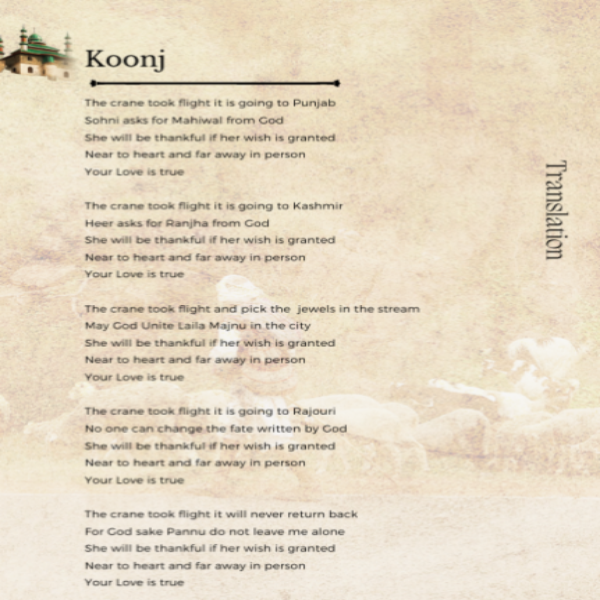
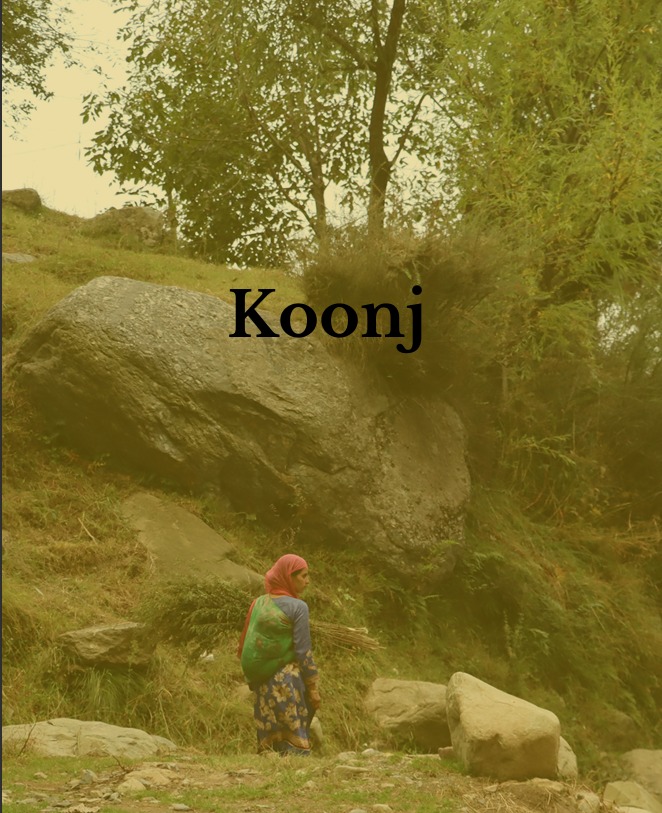
KOONJ (Tribal Poem), jammu & kashmir

Javed Rahi is a highly regarded poet and writer in the region of Jammu and Kashmir, where his poetry is famous for its striking ability to give life to people and their life stories and feelings through poetry. His works beautifully convey the spice of love, separation, and sacrifice while interpreting the cultural essence and traditions of the writer's homeland. Rahi's verses in Gojri remind everyday affairs and moving feelings to their readers in tying spaces and experiences of people to generic human feelings.
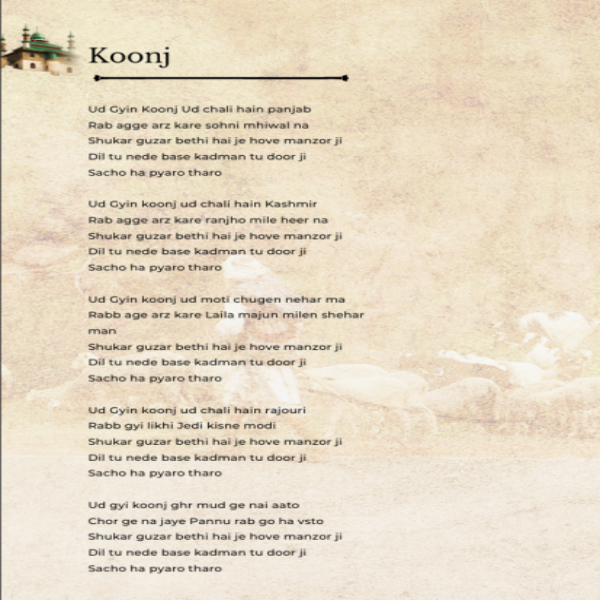
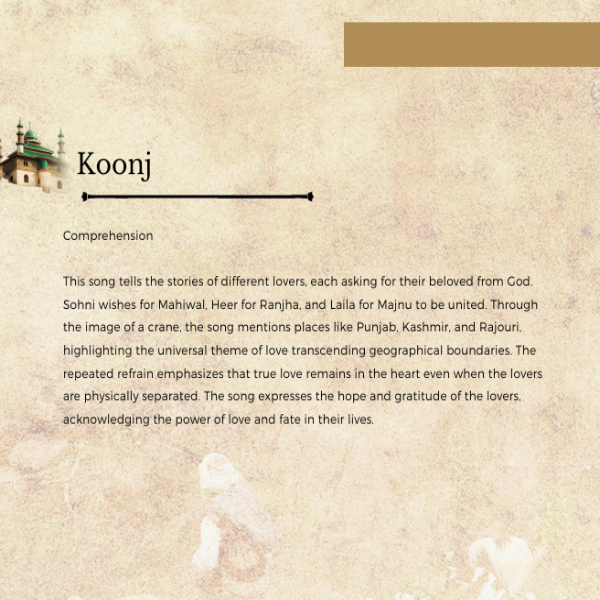
"Koonj" is framed by the flight of a crane as a metaphor for the journey of love over physical distances. Every stanza presents a different mythological couple, uttering each's profound, unrequited yearning to be together. The iterative structure of the stanzas, jumping from one couple to another, mirrors a consistent rhythm within the poem, a folk song quality, and elicits the longing of lovers apart in time and space, yet together in spirit.
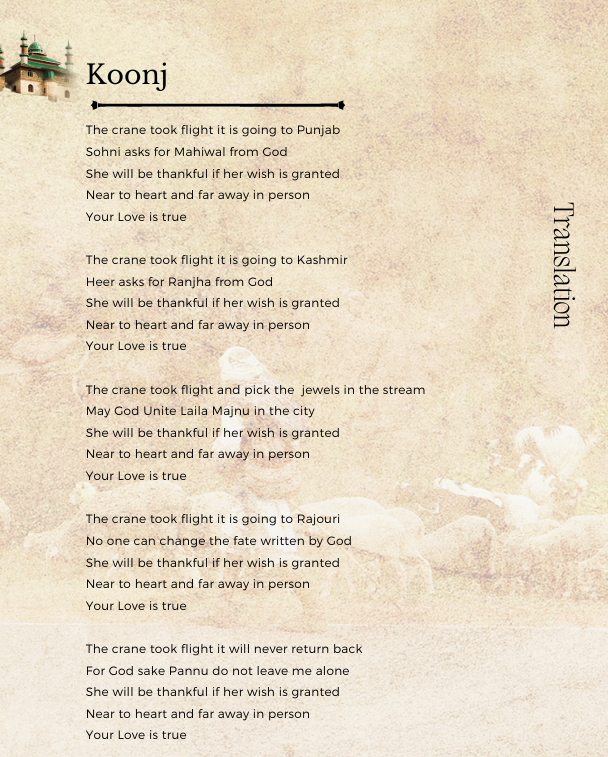
The rhyme scheme in "Koonj" is consistent, providing a calm, singing-like rhythm. The rhyme pattern provides a continuity to each stanza, emphasizing the crane's flight across various places and the overall theme of love. The repetitive rhyming provides the musicality to the poem, making it vibrate like a folk song and enabling it to reflect the passion of the estranged lovers, making each verse correspond to the others better.
The poem’s mood is contemplative and wistful, capturing the longing of the separated lovers. The crane’s flight through Punjab, Kashmir, and Rajouri symbolizes a journey across borders, mirroring the idea that love transcends boundaries. The theme emphasizes that even when separated by distance, love remains close at heart. By invoking legendary pairs, Rahi’s poem celebrates both the endurance of love and its ability to overcome obstacles, resonating with universal emotions of longing and devotion.
“Koonj” is centered around the image of the crane in flight, which acts as a narrative thread that unites various tales of love. This visual arrangement on the page follows the crane’s imagined journey, symbolizing a passage that transcends time and place. The poem’s layout invites readers to follow the path of the crane, connecting the lovers’ stories across diverse regions. This arrangement underscores the central message that love, despite physical separation, remains a constant emotional presence.