



tribal languages and literature
Rhyme Scheme of SIPAHIYA JI, jammu & kashmir
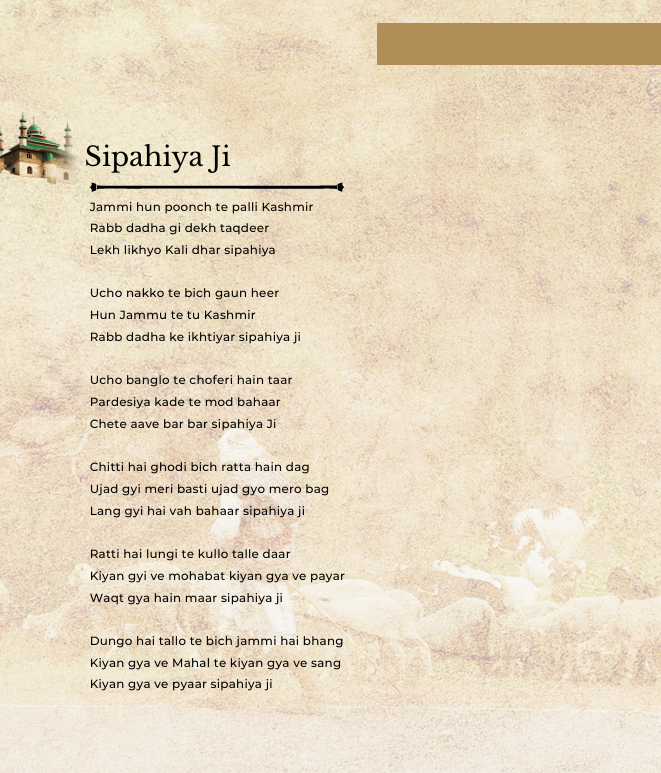
The rhyme scheme in "Sipahiya Ji" is subtle, working to enhance the narrative of the poem but not overwhelming it with a strong beat. This order adds to the contemplative and melancholic mood, playing off the speaker's yearning and relationship with the soldier, who represents individual and cultural loss. The soft rhyme scheme works with the wistful ballad-like nature of the poem, matching the rise and fall of recollection and enhancing the idea of loss and recollection.

Javed Rahi is a renowned poet, writer, and social worker whose writings illuminate the cultural diversity and challenges of tribal societies, especially the Gujjar tribe. Composing in languages such as Gojri and Urdu, Rahi brings to life regional identity, spirituality, and socio-political issues. His poems typically convey the grit and nostalgia of his people, giving a telling glimpse into their values and ways of life. "Sipahiya Ji" is one of his most evocative poems, embodying the nexus of place, people, and memory.
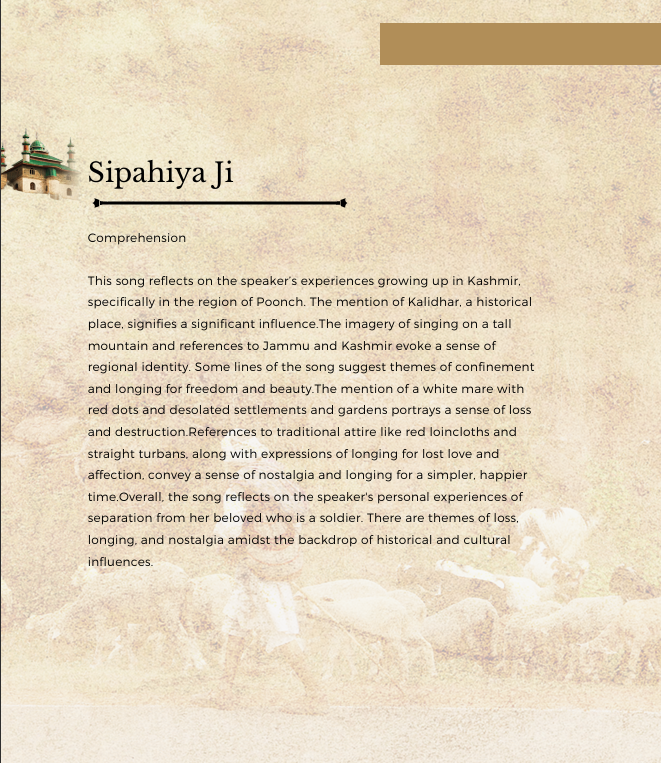
"Sipahiya Ji" employs a lively narrative format, offering each verse as a dialogue brimming with powerful images and self-analysis. The poem blends storytelling with lyricism, enabling readers to see pictures of scenes within the poet's native land, Poonch and Kashmir. With lines that range from love to loss to memory, Rahi weaves the speaker's feelings together with geographical sites and practices. The poem's formal lines and culturally symbolic material provide readers with an entrance into the poet's world.
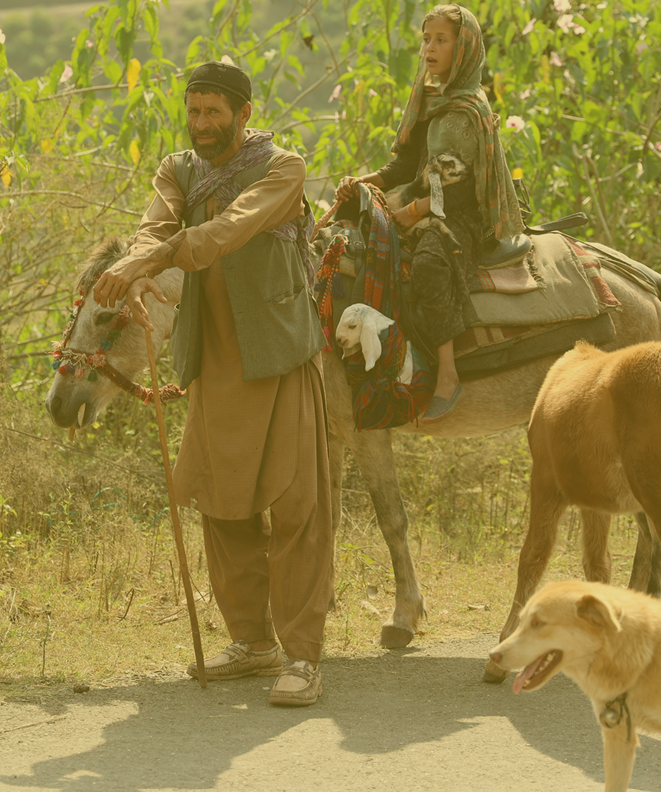
The mood in "Sipahiya Ji" is contemplative and reflective, combining emotions of separation, fidelity, and nostalgia. The poem revolves around the love for a soldier by the speaker and conjures an intense feeling of attachment to the homeland and recollections. In using imagery from the beauty of Kashmir, classic symbols, and vistas of abandonment, Rahi distills the emotions of loss and yearning. The poem also alludes to the necessity of change and illustrates the modification of the treasured sites and relationships over time.
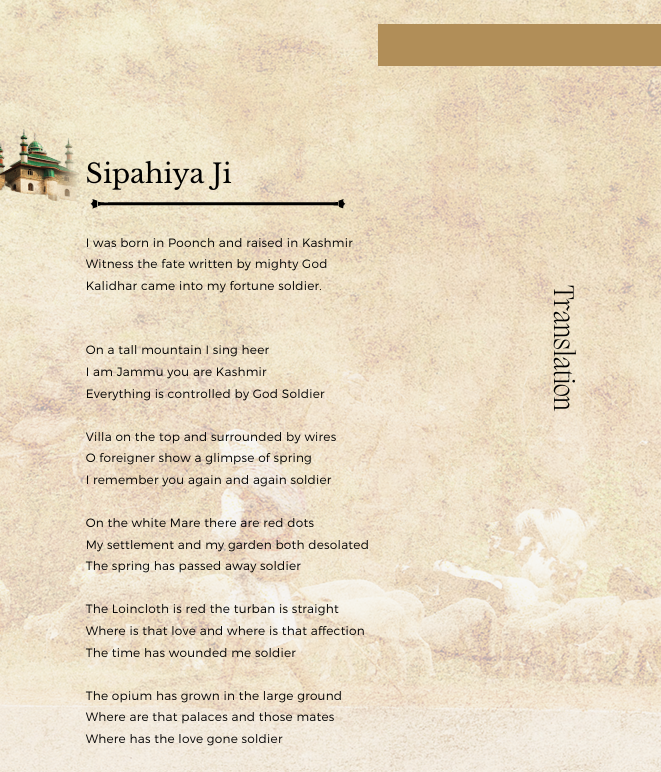
"Sipahiya Ji" is also thematically focused on issues of regional identity and emotional identification, with each stanza committed to the speaker's introspective exploration. The structure of the poem approximates a flowing narrative, with lines moving naturally as if to lead readers through a landscape characterized by personal and shared history. This structure serves to maximize the emotional weight, providing a visually unbroken consideration of the speaker's identification with both place and beloveds, and further deepening the poem's cultural and nostalgic resonance.